Public Steam disclosure research25,380 disclosures tracked
Where do games disclose AI use?
Search developers’ Steam disclosures, compare classified AI use across
games, and follow recorded changes.
This index adds cross-game classifications and statistics to
statements published on individual store pages.
Groups reflect automatic analysis of public disclosures; mature records are excluded. These counts do not measure AI use across all of Steam.
Missing or unclear statements cannot establish whether a game uses AI.
This game uses generative AI to create some character sprites, event CGs, backgrounds, and other in-game images. Some translations are also created using generative AI. These AI-generated assets are used as part of the game's content, as well as in images displayed on the game's store page. The game does not use generative AI to generate content in real time based on player input.
Some illustrative artwork used in the game (atmospheric key art shown in the in-game gallery) was created with the assistance of AI image-generation tools. Portions of the game's narrative text, achievement descriptions, and localized translations were written with the assistance of an AI language tool during development, then reviewed and edited by the developer. All sound effects and music are procedurally synthesized using traditional digital signal processing (oscillators and filters), not AI-generated.
Generative AI tools have been used as support in the development of this game. They were primarily used for programming, translations, and some background and art elements. All content has been manually reviewed and approved before being included in the game.
Generative AI was used during development to create or refine pre-generated visual assets, music and audio, and localization drafts included in the game and its marketing materials. All such content was reviewed and curated by the developer before release. The game does not generate AI content during play and does not send player data to external AI services.
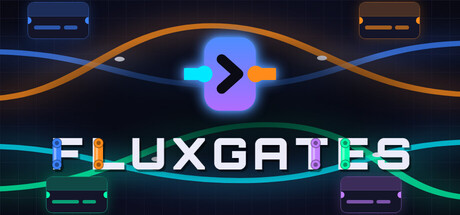
Parts of Fluxgates were built with AI assistance, and all of it is fixed content baked into the build - nothing is generated while you play.
Code: Some of the game's source was written with an AI coding assistant, reviewed, edited and tested by the developer before shipping.
Text: English and French interface strings and node descriptions were drafted with AI help and edited by hand.
No AI generated art or audio. Every visual is drawn by the interface itself, and every sound and music track is synthesised procedurally by a script in the project.
The game runs fully offline. No AI model runs at runtime, and no data leaves your machine.
Parts of this game were made with AI assistance. AI-assisted coding was used during development, and some artwork was AI-generated and then edited by hand. The design, the systems and the writing are my own.
Some of the game's 2D artwork, including character, enemy and boss sprites, item icons, and backgrounds, was created using generative AI tools. All such assets were individually reviewed, selected, polished and integrated by the development team.
Some visual assets (logo, item cover art, character portraits), portions of in-game text, localizations into languages other than Turkish and English, and music/sound effects were created with the assistance of generative AI tools and then reviewed and edited by the developers. No content is generated by AI during gameplay.
Some art, the 3D models, the music beds, the sound effects and all character voice lines were produced with generative AI tools during development, then hand-reviewed, edited and shipped as fixed assets. Nothing is generated while you play: the game ships every asset on disc, runs no model, and makes no network call.
Some visual and audio assets in this game were created with the assistance of generative AI tools
and then reviewed, edited, and curated by the developer. The game does not use live generative AI
during gameplay and does not generate content from player input.
Save Point has been in continuous development since 2021 and is, to our knowledge, the world’s first purpose-built AI-native interactive cinematic engine. The Needle uses this technology to deliver a continuously responsive cinematic experience that goes far beyond conventional branching video. AI-assisted production tools helped create portions of the game’s pre-rendered audiovisual content, with every shipped asset human-directed, reviewed, edited, and integrated. The game also offers locally processed voice controls, alongside keyboard and gamepad support. No unreviewed audiovisual content is generated and delivered to players during gameplay. The project represents tens of thousands of hours of human design, engineering, direction, editing, and testing, with AI serving as the enabling technology behind an experience an independent studio could not otherwise produce at any cost, much less a reasonable one. We didn't use AI to save money, we used it because without AI there wasn't enough money in the world to build a game like this.
Generative AI tools were used in creating the game's illustrations, artwork, cutscene images, map designs, and sound, as well as throughout development, and in writing and revising the story. All AI-assisted content was directed, reviewed, and finalized by our team.
Generative AI tools are used to assist with porting the game text into additional languages. All AI-assisted translations are reviewed and edited by the developer before release. No generative AI is used during gameplay.
Uses voice cloning by Speechify.
Uses AI generated images uploaded by other users to Pixabay when there wasn't a better alternative available.
Most such images are for character portraits and similar placeholder assets of secondary importance.
There is no prompt or direct AI usage.
Generative AI was used selectively during
development, always under direct human
authorship and review:
• Code — An AI coding assistant supported
development as a productivity tool; all systems
were designed, reviewed, and tested by the
developer.
• Key art — The Steam key art was created with
generative AI, then curated and hand-finished by
the developer. All in-game tilesets and
character art are licensed, human-made asset
packs.
• Music — Background music tracks were produced
with the assistance of generative AI tools, then
selected, edited, and mixed by the developer.
The game contains no live-generated AI content:
nothing is generated by AI at runtime.
Some visual assets in the game were originally created and edited manually using image editing software, and were later refined with generative AI tools. AI was used only as part of the visual refinement process. Final assets were reviewed and edited by the developer before being included in the game.
Generative AI was used to assist with the processing and enhancement of some images for atmospheric purposes. These images were then manually retouched and further edited by the developer before being used in the game.
Some of the background images used in this game were created with the help of generative AI tools.
All generated images were reviewed, selected, and adjusted by the developer before being included in the game.
Generative AI was not used for the scenario text, the character sprites, the UI, or the music.
This game contains no system that generates any content in real time with AI while playing.
ORACLE uses generative AI in two ways: some marketing artwork was created with generative tools, and an optional bundled local language model can generate short, context-aware ORACLE narration during play. Live generation runs locally on the player's PC and is limited to text; it does not generate code, images, audio, or gameplay rules.
Generative AI was used to assist in creating pre-generated visual assets for the game and its promotional materials, including character artwork and event illustrations. It was also used to assist with portions of the game's text and localization. All included content was reviewed and curated by the developer. No content is generated by AI during gameplay.
Seed Money was developed with the assistance of generative AI tools, including Claude, GPT, and Gemini. AI was used throughout the development process, including programming assistance and the creation of artwork and sound assets. All AI-generated content included in the game was reviewed and integrated by the development team.
Pre-rendered Content:
Generative AI tools and agentic AI development workflows were utilized during the creation of this game to assist in:
- Code & Systems: Writing and optimizing core gameplay logic, typescript structures, and simulation algorithms.
- Visual Assets: Creating and pre-rendering all visual assets used in-game, including boot screen artworks, drive interfaces, and graphical components.
- Localization: Translating and reviewing in-game text and UI labels.
Please note that all AI-assisted assets and code were pre-rendered and compiled during the development phase. The game runs entirely locally and does not perform any real-time (live) AI generation, nor does it connect to any external AI APIs or services during gameplay.
The AI coworkers in this game are voiced by a machine (TTS), and their dialogue was really written by AI together with self portraits, on purpose and under human review. The slop is diegetic. The code was written with AI agents and reviewed by the last human in that loop, the developer. That is also the plot. No AI runs at runtime. Everything was baked and reviewed before shipping.
Art direction steered asset creation, SFX, store capsule artwork and the logo were produced with generative AI assistance then hand-edited. No generative AI runs at runtime; the game generates no content live.
Generative AI tools were used to create voice-over content for the game. The generated voice content was reviewed and edited by the development team before being implemented in the game.
AI-assisted tools were used for all of the game visuals, audio, and code. No AI generation occurs during gameplay, and no external AI services are used while playing.
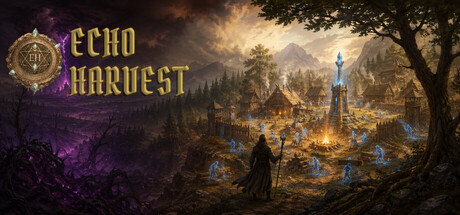
Generative AI was used during development to assist in creating some pre-generated visual artwork and illustrative assets, including artwork used within the Chronicle system. All AI-assisted content is created and reviewed during development and is included in the game as finished assets. Echo Harvest does not use generative AI to create content dynamically during gameplay.
Generative AI-assisted tools were used in the creation and development of some 3D models, audio, and visual content in the game. All such content was generated in advance during the development process and added to the game as pre-made assets. No content is generated in real time using generative AI during gameplay.
Generative AI was used during development to create pre-generated artwork (including fictional film posters and marketing images), narration, and some text and translations. These are fixed assets shipped with the game. No generative AI runs during gameplay, and no player input is sent to an external AI service.
Some visual assets were partially created with the help of generative AI. It was used as a reference for a few alpha brushes, clothing patterns, and some card designs. No output was used as-is — everything was heavily modified and finished by hand. All other content in the game was created entirely by the developer.
This game uses generative AI to create some character sprites, event CGs, backgrounds, and other in-game images. Some translations are also created using generative AI. These AI-generated assets are used as part of the game's content, as well as in images displayed on the game's store page. The game does not use generative AI to generate content in real time based on player input.
Some illustrative artwork used in the game (atmospheric key art shown in the in-game gallery) was created with the assistance of AI image-generation tools. Portions of the game's narrative text, achievement descriptions, and localized translations were written with the assistance of an AI language tool during development, then reviewed and edited by the developer. All sound effects and music are procedurally synthesized using traditional digital signal processing (oscillators and filters), not AI-generated.
Generative AI tools have been used as support in the development of this game. They were primarily used for programming, translations, and some background and art elements. All content has been manually reviewed and approved before being included in the game.
Generative AI was used during development to create or refine pre-generated visual assets, music and audio, and localization drafts included in the game and its marketing materials. All such content was reviewed and curated by the developer before release. The game does not generate AI content during play and does not send player data to external AI services.
Parts of Fluxgates were built with AI assistance, and all of it is fixed content baked into the build - nothing is generated while you play.
Code: Some of the game's source was written with an AI coding assistant, reviewed, edited and tested by the developer before shipping.
Text: English and French interface strings and node descriptions were drafted with AI help and edited by hand.
No AI generated art or audio. Every visual is drawn by the interface itself, and every sound and music track is synthesised procedurally by a script in the project.
The game runs fully offline. No AI model runs at runtime, and no data leaves your machine.
Parts of this game were made with AI assistance. AI-assisted coding was used during development, and some artwork was AI-generated and then edited by hand. The design, the systems and the writing are my own.
Some of the game's 2D artwork, including character, enemy and boss sprites, item icons, and backgrounds, was created using generative AI tools. All such assets were individually reviewed, selected, polished and integrated by the development team.
Some visual assets (logo, item cover art, character portraits), portions of in-game text, localizations into languages other than Turkish and English, and music/sound effects were created with the assistance of generative AI tools and then reviewed and edited by the developers. No content is generated by AI during gameplay.
Some art, the 3D models, the music beds, the sound effects and all character voice lines were produced with generative AI tools during development, then hand-reviewed, edited and shipped as fixed assets. Nothing is generated while you play: the game ships every asset on disc, runs no model, and makes no network call.
Some visual and audio assets in this game were created with the assistance of generative AI tools
and then reviewed, edited, and curated by the developer. The game does not use live generative AI
during gameplay and does not generate content from player input.
Save Point has been in continuous development since 2021 and is, to our knowledge, the world’s first purpose-built AI-native interactive cinematic engine. The Needle uses this technology to deliver a continuously responsive cinematic experience that goes far beyond conventional branching video. AI-assisted production tools helped create portions of the game’s pre-rendered audiovisual content, with every shipped asset human-directed, reviewed, edited, and integrated. The game also offers locally processed voice controls, alongside keyboard and gamepad support. No unreviewed audiovisual content is generated and delivered to players during gameplay. The project represents tens of thousands of hours of human design, engineering, direction, editing, and testing, with AI serving as the enabling technology behind an experience an independent studio could not otherwise produce at any cost, much less a reasonable one. We didn't use AI to save money, we used it because without AI there wasn't enough money in the world to build a game like this.
Generative AI tools were used in creating the game's illustrations, artwork, cutscene images, map designs, and sound, as well as throughout development, and in writing and revising the story. All AI-assisted content was directed, reviewed, and finalized by our team.
Generative AI tools are used to assist with porting the game text into additional languages. All AI-assisted translations are reviewed and edited by the developer before release. No generative AI is used during gameplay.
Uses voice cloning by Speechify.
Uses AI generated images uploaded by other users to Pixabay when there wasn't a better alternative available.
Most such images are for character portraits and similar placeholder assets of secondary importance.
There is no prompt or direct AI usage.
Generative AI was used selectively during
development, always under direct human
authorship and review:
• Code — An AI coding assistant supported
development as a productivity tool; all systems
were designed, reviewed, and tested by the
developer.
• Key art — The Steam key art was created with
generative AI, then curated and hand-finished by
the developer. All in-game tilesets and
character art are licensed, human-made asset
packs.
• Music — Background music tracks were produced
with the assistance of generative AI tools, then
selected, edited, and mixed by the developer.
The game contains no live-generated AI content:
nothing is generated by AI at runtime.
Some visual assets in the game were originally created and edited manually using image editing software, and were later refined with generative AI tools. AI was used only as part of the visual refinement process. Final assets were reviewed and edited by the developer before being included in the game.
Generative AI was used to assist with the processing and enhancement of some images for atmospheric purposes. These images were then manually retouched and further edited by the developer before being used in the game.
Some of the background images used in this game were created with the help of generative AI tools.
All generated images were reviewed, selected, and adjusted by the developer before being included in the game.
Generative AI was not used for the scenario text, the character sprites, the UI, or the music.
This game contains no system that generates any content in real time with AI while playing.
ORACLE uses generative AI in two ways: some marketing artwork was created with generative tools, and an optional bundled local language model can generate short, context-aware ORACLE narration during play. Live generation runs locally on the player's PC and is limited to text; it does not generate code, images, audio, or gameplay rules.
Generative AI was used to assist in creating pre-generated visual assets for the game and its promotional materials, including character artwork and event illustrations. It was also used to assist with portions of the game's text and localization. All included content was reviewed and curated by the developer. No content is generated by AI during gameplay.
Seed Money was developed with the assistance of generative AI tools, including Claude, GPT, and Gemini. AI was used throughout the development process, including programming assistance and the creation of artwork and sound assets. All AI-generated content included in the game was reviewed and integrated by the development team.
Pre-rendered Content:
Generative AI tools and agentic AI development workflows were utilized during the creation of this game to assist in:
- Code & Systems: Writing and optimizing core gameplay logic, typescript structures, and simulation algorithms.
- Visual Assets: Creating and pre-rendering all visual assets used in-game, including boot screen artworks, drive interfaces, and graphical components.
- Localization: Translating and reviewing in-game text and UI labels.
Please note that all AI-assisted assets and code were pre-rendered and compiled during the development phase. The game runs entirely locally and does not perform any real-time (live) AI generation, nor does it connect to any external AI APIs or services during gameplay.
The AI coworkers in this game are voiced by a machine (TTS), and their dialogue was really written by AI together with self portraits, on purpose and under human review. The slop is diegetic. The code was written with AI agents and reviewed by the last human in that loop, the developer. That is also the plot. No AI runs at runtime. Everything was baked and reviewed before shipping.
Art direction steered asset creation, SFX, store capsule artwork and the logo were produced with generative AI assistance then hand-edited. No generative AI runs at runtime; the game generates no content live.
Generative AI tools were used to create voice-over content for the game. The generated voice content was reviewed and edited by the development team before being implemented in the game.
AI-assisted tools were used for all of the game visuals, audio, and code. No AI generation occurs during gameplay, and no external AI services are used while playing.
Generative AI was used during development to assist in creating some pre-generated visual artwork and illustrative assets, including artwork used within the Chronicle system. All AI-assisted content is created and reviewed during development and is included in the game as finished assets. Echo Harvest does not use generative AI to create content dynamically during gameplay.
Generative AI-assisted tools were used in the creation and development of some 3D models, audio, and visual content in the game. All such content was generated in advance during the development process and added to the game as pre-made assets. No content is generated in real time using generative AI during gameplay.
Generative AI was used during development to create pre-generated artwork (including fictional film posters and marketing images), narration, and some text and translations. These are fixed assets shipped with the game. No generative AI runs during gameplay, and no player input is sent to an external AI service.
Some visual assets were partially created with the help of generative AI. It was used as a reference for a few alpha brushes, clothing patterns, and some card designs. No output was used as-is — everything was heavily modified and finished by hand. All other content in the game was created entirely by the developer.