Public Steam disclosure research25,380 disclosures tracked
Where do games disclose AI use?
Search developers’ Steam disclosures, compare classified AI use across
games, and follow recorded changes.
This index adds cross-game classifications and statistics to
statements published on individual store pages.
Groups reflect automatic analysis of public disclosures; mature records are excluded. These counts do not measure AI use across all of Steam.
Missing or unclear statements cannot establish whether a game uses AI.
AI was used during development to create portions of the game’s pre-generated artwork, characters, animations, music, voices, and sound effects. These assets are included in the finished game. No AI content is generated live during gameplay.
AI tools were used for part of the art and music. Everything gets picked, cleaned up and put together by hand afterwards. There's no AI in the game itself: what you play is exactly what was built in mind.
Coquí Crusader was made with AI-assisted tools under the developer's direction.
The coquí mascot logo and the background music were AI-generated. AI coding assistance was used to build the game and to help write its in-game and store text, all reviewed by the developer.
Every design decision was made by the developer: the mechanics, the progression and balance, and the Puerto Rican setting — the ten zones based on real landmarks, the folklore creatures from Taíno legend, and the Spanish localization.
No content is generated during gameplay, and the game never connects to any external AI service.
Some of the promotional artwork, store page banners, and/or trailer visuals for Ascend Idle: Chronicles were created with the assistance of Generative AI tools. The core game code and design were developed entirely by hand as a solo project.
Some visual artwork used in the game and promotional materials was created with generative AI tools and then selected, edited, and integrated by the developer. No generative AI content is created during gameplay.
We used generative AI tools during development to help create pre-rendered assets: part of the visual art (environments, buildings, characters and interface elements), the music, and store page artwork. All AI-generated content was reviewed, edited and assembled by us. Generative AI is not used at runtime — the game generates no AI content while you play.
Some art assets in the game and on the store page (story character portraits, some icons, backgrounds, and capsule images) were created with AI image generation tools, then manually curated and edited by the developer. All gameplay, code, and written story content is human-made. No AI content is generated at runtime.
Space Travelers uses generative AI only as a writing aid during development.
The game's text content (interface text, event and log lines) and its
localization into the 14 supported interface languages were produced with
the assistance of large language models, directed and reviewed by the
developer. Parts of this store page were drafted the same way.
No AI-generated images, audio or video are used: all artwork, animation
and sound in the game are produced by hand-written procedural code. The
game does not generate any content with AI while you play, and it never
connects to an external AI service.
Generative AI was used to translate (localize) the original Korean text into other languages. The original text was written by the development team, and the AI translations were reviewed before use.
Some pre-generated visual assets used in Roulettegeddon, including portions of promotional artwork and certain in-game visual elements, were created or refined with the assistance of generative AI. The game's gameplay, mechanics, and player progression do not rely on AI-generated content during play.
Explanation about the game development process:
In the early concept design and creative ideation stage of this game, we did use AI technology as an auxiliary tool to help us explore and validate various artistic styles and creative directions more quickly. These AI-generated reference materials provided us with initial inspiration.
However, the core creative concepts, story writing, character design, and all artistic assets presented in the final game were personally conceived and carefully crafted by our creative team. Each game element underwent repeated human optimization and fine-tuning to ensure the best gaming experience.
AI was only used as an auxiliary tool, and the final game content presented is the result of human creation. We have always adhered to human creation as the main driver, committed to bringing players a unique and meticulously polished gaming experience.
There is no AI-generated art or audio anywhere in this game. Every sprite, animation and character design is hand-drawn by me. The game has no audio at all, and the music in the trailer is my own work too. Nothing is generated while the game runs, and it never connects to an AI service.
AI was used to help with text, in three places.
The store page description and short description, in all 11 languages.
Translating the interface labels into the 10 languages other than English. There are only 24 strings in the whole game and no prose of any kind: 11 are labels like "Clear all" and "Cancel", and the other 13 are bird names, which are the real common names of each species, looked up per language rather than made up.
Some of our Steam community and marketing posts.
Chinese (both) I checked myself, and Japanese was checked at N2. Korean, Spanish, Russian, Brazilian Portuguese and German have not been checked by a native speaker.
Generative AI was used during development to assist with coding and the creation of pre-generated visual assets. No AI content is generated during gameplay.
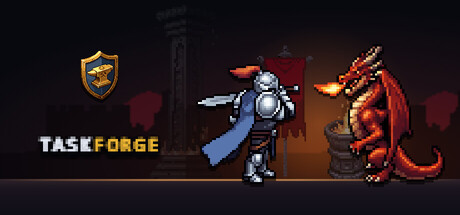
The pixel art in Taskforge — character and enemy sprites, animation frames, item and UI icons, scenery pieces and the game's emblem — was produced with the help of an AI image generation tool during development. Every generated asset was reviewed, selected, edited and assembled by hand, and ships as a fixed image file. Nothing is generated while you play: the game contains only static assets and never calls an AI service at runtime. Code, game design, balance data and all written text were made by the developer.
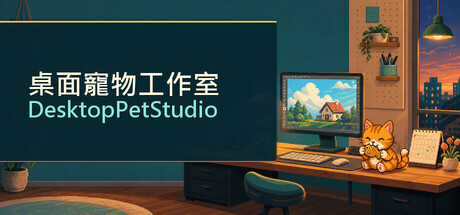
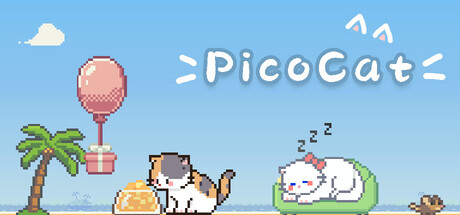
The application includes a small set of pre-generated pixel-art example assets, including default cat character poses, icons, and promotional visuals. They were created with generative AI assistance during development and curated as static demonstration content shipped with the application.
The product does not generate AI content at runtime and does not embed, call, or operate a generative AI model or service. Its AI Material Assistant only provides editable prompt templates and links to third-party services outside the application. Players may import their own images, GIFs, audio, and Workshop content.
The pixel art in this game was created with an AI image generation tool (Pixellab).
Generated art is never used as-is: the style, proportions and palette standards are set by a human,
every sprite is reviewed by eye, and anything off-standard is rejected and redone. Grounding,
animation continuity and color consistency are likewise human-checked before adoption.
Game design, balance and specification decisions are made by a human. AI-assisted tools are also
used in the development process.
Nothing is generated by AI at runtime (pre-generated content only).
Generative AI Disclosure: During the development of Farm Idle, generative AI tools were utilized to assist with creating and conceptualizing some 2D UI icons, menu graphics, and localized text. All generated assets were reviewed, cleaned, edited, and integrated by the development team to fit the game's pixel-art aesthetic. No AI content is generated in real-time while playing the game.
To make One More Chop more accessible to players around the world, AI-assisted tools were used as part of the localization process for supported languages. Their use is limited to translation and localization support, helping us make the game available to players across a wider range of languages and regions.
Some of the art in this game — the chef characters, the customer characters, the lane skins, and some of the plates — was created with the help of AI image generation tools. The sushi artwork does not use AI.
As a solo developer, AI has been a big help in making the development of this game more efficient by assisting in, but not be the sole performer of: testing, performing repetitive and some programming tasks, brainstorming and discussions, translations and some design.
This game was developed with the help of generative AI.
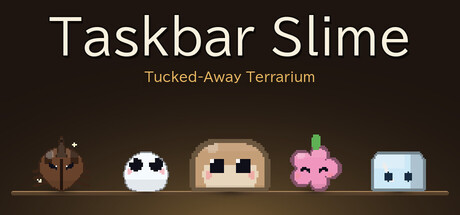
- Generative AI was used to write and translate text (slime descriptions,
in-game wording, and the English localisation). All of it was reviewed
and edited by a human.
- Generative AI was also used to write program code.
- The slime pixel art is not image-generated. It is drawn by a rendering
program written for this game.
- No AI runs while the game is playing. The game makes no network
connections and calls no AI models.
Some in-game text (such as the messages in bottles) and store page copy were written with the assistance of AI tools. All content has been reviewed and edited by the developer.
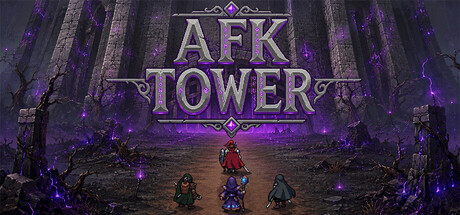
AFKTower contains AI-assisted content that was generated during development; no AI runs inside the game.
Art: most of the pixel art hero, enemy and boss sprites and their animations, weapon and armor art, skins, combat backgrounds, map scrolls, UI panels, rarity frames and icons was generated with PixelLab (pixellab.ai) from prompts and references, then handn selected, edited, recolored and assembled by the developer. The AFKTower logo was drawn without AI.
Music: the three soundtrack tracks were composed by the developer with Suno (paid plan with commercial license). Sound effects are synthesized procedurally by the game's own code, not by AI.
Text: the game and store texts were written in Spanish by the developer; the English localization and copy editing were done with the help of an AI language model (Claude, by Anthropic) and reviewed by humans.
Store screenshots are unedited captures of the game. Nothing is generated at runtime: the game contains no AI systems.
We used a Gen AI powered tool to localize the following:
- (in some languages) In-game text
- (in some languages) Steam store descriptions
We plan to replace these with human translation and LQA when we can afford it.
Until then, we are using Gen AI temporarily.
I created this game solo, using generative AI as one of the tools.
It helped me write the code and also generated the ambient music and
some of the planet textures. Everything else was crafted by hand: the
interface, Fjord and the seals orbiting the Earth aren't drawn images —
they're rendered in code.
Nothing is generated while you play: the game runs fully offline.
And no, I didn't just sit around drinking coffee while the AI did the
work — though I certainly did consume an obscene amount of coffee.
This game includes an optional AI assistant. Players may use the AI tools during gameplay for in‑game assistance such as balloon‑shooting, feeding and other actions. No AI‑generated content will be produced.
During development, generative AI tools were used to assist with programming and some pre‑generated text. All AI‑assisted text included in the game was reviewed and edited by the development team.
No AI was used to generate the game's artwork or music. All artwork and music were created by human artists and musicians.
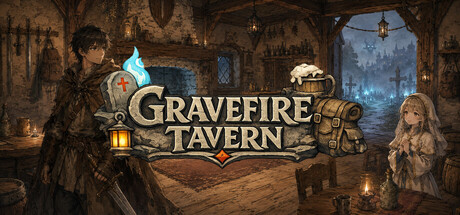
This game contains pre-generated 2D artwork and source code created with ChatGPT during development. All game source code was generated with ChatGPT, then reviewed, tested, debugged, and integrated by the developer. The artwork was generated from original prompts written for Gravefire Tavern, then reviewed, selected, edited, composited, cropped, and integrated by the developer. No generative AI runs during gameplay, and no player input is sent to an AI service.
This game uses an open-source language model (Qwen2.5) bundled with the game to generate real-time NPC dialogue and ambient chatter entirely offline on the player's own machine via llama.cpp. No external server, no third-party API, and no internet connection are required. Players can toggle this feature on or off. The model runs locally using the player's CPU — no data is uploaded, collected, stored, or used for training.
Some 2D‑art assets in this game are created with the assistance of generative‑AI tools. These assets have been filtered, edited, composited and manually reviewed by the developer before being used in‑game. The game does not perform real‑time content generation based on player input during runtime, nor does it send any player input to generative‑AI services.
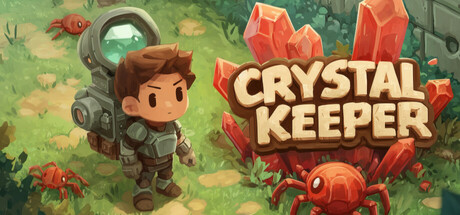
Crystal Keeper is made by one person. I used generative AI tools during development to help create some of the game's assets, such as artwork and music, every asset was hand-picked and integrated by me. No AI is used at runtime: nothing is generated while you play.
Text content only, all pre-generated during development and reviewed by the developer. AI assistance was used to write the in-game story text, the user interface translations for the 8 supported languages, the achievement names and descriptions, and the store page copy. Nothing is generated live at runtime and the game does not connect to any AI service. Art, sprites, capsule images, icons and the soundtrack are NOT AI-generated: they are produced by procedural scripts written by the developer and included in the project source.
This game utilized generative AI tools during development to assist with the following aspects:
Generation and optimization of certain code snippets;
Creation and processing of some sound effects;
Machine translation and localization assistance for in-game text and UI strings.
Important note: All visual art assets in the game (including characters, environments, props, UI elements, icons, animations, etc.) are exclusively created by human artists and were not generated by any AI tools.
All AI-generated content (code, sound, translation) has been manually reviewed, revised, and tested to ensure quality, stylistic consistency, and compliance with applicable regulations. AI is not used for real-time generation of player-facing content; all released content is finalized prior to launch.
AI was used during development to create portions of the game’s pre-generated artwork, characters, animations, music, voices, and sound effects. These assets are included in the finished game. No AI content is generated live during gameplay.
AI tools were used for part of the art and music. Everything gets picked, cleaned up and put together by hand afterwards. There's no AI in the game itself: what you play is exactly what was built in mind.
Coquí Crusader was made with AI-assisted tools under the developer's direction.
The coquí mascot logo and the background music were AI-generated. AI coding assistance was used to build the game and to help write its in-game and store text, all reviewed by the developer.
Every design decision was made by the developer: the mechanics, the progression and balance, and the Puerto Rican setting — the ten zones based on real landmarks, the folklore creatures from Taíno legend, and the Spanish localization.
No content is generated during gameplay, and the game never connects to any external AI service.
Some of the promotional artwork, store page banners, and/or trailer visuals for Ascend Idle: Chronicles were created with the assistance of Generative AI tools. The core game code and design were developed entirely by hand as a solo project.
Some visual artwork used in the game and promotional materials was created with generative AI tools and then selected, edited, and integrated by the developer. No generative AI content is created during gameplay.
We used generative AI tools during development to help create pre-rendered assets: part of the visual art (environments, buildings, characters and interface elements), the music, and store page artwork. All AI-generated content was reviewed, edited and assembled by us. Generative AI is not used at runtime — the game generates no AI content while you play.
Some art assets in the game and on the store page (story character portraits, some icons, backgrounds, and capsule images) were created with AI image generation tools, then manually curated and edited by the developer. All gameplay, code, and written story content is human-made. No AI content is generated at runtime.
Space Travelers uses generative AI only as a writing aid during development.
The game's text content (interface text, event and log lines) and its
localization into the 14 supported interface languages were produced with
the assistance of large language models, directed and reviewed by the
developer. Parts of this store page were drafted the same way.
No AI-generated images, audio or video are used: all artwork, animation
and sound in the game are produced by hand-written procedural code. The
game does not generate any content with AI while you play, and it never
connects to an external AI service.
Generative AI was used to translate (localize) the original Korean text into other languages. The original text was written by the development team, and the AI translations were reviewed before use.
Some pre-generated visual assets used in Roulettegeddon, including portions of promotional artwork and certain in-game visual elements, were created or refined with the assistance of generative AI. The game's gameplay, mechanics, and player progression do not rely on AI-generated content during play.
Explanation about the game development process:
In the early concept design and creative ideation stage of this game, we did use AI technology as an auxiliary tool to help us explore and validate various artistic styles and creative directions more quickly. These AI-generated reference materials provided us with initial inspiration.
However, the core creative concepts, story writing, character design, and all artistic assets presented in the final game were personally conceived and carefully crafted by our creative team. Each game element underwent repeated human optimization and fine-tuning to ensure the best gaming experience.
AI was only used as an auxiliary tool, and the final game content presented is the result of human creation. We have always adhered to human creation as the main driver, committed to bringing players a unique and meticulously polished gaming experience.
There is no AI-generated art or audio anywhere in this game. Every sprite, animation and character design is hand-drawn by me. The game has no audio at all, and the music in the trailer is my own work too. Nothing is generated while the game runs, and it never connects to an AI service.
AI was used to help with text, in three places.
The store page description and short description, in all 11 languages.
Translating the interface labels into the 10 languages other than English. There are only 24 strings in the whole game and no prose of any kind: 11 are labels like "Clear all" and "Cancel", and the other 13 are bird names, which are the real common names of each species, looked up per language rather than made up.
Some of our Steam community and marketing posts.
Chinese (both) I checked myself, and Japanese was checked at N2. Korean, Spanish, Russian, Brazilian Portuguese and German have not been checked by a native speaker.
Generative AI was used during development to assist with coding and the creation of pre-generated visual assets. No AI content is generated during gameplay.
The pixel art in Taskforge — character and enemy sprites, animation frames, item and UI icons, scenery pieces and the game's emblem — was produced with the help of an AI image generation tool during development. Every generated asset was reviewed, selected, edited and assembled by hand, and ships as a fixed image file. Nothing is generated while you play: the game contains only static assets and never calls an AI service at runtime. Code, game design, balance data and all written text were made by the developer.
The application includes a small set of pre-generated pixel-art example assets, including default cat character poses, icons, and promotional visuals. They were created with generative AI assistance during development and curated as static demonstration content shipped with the application.
The product does not generate AI content at runtime and does not embed, call, or operate a generative AI model or service. Its AI Material Assistant only provides editable prompt templates and links to third-party services outside the application. Players may import their own images, GIFs, audio, and Workshop content.
The pixel art in this game was created with an AI image generation tool (Pixellab).
Generated art is never used as-is: the style, proportions and palette standards are set by a human,
every sprite is reviewed by eye, and anything off-standard is rejected and redone. Grounding,
animation continuity and color consistency are likewise human-checked before adoption.
Game design, balance and specification decisions are made by a human. AI-assisted tools are also
used in the development process.
Nothing is generated by AI at runtime (pre-generated content only).
Generative AI Disclosure: During the development of Farm Idle, generative AI tools were utilized to assist with creating and conceptualizing some 2D UI icons, menu graphics, and localized text. All generated assets were reviewed, cleaned, edited, and integrated by the development team to fit the game's pixel-art aesthetic. No AI content is generated in real-time while playing the game.
To make One More Chop more accessible to players around the world, AI-assisted tools were used as part of the localization process for supported languages. Their use is limited to translation and localization support, helping us make the game available to players across a wider range of languages and regions.
Some of the art in this game — the chef characters, the customer characters, the lane skins, and some of the plates — was created with the help of AI image generation tools. The sushi artwork does not use AI.
As a solo developer, AI has been a big help in making the development of this game more efficient by assisting in, but not be the sole performer of: testing, performing repetitive and some programming tasks, brainstorming and discussions, translations and some design.
This game was developed with the help of generative AI.
- Generative AI was used to write and translate text (slime descriptions,
in-game wording, and the English localisation). All of it was reviewed
and edited by a human.
- Generative AI was also used to write program code.
- The slime pixel art is not image-generated. It is drawn by a rendering
program written for this game.
- No AI runs while the game is playing. The game makes no network
connections and calls no AI models.
Some in-game text (such as the messages in bottles) and store page copy were written with the assistance of AI tools. All content has been reviewed and edited by the developer.
AFKTower contains AI-assisted content that was generated during development; no AI runs inside the game.
Art: most of the pixel art hero, enemy and boss sprites and their animations, weapon and armor art, skins, combat backgrounds, map scrolls, UI panels, rarity frames and icons was generated with PixelLab (pixellab.ai) from prompts and references, then handn selected, edited, recolored and assembled by the developer. The AFKTower logo was drawn without AI.
Music: the three soundtrack tracks were composed by the developer with Suno (paid plan with commercial license). Sound effects are synthesized procedurally by the game's own code, not by AI.
Text: the game and store texts were written in Spanish by the developer; the English localization and copy editing were done with the help of an AI language model (Claude, by Anthropic) and reviewed by humans.
Store screenshots are unedited captures of the game. Nothing is generated at runtime: the game contains no AI systems.
We used a Gen AI powered tool to localize the following:
- (in some languages) In-game text
- (in some languages) Steam store descriptions
We plan to replace these with human translation and LQA when we can afford it.
Until then, we are using Gen AI temporarily.
I created this game solo, using generative AI as one of the tools.
It helped me write the code and also generated the ambient music and
some of the planet textures. Everything else was crafted by hand: the
interface, Fjord and the seals orbiting the Earth aren't drawn images —
they're rendered in code.
Nothing is generated while you play: the game runs fully offline.
And no, I didn't just sit around drinking coffee while the AI did the
work — though I certainly did consume an obscene amount of coffee.
This game includes an optional AI assistant. Players may use the AI tools during gameplay for in‑game assistance such as balloon‑shooting, feeding and other actions. No AI‑generated content will be produced.
During development, generative AI tools were used to assist with programming and some pre‑generated text. All AI‑assisted text included in the game was reviewed and edited by the development team.
No AI was used to generate the game's artwork or music. All artwork and music were created by human artists and musicians.
This game contains pre-generated 2D artwork and source code created with ChatGPT during development. All game source code was generated with ChatGPT, then reviewed, tested, debugged, and integrated by the developer. The artwork was generated from original prompts written for Gravefire Tavern, then reviewed, selected, edited, composited, cropped, and integrated by the developer. No generative AI runs during gameplay, and no player input is sent to an AI service.
This game uses an open-source language model (Qwen2.5) bundled with the game to generate real-time NPC dialogue and ambient chatter entirely offline on the player's own machine via llama.cpp. No external server, no third-party API, and no internet connection are required. Players can toggle this feature on or off. The model runs locally using the player's CPU — no data is uploaded, collected, stored, or used for training.
Some 2D‑art assets in this game are created with the assistance of generative‑AI tools. These assets have been filtered, edited, composited and manually reviewed by the developer before being used in‑game. The game does not perform real‑time content generation based on player input during runtime, nor does it send any player input to generative‑AI services.
Crystal Keeper is made by one person. I used generative AI tools during development to help create some of the game's assets, such as artwork and music, every asset was hand-picked and integrated by me. No AI is used at runtime: nothing is generated while you play.
Text content only, all pre-generated during development and reviewed by the developer. AI assistance was used to write the in-game story text, the user interface translations for the 8 supported languages, the achievement names and descriptions, and the store page copy. Nothing is generated live at runtime and the game does not connect to any AI service. Art, sprites, capsule images, icons and the soundtrack are NOT AI-generated: they are produced by procedural scripts written by the developer and included in the project source.
This game utilized generative AI tools during development to assist with the following aspects:
Generation and optimization of certain code snippets;
Creation and processing of some sound effects;
Machine translation and localization assistance for in-game text and UI strings.
Important note: All visual art assets in the game (including characters, environments, props, UI elements, icons, animations, etc.) are exclusively created by human artists and were not generated by any AI tools.
All AI-generated content (code, sound, translation) has been manually reviewed, revised, and tested to ensure quality, stylistic consistency, and compliance with applicable regulations. AI is not used for real-time generation of player-facing content; all released content is finalized prior to launch.