Public Steam disclosure research25,380 disclosures tracked
Where do games disclose AI use?
Search developers’ Steam disclosures, compare classified AI use across
games, and follow recorded changes.
This index adds cross-game classifications and statistics to
statements published on individual store pages.
Groups reflect automatic analysis of public disclosures; mature records are excluded. These counts do not measure AI use across all of Steam.
Missing or unclear statements cannot establish whether a game uses AI.
Generative AI tools were used during development to assist in the creation of some pre-generated visual assets, character voices, translations, and promotional materials. All AI-assisted content was reviewed, edited, and curated by the developer. The game does not generate AI content in real time during gameplay.
Generative AI tools were used to help create some of the 2D store and marketing graphics (e.g. store capsule images). These assets were reviewed and finalized by the developer, who holds the rights to use them. No generative AI is used for content inside the game, and no AI-generated content is produced live during gameplay.
We use generative AI to help create this game. It's part of what lets a small team build a game like this. We believe in being transparent about the tools we use, but they're only tools. Every part of this game is reviewed, refined, and curated by our team to meet our creative vision and quality standards, and we hope you'll enjoy the game for the experience it delivers.
The creative direction and design of this game are the work of the developer. All code, copywriting, artwork, background images, and non-Chinese translations were AI-assisted.
Utilizing artificial intelligence, we enhanced vintage photographs and photographs of the development team to align with the game’s aesthetic for paintings in game.
Penko Vox: Japanese uses local generative AI to power its immersive language learning experience. An integrated Large Language Model (LLM) acts as a native Japanese tutor, generating real-time dialogue based on user input, while a Neural Text-to-Speech (TTS) engine synthesizes high-fidelity Japanese audio for listening practice.
We use generative AI to help create this game. It's part of what lets a small team build a game like this. We believe in being transparent about the tools we use, but they're only tools. Every part of this game is reviewed, refined, and curated by our team to meet our creative vision and quality standards, and we hope you'll enjoy the game for the experience it delivers.
A small number of texture assets use generative AI as a starting point and were manually edited for use in-game. Most visual assets are original, licensed, purchased, or used with creator permission.
AI has been used to generate some graphics, music, and translations.
As the story of this game may suggest, I understand (and even share) most of the criticisms regarding AI, but it is also a tool that has enabled small creators like myself to achieve bigger things that would have been difficult without it.
In this game, questions and answers (yes/no) are sent to Amazon Bedrock to generate in-game text. Personal information like your name is not sent. Progress data is saved on your device.
Solvizz was designed, written, and hand-crafted by a small team, but generative AI played a supporting role in parts of production. Specifically, some placeholder art (achievement icons, region glyph references) and placeholder audio (background music tracks and sound effects) were generated with AI tooling to prototype the game's mood before final assets. AI was also used as a coding assistant during development. All puzzle design, game mechanics, story, level content, and code decisions were authored and reviewed by humans. No player-submitted data is sent to any AI system at runtime — the game is fully offline.
(This text was also generated with the help of AI)
Some of this game's images and artwork, its background music, and parts of its translated text were created with the help of generative AI tools. All AI-assisted content was reviewed by the developer before being included. The Sudoku puzzles themselves are generated by traditional (non-AI) algorithms, and no content is generated by AI while you play.
This game includes live-generated AI features that run locally on the player's computer and do not rely on external AI services.
The game uses AI to:
- interpret the player's spoken voice commands in real time to support gameplay interactions;
- generate voice audio for in-game pilot communications in real time.
The AI systems are used exclusively for these gameplay functions. They do not generate user-visible images, text, or other open-ended content.
The game is designed so that AI-generated output is limited to its intended gameplay purpose and cannot be used to create illegal, infringing, or otherwise prohibited content.
The development team used generative AI tools only during the to create asset icons for Steam Achievements and to generate Voice-Over assets for localization.
Some visual assets and artwork used in this game were created or assisted with generative AI tools. All generated content was reviewed, edited, and integrated into the game by the developer.
Some pre-rendered 2D artwork, icon, and UI/store visual assets were created or assisted with generative AI during development. The game does not generate AI content during gameplay and does not connect to an external AI service.
Some of the content in AquaDucked! was created with the help of generative AI tools:
- Some background music was created using AI music-generation tools.
- The blurred background images behind each theme were created or refined with AI tools.
- Portions of the store page and marketing text were drafted with AI assistance.
The core game art — the ducks, tools, and objects you play with — is either original, hand-painted watercolor, or photo-generated, not AI-generated.
All AI-generated content is pre-generated during development. AquaDucked! does not generate any content live during gameplay and does not connect to any external AI services while you play. We've made commercially reasonable efforts to ensure this content is appropriate and does not infringe on the rights of others.
Parts of Word Puzzle Master were created with the help of generative AI tools,
then reviewed, edited and assembled by the developer:
• visual art — the ambient background images and the animated background loop
• audio — background music and sound effects
Generative AI is used only during development to produce these assets. The game
does NOT use any AI at runtime — there is no live AI generation while you play.
Puzzle word lists are hand-curated, and level layouts are produced by our own
deterministic algorithm (not AI).
I used generative AI tools (specifically Fooocus) to help paint and generate my static 2D game backgrounds and concept/icon art. I also utilized AI-collaboration platforms to assist with audio synthesis composition and programming codebase layouts. All generated assets were fully curated, conceptualized, and processed under my own direct creative control and creative direction before building.
This game uses AI-assisted tools during development to help draft and iterate pre-generated content such as puzzle stage layouts, UI text, store text, and implementation support.
All game content is reviewed, edited, and finalized by the developer before release. The game does not generate AI content during gameplay.
Some in-game visual assets and trivia/ranking question data were created with the assistance of generative AI tools. All AI-assisted content was reviewed, edited, and curated by the developer before being included in the game.
This game was developed with the assistance of various AI tools. All AI-assisted content was reviewed, edited, and implemented by the developer before being included in the final game.
Generative AI tools were used as development assistance for code drafting/debugging and for creating some visual source materials. All AI-assisted code and visuals included in the game were reviewed, modified, edited, and integrated by the development team.
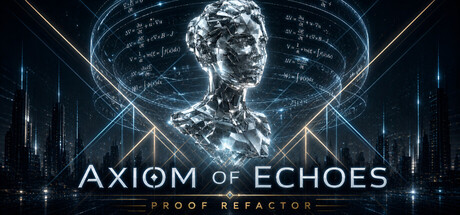
Axiom of Echoes uses generative AI for part of its assets. The store and library artwork (capsule, header, and library images) was created with AI image-generation tools and then curated and edited by hand.
Portions of the soundtrack, sound effects, and voice narration were produced with AI audio tools. All AI-assisted content is reviewed by a human before it ships. The gameplay itself — the 3D voxel puzzles, their target shapes and solutions — is generated procedurally from mathematical formulas, not by AI.
Generative AI tools were used during development to assist in the creation of some pre-generated visual assets, character voices, translations, and promotional materials. All AI-assisted content was reviewed, edited, and curated by the developer. The game does not generate AI content in real time during gameplay.
Generative AI tools were used to help create some of the 2D store and marketing graphics (e.g. store capsule images). These assets were reviewed and finalized by the developer, who holds the rights to use them. No generative AI is used for content inside the game, and no AI-generated content is produced live during gameplay.
We use generative AI to help create this game. It's part of what lets a small team build a game like this. We believe in being transparent about the tools we use, but they're only tools. Every part of this game is reviewed, refined, and curated by our team to meet our creative vision and quality standards, and we hope you'll enjoy the game for the experience it delivers.
The creative direction and design of this game are the work of the developer. All code, copywriting, artwork, background images, and non-Chinese translations were AI-assisted.
Utilizing artificial intelligence, we enhanced vintage photographs and photographs of the development team to align with the game’s aesthetic for paintings in game.
Penko Vox: Japanese uses local generative AI to power its immersive language learning experience. An integrated Large Language Model (LLM) acts as a native Japanese tutor, generating real-time dialogue based on user input, while a Neural Text-to-Speech (TTS) engine synthesizes high-fidelity Japanese audio for listening practice.
We use generative AI to help create this game. It's part of what lets a small team build a game like this. We believe in being transparent about the tools we use, but they're only tools. Every part of this game is reviewed, refined, and curated by our team to meet our creative vision and quality standards, and we hope you'll enjoy the game for the experience it delivers.
A small number of texture assets use generative AI as a starting point and were manually edited for use in-game. Most visual assets are original, licensed, purchased, or used with creator permission.
AI has been used to generate some graphics, music, and translations.
As the story of this game may suggest, I understand (and even share) most of the criticisms regarding AI, but it is also a tool that has enabled small creators like myself to achieve bigger things that would have been difficult without it.
In this game, questions and answers (yes/no) are sent to Amazon Bedrock to generate in-game text. Personal information like your name is not sent. Progress data is saved on your device.
Solvizz was designed, written, and hand-crafted by a small team, but generative AI played a supporting role in parts of production. Specifically, some placeholder art (achievement icons, region glyph references) and placeholder audio (background music tracks and sound effects) were generated with AI tooling to prototype the game's mood before final assets. AI was also used as a coding assistant during development. All puzzle design, game mechanics, story, level content, and code decisions were authored and reviewed by humans. No player-submitted data is sent to any AI system at runtime — the game is fully offline.
(This text was also generated with the help of AI)
Some of this game's images and artwork, its background music, and parts of its translated text were created with the help of generative AI tools. All AI-assisted content was reviewed by the developer before being included. The Sudoku puzzles themselves are generated by traditional (non-AI) algorithms, and no content is generated by AI while you play.
This game includes live-generated AI features that run locally on the player's computer and do not rely on external AI services.
The game uses AI to:
- interpret the player's spoken voice commands in real time to support gameplay interactions;
- generate voice audio for in-game pilot communications in real time.
The AI systems are used exclusively for these gameplay functions. They do not generate user-visible images, text, or other open-ended content.
The game is designed so that AI-generated output is limited to its intended gameplay purpose and cannot be used to create illegal, infringing, or otherwise prohibited content.
The development team used generative AI tools only during the to create asset icons for Steam Achievements and to generate Voice-Over assets for localization.
Some visual assets and artwork used in this game were created or assisted with generative AI tools. All generated content was reviewed, edited, and integrated into the game by the developer.
Some pre-rendered 2D artwork, icon, and UI/store visual assets were created or assisted with generative AI during development. The game does not generate AI content during gameplay and does not connect to an external AI service.
Some of the content in AquaDucked! was created with the help of generative AI tools:
- Some background music was created using AI music-generation tools.
- The blurred background images behind each theme were created or refined with AI tools.
- Portions of the store page and marketing text were drafted with AI assistance.
The core game art — the ducks, tools, and objects you play with — is either original, hand-painted watercolor, or photo-generated, not AI-generated.
All AI-generated content is pre-generated during development. AquaDucked! does not generate any content live during gameplay and does not connect to any external AI services while you play. We've made commercially reasonable efforts to ensure this content is appropriate and does not infringe on the rights of others.
Parts of Word Puzzle Master were created with the help of generative AI tools,
then reviewed, edited and assembled by the developer:
• visual art — the ambient background images and the animated background loop
• audio — background music and sound effects
Generative AI is used only during development to produce these assets. The game
does NOT use any AI at runtime — there is no live AI generation while you play.
Puzzle word lists are hand-curated, and level layouts are produced by our own
deterministic algorithm (not AI).
I used generative AI tools (specifically Fooocus) to help paint and generate my static 2D game backgrounds and concept/icon art. I also utilized AI-collaboration platforms to assist with audio synthesis composition and programming codebase layouts. All generated assets were fully curated, conceptualized, and processed under my own direct creative control and creative direction before building.
This game uses AI-assisted tools during development to help draft and iterate pre-generated content such as puzzle stage layouts, UI text, store text, and implementation support.
All game content is reviewed, edited, and finalized by the developer before release. The game does not generate AI content during gameplay.
Some in-game visual assets and trivia/ranking question data were created with the assistance of generative AI tools. All AI-assisted content was reviewed, edited, and curated by the developer before being included in the game.
This game was developed with the assistance of various AI tools. All AI-assisted content was reviewed, edited, and implemented by the developer before being included in the final game.
Generative AI tools were used as development assistance for code drafting/debugging and for creating some visual source materials. All AI-assisted code and visuals included in the game were reviewed, modified, edited, and integrated by the development team.
Axiom of Echoes uses generative AI for part of its assets. The store and library artwork (capsule, header, and library images) was created with AI image-generation tools and then curated and edited by hand.
Portions of the soundtrack, sound effects, and voice narration were produced with AI audio tools. All AI-assisted content is reviewed by a human before it ships. The gameplay itself — the 3D voxel puzzles, their target shapes and solutions — is generated procedurally from mathematical formulas, not by AI.