Public Steam disclosure research25,376 disclosures tracked
Where do games disclose AI use?
Search developers’ Steam disclosures, compare classified AI use across
games, and follow recorded changes.
This index adds cross-game classifications and statistics to
statements published on individual store pages.
Groups reflect automatic analysis of public disclosures; mature records are excluded. These counts do not measure AI use across all of Steam.
Missing or unclear statements cannot establish whether a game uses AI.
The game uses real-time AI models to simulate immersive conversations with the non-player characters you meet in-game. Each character has a hand-written backstory that impacts how the conversation goes. This technology complements the manual worldbuilding and lore writing, and I would love your feedback on how well you think this works!
Character voices are produced by VOIVEVOX software and licensed by the voice owners.
Songs are sung by AI virtual singers of ACE software, and have obtained relevant commercial licenses.
The English text of this game is translated by AI Translator, and the translated text is from the game script.
We reaffirm our respect for human artists and their work. Due to current technical limitations, we employed AI image generator during development and apologize to players for any concerns this may cause.
AI tools such as Doubao, Gemini, and Stable Diffusion were used solely as references to visualize concepts and inform the creation of game content. All in-game AI assets have been substantially transformed — through redesign, editing, fusion, animation, recoloring, and pixelation in professional digital art tools — to produce original assets consistent with the game’s visual style.
We do not use or reproduce AI-generated content created by third parties. All applicable copyright and licensing terms were reviewed to ensure lawful commercial use.
The poetry in Verses of Enchantment is generated using a custom AI model trained on curated public domain texts.
All other content (art, sound, dialogues, animation, ...) is created by humans and is attributed to them.
AI is used for some images and promotional materials. It also serves as a working basis for image editing. It is used anecdotally.
It has been used for some secondary elements of the game to populate the universe, such as decorative objects.
AI is not used exclusively. As a solo dev, I also work with freelance artists for main content and assets on the Unity Store.
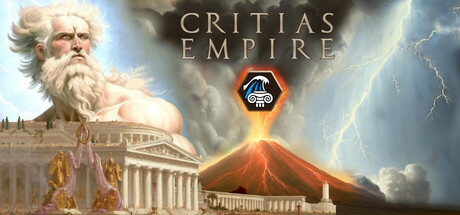
Critias Empire uses images of public domain 18th and 19th century classical oil on canvas paintings, but since there are only a limited number of these, AI generated images are used where no appropriate historical public domain image can be found. This includes backgrounds, illustrations for buildings, features, disasters, maps and characters, plus live ops, events and marketing material.
The images are generated using paid subscription to Midjourney. Crystalline Green Ltd. owns the copyright on the generated images.
We are a small independent studio with limited budget, but we appreciate not everyone is comfortable with use of AI generated images in commercial games, so we understand if you would prefer not to play our game. Feel free to contact us if you have further questions or concerns.
Some visual assets, such as store capsule images and in-game card illustrations, were created with the assistance of generative AI tools. All gameplay and code are original.
The background of the games Steam Shop main capsule image is AI generated.
The game uses AI-generated voices for all characters where no voice actors are available yet. You can disable AI voices in the audio settings.
Generative AI was used to create six placeholder images and one piece of music used in the game. These assets are temporary and are intended to be replaced with non-AL-created assets.
During the development phase, some placeholder voices and vocal prototypes are generated using AI tools. These are used solely for iteration, testing, and internal production workflows.
For the final release, all characters will be voiced by professional voice actors.
Some visual elements in this game were initially generated with the help of AI tools. All such material has been extensively refined, altered, and expanded by a human creator to form the final in-game content.
I will not directly provide any AI services, but plan to only retain the interface for external AI to take over the game logic in the game. Users can use their own trained language models, and they can only solve problems such as computing power by themselves. I plan to not allow users to enter text in the game, so that users have no chance of inducing language model generation. However, some overfitting language models will ignore the prompts and output nfsw. At the same time, I used two methods: 1. Limit the output length and suppress it from the root. 2. Keyword check to see if nfsw content exists. If someone tries to report it, he should report it to the person who gave him the language model. If the user enables AI, I will change the name of the enabled AI service into a game watermark to prove that it is the user's own problem.
Regarding AI usage: The game employs AI in only two areas
1. Character voice lines (disabled by default)
The ultra-large script (800k words) makes authentic voice acting financially unaffordable for our small studio.
2. "Seek Answers" function in the game lobby’s Sosoth (NPC) interaction interface
For entertainment purposes, we used AI chat.
What we can guarantee: Beyond these, translation, scripts, design, art, animation, and other game components absolutely did not use AI.
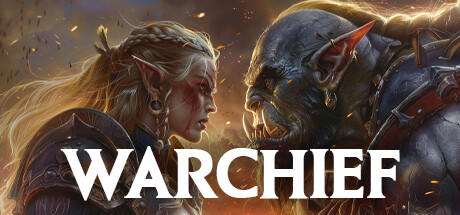
Warchief uses AI to generate UI unit images, enhancing the visual experience with dynamically created artwork. Each unit's appearance is crafted to fit seamlessly within the game's aesthetic, ensuring a fresh look.
The game uses real-time AI models to simulate immersive conversations with the non-player characters you meet in-game. Each character has a hand-written backstory that impacts how the conversation goes. This technology complements the manual worldbuilding and lore writing, and I would love your feedback on how well you think this works!
Character voices are produced by VOIVEVOX software and licensed by the voice owners.
Songs are sung by AI virtual singers of ACE software, and have obtained relevant commercial licenses.
The English text of this game is translated by AI Translator, and the translated text is from the game script.
We reaffirm our respect for human artists and their work. Due to current technical limitations, we employed AI image generator during development and apologize to players for any concerns this may cause.
AI tools such as Doubao, Gemini, and Stable Diffusion were used solely as references to visualize concepts and inform the creation of game content. All in-game AI assets have been substantially transformed — through redesign, editing, fusion, animation, recoloring, and pixelation in professional digital art tools — to produce original assets consistent with the game’s visual style.
We do not use or reproduce AI-generated content created by third parties. All applicable copyright and licensing terms were reviewed to ensure lawful commercial use.
The poetry in Verses of Enchantment is generated using a custom AI model trained on curated public domain texts.
All other content (art, sound, dialogues, animation, ...) is created by humans and is attributed to them.
AI is used for some images and promotional materials. It also serves as a working basis for image editing. It is used anecdotally.
It has been used for some secondary elements of the game to populate the universe, such as decorative objects.
AI is not used exclusively. As a solo dev, I also work with freelance artists for main content and assets on the Unity Store.
Critias Empire uses images of public domain 18th and 19th century classical oil on canvas paintings, but since there are only a limited number of these, AI generated images are used where no appropriate historical public domain image can be found. This includes backgrounds, illustrations for buildings, features, disasters, maps and characters, plus live ops, events and marketing material.
The images are generated using paid subscription to Midjourney. Crystalline Green Ltd. owns the copyright on the generated images.
We are a small independent studio with limited budget, but we appreciate not everyone is comfortable with use of AI generated images in commercial games, so we understand if you would prefer not to play our game. Feel free to contact us if you have further questions or concerns.
Some visual assets, such as store capsule images and in-game card illustrations, were created with the assistance of generative AI tools. All gameplay and code are original.
The background of the games Steam Shop main capsule image is AI generated.
The game uses AI-generated voices for all characters where no voice actors are available yet. You can disable AI voices in the audio settings.
Generative AI was used to create six placeholder images and one piece of music used in the game. These assets are temporary and are intended to be replaced with non-AL-created assets.
During the development phase, some placeholder voices and vocal prototypes are generated using AI tools. These are used solely for iteration, testing, and internal production workflows.
For the final release, all characters will be voiced by professional voice actors.
Some visual elements in this game were initially generated with the help of AI tools. All such material has been extensively refined, altered, and expanded by a human creator to form the final in-game content.
I will not directly provide any AI services, but plan to only retain the interface for external AI to take over the game logic in the game. Users can use their own trained language models, and they can only solve problems such as computing power by themselves. I plan to not allow users to enter text in the game, so that users have no chance of inducing language model generation. However, some overfitting language models will ignore the prompts and output nfsw. At the same time, I used two methods: 1. Limit the output length and suppress it from the root. 2. Keyword check to see if nfsw content exists. If someone tries to report it, he should report it to the person who gave him the language model. If the user enables AI, I will change the name of the enabled AI service into a game watermark to prove that it is the user's own problem.
Regarding AI usage: The game employs AI in only two areas
1. Character voice lines (disabled by default)
The ultra-large script (800k words) makes authentic voice acting financially unaffordable for our small studio.
2. "Seek Answers" function in the game lobby’s Sosoth (NPC) interaction interface
For entertainment purposes, we used AI chat.
What we can guarantee: Beyond these, translation, scripts, design, art, animation, and other game components absolutely did not use AI.
Warchief uses AI to generate UI unit images, enhancing the visual experience with dynamically created artwork. Each unit's appearance is crafted to fit seamlessly within the game's aesthetic, ensuring a fresh look.