Public Steam disclosure research25,380 disclosures tracked
Where do games disclose AI use?
Search developers’ Steam disclosures, compare classified AI use across
games, and follow recorded changes.
This index adds cross-game classifications and statistics to
statements published on individual store pages.
Groups reflect automatic analysis of public disclosures; mature records are excluded. These counts do not measure AI use across all of Steam.
Missing or unclear statements cannot establish whether a game uses AI.
SnapQuest uses live-generated AI as part of its core photo-scanning mechanic. When a player captures or selects a photo, a vision-language model analyzes the image and generates structured card content, including a card name, description, category, and gameplay attributes. The card artwork uses the player's submitted photo rather than an AI-generated replacement image. Generated results vary depending on the submitted photo.
Some visual assets, promotional artwork, and portions of the localization were created or assisted using generative AI during development. All AI-assisted content was reviewed, edited, and integrated by the development team. The game does not generate AI content during gameplay.
Some visual assets, promotional artwork, and portions of the localization were created or assisted using generative AI during development. All AI-assisted content was reviewed, edited, and integrated by the development team. The game does not generate AI content during gameplay.
This game's 3D environment was created with the help of AI-based 3D scene generation tools. Some marketing materials (trailer footage) were also created using AI image and video generation tools. No AI-generated content is created live during gameplay — all AI-assisted content was produced during development and is fixed at release.
Pre-generated: Store page capsule art and marketing images were created with AI assistance. In-game text (unit descriptions, UI copy) and the store description were written with AI assistance. All in-game visuals are drawn procedurally at runtime by the game's own code. No AI model runs in the game and no content is generated during play. All AI-assisted output was reviewed and edited by the developer and contains no third-party or infringing material.
This game uses generative AI in limited, non-gameplay-critical areas:
- AI-assisted code refactoring and performance optimization during development
- AI-assisted translation polishing for multi-language support
- UI layout refinement suggested by AI tools during the design process
All core gameplay logic, the unique drawing-and-deduction design, and all original game artwork were created, reviewed and refined by human developers.
Generative AI tools were used during development to assist with portions of the game’s code. All AI-assisted code was reviewed, edited, and tested by the developer. The game does not generate AI content during gameplay and does not connect to external AI services.
Localization of the textual content for non-english languages is mainly produced as translations from english using generative artificial intelligence. LLM's have been used as a help also in writing and reviewing of program code, development helper tools, infrastructure setup, security checks, test maintenance and requirements management.
Some of the user interfaces were generated using AI; the reason for this is that I am not a graphic designer myself and cannot afford to hire a service provider to create them.
Some 2D art assets in this game — such as menu UI textures (buttons and panels) and background images — were created with the help of generative AI image tools during development. All AI-generated assets were reviewed and edited by the developer before being included in the game. No AI-generated content is created live during gameplay.
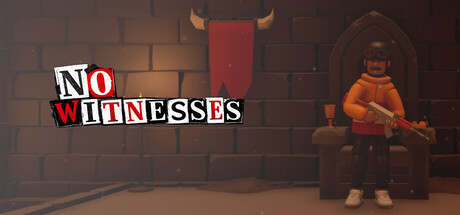
No Witnesses is developed by a two-man team, therefore generative AI has been used to assist in the creation of marketing assets and other player facing interfaces. All generated content is reviewed and perfected by a human before use.No Witnesses utilises third-party assets, of which we cannot attest to the creation of.
Generative AI tools were used to assist in the creation of selected promotional and store artwork. During gameplay, players can also optionally use generative AI to create custom word sets and hints.
Generative AI was used to create artwork for the title screen, lobby background, and some UI decorations. The generated images were selected, edited, and sliced by the development team before being integrated into the game. Generative AI was also used to assist with drafting and editing some mini-game prompts. The game does not use generative AI at runtime and does not connect to external AI services during play.
Generative AI tools were used during development to assist with the game's custom C# code, gameplay systems, UI structure and layout, in-game written content, official word list, localization in nine languages, and draft store-page copy.
All AI-assisted outputs were reviewed, edited, tested, and integrated by the developer. Visual art, icons, fonts, music, and sound effects are separately licensed third-party assets.
No generative AI is used during gameplay, and the game does not connect to external AI services.
World of ClaudeCraft is, unapologetically, a game built with AI — the name is a hint. We used AI in two ways, and we want to be clear about both.
During development, the game's code was written with an AI coding assistant, and we used AI generation tools to create some of the assets that ship in the game as ordinary, fixed files:
Sound: Most in-game sound effects and all spoken NPC voice lines were generated with ElevenLabs' AI audio and text-to-speech models. The written dialogue itself is authored by us; AI produced the spoken audio.
3D models: A small number of creature models (the "Drowned Litany") were generated with Meshy AI (text-to-3D).
Everything else is either created by the game's own code (the world, towns, terrain, water, weather, and the music soundtrack are all generated procedurally at runtime) or is licensed third-party art — CC0 model, texture, and HDRI packs plus a purchased commercial icon set. That content is not AI-generated.
Critically: no generative AI runs while you play. Every AI-made asset was generated once, offline, during development and baked into the game as a static file. The running game makes no AI or LLM calls, and none of your gameplay or personal data is ever sent to an AI system. The simulation is fully deterministic — the same inputs always produce the same result.
We’re currently using AI-generated images for our Steam page as temporary placeholders. We plan to replace them with original artwork as soon as possible.
Generative AI tools were used during development to assist with the creation of some 3D assets, music, and draft visual materials. Character concepts were based on human-made sketches, and AI was used only for early draft exploration; the final in-game characters were created by humans. All AI-assisted materials were reviewed, edited, and integrated into the game by the developer. AI is not used to generate content during gameplay.
AI tools were used to assist with pre-created text content: the localization of the game's UI text into 8 languages (reviewed by the developer) and the store page texts. All artwork, 3D models, animations and audio are human-made licensed assets; no AI-generated imagery or audio ships with the game. The game does not generate any AI content at runtime.
Some 2D art assets are created with AI-assisted pixel-art tools. Some sound effects and music are generated with AI audio tools. All AI-generated assets are reviewed, curated, and edited by the developer. No AI-generated content depicts real people, and all assets are used in compliance with the respective tools' licenses.
AI was used to generate background images, music, and audio.
Converting player drawings into AI renderings is optional and requires the host to have a Gemini API key.
Generative AI tools are used to create some background images and marketing materials, as well as to assist with the animation production process. The final assets are adjusted by the development team.
This game uses generative AI in the following ways:
- Some of the in-game and store page artwork was created using AI image generation tools.
- Some localization (translations) was assisted by AI tools.
All AI-generated content is reviewed and edited by the developer before release.
Background music uses royalty-free tracks and is not AI-generated.
Parts of the game's code were written with the assistance of AI coding tools.
We've harnessed the power of Generative AI technology to create several of our game's unique theme background artworks, enhancing your gaming experience with visually stunning designs.
This game uses VOICEVOX for character voice synthesis (taunt lines, victory lines, etc.).
All voice lines were generated during development and are pre-recorded into the game.
Nothing is generated live during gameplay, and the game does not connect to any external AI service at runtime.
AI (Claude) was also used to help translate this store page into English.
AI was used to assist with grammar corrections for in-game text, which were then carefully reviewed and refined by hand.
We use AI solely as a supporting tool. Every aspect of the game is guided by human creativity, and our development process remains firmly centered on manual work.
Some temporary horror sound effects and vocal effects in this game were created using generative AI tools during development. These assets have been reviewed and integrated by the developer. As development continues and resources become available, these temporary AI-generated audio assets may be replaced with recordings created by professional voice actors and sound engineers to further enhance the game's atmosphere and realism.
Some of Blobkey's visual assets were created with the help of generative AI, including character and face art, arena background imagery, menu background art, and imagery used in the trailer. All AI-generated content was produced during development and is baked into the game. No AI content is generated live during gameplay.
This product uses generative AI only for some visual content, including in-game sprite images and promotional/store artwork such as capsule images, key art, logos, and character/instrument illustrations. AI is not used to generate live gameplay content in real time.
AI-assisted tools were used during development to help create and refine some visual assets, sound effects, and music used in the game. All AI-assisted content was reviewed, selected, and edited by the development team before being included in the final game.
SnapQuest uses live-generated AI as part of its core photo-scanning mechanic. When a player captures or selects a photo, a vision-language model analyzes the image and generates structured card content, including a card name, description, category, and gameplay attributes. The card artwork uses the player's submitted photo rather than an AI-generated replacement image. Generated results vary depending on the submitted photo.
Some visual assets, promotional artwork, and portions of the localization were created or assisted using generative AI during development. All AI-assisted content was reviewed, edited, and integrated by the development team. The game does not generate AI content during gameplay.
Some visual assets, promotional artwork, and portions of the localization were created or assisted using generative AI during development. All AI-assisted content was reviewed, edited, and integrated by the development team. The game does not generate AI content during gameplay.
This game's 3D environment was created with the help of AI-based 3D scene generation tools. Some marketing materials (trailer footage) were also created using AI image and video generation tools. No AI-generated content is created live during gameplay — all AI-assisted content was produced during development and is fixed at release.
Pre-generated: Store page capsule art and marketing images were created with AI assistance. In-game text (unit descriptions, UI copy) and the store description were written with AI assistance. All in-game visuals are drawn procedurally at runtime by the game's own code. No AI model runs in the game and no content is generated during play. All AI-assisted output was reviewed and edited by the developer and contains no third-party or infringing material.
This game uses generative AI in limited, non-gameplay-critical areas:
- AI-assisted code refactoring and performance optimization during development
- AI-assisted translation polishing for multi-language support
- UI layout refinement suggested by AI tools during the design process
All core gameplay logic, the unique drawing-and-deduction design, and all original game artwork were created, reviewed and refined by human developers.
Generative AI tools were used during development to assist with portions of the game’s code. All AI-assisted code was reviewed, edited, and tested by the developer. The game does not generate AI content during gameplay and does not connect to external AI services.
Localization of the textual content for non-english languages is mainly produced as translations from english using generative artificial intelligence. LLM's have been used as a help also in writing and reviewing of program code, development helper tools, infrastructure setup, security checks, test maintenance and requirements management.
Some of the user interfaces were generated using AI; the reason for this is that I am not a graphic designer myself and cannot afford to hire a service provider to create them.
Some 2D art assets in this game — such as menu UI textures (buttons and panels) and background images — were created with the help of generative AI image tools during development. All AI-generated assets were reviewed and edited by the developer before being included in the game. No AI-generated content is created live during gameplay.
No Witnesses is developed by a two-man team, therefore generative AI has been used to assist in the creation of marketing assets and other player facing interfaces. All generated content is reviewed and perfected by a human before use.No Witnesses utilises third-party assets, of which we cannot attest to the creation of.
Generative AI tools were used to assist in the creation of selected promotional and store artwork. During gameplay, players can also optionally use generative AI to create custom word sets and hints.
Generative AI was used to create artwork for the title screen, lobby background, and some UI decorations. The generated images were selected, edited, and sliced by the development team before being integrated into the game. Generative AI was also used to assist with drafting and editing some mini-game prompts. The game does not use generative AI at runtime and does not connect to external AI services during play.
Generative AI tools were used during development to assist with the game's custom C# code, gameplay systems, UI structure and layout, in-game written content, official word list, localization in nine languages, and draft store-page copy.
All AI-assisted outputs were reviewed, edited, tested, and integrated by the developer. Visual art, icons, fonts, music, and sound effects are separately licensed third-party assets.
No generative AI is used during gameplay, and the game does not connect to external AI services.
World of ClaudeCraft is, unapologetically, a game built with AI — the name is a hint. We used AI in two ways, and we want to be clear about both.
During development, the game's code was written with an AI coding assistant, and we used AI generation tools to create some of the assets that ship in the game as ordinary, fixed files:
Sound: Most in-game sound effects and all spoken NPC voice lines were generated with ElevenLabs' AI audio and text-to-speech models. The written dialogue itself is authored by us; AI produced the spoken audio.
3D models: A small number of creature models (the "Drowned Litany") were generated with Meshy AI (text-to-3D).
Everything else is either created by the game's own code (the world, towns, terrain, water, weather, and the music soundtrack are all generated procedurally at runtime) or is licensed third-party art — CC0 model, texture, and HDRI packs plus a purchased commercial icon set. That content is not AI-generated.
Critically: no generative AI runs while you play. Every AI-made asset was generated once, offline, during development and baked into the game as a static file. The running game makes no AI or LLM calls, and none of your gameplay or personal data is ever sent to an AI system. The simulation is fully deterministic — the same inputs always produce the same result.
We’re currently using AI-generated images for our Steam page as temporary placeholders. We plan to replace them with original artwork as soon as possible.
Generative AI tools were used during development to assist with the creation of some 3D assets, music, and draft visual materials. Character concepts were based on human-made sketches, and AI was used only for early draft exploration; the final in-game characters were created by humans. All AI-assisted materials were reviewed, edited, and integrated into the game by the developer. AI is not used to generate content during gameplay.
AI tools were used to assist with pre-created text content: the localization of the game's UI text into 8 languages (reviewed by the developer) and the store page texts. All artwork, 3D models, animations and audio are human-made licensed assets; no AI-generated imagery or audio ships with the game. The game does not generate any AI content at runtime.
Some 2D art assets are created with AI-assisted pixel-art tools. Some sound effects and music are generated with AI audio tools. All AI-generated assets are reviewed, curated, and edited by the developer. No AI-generated content depicts real people, and all assets are used in compliance with the respective tools' licenses.
AI was used to generate background images, music, and audio.
Converting player drawings into AI renderings is optional and requires the host to have a Gemini API key.
Generative AI tools are used to create some background images and marketing materials, as well as to assist with the animation production process. The final assets are adjusted by the development team.
This game uses generative AI in the following ways:
- Some of the in-game and store page artwork was created using AI image generation tools.
- Some localization (translations) was assisted by AI tools.
All AI-generated content is reviewed and edited by the developer before release.
Background music uses royalty-free tracks and is not AI-generated.
Parts of the game's code were written with the assistance of AI coding tools.
We've harnessed the power of Generative AI technology to create several of our game's unique theme background artworks, enhancing your gaming experience with visually stunning designs.
This game uses VOICEVOX for character voice synthesis (taunt lines, victory lines, etc.).
All voice lines were generated during development and are pre-recorded into the game.
Nothing is generated live during gameplay, and the game does not connect to any external AI service at runtime.
AI (Claude) was also used to help translate this store page into English.
AI was used to assist with grammar corrections for in-game text, which were then carefully reviewed and refined by hand.
We use AI solely as a supporting tool. Every aspect of the game is guided by human creativity, and our development process remains firmly centered on manual work.
Some temporary horror sound effects and vocal effects in this game were created using generative AI tools during development. These assets have been reviewed and integrated by the developer. As development continues and resources become available, these temporary AI-generated audio assets may be replaced with recordings created by professional voice actors and sound engineers to further enhance the game's atmosphere and realism.
Some of Blobkey's visual assets were created with the help of generative AI, including character and face art, arena background imagery, menu background art, and imagery used in the trailer. All AI-generated content was produced during development and is baked into the game. No AI content is generated live during gameplay.
This product uses generative AI only for some visual content, including in-game sprite images and promotional/store artwork such as capsule images, key art, logos, and character/instrument illustrations. AI is not used to generate live gameplay content in real time.
AI-assisted tools were used during development to help create and refine some visual assets, sound effects, and music used in the game. All AI-assisted content was reviewed, selected, and edited by the development team before being included in the final game.