Public Steam disclosure research25,380 disclosures tracked
Where do games disclose AI use?
Search developers’ Steam disclosures, compare classified AI use across
games, and follow recorded changes.
This index adds cross-game classifications and statistics to
statements published on individual store pages.
Groups reflect automatic analysis of public disclosures; mature records are excluded. These counts do not measure AI use across all of Steam.
Missing or unclear statements cannot establish whether a game uses AI.
Pre-generated content: part of the game's art (backgrounds, character and enemy sprites, portraits, props, key art and capsule images) was created with generative image tools (Google Gemini, PixelLab) and then reviewed, cut, edited and assembled by hand by the developer. Some sound effects were produced with AI audio tools (ElevenLabs). Parts of the source code were written with the assistance of an AI coding assistant (Anthropic Claude) under the developer's direction and review. The story, game design, world, dialogue and puzzles are the developer's own work.
Live-generated content: none. The game does not generate any content with AI while it is running.
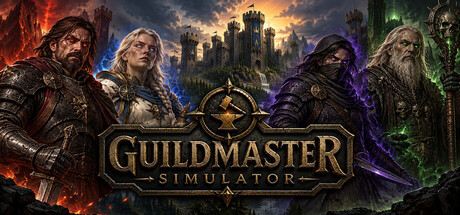
Guildmaster Simulator is developed independently, and I use generative AI as one of the tools that helps me bring the game to life. As I am not a professional graphic designer or illustrator, AI-assisted tools have helped me create selected visual assets, character artwork, interface elements and promotional imagery that I can then review, refine and adapt to fit the game’s established style.
Generative AI has also assisted with portions of the game’s written content, including some quest, event and narrative text. All AI-assisted content is reviewed, edited and shaped by me before being included in the game to ensure it fits the world, characters, gameplay systems and overall creative direction of Guildmaster Simulator.
No generative AI is used during gameplay. All AI-assisted content is created during development and is fixed within the shipped game.
Generative AI was used during development for visual assets, music, and small portions of text, as well as the store artwork. These are pre-generated assets included with the game. No content is generated by AI during play, and the game does not connect to an AI service.
Deepwood Valley uses a generative AI language model to power conversations with the
characters who live in the valley. The model runs entirely on your own computer — no
account is required, and nothing you type is sent to us or to any third party.
Every line of AI-generated dialogue passes through a deterministic content filter
before it is displayed. This filter is compiled into the game, runs on all generated
speech without exception, and cannot be turned off by the player or by mods.
Character personalities, story, world design, and all art and audio are authored by
our team.
Generative AI tools were used during development to assist with portions of the game’s source code, narrative, quest text, NPC dialogue, interface copy, and promotional artwork. All AI-assisted content was reviewed and incorporated by the developer before release. The game does not generate content using AI while it is running.
EVER BELOW was created with the assistance of generative AI across parts of its content creation and development process, including visual assets and marketing materials. All AI-assisted content was manually reviewed, selected, edited where necessary, and all final creative and development decisions were made by the developer.
This game utilizes generative AI technologies in the following areas: [Pre-generated Content] Part of BGM: AI-generated audio is temporarily used as placeholder assets during development (to be progressively replaced in future updates). [Real-time Generation during Gameplay] In-Game Text: Dynamic generation of dialogues and narrative text tailored to in-game situations. Character Voice: Real-time speech synthesis for character voices based on generated text. *All real-time generation processes run entirely locally and securely on the player's machine, with no data transmitted to external servers. Furthermore, there is no feature allowing players to freely input custom text or prompts.
Generative AI was used during development for some visual and audio assets.
During gameplay, narrative text and character dialogue are generated in real time by a third-party AI model selected and configured by the player.
AI was used only for localization and for generating some assets outside the game. The game itself does not use or integrate AI. Any AI use described in the game refers to players using their own external tools.
I am a solo developer leveraging AI to improve my efficiency while moonlighting this project. Hence, many temporary AI-generated assets make their way into the game but I hope to replace over 90% of those with handcrafted assets over time.
All core assets originate from the creativity of our human artists. The use of AI tools is strictly limited to assisting and refining the environmental background designs.
I used AI to help draft written text across the game: NPC dialogue and names, skill and talent descriptions, item and weapon flavor text, quest and lore text, and location names. I design the overall story beats and character interactions myself; AI helps draft the individual lines, especially useful since English isn't my first language. Everything shipped was reviewed by me, with many lines kept close to their original draft and others rewritten to better fit the game. All artwork, including the key art, logo, and icons, was made entirely by hand by a human illustrator. The world map was assembled by me using licensed 2D art assets.
Some of the in-game background images and the store Capsule image art assets in this game were created using pre-rendered generative AI tools. These assets were then reviewed, refined, and integrated by our development team to fit the game's artistic vision
Some of the 2D art in Cidle Online was created with the help of generative AI
image tools. This includes parts of the sprite work for buildings, points of
interest and item icons, as well as some store page artwork. Every generated
image was reviewed, edited and adjusted by hand before it went into the game,
and assets are checked so they do not reproduce existing works.
All of this art is produced during development. Nothing is generated by AI
while you play, and the game does not send any of your data to an AI service.
Generative AI tools assisted in creating pixel-art visuals, interface and narrative text, and Steam marketing artwork. This material is prepared in advance and integrated into the game and store page. The game does not generate content while running.
Some of the game's artwork — item and skill icons, character portraits, and the store capsule illustrations — was created with the help of generative AI tools, then reviewed, selected, and edited by hand. Localization drafts were machine-translated and then reviewed and corrected. No AI content is generated while you play: all content ships with the game.
Generative AI tools were used during development to create and revise pre-generated illustrations, narrative text, localization and promotional artwork. Content is prepared before play; the game does not generate AI content at runtime or connect to an external AI service during play.
Some art in Bonefall was made with generative AI tools and then cut, edited and fitted into the game by hand: the opening cinematic, the title-screen key art, the store and marketing art, and parts of the environment (the graveyard floor and scenery, the boss pillars). The Russian, Korean and Simplified Chinese translations were drafted with AI assistance. The heroes and monsters are human-made open-licensed pixel art (the Liberated Pixel Cup collection, credited in the game), and the sound effects are CC0 recordings. Nothing is generated while you play.
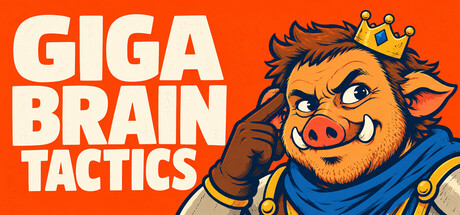
Generative AI tools were used during the development of GIGA BRAIN TACTICS to assist with the creation of certain visual and audio assets, as well as during the game development process.
All AI-assisted content is reviewed, refined, and integrated by the developers to ensure consistency with the game's visual style and quality standards.
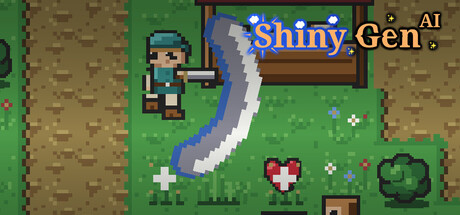
Shiny Gen ships over thirty original games and scenes. Their art, animation frames, music and sound effects were produced with the same AI generation tools the product offers to players, using the third party services listed in our Live-Generated answer. All of it was directed, reviewed and assembled by us before it shipped, and the game code itself is authored and hand edited by our team. No pre generated content in the shipping build is produced from a player's input, and none of it is generated at runtime from our side.
Shiny Gen is a game creation tool, so live generation is the product rather than a feature of it. When a player asks for something, we call third party AI services to generate game code, images, animation frames, music, sound effects and 3D models from the text they type. Generation always happens at the player's explicit request, never in the background, and always requires a free Shiny Gen account and an internet connection.
Every request goes to an established commercial AI provider: Anthropic, OpenAI, Google, OpenRouter, Cloudflare Workers AI, Runware, Retro Diffusion, Replicate and ElevenLabs. Each request is governed by that provider's usage policy and runs under the provider's own built-in safety systems at their default settings. We never disable, weaken or opt out of a provider's safety system anywhere in our product. OpenAI image generation runs under OpenAI's default moderation, and Google image generation carries Google's SynthID provenance watermarking.
Guardrails on our side:
- Our Community Rules, which are binding under our Terms of Service and published on our website, set out what may not be generated or shared. They prohibit, among other things, any sexual content involving a minor and sexual imagery of a real person without their consent, and they treat a prompt asking for prohibited content as a breach whether or not the model produces it.
- Generation requires a signed in Shiny Gen account. There is no anonymous generation, so every request is attributable to an account.
- Generation is rate limited per account and per address, and it is metered against a paid credit balance, so volume abuse is bounded rather than free.
- The prompt and the resulting asset are retained against the account that made them, which is what lets us act on a report.
- Anyone can report content to support@shinygen.ai. A person on our team reviews each report and can remove the content and close the account responsible.
- The in app feed cannot receive player made content. It is served from our own catalogue and is enforced in code: the publish endpoint refuses any caller that is not our own account. Nothing a player generates can appear in another player's feed.
- Multiplayer contains no free text channel of any kind. Communication is a closed set of eight fixed emotes, so there is no user to user text surface to moderate.
- Player made games are never separate programs. They run as interpreted scripts inside our own sandbox, which is an allowlist: it has no filesystem, network, process or operating system access, and no reflection or dynamic dispatch. A generated game cannot execute native code, start a process, reach the network or read the player's files.
We do not permit and do not support the generation of Adult Only sexual content, and we will act on reports received through Steam's in game reporting system and at support@shinygen.ai.
本作在开发过程中使用生成式 AI 辅助制作部分视觉素材,主要用于部分背景图像的生成、构图参考及初步素材制作。相关素材均经过制作组人工筛选、修改、修正或进一步加工后用于游戏。
游戏的主要剧本、角色设定、原创音乐、程序及核心美术设计均由制作组成员完成。游戏运行过程中不会调用生成式 AI,也不存在由玩家输入内容后实时生成文本、图像、音频或其他内容的功能。
No generative AI is used during live gameplay. During our development process we use generative AI for some algorithms, pixel art, some marketing content and where appropriate to improve code quality.
Some of the assets in this game were created using generative AI tools. Generated assets were reviewed by the developer and edited where necessary before use. The game itself does not use AI to generate content or code while it is running, and it does not connect to any external AI service.
While AI tools were used to assist with the creation of select assets for our game's store page, all featured assets are fully original designs developed by our internal team.
Portions of the game's 2D artwork were created with the assistance of generative AI image tools, then curated, edited, and integrated by the developer. Text localization into non-English languages was produced with AI translation assistance under developer review.
AI was used mainly for localization and for drafting written content, which the developer reviewed and edited.
No generative image, audio or video models were used. The game's sprites, item icons and zone backdrops are drawn procedurally by code. the sound effects and the trailer's audio bed are synthesised from waveform formulas.
There is no run-time AI in the shipped product - nothing is generated on the player's machine.
We used Generative AI tools solely to assist in creating capsule art and marketing assets for the store page. No AI content is generated live during gameplay.
Lost Gaijin uses generative AI during development and gameplay. Selected pre-generated visual and audio assets used in the game and its Steam materials were created or edited with generative AI tools and reviewed by the developer. During play, text-generating AI responds to player input and game state to create dynamic story content and personalized Japanese-language coaching. Live-generated text is provided through OpenRouter and may vary between playthroughs.
During the development process, we may use procedural- and AI-based tools to assist with content creation. In all such cases, the final product reflects the creativity and expression of our own development team.
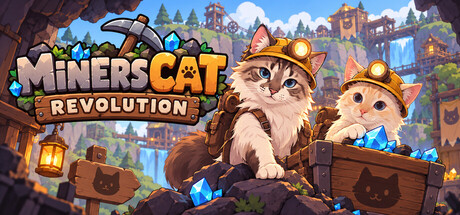
The pixel art in Miners Cat Revolution: the cats, the icons and the store art was generated with AI and then edited and assembled by hand. The translations into the nine languages other than Spanish were AI-assisted and reviewed afterwards.
Everything else is human-made: the code, the game design, the balance and the original Spanish text are written by one person.
Nothing is generated while you play. All of it ships with the game, finished and fixed.
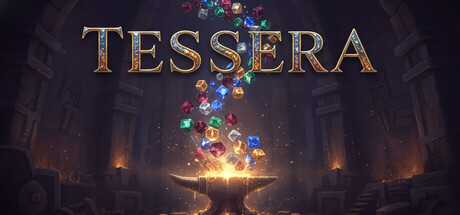
Some of Tessera's assets - including monster and character artwork, background art, gem and tile art, certain UI icons, and some audio - were created with the assistance of generative AI tools (Google Gemini) during development. These assets were reviewed, edited, curated, and integrated by the developer. Tessera does NOT generate any AI content live during gameplay; all AI-assisted content is pre-made and fixed in the build.
Pre-generated content: part of the game's art (backgrounds, character and enemy sprites, portraits, props, key art and capsule images) was created with generative image tools (Google Gemini, PixelLab) and then reviewed, cut, edited and assembled by hand by the developer. Some sound effects were produced with AI audio tools (ElevenLabs). Parts of the source code were written with the assistance of an AI coding assistant (Anthropic Claude) under the developer's direction and review. The story, game design, world, dialogue and puzzles are the developer's own work.
Live-generated content: none. The game does not generate any content with AI while it is running.
Guildmaster Simulator is developed independently, and I use generative AI as one of the tools that helps me bring the game to life. As I am not a professional graphic designer or illustrator, AI-assisted tools have helped me create selected visual assets, character artwork, interface elements and promotional imagery that I can then review, refine and adapt to fit the game’s established style.
Generative AI has also assisted with portions of the game’s written content, including some quest, event and narrative text. All AI-assisted content is reviewed, edited and shaped by me before being included in the game to ensure it fits the world, characters, gameplay systems and overall creative direction of Guildmaster Simulator.
No generative AI is used during gameplay. All AI-assisted content is created during development and is fixed within the shipped game.
Generative AI was used during development for visual assets, music, and small portions of text, as well as the store artwork. These are pre-generated assets included with the game. No content is generated by AI during play, and the game does not connect to an AI service.
Deepwood Valley uses a generative AI language model to power conversations with the
characters who live in the valley. The model runs entirely on your own computer — no
account is required, and nothing you type is sent to us or to any third party.
Every line of AI-generated dialogue passes through a deterministic content filter
before it is displayed. This filter is compiled into the game, runs on all generated
speech without exception, and cannot be turned off by the player or by mods.
Character personalities, story, world design, and all art and audio are authored by
our team.
Generative AI tools were used during development to assist with portions of the game’s source code, narrative, quest text, NPC dialogue, interface copy, and promotional artwork. All AI-assisted content was reviewed and incorporated by the developer before release. The game does not generate content using AI while it is running.
EVER BELOW was created with the assistance of generative AI across parts of its content creation and development process, including visual assets and marketing materials. All AI-assisted content was manually reviewed, selected, edited where necessary, and all final creative and development decisions were made by the developer.
This game utilizes generative AI technologies in the following areas: [Pre-generated Content] Part of BGM: AI-generated audio is temporarily used as placeholder assets during development (to be progressively replaced in future updates). [Real-time Generation during Gameplay] In-Game Text: Dynamic generation of dialogues and narrative text tailored to in-game situations. Character Voice: Real-time speech synthesis for character voices based on generated text. *All real-time generation processes run entirely locally and securely on the player's machine, with no data transmitted to external servers. Furthermore, there is no feature allowing players to freely input custom text or prompts.
Generative AI was used during development for some visual and audio assets.
During gameplay, narrative text and character dialogue are generated in real time by a third-party AI model selected and configured by the player.
AI was used only for localization and for generating some assets outside the game. The game itself does not use or integrate AI. Any AI use described in the game refers to players using their own external tools.
I am a solo developer leveraging AI to improve my efficiency while moonlighting this project. Hence, many temporary AI-generated assets make their way into the game but I hope to replace over 90% of those with handcrafted assets over time.
All core assets originate from the creativity of our human artists. The use of AI tools is strictly limited to assisting and refining the environmental background designs.
I used AI to help draft written text across the game: NPC dialogue and names, skill and talent descriptions, item and weapon flavor text, quest and lore text, and location names. I design the overall story beats and character interactions myself; AI helps draft the individual lines, especially useful since English isn't my first language. Everything shipped was reviewed by me, with many lines kept close to their original draft and others rewritten to better fit the game. All artwork, including the key art, logo, and icons, was made entirely by hand by a human illustrator. The world map was assembled by me using licensed 2D art assets.
Some of the in-game background images and the store Capsule image art assets in this game were created using pre-rendered generative AI tools. These assets were then reviewed, refined, and integrated by our development team to fit the game's artistic vision
Some of the 2D art in Cidle Online was created with the help of generative AI
image tools. This includes parts of the sprite work for buildings, points of
interest and item icons, as well as some store page artwork. Every generated
image was reviewed, edited and adjusted by hand before it went into the game,
and assets are checked so they do not reproduce existing works.
All of this art is produced during development. Nothing is generated by AI
while you play, and the game does not send any of your data to an AI service.
Generative AI tools assisted in creating pixel-art visuals, interface and narrative text, and Steam marketing artwork. This material is prepared in advance and integrated into the game and store page. The game does not generate content while running.
Some of the game's artwork — item and skill icons, character portraits, and the store capsule illustrations — was created with the help of generative AI tools, then reviewed, selected, and edited by hand. Localization drafts were machine-translated and then reviewed and corrected. No AI content is generated while you play: all content ships with the game.
Generative AI tools were used during development to create and revise pre-generated illustrations, narrative text, localization and promotional artwork. Content is prepared before play; the game does not generate AI content at runtime or connect to an external AI service during play.
Some art in Bonefall was made with generative AI tools and then cut, edited and fitted into the game by hand: the opening cinematic, the title-screen key art, the store and marketing art, and parts of the environment (the graveyard floor and scenery, the boss pillars). The Russian, Korean and Simplified Chinese translations were drafted with AI assistance. The heroes and monsters are human-made open-licensed pixel art (the Liberated Pixel Cup collection, credited in the game), and the sound effects are CC0 recordings. Nothing is generated while you play.
Generative AI tools were used during the development of GIGA BRAIN TACTICS to assist with the creation of certain visual and audio assets, as well as during the game development process.
All AI-assisted content is reviewed, refined, and integrated by the developers to ensure consistency with the game's visual style and quality standards.
Shiny Gen ships over thirty original games and scenes. Their art, animation frames, music and sound effects were produced with the same AI generation tools the product offers to players, using the third party services listed in our Live-Generated answer. All of it was directed, reviewed and assembled by us before it shipped, and the game code itself is authored and hand edited by our team. No pre generated content in the shipping build is produced from a player's input, and none of it is generated at runtime from our side.
Shiny Gen is a game creation tool, so live generation is the product rather than a feature of it. When a player asks for something, we call third party AI services to generate game code, images, animation frames, music, sound effects and 3D models from the text they type. Generation always happens at the player's explicit request, never in the background, and always requires a free Shiny Gen account and an internet connection.
Every request goes to an established commercial AI provider: Anthropic, OpenAI, Google, OpenRouter, Cloudflare Workers AI, Runware, Retro Diffusion, Replicate and ElevenLabs. Each request is governed by that provider's usage policy and runs under the provider's own built-in safety systems at their default settings. We never disable, weaken or opt out of a provider's safety system anywhere in our product. OpenAI image generation runs under OpenAI's default moderation, and Google image generation carries Google's SynthID provenance watermarking.
Guardrails on our side:
- Our Community Rules, which are binding under our Terms of Service and published on our website, set out what may not be generated or shared. They prohibit, among other things, any sexual content involving a minor and sexual imagery of a real person without their consent, and they treat a prompt asking for prohibited content as a breach whether or not the model produces it.
- Generation requires a signed in Shiny Gen account. There is no anonymous generation, so every request is attributable to an account.
- Generation is rate limited per account and per address, and it is metered against a paid credit balance, so volume abuse is bounded rather than free.
- The prompt and the resulting asset are retained against the account that made them, which is what lets us act on a report.
- Anyone can report content to support@shinygen.ai. A person on our team reviews each report and can remove the content and close the account responsible.
- The in app feed cannot receive player made content. It is served from our own catalogue and is enforced in code: the publish endpoint refuses any caller that is not our own account. Nothing a player generates can appear in another player's feed.
- Multiplayer contains no free text channel of any kind. Communication is a closed set of eight fixed emotes, so there is no user to user text surface to moderate.
- Player made games are never separate programs. They run as interpreted scripts inside our own sandbox, which is an allowlist: it has no filesystem, network, process or operating system access, and no reflection or dynamic dispatch. A generated game cannot execute native code, start a process, reach the network or read the player's files.
We do not permit and do not support the generation of Adult Only sexual content, and we will act on reports received through Steam's in game reporting system and at support@shinygen.ai.
本作在开发过程中使用生成式 AI 辅助制作部分视觉素材,主要用于部分背景图像的生成、构图参考及初步素材制作。相关素材均经过制作组人工筛选、修改、修正或进一步加工后用于游戏。
游戏的主要剧本、角色设定、原创音乐、程序及核心美术设计均由制作组成员完成。游戏运行过程中不会调用生成式 AI,也不存在由玩家输入内容后实时生成文本、图像、音频或其他内容的功能。
No generative AI is used during live gameplay. During our development process we use generative AI for some algorithms, pixel art, some marketing content and where appropriate to improve code quality.
Some of the assets in this game were created using generative AI tools. Generated assets were reviewed by the developer and edited where necessary before use. The game itself does not use AI to generate content or code while it is running, and it does not connect to any external AI service.
While AI tools were used to assist with the creation of select assets for our game's store page, all featured assets are fully original designs developed by our internal team.
Portions of the game's 2D artwork were created with the assistance of generative AI image tools, then curated, edited, and integrated by the developer. Text localization into non-English languages was produced with AI translation assistance under developer review.
AI was used mainly for localization and for drafting written content, which the developer reviewed and edited.
No generative image, audio or video models were used. The game's sprites, item icons and zone backdrops are drawn procedurally by code. the sound effects and the trailer's audio bed are synthesised from waveform formulas.
There is no run-time AI in the shipped product - nothing is generated on the player's machine.
We used Generative AI tools solely to assist in creating capsule art and marketing assets for the store page. No AI content is generated live during gameplay.
Lost Gaijin uses generative AI during development and gameplay. Selected pre-generated visual and audio assets used in the game and its Steam materials were created or edited with generative AI tools and reviewed by the developer. During play, text-generating AI responds to player input and game state to create dynamic story content and personalized Japanese-language coaching. Live-generated text is provided through OpenRouter and may vary between playthroughs.
During the development process, we may use procedural- and AI-based tools to assist with content creation. In all such cases, the final product reflects the creativity and expression of our own development team.
The pixel art in Miners Cat Revolution: the cats, the icons and the store art was generated with AI and then edited and assembled by hand. The translations into the nine languages other than Spanish were AI-assisted and reviewed afterwards.
Everything else is human-made: the code, the game design, the balance and the original Spanish text are written by one person.
Nothing is generated while you play. All of it ships with the game, finished and fixed.
Some of Tessera's assets - including monster and character artwork, background art, gem and tile art, certain UI icons, and some audio - were created with the assistance of generative AI tools (Google Gemini) during development. These assets were reviewed, edited, curated, and integrated by the developer. Tessera does NOT generate any AI content live during gameplay; all AI-assisted content is pre-made and fixed in the build.