Public Steam disclosure research25,380 disclosures tracked
Where do games disclose AI use?
Search developers’ Steam disclosures, compare classified AI use across
games, and follow recorded changes.
This index adds cross-game classifications and statistics to
statements published on individual store pages.
Groups reflect automatic analysis of public disclosures; mature records are excluded. These counts do not measure AI use across all of Steam.
Missing or unclear statements cannot establish whether a game uses AI.
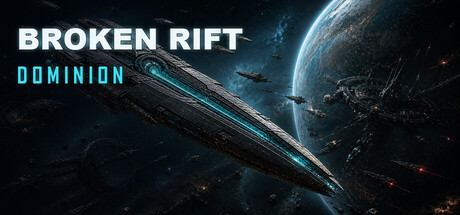
The packaged offline model generates diplomatic communications and makes faction decisions from structured game state with curated personalities. Generative AI was used to assist in creating some pre-rendered artwork, including environment backgrounds, menu and branding art, icons, and promotional/title-card images. These assets were reviewed and integrated by the developer. Game does not connect to external AI services.
AI tools were used to draft store page text and to translate the in-game text into English, Japanese and Chinese.
AI was also used for part of the art.
All of this was reviewed and edited by the developers.
No AI-generated content is created while the game is running.
Generative AI was used to create of the music included in the game, as well as marketing and promotional materials for Steam.
AI tools were also used for programming and development.
There is no AI used in the gameplay - no content is dynamically generated.
"Generative AI tools were used to create 2D promotional images and capsule artwork for the Steam store page. The game itself does not use real-time AI generation during gameplay."
Graphics (sprites, logo, artwork) were generated with Google Gemini API models,
then curated, edited, and integrated by the developer.
Music and sound effects were generated locally with ACE-Step 1.5, directed,
curated, and post-processed by the developer.
No AI runs during gameplay.
Generative AI was used to assist in creating select art assets, which were reviewed, edited, and integrated by the developer. All gameplay, programming, and overall design were created by the development team.
Generative AI tools were used during development to create certain visual and audio assets:
- 2D Visual Assets: Some 2D icons, UI symbols, and graphic elements were generated or assisted using AI image generation tools and polished for final in-game use.
- Audio (BGM): Background music (BGM) tracks were generated with the assistance of generative AI music tools.
Generative AI tools were used during development to create certain pre-generated visual and audio assets, including character portraits and video sequences, mech and environment artwork, synthetic voice-over, and some sound effects. All generated assets were reviewed and curated by the developer. The game does not generate content during gameplay, and no player input is sent to generative AI services.
Some of the promotional artwork, store page banners, and/or trailer visuals for Ascend Idle: Chronicles were created with the assistance of Generative AI tools. The core game code and design were developed entirely by hand as a solo project.
We used AI tools in two places during development, and in neither of them to replace creative work.
Our French, Spanish, Italian, Japanese and Korean localisations are made using AI. We also used AI assistance while writing and restructuring parts of our codebase.
Everything players see and hear — art, animation, sound, music, game design and all original writing — was made by people.
All simulation, art, audio and text in Terra Logic are hand-made — the game ships with no AI-generated content and makes no network requests by default. One optional feature can generate text at runtime: the "whisper" narrator, a single one-line ambient caption. By default it composes lines from a built-in, hand-written phrase library. Players who supply their own Anthropic (Claude) API key in a local config file may enable AI-generated phrasing for that one caption line; without a key the AI path is fully inactive. AI output never affects simulation, gameplay, art, audio, or any other text.
There is usage of generative AI in two places and everything it produced has been reviewed. The soundtrack was created with the assistance of AI, and some of the writing was drafted with an AI assistant and then edited afterwards: card, UI and help text, the Simplified Chinese translation, and the store page and marketing copy. Nothing else is model output — the logo, the app icon and every visual in the game are drawn by the game's own code from geometry in the source, and the sound effects are synthesized as you play.
AI-generated content in this project is limited to the store page and marketing materials. The game build itself contains no AI-generated content.
Store page text: The store description and Early Access questionnaire answers were drafted with the assistance of a large language model, then reviewed and edited by the developer.
Not AI-generated: All in-game art, models, textures and animation. 3D assets are CC0-licensed (Kenney) or built by the developer in Blender; textures are CC0/licensed sets from Poly Haven, ambientCG and Poliigon. All screenshots and capsule images are real frames captured from the game's renderer, composited with the game's own title typography. No image generation model was used to produce any art in the game or on the store page.
A moonlighting project from a husband and father of two, where late evenings and early mornings were made a little easier by generative AI tooling. The game's art, the pilot voice-over, and the music all started as AI-generated assets that I then reviewed, edited, and shaped into the game. The direction and the decisions are mine; nothing is generated while you play. Always open to constructive feedback.
AI-enabled tools were used during development to assist with asset creation. Some visual and audio assets in the finished game incorporate AI-assisted or AI-generated source material. For more information, visit https://jetgrave.com/ai-use/
AI was used in the coding and content creation for this game. That should not take away from this project the thousands of hours spent on its creation, honing and reshaping its style, direction and gameplay which was all done by a human.
This game was created by an independent developer. Generative AI tools were used during development to assist with programming, debugging, text editing, and the initial localization of Simplified Chinese, Traditional Chinese, English, Japanese, and Korean. All AI-assisted content was manually reviewed, edited, and approved by the developer. The game does not use generative AI to create content during gameplay, and player data is not used for AI training.
All art, music, and sound in TOWERPUNK are original to this project, produced by procedural code written specifically for the game. None of it is derived from generative media models. AI coding assistants were used during development to help write the game's source code and some functional interface text (menu labels, status readouts). All narrative and creative writing is authored by the developer.
Space Travelers uses generative AI only as a writing aid during development.
The game's text content (interface text, event and log lines) and its
localization into the 14 supported interface languages were produced with
the assistance of large language models, directed and reviewed by the
developer. Parts of this store page were drafted the same way.
No AI-generated images, audio or video are used: all artwork, animation
and sound in the game are produced by hand-written procedural code. The
game does not generate any content with AI while you play, and it never
connects to an external AI service.
Generative AI tools were used to assist with the localization of this game into English, Simplified Chinese, Traditional Chinese, and Korean. 本作は、英語、簡体字中国語、繁体字中国語、韓国語へのローカライズの補助として生成AIツールを使用しました。
This game makes limited, supplementary use of generative AI tools during development. The primary uses are programming assistance (such as debugging), certain image and audio assets, and assistance with translating text into English.
Generated image and audio assets are not used as-is. The development team reviews their content and makes additions, revisions, edits, and other adjustments to ensure that they are appropriately refined and fit the game.
For text translated with the assistance of generative AI, the development team reviews the context and content and makes any necessary revisions before using it in the game. Please note that generative AI does not generate any game content during gameplay.
We use generative AI for text only: writing this store page and translating the game's in-game text into the supported languages. Everything else, including all art, animation and audio, is made by hand, and no content is generated while you play.
Standard C++ game code, written during development with the assistance of an AI programming assistant, used as a pair-programming tool. This includes gameplay systems (crafting, inventory, world simulation), rendering and UI code, and development tooling. It is ordinary, static game logic.
AI assistance was used only during development, directed by myself through specific requests, with every change reviewed, tested, and committed to version control by myself.
The shipped game contains no AI models and does not execute or generate any code or content via AI at runtime. The game is a fully offline, single-player experience.
Generative AI was used during development to assist with coding and the creation of pre-generated visual assets. No AI content is generated during gameplay.
Generative AI was used during development to assist in the creation of some visual assets and music. All AI-assisted content was reviewed, selected, and integrated by the development team. The game does not use generative AI to create content in real time during gameplay.
Generative AI tools were used during development to assist with selected 2D and 3D visual assets, sounds, localization, and marketing materials.
All AI-assisted content was reviewed, edited, and integrated by the developer to ensure consistency with the game's visual style and intended design.
All art, sound and music in Iron Frame are human-made. The sprites and sound
effects are CC0 assets by Kenney, the music is CC0 work by nene, and the store
capsules are composed from those same sprites — nothing you see or hear was
generated by AI.
Generative AI was used as a writing assistant for some in-game text: weapon,
frame and enemy names and their one-line descriptions, and this store page.
Everything was reviewed and edited by the developer, and no content is generated
while you play.
Generative AI was used to create and/or assist with some promotional and marketing materials for the game, including store capsule artwork, cover images, and other store page visuals. Generative AI was not used to generate gameplay content or content during gameplay.
All shipped assets are first-party or CC0/OFL-licensed human-made packs. Some 3D
meshes (enemy armor fused onto CC0 base rigs, the drone, weapon models) and the
entire soundtrack are produced by deterministic, first-party procedural build
scripts; those scripts were written with the help of an AI code assistant. No
image-, audio- or voice-generation model produced any shipped asset. The game's
written text — squad comms, item and mission descriptions, narrative screens —
and this store page's copy were drafted with AI assistance under developer
direction, then reviewed and edited by the developer. The game contains no
runtime or live AI generation.
Some placeholder assets in the current build (terrain textures and sound effects) were AI-generated and are being replaced with human-made and procedural versions. All models, writing, characters, and design are human-made.
Generative AI was used solely to assist with drafting and translating the Japanese and English descriptions for the Steam store page. Generative AI was not used for any other purpose. All content within the game itself was created by humans.
Generative AI tools were used during development to assist with programming and in the creation of certain pre-generated game assets. All AI-assisted content was reviewed, selected, edited when necessary, and manually integrated by the developer. No AI-generated content is produced in real time during gameplay.
AI tools (LLMs) were used solely for programming assistance, brainstorming, and writing Unreal Engine Blueprint logic. All visual assets, 3D models, and gameplay systems were entirely created and implemented manually by the solo developer.
The packaged offline model generates diplomatic communications and makes faction decisions from structured game state with curated personalities. Generative AI was used to assist in creating some pre-rendered artwork, including environment backgrounds, menu and branding art, icons, and promotional/title-card images. These assets were reviewed and integrated by the developer. Game does not connect to external AI services.
AI tools were used to draft store page text and to translate the in-game text into English, Japanese and Chinese.
AI was also used for part of the art.
All of this was reviewed and edited by the developers.
No AI-generated content is created while the game is running.
Generative AI was used to create of the music included in the game, as well as marketing and promotional materials for Steam.
AI tools were also used for programming and development.
There is no AI used in the gameplay - no content is dynamically generated.
"Generative AI tools were used to create 2D promotional images and capsule artwork for the Steam store page. The game itself does not use real-time AI generation during gameplay."
Graphics (sprites, logo, artwork) were generated with Google Gemini API models,
then curated, edited, and integrated by the developer.
Music and sound effects were generated locally with ACE-Step 1.5, directed,
curated, and post-processed by the developer.
No AI runs during gameplay.
Generative AI was used to assist in creating select art assets, which were reviewed, edited, and integrated by the developer. All gameplay, programming, and overall design were created by the development team.
Generative AI tools were used during development to create certain visual and audio assets:
- 2D Visual Assets: Some 2D icons, UI symbols, and graphic elements were generated or assisted using AI image generation tools and polished for final in-game use.
- Audio (BGM): Background music (BGM) tracks were generated with the assistance of generative AI music tools.
Generative AI tools were used during development to create certain pre-generated visual and audio assets, including character portraits and video sequences, mech and environment artwork, synthetic voice-over, and some sound effects. All generated assets were reviewed and curated by the developer. The game does not generate content during gameplay, and no player input is sent to generative AI services.
Some of the promotional artwork, store page banners, and/or trailer visuals for Ascend Idle: Chronicles were created with the assistance of Generative AI tools. The core game code and design were developed entirely by hand as a solo project.
We used AI tools in two places during development, and in neither of them to replace creative work.
Our French, Spanish, Italian, Japanese and Korean localisations are made using AI. We also used AI assistance while writing and restructuring parts of our codebase.
Everything players see and hear — art, animation, sound, music, game design and all original writing — was made by people.
All simulation, art, audio and text in Terra Logic are hand-made — the game ships with no AI-generated content and makes no network requests by default. One optional feature can generate text at runtime: the "whisper" narrator, a single one-line ambient caption. By default it composes lines from a built-in, hand-written phrase library. Players who supply their own Anthropic (Claude) API key in a local config file may enable AI-generated phrasing for that one caption line; without a key the AI path is fully inactive. AI output never affects simulation, gameplay, art, audio, or any other text.
There is usage of generative AI in two places and everything it produced has been reviewed. The soundtrack was created with the assistance of AI, and some of the writing was drafted with an AI assistant and then edited afterwards: card, UI and help text, the Simplified Chinese translation, and the store page and marketing copy. Nothing else is model output — the logo, the app icon and every visual in the game are drawn by the game's own code from geometry in the source, and the sound effects are synthesized as you play.
AI-generated content in this project is limited to the store page and marketing materials. The game build itself contains no AI-generated content.
Store page text: The store description and Early Access questionnaire answers were drafted with the assistance of a large language model, then reviewed and edited by the developer.
Not AI-generated: All in-game art, models, textures and animation. 3D assets are CC0-licensed (Kenney) or built by the developer in Blender; textures are CC0/licensed sets from Poly Haven, ambientCG and Poliigon. All screenshots and capsule images are real frames captured from the game's renderer, composited with the game's own title typography. No image generation model was used to produce any art in the game or on the store page.
A moonlighting project from a husband and father of two, where late evenings and early mornings were made a little easier by generative AI tooling. The game's art, the pilot voice-over, and the music all started as AI-generated assets that I then reviewed, edited, and shaped into the game. The direction and the decisions are mine; nothing is generated while you play. Always open to constructive feedback.
AI-enabled tools were used during development to assist with asset creation. Some visual and audio assets in the finished game incorporate AI-assisted or AI-generated source material. For more information, visit https://jetgrave.com/ai-use/
AI was used in the coding and content creation for this game. That should not take away from this project the thousands of hours spent on its creation, honing and reshaping its style, direction and gameplay which was all done by a human.
This game was created by an independent developer. Generative AI tools were used during development to assist with programming, debugging, text editing, and the initial localization of Simplified Chinese, Traditional Chinese, English, Japanese, and Korean. All AI-assisted content was manually reviewed, edited, and approved by the developer. The game does not use generative AI to create content during gameplay, and player data is not used for AI training.
All art, music, and sound in TOWERPUNK are original to this project, produced by procedural code written specifically for the game. None of it is derived from generative media models. AI coding assistants were used during development to help write the game's source code and some functional interface text (menu labels, status readouts). All narrative and creative writing is authored by the developer.
Space Travelers uses generative AI only as a writing aid during development.
The game's text content (interface text, event and log lines) and its
localization into the 14 supported interface languages were produced with
the assistance of large language models, directed and reviewed by the
developer. Parts of this store page were drafted the same way.
No AI-generated images, audio or video are used: all artwork, animation
and sound in the game are produced by hand-written procedural code. The
game does not generate any content with AI while you play, and it never
connects to an external AI service.
Generative AI tools were used to assist with the localization of this game into English, Simplified Chinese, Traditional Chinese, and Korean. 本作は、英語、簡体字中国語、繁体字中国語、韓国語へのローカライズの補助として生成AIツールを使用しました。
This game makes limited, supplementary use of generative AI tools during development. The primary uses are programming assistance (such as debugging), certain image and audio assets, and assistance with translating text into English.
Generated image and audio assets are not used as-is. The development team reviews their content and makes additions, revisions, edits, and other adjustments to ensure that they are appropriately refined and fit the game.
For text translated with the assistance of generative AI, the development team reviews the context and content and makes any necessary revisions before using it in the game. Please note that generative AI does not generate any game content during gameplay.
We use generative AI for text only: writing this store page and translating the game's in-game text into the supported languages. Everything else, including all art, animation and audio, is made by hand, and no content is generated while you play.
Standard C++ game code, written during development with the assistance of an AI programming assistant, used as a pair-programming tool. This includes gameplay systems (crafting, inventory, world simulation), rendering and UI code, and development tooling. It is ordinary, static game logic.
AI assistance was used only during development, directed by myself through specific requests, with every change reviewed, tested, and committed to version control by myself.
The shipped game contains no AI models and does not execute or generate any code or content via AI at runtime. The game is a fully offline, single-player experience.
Generative AI was used during development to assist with coding and the creation of pre-generated visual assets. No AI content is generated during gameplay.
Generative AI was used during development to assist in the creation of some visual assets and music. All AI-assisted content was reviewed, selected, and integrated by the development team. The game does not use generative AI to create content in real time during gameplay.
Generative AI tools were used during development to assist with selected 2D and 3D visual assets, sounds, localization, and marketing materials.
All AI-assisted content was reviewed, edited, and integrated by the developer to ensure consistency with the game's visual style and intended design.
All art, sound and music in Iron Frame are human-made. The sprites and sound
effects are CC0 assets by Kenney, the music is CC0 work by nene, and the store
capsules are composed from those same sprites — nothing you see or hear was
generated by AI.
Generative AI was used as a writing assistant for some in-game text: weapon,
frame and enemy names and their one-line descriptions, and this store page.
Everything was reviewed and edited by the developer, and no content is generated
while you play.
Generative AI was used to create and/or assist with some promotional and marketing materials for the game, including store capsule artwork, cover images, and other store page visuals. Generative AI was not used to generate gameplay content or content during gameplay.
All shipped assets are first-party or CC0/OFL-licensed human-made packs. Some 3D
meshes (enemy armor fused onto CC0 base rigs, the drone, weapon models) and the
entire soundtrack are produced by deterministic, first-party procedural build
scripts; those scripts were written with the help of an AI code assistant. No
image-, audio- or voice-generation model produced any shipped asset. The game's
written text — squad comms, item and mission descriptions, narrative screens —
and this store page's copy were drafted with AI assistance under developer
direction, then reviewed and edited by the developer. The game contains no
runtime or live AI generation.
Some placeholder assets in the current build (terrain textures and sound effects) were AI-generated and are being replaced with human-made and procedural versions. All models, writing, characters, and design are human-made.
Generative AI was used solely to assist with drafting and translating the Japanese and English descriptions for the Steam store page. Generative AI was not used for any other purpose. All content within the game itself was created by humans.
Generative AI tools were used during development to assist with programming and in the creation of certain pre-generated game assets. All AI-assisted content was reviewed, selected, edited when necessary, and manually integrated by the developer. No AI-generated content is produced in real time during gameplay.
AI tools (LLMs) were used solely for programming assistance, brainstorming, and writing Unreal Engine Blueprint logic. All visual assets, 3D models, and gameplay systems were entirely created and implemented manually by the solo developer.