Public Steam disclosure research25,380 disclosures tracked
Where do games disclose AI use?
Search developers’ Steam disclosures, compare classified AI use across
games, and follow recorded changes.
This index adds cross-game classifications and statistics to
statements published on individual store pages.
Groups reflect automatic analysis of public disclosures; mature records are excluded. These counts do not measure AI use across all of Steam.
Missing or unclear statements cannot establish whether a game uses AI.
Localization of the textual content for non-english languages is mainly produced as translations from english using generative artificial intelligence. LLM's have been used as a help also in writing and reviewing of program code, development helper tools, infrastructure setup, security checks, test maintenance and requirements management.
Generative AI was used to help create promotional capsule artwork and music/audio material for the game. The gameplay, level design, mechanics, and final implementation were created and reviewed by the developer.
Campfire Battles is our attempt to bring an idea to life as a two-person team. AI tools helped us work quickly, particularly on the coding side, but every piece was reviewed and refined by hand.
Generative AI tools were used to assist in the creation of selected promotional and store artwork. During gameplay, players can also optionally use generative AI to create custom word sets and hints.
Some promotional images and marketing content for Maze Mischief were created with the assistance of generative artificial intelligence tools and subsequently reviewed and adjusted by the developer.
Selected background elements, tilesets, and player and boss character models used AI-generated source material that was manually reworked and adapted. Translations were created and edited with AI assistance. Part of the game's logic was developed with AI assistance. All design and gameplay decisions were made by the developer.
AI tools were used in writing the game's code. No AI generated images, music, audio, or models were used. All artwork is Public-Domain paintings from famous, historical artists.
Generative AI was used to create the initial artwork for the game’s shortcut icon and certain promotional graphical assets. These assets were reviewed and selected by the developer before being included. The game does not generate AI content in real time.
The masterpieces featured in this game are real public-domain paintings, digitized from high-resolution scans. They are not AI-generated.
Generative AI was used only in the following areas: some artwork other than the masterpieces (UI, characters, backgrounds), some sound, and localization.
Generative AI was used for creating Store page assets and in game items. Generated content was then manually edited to remove any anomalies and match look and feel of overall game's theme.
This game was built in a basement by a dad of 3 with claude, gemini, grok, copilot and chat gpt, all pitched in with various parts. some of the backgrounds and icons atrwork had ai refinement in the process but were all reformatted and redrawn as conceptualized by dev
Store Page Description
Please enter a message to players describing how this game uses generative artificial intelligence.
Note: The Steam Store will display this message under the 'About This Game' section on the game's store page. You can return to this survey at any time to update this message or its localizations.
Koi Frenzy contains pre-generated AI-assisted visual assets, including artwork and certain in-game graphics. All AI-generated content was reviewed, edited where necessary, and integrated by the developer. The game does not use live AI generation during gameplay.
Some pre-generated visual assets used in the game and store materials were created with the help of generative AI tools during development. These include selected images for the title screen, options screen, game over screen and promotional artwork. No live AI generation is used during gameplay.
AI Disclosure:
Generative AI was used for the following elements of this game:
・Programming: General game systems
・Graphic Assets: UI and character variations
Sound design and Localization (localization can hopefully be community sourced with proper credit given in-game for users that assist with translations)
During gameplay, the AI generates regional information and sightseeing guides (utilizing the Google Gemini API ). These generated texts change in real time and may occasionally contain inaccurate information.
Additionally, some images displayed within the game and on the store page utilize assets pre-generated by Google Gemini. (These are pre-generated contents, not live-generated during gameplay.)
Generative AI tools were used during development to assist with creating some concept art, graphical assets, and text for the game and its Steam store page. All generated content was reviewed, edited, and integrated by the developer. No generative AI is used during gameplay.
Generative AI tools were used to create visual assets, including background artwork and in-game target images. Additionally, AI was utilized to assist with code generation during the development process.
Color Cup Racing uses generative AI tools as part of the development and content creation process.
AI-assisted tools were used to help create or refine some game content, including development support, visual concepts, marketing materials, and/or music assets. All content included in the game is reviewed, selected, edited, and implemented by the developer before release.
The game does not generate AI content during gameplay. Players do not enter prompts, the game does not create live AI-generated images, audio, text, or code while running, and the game does not connect to external AI services during play.
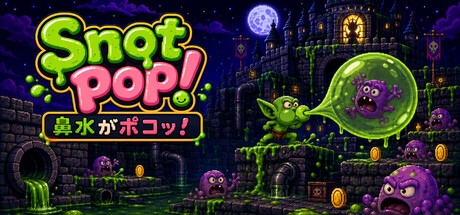
Snot Pop! is an indie project. Like many independent developers, generative AI was used as a tool among many during development; for brainstorming, writing, art and audio design, and working through balancing problems. AI was not the game designer or orchestrator of the project. All content was reviewed, directed, altered, and approved before inclusion. Everything in the game reflects deliberate creative decisions made by the developer.
AI is NOT used in the graphics, sound effects, music, or code, and none of these contain any AI-generated content. AI is used ONLY to produce higher-quality text translations than standard translation tools, and for no other purpose.
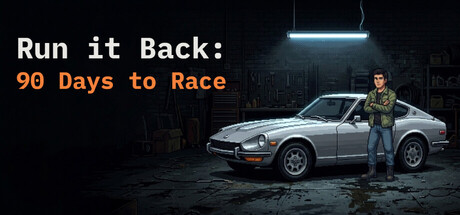
Run It Back: 90 Days to Race is developed solo. Illustrating the game's scenes, key art, and character art by hand wasn't feasible working alone, so AI image-generation tools are used as part of the art pipeline — some pieces generated directly from text prompts, others produced by restyling real photographic references into the game's illustrated art style. All AI-assisted artwork was selected and curated by the developer. No AI-generated content is created live during gameplay.
Some visual assets and audio assets used in this game were created or assisted using generative AI tools. All AI-generated content has been reviewed, edited, and integrated by the developer as part of the game's production process. The game does not generate content using AI during gameplay.
Lumenfall is built by a small studio using AI-assisted development tools. Some pre-generated content — including portions of the game's code, the store page text, and the 2D promotional/capsule artwork and achievement icons — was created with the help of AI tools, always under human direction and review. The game does not generate any content with AI at runtime; everything you play is fixed, hand-tuned content.
All songs in **GALAXY BEAT** credited to the artist **"Nullspecter"** were created using AI.
In addition, some of the album artwork and UI images included in **GALAXY BEAT** were created with the assistance of AI.
Generative AI was used during development to assist in creating some pre-generated visual assets for the game and its promotional materials, as well as parts of the English localization. All AI-assisted content was reviewed by the developer and edited where necessary. No content is generated by AI while the game is running.
Generative AI tools were used during development to assist with some code, visual assets, and English voice and audio content. The game's design, selection, editing, integration, balancing, testing, and final creative decisions are handled and reviewed by the developer before release.
Pre-generated AI tools were used during development to create the game's soundtrack and sound effects, and to assist with portions of its application icon and promotional key art. Those assets were selected, integrated, and reviewed by the developer. No AI content is generated during gameplay.
Salt and Soil uses generative AI during gameplay to create some Annual Family Council narrative text and structured choice outcomes based on the current campaign state. Generated council content is constrained by the game’s historical setting, family data, localization rules, and gameplay schema, then validated before it is shown to the player.
Generative AI tools were used during development and marketing to assist with ideation, drafting, rewriting, and visual exploration for IN & OUT.
All final content included in the game, store page, screenshots, capsules, trailers, and marketing materials is reviewed, selected, edited, and approved by the development team before publication.
The game does not use live-generated AI content at runtime. No player input is sent to an AI service, and no gameplay, puzzle, narrative, visual, audio, or localization content is generated dynamically by AI while the game is running.
No game assets or gameplay content were generated using AI.
Localization into some supported languages was created with AI assistance and reviewed by the developers and community where possible.
Some visual assets and promotional artwork were created or assisted using generative AI, then reviewed and refined by the developer. All gameplay systems, game design, programming, balance, and core content were created by the developer. No generative AI is used during gameplay.
The background music (BGM) in this game was created using Suno, a generative AI tool. Some image assets (such as icons) were also created with the assistance of generative AI tools.
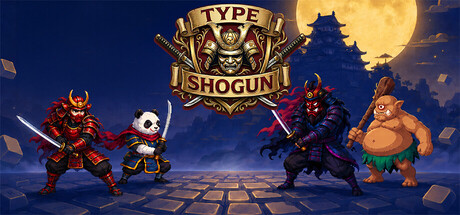
Type Shogun uses pre-generated AI-assisted artwork for some stylized visual assets, including Steam store/library artwork and selected marketing/capsule images. Some in-game background or presentation artwork may also include AI-assisted elements. All AI-assisted content was reviewed, selected, and curated by NH Media LLC before inclusion.
Type Shogun does not use live generative AI during gameplay. Players cannot generate AI images, text, audio, or other AI content inside the game.
This game uses generative AI tools in the creation of some visual assets, including certain artwork and promotional materials. All AI-generated content has been reviewed and modified by the development team to ensure consistency with the game’s art direction.
Localization of the textual content for non-english languages is mainly produced as translations from english using generative artificial intelligence. LLM's have been used as a help also in writing and reviewing of program code, development helper tools, infrastructure setup, security checks, test maintenance and requirements management.
Generative AI was used to help create promotional capsule artwork and music/audio material for the game. The gameplay, level design, mechanics, and final implementation were created and reviewed by the developer.
Campfire Battles is our attempt to bring an idea to life as a two-person team. AI tools helped us work quickly, particularly on the coding side, but every piece was reviewed and refined by hand.
Generative AI tools were used to assist in the creation of selected promotional and store artwork. During gameplay, players can also optionally use generative AI to create custom word sets and hints.
Some promotional images and marketing content for Maze Mischief were created with the assistance of generative artificial intelligence tools and subsequently reviewed and adjusted by the developer.
Selected background elements, tilesets, and player and boss character models used AI-generated source material that was manually reworked and adapted. Translations were created and edited with AI assistance. Part of the game's logic was developed with AI assistance. All design and gameplay decisions were made by the developer.
AI tools were used in writing the game's code. No AI generated images, music, audio, or models were used. All artwork is Public-Domain paintings from famous, historical artists.
Generative AI was used to create the initial artwork for the game’s shortcut icon and certain promotional graphical assets. These assets were reviewed and selected by the developer before being included. The game does not generate AI content in real time.
The masterpieces featured in this game are real public-domain paintings, digitized from high-resolution scans. They are not AI-generated.
Generative AI was used only in the following areas: some artwork other than the masterpieces (UI, characters, backgrounds), some sound, and localization.
Generative AI was used for creating Store page assets and in game items. Generated content was then manually edited to remove any anomalies and match look and feel of overall game's theme.
This game was built in a basement by a dad of 3 with claude, gemini, grok, copilot and chat gpt, all pitched in with various parts. some of the backgrounds and icons atrwork had ai refinement in the process but were all reformatted and redrawn as conceptualized by dev
Store Page Description
Please enter a message to players describing how this game uses generative artificial intelligence.
Note: The Steam Store will display this message under the 'About This Game' section on the game's store page. You can return to this survey at any time to update this message or its localizations.
Koi Frenzy contains pre-generated AI-assisted visual assets, including artwork and certain in-game graphics. All AI-generated content was reviewed, edited where necessary, and integrated by the developer. The game does not use live AI generation during gameplay.
Some pre-generated visual assets used in the game and store materials were created with the help of generative AI tools during development. These include selected images for the title screen, options screen, game over screen and promotional artwork. No live AI generation is used during gameplay.
AI Disclosure:
Generative AI was used for the following elements of this game:
・Programming: General game systems
・Graphic Assets: UI and character variations
Sound design and Localization (localization can hopefully be community sourced with proper credit given in-game for users that assist with translations)
During gameplay, the AI generates regional information and sightseeing guides (utilizing the Google Gemini API ). These generated texts change in real time and may occasionally contain inaccurate information.
Additionally, some images displayed within the game and on the store page utilize assets pre-generated by Google Gemini. (These are pre-generated contents, not live-generated during gameplay.)
Generative AI tools were used during development to assist with creating some concept art, graphical assets, and text for the game and its Steam store page. All generated content was reviewed, edited, and integrated by the developer. No generative AI is used during gameplay.
Generative AI tools were used to create visual assets, including background artwork and in-game target images. Additionally, AI was utilized to assist with code generation during the development process.
Color Cup Racing uses generative AI tools as part of the development and content creation process.
AI-assisted tools were used to help create or refine some game content, including development support, visual concepts, marketing materials, and/or music assets. All content included in the game is reviewed, selected, edited, and implemented by the developer before release.
The game does not generate AI content during gameplay. Players do not enter prompts, the game does not create live AI-generated images, audio, text, or code while running, and the game does not connect to external AI services during play.
Snot Pop! is an indie project. Like many independent developers, generative AI was used as a tool among many during development; for brainstorming, writing, art and audio design, and working through balancing problems. AI was not the game designer or orchestrator of the project. All content was reviewed, directed, altered, and approved before inclusion. Everything in the game reflects deliberate creative decisions made by the developer.
AI is NOT used in the graphics, sound effects, music, or code, and none of these contain any AI-generated content. AI is used ONLY to produce higher-quality text translations than standard translation tools, and for no other purpose.
Run It Back: 90 Days to Race is developed solo. Illustrating the game's scenes, key art, and character art by hand wasn't feasible working alone, so AI image-generation tools are used as part of the art pipeline — some pieces generated directly from text prompts, others produced by restyling real photographic references into the game's illustrated art style. All AI-assisted artwork was selected and curated by the developer. No AI-generated content is created live during gameplay.
Some visual assets and audio assets used in this game were created or assisted using generative AI tools. All AI-generated content has been reviewed, edited, and integrated by the developer as part of the game's production process. The game does not generate content using AI during gameplay.
Lumenfall is built by a small studio using AI-assisted development tools. Some pre-generated content — including portions of the game's code, the store page text, and the 2D promotional/capsule artwork and achievement icons — was created with the help of AI tools, always under human direction and review. The game does not generate any content with AI at runtime; everything you play is fixed, hand-tuned content.
All songs in **GALAXY BEAT** credited to the artist **"Nullspecter"** were created using AI.
In addition, some of the album artwork and UI images included in **GALAXY BEAT** were created with the assistance of AI.
Generative AI was used during development to assist in creating some pre-generated visual assets for the game and its promotional materials, as well as parts of the English localization. All AI-assisted content was reviewed by the developer and edited where necessary. No content is generated by AI while the game is running.
Generative AI tools were used during development to assist with some code, visual assets, and English voice and audio content. The game's design, selection, editing, integration, balancing, testing, and final creative decisions are handled and reviewed by the developer before release.
Pre-generated AI tools were used during development to create the game's soundtrack and sound effects, and to assist with portions of its application icon and promotional key art. Those assets were selected, integrated, and reviewed by the developer. No AI content is generated during gameplay.
Salt and Soil uses generative AI during gameplay to create some Annual Family Council narrative text and structured choice outcomes based on the current campaign state. Generated council content is constrained by the game’s historical setting, family data, localization rules, and gameplay schema, then validated before it is shown to the player.
Generative AI tools were used during development and marketing to assist with ideation, drafting, rewriting, and visual exploration for IN & OUT.
All final content included in the game, store page, screenshots, capsules, trailers, and marketing materials is reviewed, selected, edited, and approved by the development team before publication.
The game does not use live-generated AI content at runtime. No player input is sent to an AI service, and no gameplay, puzzle, narrative, visual, audio, or localization content is generated dynamically by AI while the game is running.
No game assets or gameplay content were generated using AI.
Localization into some supported languages was created with AI assistance and reviewed by the developers and community where possible.
Some visual assets and promotional artwork were created or assisted using generative AI, then reviewed and refined by the developer. All gameplay systems, game design, programming, balance, and core content were created by the developer. No generative AI is used during gameplay.
The background music (BGM) in this game was created using Suno, a generative AI tool. Some image assets (such as icons) were also created with the assistance of generative AI tools.
Type Shogun uses pre-generated AI-assisted artwork for some stylized visual assets, including Steam store/library artwork and selected marketing/capsule images. Some in-game background or presentation artwork may also include AI-assisted elements. All AI-assisted content was reviewed, selected, and curated by NH Media LLC before inclusion.
Type Shogun does not use live generative AI during gameplay. Players cannot generate AI images, text, audio, or other AI content inside the game.
This game uses generative AI tools in the creation of some visual assets, including certain artwork and promotional materials. All AI-generated content has been reviewed and modified by the development team to ensure consistency with the game’s art direction.