Public Steam disclosure research25,380 disclosures tracked
Where do games disclose AI use?
Search developers’ Steam disclosures, compare classified AI use across
games, and follow recorded changes.
This index adds cross-game classifications and statistics to
statements published on individual store pages.
Groups reflect automatic analysis of public disclosures; mature records are excluded. These counts do not measure AI use across all of Steam.
Missing or unclear statements cannot establish whether a game uses AI.
Generative AI tools were used as part of the development workflow for programming assistance, debugging support, implementation planning, and visual refinement.
AI-assisted visual workflows were used to explore, refine, or produce some visual elements. All such content was reviewed and integrated manually by the developer.
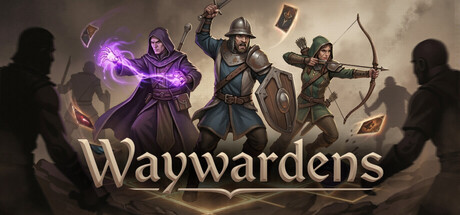
Waywardens does not use live generative AI during gameplay. The game does not generate AI content at runtime and does not send player input to AI services.
Character portraits, world objects, and background artwork utilize generative AI as a foundational base. However, every visual asset undergoes heavy, manual editing and refinement through multiple iterations by myself to achieve the game's specific art style.
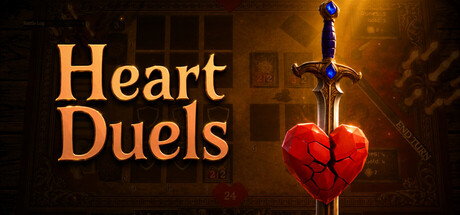
Heart Duels is a solo-developed game. I use AI-assisted tools for some art and audio. All assets are curated and integrated by me to create a cohesive experience.
AI tools were used to assist in creating certain promotional/store assets such as capsule images and marketing artwork.
No AI-generated content is included in gameplay, game assets, or user interactions.
Official AI Usage Statement:
Some of the soundtracks in the game have been procured from commercial music large-scale models and are accompanied by commercial licensing certificates.
The initial rough models of certain game elements were generated by commercially viable large-scale models to assist in the development process.
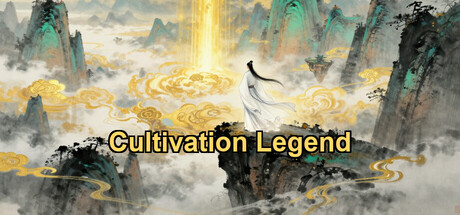
All in-game visual art assets in this title — including item icons, equipment artwork, character portraits, story illustrations, and UI decorative elements (frames, icons, and background textures) — are produced using OpenAI's ChatGPT image generation and xAI's Grok image generation API as core tools within our ink-wash and gongbi-style art pipeline. Every generated asset is reviewed, curated, manually retouched, and compositionally adjusted by the developer before being incorporated into the game. No real person's likeness has been used.
The game's source code is written by the developer, Kevin Chen, with OpenAI Codex and Anthropic Claude Code used as coding assistants during development. In-game narrative and dialogue text are written by the developer, with portions assisted by Anthropic Claude for polishing and proofreading.
Some visual assets in Triad were created with the assistance of AI tools and further refined by the developer.
Triad is a solo-developed project, and these tools helped make its creation possible.
— Raph, developer of Triad
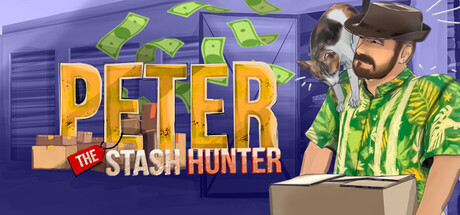
Peter the Stash Hunter has been mostly designed and coded by hand by a single developer using traditional methods. AI tools were used in the development process only in two supporting roles:
- Translating store descriptions and in-game text into different languages
- Acting as a helper assistant during code writing
All AI outputs have been reviewed and edited by the developer. Translations are planned to be improved over time based on community feedback. None of the game's visuals, story, characters, music, sound effects, gameplay mechanics, or design decisions have been generated by AI. There is also no AI system running inside the game.
All code in this game is generated with AI assistance. The game’s visuals and music also involve AI-aided processes, including image adjustments and extension of music segments. The gameplay concepts and skill/item designs are partially inspired by AI, with some skill and item names originating from AI-generated ideas.
Some visual assets in this game were generated using AI. As a one‑person developer, I use these tools to accelerate production, but all images are reviewed, refined, and finalized by me to maintain a consistent artistic direction.
As a small-scale indie game project, this title is developed under limited funding and team resources, and currently has no dedicated art staff. Therefore, generative AI has been used in parts of the content creation process to reduce basic production costs and help move development forward. All such content has been manually reviewed and adjusted.
The images used in the game, as well as the promotional visuals shown in the store, are generated using AI. In addition, translations are also performed using large language models.
Some visual assets in this game were created or enhanced using generative AI tools during development. These assets were reviewed and refined by the development team before being included in the final product.
The game does not use AI to generate content during gameplay.
AI-generated art is used for monster illustrations (370+), equipment icons, background art, and promotional materials. AI-assisted translation is used for 10-language localization. All AI-generated content has been reviewed and curated by the developer. No AI is used for gameplay logic, player data processing, or real-time content generation during gameplay.
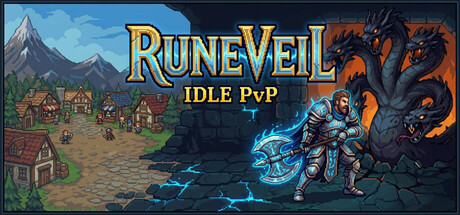
Runeveil: Idle PvP uses generative AI tools only during the design phase of 2D pixel art assets (characters, monsters, items, environments and icons). These visuals serve as a working base and are then edited, integrated and manually reviewed by the team before being added to the game.
No generative AI is used for the game's code, for generating content in real time during gameplay, nor for the soundtrack, narrative text or translations. All content you see in the game has been checked and assembled by hand.
This game uses live-generated AI to create text-based dialogue and narrative responses during gameplay. Players can type messages to interact with AI-driven characters and story events, and the AI may generate contextual responses based on the player’s input and current game state. AI-generated content in this game is limited to in-game text and narrative interaction.
Localization was assisted by AI for multilingual support.
A small number of UI icons (approx. 10) were created using AI tools and manually refined by the developer.
"We utilize AI to assist in various design processes, including stylistic conceptualization, environment concept art, character definition, and color scheme planning."
No real-time generative AI in the client. Static in-game and store art/audio may include material initially produced with generative AI, revised and approved by the developer before release.
This game was built extensively with generative AI. AI tools were used to assist with code development, pixel art generation, music composition, sound effect creation, voice acting, dialogue writing, story design, and game design.
The core concepts, rules, and gameplay mechanics of The Bone Yard are entirely my own original creation. Because this is a solo passion project, I utilized generative AI as a development assistant to help bring my vision to life. AI tools were used to help brainstorm visual design elements, which I then curated and integrated into the game. I also used AI to assist with coding and text localization. The heart of the game, how it plays, how it feels, is 100% USDA Prime Human.
Generative AI tools were used for some visual and audio assets, as well as in parts of the development process. All content included in the final game and store materials was reviewed and edited by the developer before release.
American Football Coach utilises artificial intelligence to randomise players and finances at the start of each game load, for the gameplay of each individual match, the questions posed by the media and the occasional random event, which can effect your finances and prestige positively or negatively.
This game only uses AI tools to assist in generating part of the art materials and plot copy during the development stage. All AI-generated content has been fully manually reviewed, secondary modified and compliance checked. There is no real-time AI interaction function in the game, and no real-time AI response or usage scenarios for players.
The in-game character sprites and 2D scene graphics are created using AI and subsequently refined in post-production. They have been labeled during the game review process. Please exercise caution when making purchases.
AI-assisted tools were used for all of the game visuals, audio, and code. No AI generation occurs during gameplay, and no external AI services are used while playing.
Some visual and textual elements of this game were initially created using generative artificial intelligence tools as part of the development process. All content has subsequently been reviewed, edited, and manually refined by the team to ensure its quality, consistency, and suitability for the final game experience.
I used AI-assisted tools to help create and animate characters, manually refining and adapting them to fit the game's art style.
All other content, including world-building, UI, SFX, VFX, was either licensed from professional artists or created traditionally.
This game incorporates AI assistance in its development. The overall vision and execution remain that of the developer.
All language translations were done using Claude. If there are any mistranslations, please contact me to fix them!
Generative AI tools were used as part of the development workflow for programming assistance, debugging support, implementation planning, and visual refinement.
AI-assisted visual workflows were used to explore, refine, or produce some visual elements. All such content was reviewed and integrated manually by the developer.
Waywardens does not use live generative AI during gameplay. The game does not generate AI content at runtime and does not send player input to AI services.
Character portraits, world objects, and background artwork utilize generative AI as a foundational base. However, every visual asset undergoes heavy, manual editing and refinement through multiple iterations by myself to achieve the game's specific art style.
Heart Duels is a solo-developed game. I use AI-assisted tools for some art and audio. All assets are curated and integrated by me to create a cohesive experience.
AI tools were used to assist in creating certain promotional/store assets such as capsule images and marketing artwork.
No AI-generated content is included in gameplay, game assets, or user interactions.
Official AI Usage Statement:
Some of the soundtracks in the game have been procured from commercial music large-scale models and are accompanied by commercial licensing certificates.
The initial rough models of certain game elements were generated by commercially viable large-scale models to assist in the development process.
All in-game visual art assets in this title — including item icons, equipment artwork, character portraits, story illustrations, and UI decorative elements (frames, icons, and background textures) — are produced using OpenAI's ChatGPT image generation and xAI's Grok image generation API as core tools within our ink-wash and gongbi-style art pipeline. Every generated asset is reviewed, curated, manually retouched, and compositionally adjusted by the developer before being incorporated into the game. No real person's likeness has been used.
The game's source code is written by the developer, Kevin Chen, with OpenAI Codex and Anthropic Claude Code used as coding assistants during development. In-game narrative and dialogue text are written by the developer, with portions assisted by Anthropic Claude for polishing and proofreading.
Some visual assets in Triad were created with the assistance of AI tools and further refined by the developer.
Triad is a solo-developed project, and these tools helped make its creation possible.
— Raph, developer of Triad
Peter the Stash Hunter has been mostly designed and coded by hand by a single developer using traditional methods. AI tools were used in the development process only in two supporting roles:
- Translating store descriptions and in-game text into different languages
- Acting as a helper assistant during code writing
All AI outputs have been reviewed and edited by the developer. Translations are planned to be improved over time based on community feedback. None of the game's visuals, story, characters, music, sound effects, gameplay mechanics, or design decisions have been generated by AI. There is also no AI system running inside the game.
All code in this game is generated with AI assistance. The game’s visuals and music also involve AI-aided processes, including image adjustments and extension of music segments. The gameplay concepts and skill/item designs are partially inspired by AI, with some skill and item names originating from AI-generated ideas.
Some visual assets in this game were generated using AI. As a one‑person developer, I use these tools to accelerate production, but all images are reviewed, refined, and finalized by me to maintain a consistent artistic direction.
As a small-scale indie game project, this title is developed under limited funding and team resources, and currently has no dedicated art staff. Therefore, generative AI has been used in parts of the content creation process to reduce basic production costs and help move development forward. All such content has been manually reviewed and adjusted.
The images used in the game, as well as the promotional visuals shown in the store, are generated using AI. In addition, translations are also performed using large language models.
Some visual assets in this game were created or enhanced using generative AI tools during development. These assets were reviewed and refined by the development team before being included in the final product.
The game does not use AI to generate content during gameplay.
AI-generated art is used for monster illustrations (370+), equipment icons, background art, and promotional materials. AI-assisted translation is used for 10-language localization. All AI-generated content has been reviewed and curated by the developer. No AI is used for gameplay logic, player data processing, or real-time content generation during gameplay.
Runeveil: Idle PvP uses generative AI tools only during the design phase of 2D pixel art assets (characters, monsters, items, environments and icons). These visuals serve as a working base and are then edited, integrated and manually reviewed by the team before being added to the game.
No generative AI is used for the game's code, for generating content in real time during gameplay, nor for the soundtrack, narrative text or translations. All content you see in the game has been checked and assembled by hand.
This game uses live-generated AI to create text-based dialogue and narrative responses during gameplay. Players can type messages to interact with AI-driven characters and story events, and the AI may generate contextual responses based on the player’s input and current game state. AI-generated content in this game is limited to in-game text and narrative interaction.
Localization was assisted by AI for multilingual support.
A small number of UI icons (approx. 10) were created using AI tools and manually refined by the developer.
"We utilize AI to assist in various design processes, including stylistic conceptualization, environment concept art, character definition, and color scheme planning."
No real-time generative AI in the client. Static in-game and store art/audio may include material initially produced with generative AI, revised and approved by the developer before release.
This game was built extensively with generative AI. AI tools were used to assist with code development, pixel art generation, music composition, sound effect creation, voice acting, dialogue writing, story design, and game design.
The core concepts, rules, and gameplay mechanics of The Bone Yard are entirely my own original creation. Because this is a solo passion project, I utilized generative AI as a development assistant to help bring my vision to life. AI tools were used to help brainstorm visual design elements, which I then curated and integrated into the game. I also used AI to assist with coding and text localization. The heart of the game, how it plays, how it feels, is 100% USDA Prime Human.
Generative AI tools were used for some visual and audio assets, as well as in parts of the development process. All content included in the final game and store materials was reviewed and edited by the developer before release.
American Football Coach utilises artificial intelligence to randomise players and finances at the start of each game load, for the gameplay of each individual match, the questions posed by the media and the occasional random event, which can effect your finances and prestige positively or negatively.
This game only uses AI tools to assist in generating part of the art materials and plot copy during the development stage. All AI-generated content has been fully manually reviewed, secondary modified and compliance checked. There is no real-time AI interaction function in the game, and no real-time AI response or usage scenarios for players.
The in-game character sprites and 2D scene graphics are created using AI and subsequently refined in post-production. They have been labeled during the game review process. Please exercise caution when making purchases.
AI-assisted tools were used for all of the game visuals, audio, and code. No AI generation occurs during gameplay, and no external AI services are used while playing.
Some visual and textual elements of this game were initially created using generative artificial intelligence tools as part of the development process. All content has subsequently been reviewed, edited, and manually refined by the team to ensure its quality, consistency, and suitability for the final game experience.
I used AI-assisted tools to help create and animate characters, manually refining and adapting them to fit the game's art style.
All other content, including world-building, UI, SFX, VFX, was either licensed from professional artists or created traditionally.
This game incorporates AI assistance in its development. The overall vision and execution remain that of the developer.
All language translations were done using Claude. If there are any mistranslations, please contact me to fix them!