Public Steam disclosure research25,714 disclosures tracked
Where do games disclose AI use?
Search developers’ Steam disclosures, compare classified AI use across
games, and follow recorded changes.
This index adds cross-game classifications and statistics to
statements published on individual store pages.
Groups reflect automatic analysis of public disclosures; mature records are excluded. These counts do not measure AI use across all of Steam.
Missing or unclear statements cannot establish whether a game uses AI.
This game was developed with the assistance of an AI language model, including store page content, level design, in-game descriptions, code, and game mechanics. All creative direction and final decisions were made by the developer.
Generative AI tools were used as part of the development and drafting workflow. Hex Tower Boogie does not generate content during gameplay, does not connect to external AI services, and all shipped/store content is reviewed and curated by the developer.
Generative AI tools were used during the creation of marketing and promotional materials for the game's Steam Store page and Community Hub assets. Specifically, the game's official community avatars, group banner backgrounds, and concept art presentations were generated using AI imagery tools to establish the game's retro space pixel-art aesthetic. No AI-generated assets are contained directly within the game code or build itself.
This game used generative AI tools during development to assist with the creation and iteration of some visual assets, text and code. All AI-assisted content was reviewed, edited and manually implemented by the developer. The game does not generate AI content during gameplay.
This title makes assistive use of generative AI tools in the following areas. All AI-generated outputs are manually reviewed, edited, and curated by the development team before being incorporated as final assets, and we have taken care to ensure that they do not infringe on the rights of third parties. No real-time AI generation occurs during gameplay.[Pre-Rendered Content — AI-Assisted Areas]- Production support for a portion of the in-game visual assets- Production support for a portion of the in-game music (BGM) and sound effects- Translation support for store page localization across supported languages (with human proofreading)[Live Generation]The game does not invoke generative AI in real time at any point during gameplay.
Some 2D art (such as cosmetic items) and the background music were created using generative AI tools based on developer reference images, then reviewed and edited by the developer. No AI runs during gameplay.
The visual assets, audio, music, in-game text, and store page content of this game were created with the help of generative AI tools. All AI-generated content was reviewed, selected, and assembled by the developer. The game's design, code, and systems were created by the developer.
Generative AI was used during the development process to create static 2D illustrations of various types of buildings that serve as project previews in the game interface.
Marketing resources (storage capsules) were also created using AI to generate images.
Generative AI tools were used during development for ideation, development assistance, and promotional exploration. All final gameplay systems, game logic, and in-game content were created and reviewed by the developer.
This game uses pre-generated AI-assisted assets in some development and marketing materials, including draft visuals, voice work, localization support, and production references. Final content is reviewed and curated by the developer. The game does not generate AI content during gameplay.
Game design, code, mechanics, gameplay systems, sprites, and writing are entirely human-made. All AI-generated assets were reviewed, edited, composed, and integrated manually by the developer. No AI content is generated at runtime — every asset is pre-authored and curated.
Generative AI was used in the creation of:
Marketing and store page artwork (capsules, banners, hero, logo)
In-game background art, sprites directions
Music tracks
Some visual assets, promotional artwork, sound concepts, and early creative content for Lumibloom were created or assisted using generative AI tools during development. All AI-assisted content is reviewed, edited, and integrated by the developer to fit the game’s final artistic direction and gameplay experience.
AI tools were used during development for assistance with programming and creation of promotional visual assets.
AI-assisted code generation was used to help implement gameplay systems and scripting within the Godot engine. All code was reviewed, integrated, and tested by the developer.
Generative AI was also used to create certain marketing and promotional images used in trailers and store presentation materials. No AI-generated assets are included directly in gameplay.
I used chatgpt to remaster some models, and to boost my artwork.
I DID NOT:
- let AI create any new models
- design any of my levels or scripts
- generate voices or music
Some promotional artwork and store graphic backgrounds may include AI-assisted elements. The core gameplay, UI, ships, enemies, mechanics, systems and visual identity are created and edited by the developer using original game assets.
The following aspects of this game's development were assisted by AI tools:
• Code architecture planning and refactoring suggestions
• Debugging assistance
• Localization (English / Simplified Chinese / Japanese / and other supported languages)
• Initial drafts of select art assets
• Background music generation (SUNO)
All AI-generated output was reviewed, edited, and integrated by a human before inclusion in the final build. Core gameplay design, balancing, and final decisions were made by the developer.
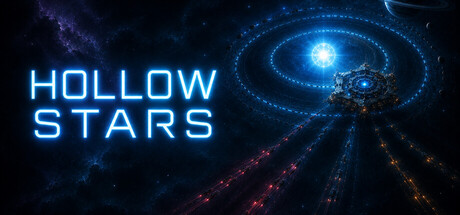
Some 2D visual assets in Hollow Stars were created with the help of generative AI image tools during development. This includes parts of the store and marketing artwork, the achievement icons, and background art used in the game's cinematic intro. Every AI-assisted asset was reviewed, edited and curated by the development team before release.
Generative AI is not used while you play. The game runs no generative AI at runtime — the in-game faction "AI" is a fully deterministic, rule-based simulation, not a generative model. No player input or data is sent to any AI service.
Generative AI tools were used to assist with localization drafts, wording review, store text preparation, research into real-world goods and price references, code debugging, and optimization suggestions. All final text, translations, game design, data, UI implementation, pricing decisions, and release decisions are reviewed and controlled by the developer.
Generative AI was used strictly as an assistive tool during development. It was utilized to help debug code, optimize scripts, and generate minor background visual elements. All core gameplay mechanics, main graphics, story, and game design were created entirely by the developer.
This game uses pre-generated AI-assisted content for certain promotional artwork, visual assets, and audio materials. No AI-generated content is created during gameplay.
This game makes use of generative AI as a creative assistant during development. All AI-assisted output is reviewed, edited, and approved by the developer before being included in the final game. No content is generated live during gameplay.
Source code: Drafted with AI coding tools, then reviewed, tested, and integrated by the developer.
Visual assets: All main character designs and key visuals are based on the developer's hand-drawn illustrations. Some assets combine the developer's artwork with AI-assisted generation or refinement.
Scenario text: Story, dialogue, and worldbuilding are written by the developer, with AI used for drafting support, rewriting, and consistency checks.
Music: A portion of the in-game music is produced with AI assistance; the developer selects, edits, and finalizes all tracks used in the game.
Localization: The English translation is produced with AI assistance and reviewed by the developer.
Ten Rings 2 uses generative AI during development to assist with some 2D visual asset production, concept iteration, and writing drafts. Final in-game content is selected, edited, integrated, and reviewed by the developer. Generative AI is not used to create live or personalized content during gameplay.
This game contains pre-generated content created with the assistance of generative AI tools during development.
AI was used mainly for card illustrations, UI design drafts, some text creation assistance, and programming assistance.
The game does not generate new images, audio, text, or other content using AI during gameplay.
Generative AI tools, including GPT/Codex, were used during development to create, draft, edit, and process pre-generated game content, including UI text, localization drafts, icons, interface assets, store copy, planning materials, QA materials, and code assistance.
All AI-assisted content included in the game or marketing materials was reviewed, selected, edited, and integrated by the developer before publication.
The game does not include live-generated AI content, AI chatbots, runtime AI generation, or in-game AI image generation.
Some promotional artwork, store capsule images, and marketing visuals were created with the assistance of generative AI tools and then reviewed, selected, and edited by the developer. The game itself does not generate new AI content during gameplay.
During the development of Super Monsterdoom, generative AI tools were used to support text creation, visual exploration, and mechanical iteration. As a solo developer, these tools were key to accelerating and expanding the process, but every final asset, text, and design decision went through extensive human editing, refinement, and hands-on work.
Generative AI tools were used during the development process to assist in writing, optimizing, and refining C# scripts in Unity, as well as in the conceptualization, texture generation, and editing of 2D visual assets and user interface elements.
We begin by defining detailed character backgrounds, which are then transformed into base concept art using generative AI. Subsequently, we perform local editing, detailed repainting, and textural refinement on these images to ensure every asset meets our specific design requirements.
This game was developed with the assistance of an AI language model, including store page content, level design, in-game descriptions, code, and game mechanics. All creative direction and final decisions were made by the developer.
Generative AI tools were used as part of the development and drafting workflow. Hex Tower Boogie does not generate content during gameplay, does not connect to external AI services, and all shipped/store content is reviewed and curated by the developer.
Generative AI tools were used during the creation of marketing and promotional materials for the game's Steam Store page and Community Hub assets. Specifically, the game's official community avatars, group banner backgrounds, and concept art presentations were generated using AI imagery tools to establish the game's retro space pixel-art aesthetic. No AI-generated assets are contained directly within the game code or build itself.
This game used generative AI tools during development to assist with the creation and iteration of some visual assets, text and code. All AI-assisted content was reviewed, edited and manually implemented by the developer. The game does not generate AI content during gameplay.
This title makes assistive use of generative AI tools in the following areas. All AI-generated outputs are manually reviewed, edited, and curated by the development team before being incorporated as final assets, and we have taken care to ensure that they do not infringe on the rights of third parties. No real-time AI generation occurs during gameplay.[Pre-Rendered Content — AI-Assisted Areas]- Production support for a portion of the in-game visual assets- Production support for a portion of the in-game music (BGM) and sound effects- Translation support for store page localization across supported languages (with human proofreading)[Live Generation]The game does not invoke generative AI in real time at any point during gameplay.
Some 2D art (such as cosmetic items) and the background music were created using generative AI tools based on developer reference images, then reviewed and edited by the developer. No AI runs during gameplay.
The visual assets, audio, music, in-game text, and store page content of this game were created with the help of generative AI tools. All AI-generated content was reviewed, selected, and assembled by the developer. The game's design, code, and systems were created by the developer.
Generative AI was used during the development process to create static 2D illustrations of various types of buildings that serve as project previews in the game interface.
Marketing resources (storage capsules) were also created using AI to generate images.
Generative AI tools were used during development for ideation, development assistance, and promotional exploration. All final gameplay systems, game logic, and in-game content were created and reviewed by the developer.
This game uses pre-generated AI-assisted assets in some development and marketing materials, including draft visuals, voice work, localization support, and production references. Final content is reviewed and curated by the developer. The game does not generate AI content during gameplay.
Game design, code, mechanics, gameplay systems, sprites, and writing are entirely human-made. All AI-generated assets were reviewed, edited, composed, and integrated manually by the developer. No AI content is generated at runtime — every asset is pre-authored and curated.
Generative AI was used in the creation of:
Marketing and store page artwork (capsules, banners, hero, logo)
In-game background art, sprites directions
Music tracks
Some visual assets, promotional artwork, sound concepts, and early creative content for Lumibloom were created or assisted using generative AI tools during development. All AI-assisted content is reviewed, edited, and integrated by the developer to fit the game’s final artistic direction and gameplay experience.
AI tools were used during development for assistance with programming and creation of promotional visual assets.
AI-assisted code generation was used to help implement gameplay systems and scripting within the Godot engine. All code was reviewed, integrated, and tested by the developer.
Generative AI was also used to create certain marketing and promotional images used in trailers and store presentation materials. No AI-generated assets are included directly in gameplay.
I used chatgpt to remaster some models, and to boost my artwork.
I DID NOT:
- let AI create any new models
- design any of my levels or scripts
- generate voices or music
Some promotional artwork and store graphic backgrounds may include AI-assisted elements. The core gameplay, UI, ships, enemies, mechanics, systems and visual identity are created and edited by the developer using original game assets.
The following aspects of this game's development were assisted by AI tools:
• Code architecture planning and refactoring suggestions
• Debugging assistance
• Localization (English / Simplified Chinese / Japanese / and other supported languages)
• Initial drafts of select art assets
• Background music generation (SUNO)
All AI-generated output was reviewed, edited, and integrated by a human before inclusion in the final build. Core gameplay design, balancing, and final decisions were made by the developer.
Some 2D visual assets in Hollow Stars were created with the help of generative AI image tools during development. This includes parts of the store and marketing artwork, the achievement icons, and background art used in the game's cinematic intro. Every AI-assisted asset was reviewed, edited and curated by the development team before release.
Generative AI is not used while you play. The game runs no generative AI at runtime — the in-game faction "AI" is a fully deterministic, rule-based simulation, not a generative model. No player input or data is sent to any AI service.
Generative AI tools were used to assist with localization drafts, wording review, store text preparation, research into real-world goods and price references, code debugging, and optimization suggestions. All final text, translations, game design, data, UI implementation, pricing decisions, and release decisions are reviewed and controlled by the developer.
Generative AI was used strictly as an assistive tool during development. It was utilized to help debug code, optimize scripts, and generate minor background visual elements. All core gameplay mechanics, main graphics, story, and game design were created entirely by the developer.
This game uses pre-generated AI-assisted content for certain promotional artwork, visual assets, and audio materials. No AI-generated content is created during gameplay.
This game makes use of generative AI as a creative assistant during development. All AI-assisted output is reviewed, edited, and approved by the developer before being included in the final game. No content is generated live during gameplay.
Source code: Drafted with AI coding tools, then reviewed, tested, and integrated by the developer.
Visual assets: All main character designs and key visuals are based on the developer's hand-drawn illustrations. Some assets combine the developer's artwork with AI-assisted generation or refinement.
Scenario text: Story, dialogue, and worldbuilding are written by the developer, with AI used for drafting support, rewriting, and consistency checks.
Music: A portion of the in-game music is produced with AI assistance; the developer selects, edits, and finalizes all tracks used in the game.
Localization: The English translation is produced with AI assistance and reviewed by the developer.
Ten Rings 2 uses generative AI during development to assist with some 2D visual asset production, concept iteration, and writing drafts. Final in-game content is selected, edited, integrated, and reviewed by the developer. Generative AI is not used to create live or personalized content during gameplay.
This game contains pre-generated content created with the assistance of generative AI tools during development.
AI was used mainly for card illustrations, UI design drafts, some text creation assistance, and programming assistance.
The game does not generate new images, audio, text, or other content using AI during gameplay.
Generative AI tools, including GPT/Codex, were used during development to create, draft, edit, and process pre-generated game content, including UI text, localization drafts, icons, interface assets, store copy, planning materials, QA materials, and code assistance.
All AI-assisted content included in the game or marketing materials was reviewed, selected, edited, and integrated by the developer before publication.
The game does not include live-generated AI content, AI chatbots, runtime AI generation, or in-game AI image generation.
Some promotional artwork, store capsule images, and marketing visuals were created with the assistance of generative AI tools and then reviewed, selected, and edited by the developer. The game itself does not generate new AI content during gameplay.
During the development of Super Monsterdoom, generative AI tools were used to support text creation, visual exploration, and mechanical iteration. As a solo developer, these tools were key to accelerating and expanding the process, but every final asset, text, and design decision went through extensive human editing, refinement, and hands-on work.
Generative AI tools were used during the development process to assist in writing, optimizing, and refining C# scripts in Unity, as well as in the conceptualization, texture generation, and editing of 2D visual assets and user interface elements.
We begin by defining detailed character backgrounds, which are then transformed into base concept art using generative AI. Subsequently, we perform local editing, detailed repainting, and textural refinement on these images to ensure every asset meets our specific design requirements.