Public Steam disclosure research25,727 disclosures tracked
Where do games disclose AI use?
Search developers’ Steam disclosures, compare classified AI use across
games, and follow recorded changes.
This index adds cross-game classifications and statistics to
statements published on individual store pages.
Groups reflect automatic analysis of public disclosures; mature records are excluded. These counts do not measure AI use across all of Steam.
Missing or unclear statements cannot establish whether a game uses AI.
AI tools were used during development to help compose the soundtrack, draw the pixel art, and draft text (including localization and this store page), all under human direction — every piece was reviewed, curated, and approved by the developer. All content is fixed at build time; the game contains no live or runtime AI generation.
During the development process, I use procedural and AI-based tools to assist with content creation. In all such cases, the final product reflects my own creativity and vision as a solo developer. Examples include utilizing AI tools to help generate and refine certain textures and 3D models in the game.
This game uses AI-generated tools as part of its development, including AI-assisted voice lines and background music. All AI-generated content was reviewed and curated by the developer.
Generative AI was used throughout nearly every aspect of this game's development and production. AI and a human developer formed an unholy union of sound and mind (a merge, if you will) to birth this production.
No generative AI runs during gameplay. Its contributions were created during development.
Algumas imagens presentes neste jogo foram criadas com auxílio de inteligência artificial generativa e posteriormente revisadas, editadas e integradas pelo desenvolvedor. Todo o restante do jogo, incluindo programação, design, mecânicas e direção criativa, foi desenvolvido manualmente.
This game uses AI technology in the production of some of its illustrations, music, voice, and text assets. All generated assets have been reviewed and adjusted by the developer before inclusion.
The game also includes an "offline AI study assistant." This assistant does NOT generate text. It identifies the intent of the player's question and searches through study data that the developer has written and verified in advance, then displays the matching explanation as-is. It uses two bundled machine-learning models to improve search accuracy (an embedding model, multilingual-e5-large / MIT, and a re-ranking model, ms-marco-MiniLM-L-6-v2 / Apache-2.0), but these models do not generate any answer text. All processing runs entirely on the player's device with no external data transmission (no GPU required; runs on CPU). Any explanation shown was written and verified in advance by the developer. Note that it cannot answer topics outside the included data, and content may become outdated due to changes in exam rules or laws, so please confirm important matters with official exam information. This AI assistant is a supplementary study feature.
Generative AI tools (ChatGPT Image Generation / DALL-E) were used during development to generate concepts and visual marketing assets, including some store page banners and promotional artwork. All core gameplay pixel-art, character animations, sound design, and code were created manually by the developer.
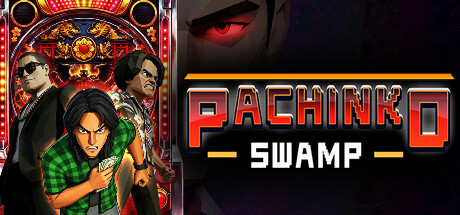
Some of the game's 2D artwork (the slot machine cabinet and its symbols) was created with the help of generative AI image tools, then reviewed, corrected and integrated by hand. Part of the soundtrack was created with generative AI music tools. All game design, gameplay code and text were authored by the developer, who also used AI coding assistants during development. Nothing is AI-generated at runtime: the game contains no live AI content.
Partial artwork uses generative AI assistance. Scripts are fully original written by the developer. Background music is CC0 public domain material, no in-game real-time AI generation.
I’m a web designer by day, and making a game has been a childhood dream of mine. I used generative AI as part of my development process, including helping with code, visual and audio assets. Every asset included in the final game was personally selected, refined by hand, placed, and directed by me to match the game’s overall vision.
During the development of this game, pre-generated AI tools were utilized to assist with text translations, programming scripts and optimization, and the creation of 2D artwork assets. All AI-generated content was directly reviewed, refined, and applied to the game by the developer.
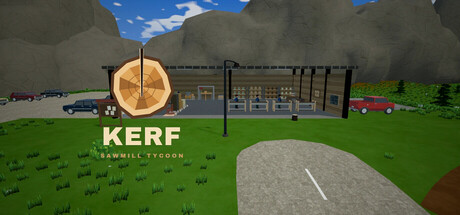
Kerf - Sawmill Tycoon was made almost entirely with AI tools. The developer directed the work, chose what went into the game and approved every result, but did not model, rig or write code by hand. What that means for the content that ships in the game:
- Code: written by an AI coding assistant.
- Characters: generated by an AI 3D tool from AI-generated reference images, then rigged and set up in the game by the AI assistant.
- Other 3D models: some came from an AI 3D tool - a vehicle and environment props such as rocks, mountains and bushes. The rest, including the valley, the buildings, the machines and the trees, were built in 3D software by the AI assistant writing scripts.
- Animation: all character animation was generated with an AI motion tool.
- Music: all of the in-game music was generated with an AI music tool.
- Sound: some sound effects were generated with an AI sound tool; the rest were sourced from sound libraries by the developer.
- Text: the in-game text was written with AI assistance, and the translations from English and Polish into the other 13 supported languages were made with AI.
Everything was reviewed and approved by the developer before release.
No content is generated by AI while the game is running. The Twitch integration only displays messages typed by real viewers.
We used generative AI tools to create the video content shown on the in-game pinball machine, and some of the promotional assets on our store page. All AI-generated content is reviewed by our team before release.
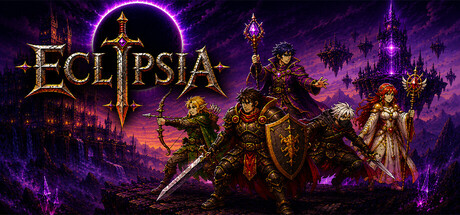
Eclipsia uses generative AI as part of the development process to assist in creating certain visual assets. All AI-assisted content is reviewed, edited, and integrated by the development team. The game does not use generative AI to generate gameplay, game logic, or player-created content in real time.
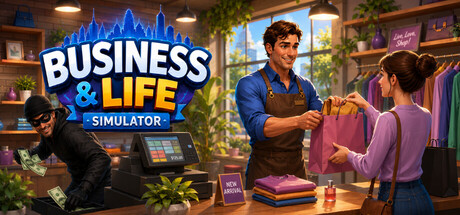
Business And Life Simulator, uses generative AI-assisted artwork in some packaging visuals for in-game products/items. Generative AI is not used in any other part of the game, and we are working to remove these AI-assisted visuals before the full release.
Some of the game's 2D and 3D art assets — including 3D character models and environment props, background and biome art, and iconography — were produced with AI image/model generation tools during development, then hand-curated, edited, and processed into the game. No AI runs at play time; nothing is generated on the player's machine or via an external service.
Some visual assets were created with the help of generative AI and then hand-finished: the store capsule/key art and a short promotional video are AI-assisted, and a small set of in-game background and decoration art (tile textures, decals) started from AI-generated images that were manually edited and integrated. All game code, game design, writing and gameplay systems are human-made. Screenshots on this page show real gameplay. The game does not generate any content with AI at runtime.
Generative AI tools were used during development to create or assist with some visual assets, audio, and 3D assets used in the game and its promotional materials. No AI-generated content is created during gameplay, and the game does not connect to external AI services.
Generative AI tools were used during development to assist in creating selected pre-generated 2D artwork used in the game and on the store page, including promotional illustrations and some visual assets. AI-assisted localization drafts were also used and subsequently reviewed and integrated by the developer. All included content was selected, edited, and prepared before release. The game does not generate AI content while running.
This game was developed with the assistance of generative AI tools during production. AI-generated 2D artwork (building icons, unit portraits, background illustrations, and UI elements) was created and curated by the development team as part of the game's visual assets. AI is not used to generate content dynamically during gameplay -- all art assets are fixed and shipped with the game. In-game opponent behavior uses traditional programmed game logic, not generative AI.
Generative AI was used to create some pre-rendered marketing and store page artwork, including capsule images and promotional graphics. These assets were reviewed and selected by the developer before use. The game does not use live-generated AI content during gameplay.
GRIDFALL was developed with extensive AI assistance (Anthropic's Claude): the game's code — including the procedural generators that produce all in-game art (pre-baked at build time) and synthesize all audio and music at runtime — was written with AI pair-programming under human direction and review. The game contains no pre-rendered AI-generated images or audio files; all art and audio assets are produced by deterministic code, and the sole third-party asset is the SIL-licensed Noto Sans UI font. Story, dialogue, and text were authored with AI assistance under human editorial control.
Character portraits are entirely hand-drawn by artists. Background assets are created using AI as preliminary sketches, then comprehensively revised and manually reworked to achieve consistent art style.
This game features background music generated with AI, used under a commercial license. Some of the supported-language translations were produced with AI assistance. All visual art and game code are hand-authored.
Generative AI tools were used during development to assist with portions of the game’s code and to create or refine some pre-rendered 2D artwork, including character sprites and portraits, item icons, and environment assets. All AI-assisted content was reviewed, edited, and integrated by the developer. The game does not generate AI content or code during gameplay and does not connect to an external AI service during gameplay.
This game uses AI tools in a supporting capacity during the creation of some assets (such as background images, music, and sound effects).
No generated assets are used as-is; all have been processed, adjusted, and composited by human hands before being included in the game.
Some visual assets in this demo are AI-generated placeholders, used temporarily due to budget constraints as a solo developer. These are planned to be replaced with final hand-crafted art before the game's full release.
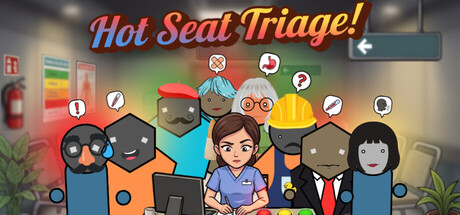
Hot Seat Triage uses AI tools during development only; the game contains no live AI generation at runtime.
Code: The game's code was written with the assistance of Claude (Anthropic). All AI-assisted code was directed, reviewed and tested by the developer.
Art: The in-game background image was initially generated with Nano Banana 2, then manually edited and finalized by the developer. All other art and UI assets are human-made.
Text: Clinical case scenarios were drafted with AI assistance and then reviewed, corrected and medically approved by the developer, an emergency medicine physician.
Audio: The theme music and some sound effects were created by the developer using Suno.
All AI-assisted content was human-reviewed before inclusion.
Elemancer is a solo-developed game. Every system, all gameplay code, the balance, and all writing are human-made and hand-tuned. The 2D art and audio were created with AI tools, then hand-curated, edited, and quality-checked asset by asset before shipping.
AI tools were used as assistive tools during development, specifically for code writing and text proofreading. No AI-generated content is used in the game's art assets, sound effects, or music.
This game uses generative AI to assist in the creation of certain illustrations, visual assets, and some monster graphics. These assets are carefully selected, edited, and integrated into the game by the developer. The game design, scenario, systems, programming, gameplay, maps, and event content are all created by the developer.
This game uses content created or assisted by generative AI. Generative AI was used to help create and edit some visual assets, music/sound materials, and scripts. All final content was reviewed, selected, and adjusted by the developer before being included in the game.
Holiday Alliance uses generative AI to help produce character art, map backgrounds, and music/SFX. All game design, level design, balance, dialogue, and final art/audio selection were done by the developer, with every AI-generated asset reviewed and revised before inclusion.
Generative AI tools were used in parts of this game's development, always under human creative direction.
Art: The game's visual design is led by a classically trained 2D artist acting as art director. The UI style, overall color palette, character art, and environment style are all conceived and directed by a human, starting from hand-drawn sketches and detailed art direction. Generative AI is used only as an execution tool carrying out that direction—the distinctive style and texture of the game come from human artistic judgment, and every asset is directed, selected, and refined by the artist.
Music: The main melodies are composed by us by ear. Generative AI is then directed—with specific guidance on mood, instrumentation, and arrangement—to help realize the finished tracks.
Code: The game's code was generated using AI coding tools.
All content is reviewed and integrated by the developers before inclusion. The game contains no content generated live by AI during gameplay.
AI tools were used during development to help compose the soundtrack, draw the pixel art, and draft text (including localization and this store page), all under human direction — every piece was reviewed, curated, and approved by the developer. All content is fixed at build time; the game contains no live or runtime AI generation.
During the development process, I use procedural and AI-based tools to assist with content creation. In all such cases, the final product reflects my own creativity and vision as a solo developer. Examples include utilizing AI tools to help generate and refine certain textures and 3D models in the game.
This game uses AI-generated tools as part of its development, including AI-assisted voice lines and background music. All AI-generated content was reviewed and curated by the developer.
Generative AI was used throughout nearly every aspect of this game's development and production. AI and a human developer formed an unholy union of sound and mind (a merge, if you will) to birth this production.
No generative AI runs during gameplay. Its contributions were created during development.
Algumas imagens presentes neste jogo foram criadas com auxílio de inteligência artificial generativa e posteriormente revisadas, editadas e integradas pelo desenvolvedor. Todo o restante do jogo, incluindo programação, design, mecânicas e direção criativa, foi desenvolvido manualmente.
This game uses AI technology in the production of some of its illustrations, music, voice, and text assets. All generated assets have been reviewed and adjusted by the developer before inclusion.
The game also includes an "offline AI study assistant." This assistant does NOT generate text. It identifies the intent of the player's question and searches through study data that the developer has written and verified in advance, then displays the matching explanation as-is. It uses two bundled machine-learning models to improve search accuracy (an embedding model, multilingual-e5-large / MIT, and a re-ranking model, ms-marco-MiniLM-L-6-v2 / Apache-2.0), but these models do not generate any answer text. All processing runs entirely on the player's device with no external data transmission (no GPU required; runs on CPU). Any explanation shown was written and verified in advance by the developer. Note that it cannot answer topics outside the included data, and content may become outdated due to changes in exam rules or laws, so please confirm important matters with official exam information. This AI assistant is a supplementary study feature.
Generative AI tools (ChatGPT Image Generation / DALL-E) were used during development to generate concepts and visual marketing assets, including some store page banners and promotional artwork. All core gameplay pixel-art, character animations, sound design, and code were created manually by the developer.
Some of the game's 2D artwork (the slot machine cabinet and its symbols) was created with the help of generative AI image tools, then reviewed, corrected and integrated by hand. Part of the soundtrack was created with generative AI music tools. All game design, gameplay code and text were authored by the developer, who also used AI coding assistants during development. Nothing is AI-generated at runtime: the game contains no live AI content.
Partial artwork uses generative AI assistance. Scripts are fully original written by the developer. Background music is CC0 public domain material, no in-game real-time AI generation.
I’m a web designer by day, and making a game has been a childhood dream of mine. I used generative AI as part of my development process, including helping with code, visual and audio assets. Every asset included in the final game was personally selected, refined by hand, placed, and directed by me to match the game’s overall vision.
During the development of this game, pre-generated AI tools were utilized to assist with text translations, programming scripts and optimization, and the creation of 2D artwork assets. All AI-generated content was directly reviewed, refined, and applied to the game by the developer.
Kerf - Sawmill Tycoon was made almost entirely with AI tools. The developer directed the work, chose what went into the game and approved every result, but did not model, rig or write code by hand. What that means for the content that ships in the game:
- Code: written by an AI coding assistant.
- Characters: generated by an AI 3D tool from AI-generated reference images, then rigged and set up in the game by the AI assistant.
- Other 3D models: some came from an AI 3D tool - a vehicle and environment props such as rocks, mountains and bushes. The rest, including the valley, the buildings, the machines and the trees, were built in 3D software by the AI assistant writing scripts.
- Animation: all character animation was generated with an AI motion tool.
- Music: all of the in-game music was generated with an AI music tool.
- Sound: some sound effects were generated with an AI sound tool; the rest were sourced from sound libraries by the developer.
- Text: the in-game text was written with AI assistance, and the translations from English and Polish into the other 13 supported languages were made with AI.
Everything was reviewed and approved by the developer before release.
No content is generated by AI while the game is running. The Twitch integration only displays messages typed by real viewers.
We used generative AI tools to create the video content shown on the in-game pinball machine, and some of the promotional assets on our store page. All AI-generated content is reviewed by our team before release.
Eclipsia uses generative AI as part of the development process to assist in creating certain visual assets. All AI-assisted content is reviewed, edited, and integrated by the development team. The game does not use generative AI to generate gameplay, game logic, or player-created content in real time.
Business And Life Simulator, uses generative AI-assisted artwork in some packaging visuals for in-game products/items. Generative AI is not used in any other part of the game, and we are working to remove these AI-assisted visuals before the full release.
Some of the game's 2D and 3D art assets — including 3D character models and environment props, background and biome art, and iconography — were produced with AI image/model generation tools during development, then hand-curated, edited, and processed into the game. No AI runs at play time; nothing is generated on the player's machine or via an external service.
Some visual assets were created with the help of generative AI and then hand-finished: the store capsule/key art and a short promotional video are AI-assisted, and a small set of in-game background and decoration art (tile textures, decals) started from AI-generated images that were manually edited and integrated. All game code, game design, writing and gameplay systems are human-made. Screenshots on this page show real gameplay. The game does not generate any content with AI at runtime.
Generative AI tools were used during development to create or assist with some visual assets, audio, and 3D assets used in the game and its promotional materials. No AI-generated content is created during gameplay, and the game does not connect to external AI services.
Generative AI tools were used during development to assist in creating selected pre-generated 2D artwork used in the game and on the store page, including promotional illustrations and some visual assets. AI-assisted localization drafts were also used and subsequently reviewed and integrated by the developer. All included content was selected, edited, and prepared before release. The game does not generate AI content while running.
This game was developed with the assistance of generative AI tools during production. AI-generated 2D artwork (building icons, unit portraits, background illustrations, and UI elements) was created and curated by the development team as part of the game's visual assets. AI is not used to generate content dynamically during gameplay -- all art assets are fixed and shipped with the game. In-game opponent behavior uses traditional programmed game logic, not generative AI.
Generative AI was used to create some pre-rendered marketing and store page artwork, including capsule images and promotional graphics. These assets were reviewed and selected by the developer before use. The game does not use live-generated AI content during gameplay.
GRIDFALL was developed with extensive AI assistance (Anthropic's Claude): the game's code — including the procedural generators that produce all in-game art (pre-baked at build time) and synthesize all audio and music at runtime — was written with AI pair-programming under human direction and review. The game contains no pre-rendered AI-generated images or audio files; all art and audio assets are produced by deterministic code, and the sole third-party asset is the SIL-licensed Noto Sans UI font. Story, dialogue, and text were authored with AI assistance under human editorial control.
Character portraits are entirely hand-drawn by artists. Background assets are created using AI as preliminary sketches, then comprehensively revised and manually reworked to achieve consistent art style.
This game features background music generated with AI, used under a commercial license. Some of the supported-language translations were produced with AI assistance. All visual art and game code are hand-authored.
Generative AI tools were used during development to assist with portions of the game’s code and to create or refine some pre-rendered 2D artwork, including character sprites and portraits, item icons, and environment assets. All AI-assisted content was reviewed, edited, and integrated by the developer. The game does not generate AI content or code during gameplay and does not connect to an external AI service during gameplay.
This game uses AI tools in a supporting capacity during the creation of some assets (such as background images, music, and sound effects).
No generated assets are used as-is; all have been processed, adjusted, and composited by human hands before being included in the game.
Some visual assets in this demo are AI-generated placeholders, used temporarily due to budget constraints as a solo developer. These are planned to be replaced with final hand-crafted art before the game's full release.
Hot Seat Triage uses AI tools during development only; the game contains no live AI generation at runtime.
Code: The game's code was written with the assistance of Claude (Anthropic). All AI-assisted code was directed, reviewed and tested by the developer.
Art: The in-game background image was initially generated with Nano Banana 2, then manually edited and finalized by the developer. All other art and UI assets are human-made.
Text: Clinical case scenarios were drafted with AI assistance and then reviewed, corrected and medically approved by the developer, an emergency medicine physician.
Audio: The theme music and some sound effects were created by the developer using Suno.
All AI-assisted content was human-reviewed before inclusion.
Elemancer is a solo-developed game. Every system, all gameplay code, the balance, and all writing are human-made and hand-tuned. The 2D art and audio were created with AI tools, then hand-curated, edited, and quality-checked asset by asset before shipping.
AI tools were used as assistive tools during development, specifically for code writing and text proofreading. No AI-generated content is used in the game's art assets, sound effects, or music.
This game uses generative AI to assist in the creation of certain illustrations, visual assets, and some monster graphics. These assets are carefully selected, edited, and integrated into the game by the developer. The game design, scenario, systems, programming, gameplay, maps, and event content are all created by the developer.
This game uses content created or assisted by generative AI. Generative AI was used to help create and edit some visual assets, music/sound materials, and scripts. All final content was reviewed, selected, and adjusted by the developer before being included in the game.
Holiday Alliance uses generative AI to help produce character art, map backgrounds, and music/SFX. All game design, level design, balance, dialogue, and final art/audio selection were done by the developer, with every AI-generated asset reviewed and revised before inclusion.
Generative AI tools were used in parts of this game's development, always under human creative direction.
Art: The game's visual design is led by a classically trained 2D artist acting as art director. The UI style, overall color palette, character art, and environment style are all conceived and directed by a human, starting from hand-drawn sketches and detailed art direction. Generative AI is used only as an execution tool carrying out that direction—the distinctive style and texture of the game come from human artistic judgment, and every asset is directed, selected, and refined by the artist.
Music: The main melodies are composed by us by ear. Generative AI is then directed—with specific guidance on mood, instrumentation, and arrangement—to help realize the finished tracks.
Code: The game's code was generated using AI coding tools.
All content is reviewed and integrated by the developers before inclusion. The game contains no content generated live by AI during gameplay.