Public Steam disclosure research25,380 disclosures tracked
Where do games disclose AI use?
Search developers’ Steam disclosures, compare classified AI use across
games, and follow recorded changes.
This index adds cross-game classifications and statistics to
statements published on individual store pages.
Groups reflect automatic analysis of public disclosures; mature records are excluded. These counts do not measure AI use across all of Steam.
Missing or unclear statements cannot establish whether a game uses AI.
Generative AI (Claude, Anthropic) was used to draft narrative text including level briefing descriptions, objective text, and in-game educational hints. All narrative content was written collaboratively with human review and editing before inclusion in the final game.
VOIDWAVE's game design, programming, and automation simulation are built by hand. Some visual assets — certain sprites, icons, and UI art — were created with the help of generative AI tools and hand-edited to fit the game's style, and the game's music is AI-generated. Sound effects use procedural synthesis (not AI). All gameplay, systems, and balancing are human-designed, and all content is finalized during development — nothing is AI-generated while you play.
AI tools were used to generate the visual assets, logos, and images featured on this store page and inside the application. The software itself is a local utility and does not dynamically generate any AI content during runtime.
Some art assets in this game were created or assisted by generative AI tools during development, including selected icons, textures, and promotional images. All such assets were pre-generated, manually reviewed, edited, and integrated into the game. The game does not generate AI content during runtime and does not connect to or use any external AI services.
Generative AI tools were used during the development of this game to assist with early concept art generation, texture optimization, and fine-tuning certain visual assets. All final in-game assets have been reviewed and refined by the development team.
AI Used to Generate SOME Game Aspects such as backend simulations and Graphical Textures. ALL AI Usage is Pre-Rendered and approved by Development team before being built into the game.
The story and game design are an original creation of the developer.
AI was used as a tool to produce certain fixed visuals (store page, logo, illustrations),
in order to faithfully represent the game's artistic vision.
No content is AI-generated during gameplay.
Generative AI was used during development to assist in creating certain visual assets, dialogue drafts, event text, and marketing artwork. All AI-generated content has been reviewed, edited, and integrated by the developer before being included in the game. The game does not use live-generated AI content during gameplay.
During the development of this game, generative AI tools were used to assist the developer in several areas:
- Music & Audio: The game's soundtrack and musical scores were entirely generated using AI audio tools.
- Visual Assets: AI tools were used to assist in the texturing process for a selection of 3D models.
- Localization & Text: AI assisted in the translation and localization of the game's text, as well as refining marketing materials and store descriptions.
- Coding: AI coding agents were utilized to assist with programming, code optimization, and debugging.
All AI-assisted assets and code have been carefully reviewed, curated, and integrated by the developer to ensure a cohesive and high-quality player experience.
AI tools were used during development.
The interface translations (English, French, German, Italian and Portuguese) and the log translations were generated with AI assistance, under the developer's direction and with human review. The game does not generate AI content at runtime.
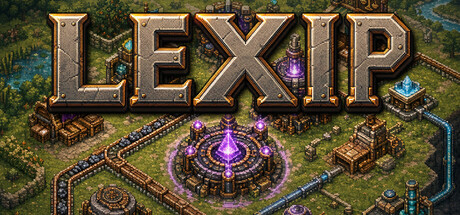
Generative AI tools were used in the development of Lexip to create initial drafts and source material for parts of the project, including code, visual assets, sounds, writing, and marketing materials. These outputs were not used unchanged; they were reviewed, selected, adapted, edited, and integrated by the developer. The final implementation, design decisions, and overall tuning were done manually. The game does not generate new AI content during gameplay.
AI was used as the main tool to code this game, generate assets, and navigate the release processes.
This is the core model of Shadow Games Software. Leveraging AI to do the busy work to free up creative teams to focus more on design, taste, and producing a quality product.
As the 2nd real project for the studio, Idle Energy, heavily used AI during development.
Some 2D images and promotional artwork used in the game and on the Steam store page were created or assisted using generative AI tools and then reviewed, modified, and integrated by the developer. No real-time AI-generated content is created during gameplay.
Some of this game's character and enemy art was created with the assistance of generative AI tools during development, then hand-reviewed and edited before shipping. No AI content is generated at runtime.
This game includes some pre-generated visual assets and music created with the help of AI tools during development. No AI content is generated live during gameplay.
Generative AI tools, including GPT/Codex, were used during development to assist with code, UI text, layout iteration, documentation drafts, store copy, planning materials, QA checklists, and release preparation.
All AI-assisted content included in ClickAssist or its store materials was reviewed, selected, edited, and integrated by the developer before publication.
ClickAssist itself does not include live-generated AI content, AI chatbots, runtime AI generation, external AI service connections, or in-app AI image generation.
Generative AI was used during the development process to assist with code optimization, refactoring, and text translation. None of the AI-generated content is generated in real-time or active during live gameplay.
I only used AI to help with the Steam assets (capsules, banners, etc.) and with some programming systems I was still learning, such as the save system and the rebirth system. I've been developing this game for about 3.5 months, and at some point you have to call it finished. I'm happy with how it turned out, and I hope you'll give it a try. It's designed to be a game you can open for 10–15 minutes a day, make some progress, and come back to later.
The art, music, and writing in this game were created with AI tools during development, directed by the developer through written prompts. The development process is documented publicly, prompt by prompt. The shipped game contains no live or runtime AI generation — the in-game assistant “Aya” is a hand-authored, deterministic simulation, and the game makes no network or model calls during play.
The game's code, artwork, text content, and some marketing assets were created with the assistance of generative AI tools during development. All AI-generated content was reviewed, tested, and curated by the developer before inclusion. The game does not generate any content in real time using AI — all content is pre-rendered and static.
This game and its store page may include pre-generated AI-assisted content, such as visual assets, store artwork, marketing images, text drafts and localization support. All AI-assisted content is reviewed, selected and edited manually before inclusion.
The game does not use live-generated AI during gameplay.
Store and marketing art assets were created with the assistance of generative AI image tools, based on the developer's original prompts. All other game content is human-authored. No AI content is generated during gameplay.
A pre-rendered cinematic intro sequence was created with the assistance of AI-based video generation tools. Some visual assets were generated or refined using AI image generation.
Artificial intelligence was used as a supporting tool to help organize the project, structure ideas, and assist throughout development. The game's design, gameplay, programming, and all creative decisions were created by the developer.
Some non-interactive assets in Harvest Havoc were produced with AI-assisted tools:
- Background music tracks were generated via AI music synthesis models, then curated and mixed by the developer.
- Sound effects were produced with AI-assisted audio generation tools.
- English and Japanese in-game text was drafted with AI translation assistance and then reviewed by the developer.
All gameplay code, level design, sprite art, and character animations were created by the developer without AI generation. No AI content is generated at runtime.
Generative AI tools are used to assist the development process, including concept art generation, programming support, and localization. All final content is reviewed and edited by the developer.
Generative AI was used only to assist in editing and enhancing certain 2D images used in the game, such as improving quality, refining details, or making visual adjustments. All gameplay, programming, game design, and the final implementation of assets were created and reviewed by the developer. No generative AI is used to create gameplay content or player interactions during gameplay.
Oreworks contains AI-generated content. Like in-game visual assets and programming assistance during developement.
All AI-generated content was manually reviewed, curated and intetegrated by the developer.
This game was made with the help of AI. The music was generated using Suno, and AI tools assisted with other content and store materials, all reviewed and curated by the developer.
Action & Automation is not only how the game plays, it is how the game was made.
As the game’s sole human developer, game director, and system architect, I designed the core gameplay systems, software architecture, worldbuilding, narrative framework, story design, and gameplay balance. That is the Action.
For the Automation, I deliberately pushed generative AI throughout the production pipeline, with quality and player experience as the only limits. Following my direction and specifications, AI produced much of the code, artwork, animation, VFX, and UI, and was used for text polishing and localization.
No generative AI model or external AI service runs during gameplay. The game requires no AI account, API key, subscription, or token credits. Any apparent AI thinking or reasoning is scripted or driven by conventional game AI systems.
Human-designed. AI-produced. That is Action & Automation.
Good, honest call — AI-generated art means you disclose it, and Steam shows this text publicly on your page. Here's a clean, accurate disclosure message:
Some of the visual assets in this game (such as card artwork and illustrations) were created with the assistance of generative AI tools. All AI-generated content was reviewed and curated by the developer. The game's design, code, and gameplay are human-authored.
Development/Pre-Generated AI Use Disclosure:
During the development process, Generative AI tools were used to assist in the creation of game assets. Specifically, portions of the game props, enemy models, 2D user interface elements, and background music/audio were developed with the assistance of AI tools.
All of these assets have undergone a thorough review, manual optimization, and integration through our standard development pipeline to ensure they match the game's unique artistic style and high-quality standards.
None of the AI-assisted content infringes upon any third-party copyrights or contains any restricted elements. The final game complies entirely with Steam's content policies.
Some of the images in the game were generated using AI during the prototype stage. Such assets may be present in the game up until the release of the demo (inclusive). During the development process, we gradually get rid of generated assets and replace them with hand-made ones. By the time of the official release, all generated content will be removed. This is a normal process for developing an indie game.
This game includes some AI-assisted music and Steam store marketing assets created during development. All such content was reviewed and integrated by the developer. No AI-generated content is created during gameplay, and players cannot generate AI content within the game.
This game has AI generated images (including the community items) and other AI made components. If you are sensitive about AI generated content please do not purchase this game.
Some store page marketing images, capsule assets, and promotional screenshots were created or edited with generative AI and then reviewed and adjusted for layout, sizing, and text. The game does not use live generative AI during gameplay, and it does not connect to any third-party AI service while players are playing.
Generative AI was used to assist in creating some visual assets during development. All final in-game artwork was manually retouched and finalized by human artists.
I am writing to provide further explanation regarding the AI content disclosure. We used an AI-assisted video and image editing tool, specifically CapCut (also known as JianYing), to help edit and generate some of the assets for our promotional trailer and store page images. The AI features within this software were utilized to assist in the editing, effects, and visual generation process for these store page assets.
Generative AI (Claude, Anthropic) was used to draft narrative text including level briefing descriptions, objective text, and in-game educational hints. All narrative content was written collaboratively with human review and editing before inclusion in the final game.
VOIDWAVE's game design, programming, and automation simulation are built by hand. Some visual assets — certain sprites, icons, and UI art — were created with the help of generative AI tools and hand-edited to fit the game's style, and the game's music is AI-generated. Sound effects use procedural synthesis (not AI). All gameplay, systems, and balancing are human-designed, and all content is finalized during development — nothing is AI-generated while you play.
AI tools were used to generate the visual assets, logos, and images featured on this store page and inside the application. The software itself is a local utility and does not dynamically generate any AI content during runtime.
Some art assets in this game were created or assisted by generative AI tools during development, including selected icons, textures, and promotional images. All such assets were pre-generated, manually reviewed, edited, and integrated into the game. The game does not generate AI content during runtime and does not connect to or use any external AI services.
Generative AI tools were used during the development of this game to assist with early concept art generation, texture optimization, and fine-tuning certain visual assets. All final in-game assets have been reviewed and refined by the development team.
AI Used to Generate SOME Game Aspects such as backend simulations and Graphical Textures. ALL AI Usage is Pre-Rendered and approved by Development team before being built into the game.
The story and game design are an original creation of the developer.
AI was used as a tool to produce certain fixed visuals (store page, logo, illustrations),
in order to faithfully represent the game's artistic vision.
No content is AI-generated during gameplay.
Generative AI was used during development to assist in creating certain visual assets, dialogue drafts, event text, and marketing artwork. All AI-generated content has been reviewed, edited, and integrated by the developer before being included in the game. The game does not use live-generated AI content during gameplay.
During the development of this game, generative AI tools were used to assist the developer in several areas:
- Music & Audio: The game's soundtrack and musical scores were entirely generated using AI audio tools.
- Visual Assets: AI tools were used to assist in the texturing process for a selection of 3D models.
- Localization & Text: AI assisted in the translation and localization of the game's text, as well as refining marketing materials and store descriptions.
- Coding: AI coding agents were utilized to assist with programming, code optimization, and debugging.
All AI-assisted assets and code have been carefully reviewed, curated, and integrated by the developer to ensure a cohesive and high-quality player experience.
AI tools were used during development.
The interface translations (English, French, German, Italian and Portuguese) and the log translations were generated with AI assistance, under the developer's direction and with human review. The game does not generate AI content at runtime.
Generative AI tools were used in the development of Lexip to create initial drafts and source material for parts of the project, including code, visual assets, sounds, writing, and marketing materials. These outputs were not used unchanged; they were reviewed, selected, adapted, edited, and integrated by the developer. The final implementation, design decisions, and overall tuning were done manually. The game does not generate new AI content during gameplay.
AI was used as the main tool to code this game, generate assets, and navigate the release processes.
This is the core model of Shadow Games Software. Leveraging AI to do the busy work to free up creative teams to focus more on design, taste, and producing a quality product.
As the 2nd real project for the studio, Idle Energy, heavily used AI during development.
Some 2D images and promotional artwork used in the game and on the Steam store page were created or assisted using generative AI tools and then reviewed, modified, and integrated by the developer. No real-time AI-generated content is created during gameplay.
Some of this game's character and enemy art was created with the assistance of generative AI tools during development, then hand-reviewed and edited before shipping. No AI content is generated at runtime.
This game includes some pre-generated visual assets and music created with the help of AI tools during development. No AI content is generated live during gameplay.
Generative AI tools, including GPT/Codex, were used during development to assist with code, UI text, layout iteration, documentation drafts, store copy, planning materials, QA checklists, and release preparation.
All AI-assisted content included in ClickAssist or its store materials was reviewed, selected, edited, and integrated by the developer before publication.
ClickAssist itself does not include live-generated AI content, AI chatbots, runtime AI generation, external AI service connections, or in-app AI image generation.
Generative AI was used during the development process to assist with code optimization, refactoring, and text translation. None of the AI-generated content is generated in real-time or active during live gameplay.
I only used AI to help with the Steam assets (capsules, banners, etc.) and with some programming systems I was still learning, such as the save system and the rebirth system. I've been developing this game for about 3.5 months, and at some point you have to call it finished. I'm happy with how it turned out, and I hope you'll give it a try. It's designed to be a game you can open for 10–15 minutes a day, make some progress, and come back to later.
The art, music, and writing in this game were created with AI tools during development, directed by the developer through written prompts. The development process is documented publicly, prompt by prompt. The shipped game contains no live or runtime AI generation — the in-game assistant “Aya” is a hand-authored, deterministic simulation, and the game makes no network or model calls during play.
The game's code, artwork, text content, and some marketing assets were created with the assistance of generative AI tools during development. All AI-generated content was reviewed, tested, and curated by the developer before inclusion. The game does not generate any content in real time using AI — all content is pre-rendered and static.
This game and its store page may include pre-generated AI-assisted content, such as visual assets, store artwork, marketing images, text drafts and localization support. All AI-assisted content is reviewed, selected and edited manually before inclusion.
The game does not use live-generated AI during gameplay.
Store and marketing art assets were created with the assistance of generative AI image tools, based on the developer's original prompts. All other game content is human-authored. No AI content is generated during gameplay.
A pre-rendered cinematic intro sequence was created with the assistance of AI-based video generation tools. Some visual assets were generated or refined using AI image generation.
Artificial intelligence was used as a supporting tool to help organize the project, structure ideas, and assist throughout development. The game's design, gameplay, programming, and all creative decisions were created by the developer.
Some non-interactive assets in Harvest Havoc were produced with AI-assisted tools:
- Background music tracks were generated via AI music synthesis models, then curated and mixed by the developer.
- Sound effects were produced with AI-assisted audio generation tools.
- English and Japanese in-game text was drafted with AI translation assistance and then reviewed by the developer.
All gameplay code, level design, sprite art, and character animations were created by the developer without AI generation. No AI content is generated at runtime.
Generative AI tools are used to assist the development process, including concept art generation, programming support, and localization. All final content is reviewed and edited by the developer.
Generative AI was used only to assist in editing and enhancing certain 2D images used in the game, such as improving quality, refining details, or making visual adjustments. All gameplay, programming, game design, and the final implementation of assets were created and reviewed by the developer. No generative AI is used to create gameplay content or player interactions during gameplay.
Oreworks contains AI-generated content. Like in-game visual assets and programming assistance during developement.
All AI-generated content was manually reviewed, curated and intetegrated by the developer.
This game was made with the help of AI. The music was generated using Suno, and AI tools assisted with other content and store materials, all reviewed and curated by the developer.
Action & Automation is not only how the game plays, it is how the game was made.
As the game’s sole human developer, game director, and system architect, I designed the core gameplay systems, software architecture, worldbuilding, narrative framework, story design, and gameplay balance. That is the Action.
For the Automation, I deliberately pushed generative AI throughout the production pipeline, with quality and player experience as the only limits. Following my direction and specifications, AI produced much of the code, artwork, animation, VFX, and UI, and was used for text polishing and localization.
No generative AI model or external AI service runs during gameplay. The game requires no AI account, API key, subscription, or token credits. Any apparent AI thinking or reasoning is scripted or driven by conventional game AI systems.
Human-designed. AI-produced. That is Action & Automation.
Good, honest call — AI-generated art means you disclose it, and Steam shows this text publicly on your page. Here's a clean, accurate disclosure message:
Some of the visual assets in this game (such as card artwork and illustrations) were created with the assistance of generative AI tools. All AI-generated content was reviewed and curated by the developer. The game's design, code, and gameplay are human-authored.
Development/Pre-Generated AI Use Disclosure:
During the development process, Generative AI tools were used to assist in the creation of game assets. Specifically, portions of the game props, enemy models, 2D user interface elements, and background music/audio were developed with the assistance of AI tools.
All of these assets have undergone a thorough review, manual optimization, and integration through our standard development pipeline to ensure they match the game's unique artistic style and high-quality standards.
None of the AI-assisted content infringes upon any third-party copyrights or contains any restricted elements. The final game complies entirely with Steam's content policies.
Some of the images in the game were generated using AI during the prototype stage. Such assets may be present in the game up until the release of the demo (inclusive). During the development process, we gradually get rid of generated assets and replace them with hand-made ones. By the time of the official release, all generated content will be removed. This is a normal process for developing an indie game.
This game includes some AI-assisted music and Steam store marketing assets created during development. All such content was reviewed and integrated by the developer. No AI-generated content is created during gameplay, and players cannot generate AI content within the game.
This game has AI generated images (including the community items) and other AI made components. If you are sensitive about AI generated content please do not purchase this game.
Some store page marketing images, capsule assets, and promotional screenshots were created or edited with generative AI and then reviewed and adjusted for layout, sizing, and text. The game does not use live generative AI during gameplay, and it does not connect to any third-party AI service while players are playing.
Generative AI was used to assist in creating some visual assets during development. All final in-game artwork was manually retouched and finalized by human artists.
I am writing to provide further explanation regarding the AI content disclosure. We used an AI-assisted video and image editing tool, specifically CapCut (also known as JianYing), to help edit and generate some of the assets for our promotional trailer and store page images. The AI features within this software were utilized to assist in the editing, effects, and visual generation process for these store page assets.