Public Steam disclosure research25,380 disclosures tracked
Where do games disclose AI use?
Search developers’ Steam disclosures, compare classified AI use across
games, and follow recorded changes.
This index adds cross-game classifications and statistics to
statements published on individual store pages.
Groups reflect automatic analysis of public disclosures; mature records are excluded. These counts do not measure AI use across all of Steam.
Missing or unclear statements cannot establish whether a game uses AI.
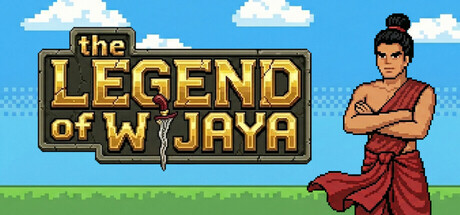
The Legend of Wijaya utilizes pre-generated AI tools strictly as an assistive foundation for a minor portion of background environmental assets and foundational music tracks. All AI-assisted content is heavily manually edited, polished, and arranged by the developer to ensure it strictly matches the handcrafted pixel-art aesthetic and historical tone of the game.
This game was developed with the assistance of AI tools. Character sprites and visual assets were generated using AI image tools and further edited using image editing software. The game's soundtrack was created using AI music generation tools. Game code was written with AI coding assistance. The game's story, narrative, and gameplay design are entirely original and created by the developer.
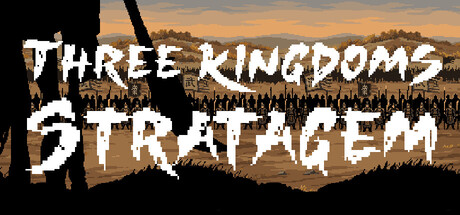
This game contains a mix of human-created and AI-generated pixel art assets. Some assets were initially AI-generated and then heavily modified by a human artist (e.g. the battle map hexes, horse sprites, intro screen).
The voice acting was generated with XTTS v2, an open-source text-to-speech model. This allowed a one-person project to have a large cast of voiced characters.
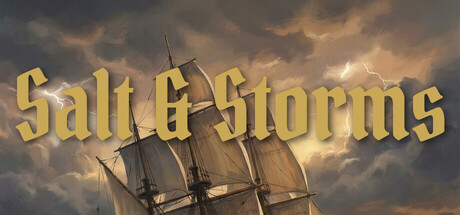
Some art assets (cargo icons, music tracks, marketing images) were created with assistance from AI generation tools and refined by the developer. All game code, design, and gameplay systems are human-created. No AI content is generated at runtime during gameplay.
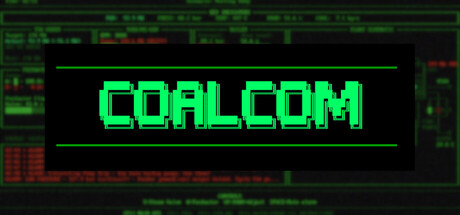
COALCOM was built by a solo developer with 20+ years in the power industry. Generative AI was used to write and iterate on game code — it's what made finishing a +10-year project idea finally possible. Some written content, including store page copy and the game manual, was drafted with AI assistance and refined by the developer. The game design, mechanics, domain expertise, and voice are entirely human. The visual assets were not AI-generated.
This game does not contain any AI-generated visual or audio assets.
AI tools were used solely as development assistance for:
• Translation assistance
• Text proofreading and wording suggestions
• Code review, debugging, and programming assistance
• Brainstorming and general development support
All game content, assets, and code were created, reviewed, and curated by the developer. Any AI-assisted output was subject to human review and modification before inclusion in the game.
For this game, generative AI is used as an auxiliary tool in some parts of development and production.
It is used to create rough drafts of some of the images, text, and localization ideas used on the store page and in-game.
Final acceptance, editing, and quality checks are handled by the developers, and the content is released only after being confirmed for accuracy and appropriateness.
Please note that no content is generated in real time in response to player input within the game.
The core textual content of this application, including the multilingual translations of the Tao Te Ching and the in-depth semantic analysis of each individual ancient Chinese character, is pre-generated utilizing advanced Large Language Models (such as Claude and Gemini). The powerful logical reasoning and cross-linguistic mapping capabilities of AI help us break down the barriers of language and time, delivering a highly accurate, modern deconstruction of classical Eastern philosophy from over two thousand years ago.
During the development of this game, we utilized generative artificial intelligence (AI) technology to assist in the creation of certain game art assets, narrative text, game content, programming, and localized translations. All AI-generated content has been manually reviewed, modified, and integrated by our development team to ensure it aligns with game design, meets quality standards, and maintains originality.
Generative artificial intelligence is utilized in game development for the artistic creation of images rendering scenic spots and historical sites and horses.
The core code and system design of the game were primarily developed with the assistance of Generative AI.
The development approach adopts a "human-AI collaboration" development model:
- Design & Planning**: Game concepts, mechanics, and feature requirements proposed by human developers
- Code Implementation**: C# code and Unity scripts generated by AI assistant (based on large language models)
- Testing & Refinement**: Game testing conducted by human developers, with AI iterating based on feedback
- Creative Decisions**: All core gameplay, numerical balance, and design direction determined by human developers
In-Game Assets: We use AI tools to assist our small team in creating some 2D assets like UI icons and decorative textures.
Marketing: Store images and descriptions were generated with AI assistance to help present our game concept.
[AI Content Disclosure]This game utilizes generative AI tools to assist in the creation of visual assets (backgrounds, characters), background music, and parts of the narrative script.All AI-generated content has been manually reviewed, edited, and refined by the human developer to ensure it aligns with the game's "Japanese Gothic" aesthetic and story. We define this collaborative process between human creativity and AI as "Vibe Coding."
As a two-person independent team with no dedicated art department or budget, we have utilized generative AI to create all visual assets within the game. This includes:
Environment & Backgrounds: All village landscapes, interiors, and atmospheric backdrops depicting 1920s Anatolia.
Character Portraits: All visual representations of the villagers and historical figures.
UI & Icons: The majority of the user interface elements, icons, and parchment-style menus.
Concept Art: All marketing materials and store page assets.
We have carefully curated, edited, and integrated these AI-generated visuals to ensure they align with our specific historical narrative and charcoal-style aesthetic. Our use of this technology was the only way to bring our vision of this National Struggle story to life with the limited resources of a two-man studio.
This game uses AI-assisted tools in the creation of certain UI elements, icon images, music, sound effects, and translations.
Character designs and background illustrations are fully created by the developer without the use of AI.
All AI-generated content has been manually reviewed, edited, and finalized to ensure quality and consistency.
We've harnessed the power of Generative AI technology to create several of our game's unique theme background artworks, enhancing your gaming experience with visually stunning designs.
We have utilized generative AI tools during the development process to assist in the creation of various 2D and 3D assets. This includes certain environmental textures, 2D UI elements, and some base 3D models. All AI-generated content has been manually reviewed, edited, and refined by our team to ensure quality and originality. These assets are pre-generated and are not created in real-time during gameplay.
AI is used to generate the voices and advice of two opposing royal advisers (Left and Right Councillor). Each turn they comment on the situation and recommend different actions. If the player’s decree aligns more closely with one adviser’s stance, that adviser’s credibility increases while the other’s decreases.
As the credibility gap grows, public trust is affected, reflecting rising factional tension. If an adviser’s credibility reaches zero, they resign—sometimes angrily—warning the player not to dismiss their counsel. The vacant seat is then filled by a successor adviser, represented by a different local LLM model. This creates shifting personalities and advice styles across runs.
AI does not determine the game’s outcomes. Core consequences and metric changes are resolved by the game’s rule system; AI provides narrative and guidance within that system.
I use AI to supplement as a stand in for what will eventually become human made content, currently its just music at the main menu and some parts of images in advertisements
AI-based voice conversion is used for a single cameo character to respectfully recreate and restore the voice of a deceased person from archival recordings, while all dialogue is written manually.
Generative artificial intelligence was used during development to assist with creating only a few concept art pieces, while the majority of concept art was drawn by the development team. AI was also used to help polish certain 2D scene visuals. All AI-assisted content was reviewed, refined, and integrated by the team to ensure it fits the game’s artistic vision and quality standards.
We have utilized AI-assisted design for the store materials and some 2D background images within the game. However, these are not purely AI-generated; they are based on our original photographs that were enhanced using AI technology, and subsequently refined manually to ensure quality.
We utilize AI tools to assist in our development process. Any content generated with AI is then carefully refined and polished by our design team to ensure it aligns perfectly with the game's unique art style and overall vision.
The Legend of Wijaya utilizes pre-generated AI tools strictly as an assistive foundation for a minor portion of background environmental assets and foundational music tracks. All AI-assisted content is heavily manually edited, polished, and arranged by the developer to ensure it strictly matches the handcrafted pixel-art aesthetic and historical tone of the game.
This game was developed with the assistance of AI tools. Character sprites and visual assets were generated using AI image tools and further edited using image editing software. The game's soundtrack was created using AI music generation tools. Game code was written with AI coding assistance. The game's story, narrative, and gameplay design are entirely original and created by the developer.
This game contains a mix of human-created and AI-generated pixel art assets. Some assets were initially AI-generated and then heavily modified by a human artist (e.g. the battle map hexes, horse sprites, intro screen).
The voice acting was generated with XTTS v2, an open-source text-to-speech model. This allowed a one-person project to have a large cast of voiced characters.
Some art assets (cargo icons, music tracks, marketing images) were created with assistance from AI generation tools and refined by the developer. All game code, design, and gameplay systems are human-created. No AI content is generated at runtime during gameplay.
COALCOM was built by a solo developer with 20+ years in the power industry. Generative AI was used to write and iterate on game code — it's what made finishing a +10-year project idea finally possible. Some written content, including store page copy and the game manual, was drafted with AI assistance and refined by the developer. The game design, mechanics, domain expertise, and voice are entirely human. The visual assets were not AI-generated.
This game does not contain any AI-generated visual or audio assets.
AI tools were used solely as development assistance for:
• Translation assistance
• Text proofreading and wording suggestions
• Code review, debugging, and programming assistance
• Brainstorming and general development support
All game content, assets, and code were created, reviewed, and curated by the developer. Any AI-assisted output was subject to human review and modification before inclusion in the game.
For this game, generative AI is used as an auxiliary tool in some parts of development and production.
It is used to create rough drafts of some of the images, text, and localization ideas used on the store page and in-game.
Final acceptance, editing, and quality checks are handled by the developers, and the content is released only after being confirmed for accuracy and appropriateness.
Please note that no content is generated in real time in response to player input within the game.
The core textual content of this application, including the multilingual translations of the Tao Te Ching and the in-depth semantic analysis of each individual ancient Chinese character, is pre-generated utilizing advanced Large Language Models (such as Claude and Gemini). The powerful logical reasoning and cross-linguistic mapping capabilities of AI help us break down the barriers of language and time, delivering a highly accurate, modern deconstruction of classical Eastern philosophy from over two thousand years ago.
During the development of this game, we utilized generative artificial intelligence (AI) technology to assist in the creation of certain game art assets, narrative text, game content, programming, and localized translations. All AI-generated content has been manually reviewed, modified, and integrated by our development team to ensure it aligns with game design, meets quality standards, and maintains originality.
Generative artificial intelligence is utilized in game development for the artistic creation of images rendering scenic spots and historical sites and horses.
The core code and system design of the game were primarily developed with the assistance of Generative AI.
The development approach adopts a "human-AI collaboration" development model:
- Design & Planning**: Game concepts, mechanics, and feature requirements proposed by human developers
- Code Implementation**: C# code and Unity scripts generated by AI assistant (based on large language models)
- Testing & Refinement**: Game testing conducted by human developers, with AI iterating based on feedback
- Creative Decisions**: All core gameplay, numerical balance, and design direction determined by human developers
In-Game Assets: We use AI tools to assist our small team in creating some 2D assets like UI icons and decorative textures.
Marketing: Store images and descriptions were generated with AI assistance to help present our game concept.
[AI Content Disclosure]This game utilizes generative AI tools to assist in the creation of visual assets (backgrounds, characters), background music, and parts of the narrative script.All AI-generated content has been manually reviewed, edited, and refined by the human developer to ensure it aligns with the game's "Japanese Gothic" aesthetic and story. We define this collaborative process between human creativity and AI as "Vibe Coding."
As a two-person independent team with no dedicated art department or budget, we have utilized generative AI to create all visual assets within the game. This includes:
Environment & Backgrounds: All village landscapes, interiors, and atmospheric backdrops depicting 1920s Anatolia.
Character Portraits: All visual representations of the villagers and historical figures.
UI & Icons: The majority of the user interface elements, icons, and parchment-style menus.
Concept Art: All marketing materials and store page assets.
We have carefully curated, edited, and integrated these AI-generated visuals to ensure they align with our specific historical narrative and charcoal-style aesthetic. Our use of this technology was the only way to bring our vision of this National Struggle story to life with the limited resources of a two-man studio.
This game uses AI-assisted tools in the creation of certain UI elements, icon images, music, sound effects, and translations.
Character designs and background illustrations are fully created by the developer without the use of AI.
All AI-generated content has been manually reviewed, edited, and finalized to ensure quality and consistency.
We've harnessed the power of Generative AI technology to create several of our game's unique theme background artworks, enhancing your gaming experience with visually stunning designs.
We have utilized generative AI tools during the development process to assist in the creation of various 2D and 3D assets. This includes certain environmental textures, 2D UI elements, and some base 3D models. All AI-generated content has been manually reviewed, edited, and refined by our team to ensure quality and originality. These assets are pre-generated and are not created in real-time during gameplay.
AI is used to generate the voices and advice of two opposing royal advisers (Left and Right Councillor). Each turn they comment on the situation and recommend different actions. If the player’s decree aligns more closely with one adviser’s stance, that adviser’s credibility increases while the other’s decreases.
As the credibility gap grows, public trust is affected, reflecting rising factional tension. If an adviser’s credibility reaches zero, they resign—sometimes angrily—warning the player not to dismiss their counsel. The vacant seat is then filled by a successor adviser, represented by a different local LLM model. This creates shifting personalities and advice styles across runs.
AI does not determine the game’s outcomes. Core consequences and metric changes are resolved by the game’s rule system; AI provides narrative and guidance within that system.
I use AI to supplement as a stand in for what will eventually become human made content, currently its just music at the main menu and some parts of images in advertisements
AI-based voice conversion is used for a single cameo character to respectfully recreate and restore the voice of a deceased person from archival recordings, while all dialogue is written manually.
Generative artificial intelligence was used during development to assist with creating only a few concept art pieces, while the majority of concept art was drawn by the development team. AI was also used to help polish certain 2D scene visuals. All AI-assisted content was reviewed, refined, and integrated by the team to ensure it fits the game’s artistic vision and quality standards.
We have utilized AI-assisted design for the store materials and some 2D background images within the game. However, these are not purely AI-generated; they are based on our original photographs that were enhanced using AI technology, and subsequently refined manually to ensure quality.
We utilize AI tools to assist in our development process. Any content generated with AI is then carefully refined and polished by our design team to ensure it aligns perfectly with the game's unique art style and overall vision.