Public Steam disclosure research25,380 disclosures tracked
Where do games disclose AI use?
Search developers’ Steam disclosures, compare classified AI use across
games, and follow recorded changes.
This index adds cross-game classifications and statistics to
statements published on individual store pages.
Groups reflect automatic analysis of public disclosures; mature records are excluded. These counts do not measure AI use across all of Steam.
Missing or unclear statements cannot establish whether a game uses AI.
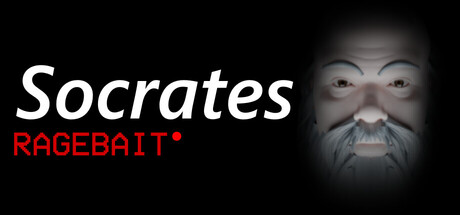
This game uses a local AI language model to generate the NPC's dialogue in real-time during gameplay. All AI processing runs entirely on your device using bundled software, no internet connection is required and no data is ever sent to external servers or third parties.
This game uses generative AI to dynamically adapt dialogue and narration during gameplay.
Text is generated locally on the player’s device to adjust tone, emotion, and phrasing based on player choices and character traits. This system enhances variation and replayability while keeping the core story structure intact. No external services are required during gameplay.
This game is created by a solo developer. Generative AI tools were utilized to enhance the music, sound effects, and localization for a better atmosphere and overall experience. All AI-assisted content has been personally reviewed and finalized by the developer. All visual assets and the narrative are entirely handcrafted.
Generative AI (SoundID VoiceAI) was used to process recorded voice-acting performances for character dialogue and undead vocals. AI tools were also used in the creation of environmental textures and ambient sound layers."
Some visual assets used in the game’s store page and promotional materials were created with the assistance of generative AI tools. All gameplay content, writing, and narrative design are created by the developer.
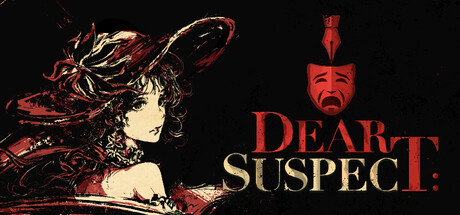
This game uses generative AI to power NPC letter responses during gameplay. When players write to in-game characters, an AI system generates personalized replies based on each character's predefined personality, knowledge boundaries, and narrative role. The AI does not create story content freely. It operates within a structured information system where specific clues and facts are released only when triggered by the player's questions. All narrative content, character writing, and story outcomes are authored by the development team. The AI serves as a delivery mechanism for this authored content, not as a content creator.No art or music assets are generated by AI. All visual and audio assets in the game are created by human artists. Credits can be found on our website.Why AI is used: The core gameplay revolves around investigating through freely written letters. Every player asks different questions, follows a different investigative path, and sometimes needs to persuade, pressure, or confront characters to pry loose specific information — meaning NPC responses cannot be pre-written. They must be generated in real time based on each player's specific inquiries. AI is the necessary means to enable this gameplay, not a replacement for human creators or a cost-saving measure. Without AI, this game's core mechanic simply could not exist.Our team is made up of game enthusiasts and young professionals with an average age of 24. We are not an AI technology company. Our Demo is 100% free to play, and we do not use player data for any AI model training. We understand that AI technology remains ethically complex, and we take the concerns of players and fellow creators seriously. We believe, and are committed to proving, that human creativity can command AI, not the other way around. Listening to your feedback is our responsibility. We welcome any questions, suggestions, or concerns about our use of AI — please reach out to our email or our [Discord/QQ]. Your feedback will help us improve and do better.
Some CG artwork, visual assets, and audio assets in this game were created with the assistance of AI generation tools and then manually refined and integrated by the developer.
Yes. The game uses AI for localization translation (8 languages) and AI-assisted pixel art generation. All AI-generated assets have been heavily edited and refined by the developer to fit the game's dark pixel art style and narrative context.
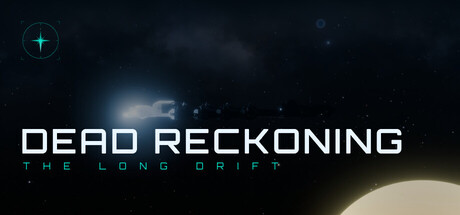
Dead Reckoning is written, and designed by one person. I want to be precise about where AI tools do and don't appear in it.
Creative content — no generative AI. All writing, narrative, and design is mine. I've worked as a technical writer for twelve years; the game's voice is my own. All art and visual assets are hand-made or licensed from named human artists. All music and sound effects are licensed from named human creators (public domain / Creative Commons) — none of it is AI-generated. This is a hard line and I intend to keep it.
Development & release tooling — where AI assists. I use AI in the engineering and release pipeline only, never to author the game itself:
- Coding assistance while writing the game's GDScript.
- An automated QA/test harness that plays the simulation thousands of times to catch crashes and balance regressions.
- Assistance in building linters (Valve YAML sheets) that check the project's text.
- Drafting and summarizing the release notes (patch notes) from the project's changelog.
None of this creates any of the writing, art, audio, or design inside the game.
Localization. The four translations (German, French, Italian, Spanish) are machine-translated by DeepL from my English source, with automated guards that fall back to English wherever a translation would break. This is an accessibility vs. quality decision, and I decided on the former. Proper localizations are planned and will be contracted out if the budget allows.
This game only uses AI tools to assist in generating part of the art materials and plot copy during the development stage. All AI-generated content has been fully manually reviewed, secondary modified and compliance checked. There is no real-time AI interaction function in the game, and no real-time AI response or usage scenarios for players.
Artificial intelligence tools were used during the development of this game.
AI-assisted tools were utilized in certain parts of the coding process and for generating some visual assets.
All AI-generated content has been reviewed, modified, and integrated by the developer to ensure consistency and quality.
Pingo uses generative AI to provide certain dialogue, monologue, and personalized text interactions. When these features are enabled, the game generates responses based on player input, context, and the selected AI configuration. Some features may connect to external AI services, and players may also choose to use their own compatible models or API configuration.
Voice synthesis. All informant dialogue is voiced using Google Cloud Text-to-Speech. Each of the 27 informants has a distinct voice selected to reflect their regional background.
Story illustrations. Discovery images were generated using AI image generation and curated by the developer.
Game content. Story text, discovery descriptions, and informant dialogue were drafted with AI assistance and edited by the developer.
No AI-generated content is produced live during gameplay. All content is pre-rendered and reviewed before shipping.
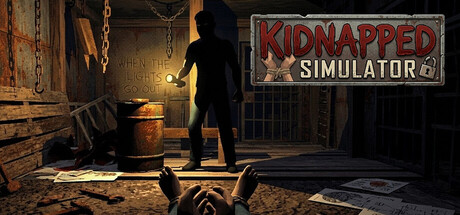
This game uses a custom-built local AI language model running entirely on the player's machine via the proprietary GROLAF3D ENGINE. The AI generates all dialogue, actions, and narrative responses from the kidnapper character in real time during gameplay. No internet connection is required and no player input is transmitted to external servers. The AI also powers an optional voice synthesis system for spoken responses. All AI-generated content is produced live based on player input and is unique to each session.
This game uses AI-generated imagery for store page assets and marketing materials. Including, capsule art and banner images. AI-generated music was used in the trailer and promotional materials. All in-game content is crated by developer.
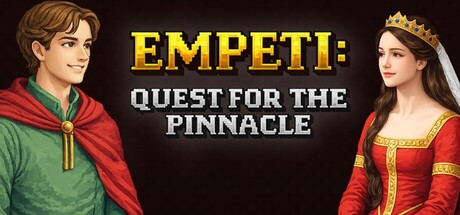
Empetiti: Quest for the Pinnacle uses generative AI as part of the production pipeline for selected images and voice-over/audio assets appearing in the game and some promotional materials. These assets are reviewed and refined by the development team before being published. The game does not use live-generated AI during gameplay.
THE GAME IS CONSTANTLY BEING REWORKED TO FURTHER MINIMISE THE USE OF AI-GENERATED IMAGES AND VOICES.
AI-powered image generation tools were used to create the game's visual elements, including character and environment images. AI tools were also used to support translations into multiple languages.
This game uses generative AI to produce real-time, dialogue-based explanations, narrative content, and key summaries during gameplay (with optional AI-generated voice output).
The generated content dynamically adapts based on player inputs, such as uploaded papers or text, as well as in-game choices, and is used solely for in-game presentation.
Players are advised not to input sensitive personal information and to independently verify any important information.
Some character portraits and CG illustrations in this game were created with reference to AI-generated images for visual inspiration and compositional guidance. All final artwork was manually produced by our art team.
AI tools were used in a limited capacity to help speed up parts of the development process, with all content later refined and integrated into the final game.
This game extensively uses generative AI in its development, including:
- Visual art creation (backgrounds, character sprites, interfaces, and icons)
- Music composition and audio effects
- Narrative development, dialogues, and script
All AI-generated content was curated, reviewed, edited, and manually integrated by the developer to ensure narrative coherence, artistic quality, and smooth gameplay experience. Creative direction, gameplay design, technical implementation, programming, and design decisions were made by humans.
As the developer, I am responsible for the game's scenario and overall production.
AI tools were used to generate the character assets, background images, and BGM, all of which were then customized for the game.
Sound effects were sourced from free material libraries.
The characters appearing in this work use appearances generated by AI as **non-existent humans**, based on images that are permitted for commercial use.
Exactly half of this game's content is AI-generated.This is intentional, and part of the gameplay - designed to convey the difference between AI-created and human-made works.[AI Usage] - AI Mode character graphics: AI-generated - AI Mode scenario / script: AI-generated - AI Mode audio: AI-generated - The giraffe - Any other elements necessary for in-game[Non-AI Usage] - Organic Mode character art: Human-made - Organic Mode story: Human-made - Organic Mode music / sound effects: Human-made - Any other elements necessary for in-game cinematics※ All content was pre-produced during development. No real-time AI generation is used during gameplay.
This game uses generative AI for dynamic dialogue and narrative progression with the main character, "Lily." Instead of relying on pre-set options, this technology allows the character to generate natural responses and take appropriate actions based on the specific context of the player's real-time voice input.
Artificial intelligence tools were used during certain stages of the development of The Letter as supportive tools to assist the creative process. AI was primarily utilized for concept ideation, early visual references, and iterative design exploration.
These tools helped accelerate prototyping, generate visual inspiration, and assist with writing drafts during early development phases. However, all core gameplay systems, narrative design, environmental storytelling, and final artistic direction were created, reviewed, and curated by the developer.
AI tools were used as creative assistants rather than autonomous content generators, ensuring that the final experience remains a carefully crafted and human-directed project.
This game uses generative artificial intelligence (AI) in limited aspects of its development.
Some background images in the game were created with the assistance of AI tools. In addition, AI was used to help translate in-game text into multiple languages. All AI-generated content has been reviewed and integrated by the developer to ensure quality and consistency.
This game uses a local AI language model to generate the NPC's dialogue in real-time during gameplay. All AI processing runs entirely on your device using bundled software, no internet connection is required and no data is ever sent to external servers or third parties.
This game uses generative AI to dynamically adapt dialogue and narration during gameplay.
Text is generated locally on the player’s device to adjust tone, emotion, and phrasing based on player choices and character traits. This system enhances variation and replayability while keeping the core story structure intact. No external services are required during gameplay.
This game is created by a solo developer. Generative AI tools were utilized to enhance the music, sound effects, and localization for a better atmosphere and overall experience. All AI-assisted content has been personally reviewed and finalized by the developer. All visual assets and the narrative are entirely handcrafted.
Generative AI (SoundID VoiceAI) was used to process recorded voice-acting performances for character dialogue and undead vocals. AI tools were also used in the creation of environmental textures and ambient sound layers."
Some visual assets used in the game’s store page and promotional materials were created with the assistance of generative AI tools. All gameplay content, writing, and narrative design are created by the developer.
This game uses generative AI to power NPC letter responses during gameplay. When players write to in-game characters, an AI system generates personalized replies based on each character's predefined personality, knowledge boundaries, and narrative role. The AI does not create story content freely. It operates within a structured information system where specific clues and facts are released only when triggered by the player's questions. All narrative content, character writing, and story outcomes are authored by the development team. The AI serves as a delivery mechanism for this authored content, not as a content creator.No art or music assets are generated by AI. All visual and audio assets in the game are created by human artists. Credits can be found on our website.Why AI is used: The core gameplay revolves around investigating through freely written letters. Every player asks different questions, follows a different investigative path, and sometimes needs to persuade, pressure, or confront characters to pry loose specific information — meaning NPC responses cannot be pre-written. They must be generated in real time based on each player's specific inquiries. AI is the necessary means to enable this gameplay, not a replacement for human creators or a cost-saving measure. Without AI, this game's core mechanic simply could not exist.Our team is made up of game enthusiasts and young professionals with an average age of 24. We are not an AI technology company. Our Demo is 100% free to play, and we do not use player data for any AI model training. We understand that AI technology remains ethically complex, and we take the concerns of players and fellow creators seriously. We believe, and are committed to proving, that human creativity can command AI, not the other way around. Listening to your feedback is our responsibility. We welcome any questions, suggestions, or concerns about our use of AI — please reach out to our email or our [Discord/QQ]. Your feedback will help us improve and do better.
Some CG artwork, visual assets, and audio assets in this game were created with the assistance of AI generation tools and then manually refined and integrated by the developer.
Yes. The game uses AI for localization translation (8 languages) and AI-assisted pixel art generation. All AI-generated assets have been heavily edited and refined by the developer to fit the game's dark pixel art style and narrative context.
Dead Reckoning is written, and designed by one person. I want to be precise about where AI tools do and don't appear in it.
Creative content — no generative AI. All writing, narrative, and design is mine. I've worked as a technical writer for twelve years; the game's voice is my own. All art and visual assets are hand-made or licensed from named human artists. All music and sound effects are licensed from named human creators (public domain / Creative Commons) — none of it is AI-generated. This is a hard line and I intend to keep it.
Development & release tooling — where AI assists. I use AI in the engineering and release pipeline only, never to author the game itself:
- Coding assistance while writing the game's GDScript.
- An automated QA/test harness that plays the simulation thousands of times to catch crashes and balance regressions.
- Assistance in building linters (Valve YAML sheets) that check the project's text.
- Drafting and summarizing the release notes (patch notes) from the project's changelog.
None of this creates any of the writing, art, audio, or design inside the game.
Localization. The four translations (German, French, Italian, Spanish) are machine-translated by DeepL from my English source, with automated guards that fall back to English wherever a translation would break. This is an accessibility vs. quality decision, and I decided on the former. Proper localizations are planned and will be contracted out if the budget allows.
This game only uses AI tools to assist in generating part of the art materials and plot copy during the development stage. All AI-generated content has been fully manually reviewed, secondary modified and compliance checked. There is no real-time AI interaction function in the game, and no real-time AI response or usage scenarios for players.
Artificial intelligence tools were used during the development of this game.
AI-assisted tools were utilized in certain parts of the coding process and for generating some visual assets.
All AI-generated content has been reviewed, modified, and integrated by the developer to ensure consistency and quality.
Pingo uses generative AI to provide certain dialogue, monologue, and personalized text interactions. When these features are enabled, the game generates responses based on player input, context, and the selected AI configuration. Some features may connect to external AI services, and players may also choose to use their own compatible models or API configuration.
Voice synthesis. All informant dialogue is voiced using Google Cloud Text-to-Speech. Each of the 27 informants has a distinct voice selected to reflect their regional background.
Story illustrations. Discovery images were generated using AI image generation and curated by the developer.
Game content. Story text, discovery descriptions, and informant dialogue were drafted with AI assistance and edited by the developer.
No AI-generated content is produced live during gameplay. All content is pre-rendered and reviewed before shipping.
This game uses a custom-built local AI language model running entirely on the player's machine via the proprietary GROLAF3D ENGINE. The AI generates all dialogue, actions, and narrative responses from the kidnapper character in real time during gameplay. No internet connection is required and no player input is transmitted to external servers. The AI also powers an optional voice synthesis system for spoken responses. All AI-generated content is produced live based on player input and is unique to each session.
This game uses AI-generated imagery for store page assets and marketing materials. Including, capsule art and banner images. AI-generated music was used in the trailer and promotional materials. All in-game content is crated by developer.
Empetiti: Quest for the Pinnacle uses generative AI as part of the production pipeline for selected images and voice-over/audio assets appearing in the game and some promotional materials. These assets are reviewed and refined by the development team before being published. The game does not use live-generated AI during gameplay.
THE GAME IS CONSTANTLY BEING REWORKED TO FURTHER MINIMISE THE USE OF AI-GENERATED IMAGES AND VOICES.
AI-powered image generation tools were used to create the game's visual elements, including character and environment images. AI tools were also used to support translations into multiple languages.
This game uses generative AI to produce real-time, dialogue-based explanations, narrative content, and key summaries during gameplay (with optional AI-generated voice output).
The generated content dynamically adapts based on player inputs, such as uploaded papers or text, as well as in-game choices, and is used solely for in-game presentation.
Players are advised not to input sensitive personal information and to independently verify any important information.
Some character portraits and CG illustrations in this game were created with reference to AI-generated images for visual inspiration and compositional guidance. All final artwork was manually produced by our art team.
AI tools were used in a limited capacity to help speed up parts of the development process, with all content later refined and integrated into the final game.
This game extensively uses generative AI in its development, including:
- Visual art creation (backgrounds, character sprites, interfaces, and icons)
- Music composition and audio effects
- Narrative development, dialogues, and script
All AI-generated content was curated, reviewed, edited, and manually integrated by the developer to ensure narrative coherence, artistic quality, and smooth gameplay experience. Creative direction, gameplay design, technical implementation, programming, and design decisions were made by humans.
As the developer, I am responsible for the game's scenario and overall production.
AI tools were used to generate the character assets, background images, and BGM, all of which were then customized for the game.
Sound effects were sourced from free material libraries.
The characters appearing in this work use appearances generated by AI as **non-existent humans**, based on images that are permitted for commercial use.
Exactly half of this game's content is AI-generated.This is intentional, and part of the gameplay - designed to convey the difference between AI-created and human-made works.[AI Usage] - AI Mode character graphics: AI-generated - AI Mode scenario / script: AI-generated - AI Mode audio: AI-generated - The giraffe - Any other elements necessary for in-game[Non-AI Usage] - Organic Mode character art: Human-made - Organic Mode story: Human-made - Organic Mode music / sound effects: Human-made - Any other elements necessary for in-game cinematics※ All content was pre-produced during development. No real-time AI generation is used during gameplay.
This game uses generative AI for dynamic dialogue and narrative progression with the main character, "Lily." Instead of relying on pre-set options, this technology allows the character to generate natural responses and take appropriate actions based on the specific context of the player's real-time voice input.
Artificial intelligence tools were used during certain stages of the development of The Letter as supportive tools to assist the creative process. AI was primarily utilized for concept ideation, early visual references, and iterative design exploration.
These tools helped accelerate prototyping, generate visual inspiration, and assist with writing drafts during early development phases. However, all core gameplay systems, narrative design, environmental storytelling, and final artistic direction were created, reviewed, and curated by the developer.
AI tools were used as creative assistants rather than autonomous content generators, ensuring that the final experience remains a carefully crafted and human-directed project.
This game uses generative artificial intelligence (AI) in limited aspects of its development.
Some background images in the game were created with the assistance of AI tools. In addition, AI was used to help translate in-game text into multiple languages. All AI-generated content has been reviewed and integrated by the developer to ensure quality and consistency.