Public Steam disclosure research25,514 disclosures tracked
Where do games disclose AI use?
Search developers’ Steam disclosures, compare classified AI use across
games, and follow recorded changes.
This index adds cross-game classifications and statistics to
statements published on individual store pages.
Groups reflect automatic analysis of public disclosures; mature records are excluded. These counts do not measure AI use across all of Steam.
Missing or unclear statements cannot establish whether a game uses AI.
Generative AI tools were used during development to assist with visual materials, texture design, localization, marketing texts, and partially for coding assistance. No AI is used during gameplay or for generating real-time content.
All characters and key artwork in this work were created entirely by hand by human artists. AI tools were used solely as an auxiliary tool during the coloring of backgrounds and user interface elements, with only public-domain images used as references. All content was completed through lawful production processes and does not infringe any third party’s copyright or related rights.
Some image assets are generated or edited using these tools, but all illustrations are ultimately created by an artist. Furthermore, these tools were used to produce animations for the trailer.
The app was developed through both my own coding effort, as well as back and forth coding prompts with ChatGPT 5. Additionally, art assets were generated through use of ChatGPT 5.
Some in-game text were proofread and improved by AI-powered writing reviewer.
No other game assets were AI-gnereated. All sprites you see here are hand-pixelated.
Libra Apocrypha combines traditional art creation methods with generative AI practices to create hybrid designs for some 2D artworks featured within the game. Typically this is used to conform existing artworks to an aesthetic style by using AI-based tools to recolour and adjust composition of pre-rendered shots of characters, locations and effects, most notably present in current card designs.
Marketing materials, pre-rendered in-game visual effects, textures and materials for characters, props, and environments and translations are partly or completly AI-generated.
We use — and plan to continue using — neural networks to generate various types of content. This is done primarily to optimize routine tasks, as well as time and financial costs.
The content is generated using neural networks that have been additionally trained by our team. All AI-generated content undergoes extensive refinement and manual adjustment by our developers.
Artwork for each card was generated with the help of Midjourney.
All narrated events that draw from Greek mythology were generated using Claude and Elevenlabs.
Sound effects and music were created using Elevenlabs and Suno.
This is a passion project without any budget, so other means of generating these assets were not available.
Some assets and promotional materials were created or enhanced using AI tools.
However, all game content is original, owned by the developer, and does not include unlicensed third-party material. The AI tools were used only to assist in creating art, text, and marketing visuals under full creative control.
The game and its Steam store page include some AI-generated images and translated text content (all non-Chinese text was generated using AI translation).
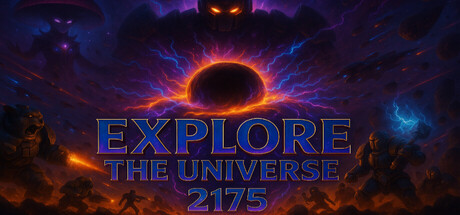
Explore the Universe 2175 uses AI in two distinct ways, and we want to be clear about both.
Real-time simulation (the core of the game). The galaxy is driven by a custom AI system we built ourselves. Faction behavior, MEGABOT's roaming strategy, enemy tactics, and the way wars unfold across sectors are all computed live in our own engine — not generated text or assets. This is procedural and rule-based simulation: the "intelligence" you fight against is real-time decision-making, the same category as the AI in any strategy game, just deeper.
Dialogue is human-written, scripted in advance.
Music and sound are human-created.
Some in-game entity visuals and animations are AI-generated (created during development, not dynamically while you play).
Some marketing and store-page images are AI-generated. Gameplay screenshots are authentic.
No AI-generated content is used to deceive players or misrepresent the game.
Some of the music, sound effects, and visuals in this game have been generated using AI technologies, bringing a unique and creative twist to the game's overall experience.
This game does not use AI during gameplay. Some visual and audio assets were created with AI assistance during development, but all content in the final game is fixed, manually reviewed, and does not involve any live AI.
Generative AI has been used only for the following things but will be replaced before the full release:
-Voice announcements at the start of the battle
-A few GUI elements and buttons
Certain visual content within the game was created using generative AI. This includes the static background images and illustrations that appear as part of the main storyline and narrative progression
There is no AI-generated content in the game itself, but there is on the store page; the photos of the store's resources and the library resources were generated by AI, as were the promotional materials.
Some of the Game's artistic materials are generated via the "Jimeng AI" platform. The Developer has paid the membership fee and complied with the platform's rules. Such materials are created through the Developer's clear creative intent, personalized prompt design, and post-generation adjustments, which meet the standard of "substantial human contribution". The intellectual property rights of these materials shall be owned by the Developer. The materials have been labeled as AI-generated in accordance with the Measures for the Identification of AI-Generated Synthetic Content.
The game was conceived with the help of ChatGPT, partially built with Perplexity, and programmed using Claude Sonnet 4 and Gemini Pro.
In short, they all made it together — from the story and challenges to the localization and everything in between.
I personally tested it thoroughly (and trust me, it’s super hard!).
Select card art, event imagery, and UI elements were developed with the help of AI tools.
No AI is used in the coding, audio, video, or marketing of the game.
During the Early Access stage, translations for languages other than English are provided using DeepL AI. We will continue to improve and refine these translations over time. No AI is used in the gameplay itself.
Based on our Frontline 1 assets, we've leveraged the innovative capabilities of AI to elevate our visuals by enhancing the graphics for some of the background & art images.
Generative AI tools were used during development to assist with visual materials, texture design, localization, marketing texts, and partially for coding assistance. No AI is used during gameplay or for generating real-time content.
All characters and key artwork in this work were created entirely by hand by human artists. AI tools were used solely as an auxiliary tool during the coloring of backgrounds and user interface elements, with only public-domain images used as references. All content was completed through lawful production processes and does not infringe any third party’s copyright or related rights.
Some image assets are generated or edited using these tools, but all illustrations are ultimately created by an artist. Furthermore, these tools were used to produce animations for the trailer.
The app was developed through both my own coding effort, as well as back and forth coding prompts with ChatGPT 5. Additionally, art assets were generated through use of ChatGPT 5.
Some in-game text were proofread and improved by AI-powered writing reviewer.
No other game assets were AI-gnereated. All sprites you see here are hand-pixelated.
Libra Apocrypha combines traditional art creation methods with generative AI practices to create hybrid designs for some 2D artworks featured within the game. Typically this is used to conform existing artworks to an aesthetic style by using AI-based tools to recolour and adjust composition of pre-rendered shots of characters, locations and effects, most notably present in current card designs.
Marketing materials, pre-rendered in-game visual effects, textures and materials for characters, props, and environments and translations are partly or completly AI-generated.
We use — and plan to continue using — neural networks to generate various types of content. This is done primarily to optimize routine tasks, as well as time and financial costs.
The content is generated using neural networks that have been additionally trained by our team. All AI-generated content undergoes extensive refinement and manual adjustment by our developers.
Artwork for each card was generated with the help of Midjourney.
All narrated events that draw from Greek mythology were generated using Claude and Elevenlabs.
Sound effects and music were created using Elevenlabs and Suno.
This is a passion project without any budget, so other means of generating these assets were not available.
Some assets and promotional materials were created or enhanced using AI tools.
However, all game content is original, owned by the developer, and does not include unlicensed third-party material. The AI tools were used only to assist in creating art, text, and marketing visuals under full creative control.
The game and its Steam store page include some AI-generated images and translated text content (all non-Chinese text was generated using AI translation).
Explore the Universe 2175 uses AI in two distinct ways, and we want to be clear about both.
Real-time simulation (the core of the game). The galaxy is driven by a custom AI system we built ourselves. Faction behavior, MEGABOT's roaming strategy, enemy tactics, and the way wars unfold across sectors are all computed live in our own engine — not generated text or assets. This is procedural and rule-based simulation: the "intelligence" you fight against is real-time decision-making, the same category as the AI in any strategy game, just deeper.
Dialogue is human-written, scripted in advance.
Music and sound are human-created.
Some in-game entity visuals and animations are AI-generated (created during development, not dynamically while you play).
Some marketing and store-page images are AI-generated. Gameplay screenshots are authentic.
No AI-generated content is used to deceive players or misrepresent the game.
Some of the music, sound effects, and visuals in this game have been generated using AI technologies, bringing a unique and creative twist to the game's overall experience.
This game does not use AI during gameplay. Some visual and audio assets were created with AI assistance during development, but all content in the final game is fixed, manually reviewed, and does not involve any live AI.
Generative AI has been used only for the following things but will be replaced before the full release:
-Voice announcements at the start of the battle
-A few GUI elements and buttons
Certain visual content within the game was created using generative AI. This includes the static background images and illustrations that appear as part of the main storyline and narrative progression
There is no AI-generated content in the game itself, but there is on the store page; the photos of the store's resources and the library resources were generated by AI, as were the promotional materials.
Some of the Game's artistic materials are generated via the "Jimeng AI" platform. The Developer has paid the membership fee and complied with the platform's rules. Such materials are created through the Developer's clear creative intent, personalized prompt design, and post-generation adjustments, which meet the standard of "substantial human contribution". The intellectual property rights of these materials shall be owned by the Developer. The materials have been labeled as AI-generated in accordance with the Measures for the Identification of AI-Generated Synthetic Content.
The game was conceived with the help of ChatGPT, partially built with Perplexity, and programmed using Claude Sonnet 4 and Gemini Pro.
In short, they all made it together — from the story and challenges to the localization and everything in between.
I personally tested it thoroughly (and trust me, it’s super hard!).
Select card art, event imagery, and UI elements were developed with the help of AI tools.
No AI is used in the coding, audio, video, or marketing of the game.
During the Early Access stage, translations for languages other than English are provided using DeepL AI. We will continue to improve and refine these translations over time. No AI is used in the gameplay itself.
Based on our Frontline 1 assets, we've leveraged the innovative capabilities of AI to elevate our visuals by enhancing the graphics for some of the background & art images.