Public Steam disclosure research25,867 disclosures tracked
Where do games disclose AI use?
Search developers’ Steam disclosures, compare classified AI use across
games, and follow recorded changes.
This index adds cross-game classifications and statistics to
statements published on individual store pages.
Groups reflect automatic analysis of public disclosures; mature records are excluded. These counts do not measure AI use across all of Steam.
Missing or unclear statements cannot establish whether a game uses AI.
Some sound effects were created with AI tools, and a small number of background 3D assets were initially AI-generated, then manually optimized. Parts of the promotional artwork were made with AI assistance. Everything else, including all gameplay systems, the driving and economy mechanics, and the street-by-street recreation of Istanbul's historic peninsula, is hand-crafted by a solo developer.
1453 contains pre-generated AI content: in-game illustrations and short ambient video clips created with generative image/video tools, curated and edited under human art direction and reviewed for historical accuracy. The narrative text is human–AI co-written and human-edited under the author's direction; the game design is the author's. No AI content is generated at runtime.
Generative AI tools were used during development to assist in creating and refining some 2D pixel-art assets, animations, and localization text. All AI-assisted content was reviewed, edited, and integrated by the developer.
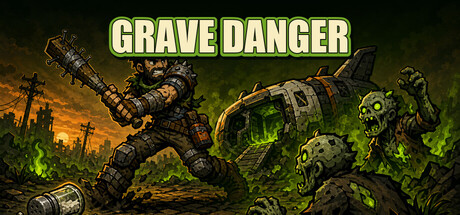
Generative AI tools assisted with portions of the game's code, comedic written content, and certain original visual assets. The game also includes 12 pre-generated instrumental music tracks made with Suno. All AI-assisted material was reviewed, edited, and integrated by the developer. Grave Danger does not generate AI content during gameplay and does not connect to external AI services.
During development of this game, generative AI was used to assist with writing portions of the source code. All AI-generated code was reviewed, modified, tested, and approved by the developer before being incorporated into the game. The game's design, functionality, and overall quality are the result of developer oversight and implementation.
Generative AI was used during development to create some of the pre-generated images included in the game. All AI-generated content is created in advance and included as static game assets. The game does not generate AI content during gameplay.
Gemfire Survival was developed with assistance from generative AI tools (such as Large Language Models) to help write and structure the source code and draft store descriptions. All AI-generated content was reviewed, edited, and integrated manually. The game does not feature live, runtime generative AI or external API connections during gameplay.
This game includes pre-generated content made with the assistance of generative AI tools during development. AI tools were used to help create and iterate some static story illustrations, character and store-art references, voice and sound-effect materials, texture details, copy polishing, and localization drafts. All such content is selected, edited, assembled, and manually reviewed by the developer before shipping. The game does not connect to a live generative AI service during play and does not generate new player-facing AI content at runtime.
In keeping with the game's premise, many of the in-game AI opponent's answers — along with question prompts, post-game flavor text, and portions of the French localization — were written with the help of generative AI, reviewed and directed throughout by the developer.
Generative AI tools were used throughout development to assist in creating and refining game code, 2D artwork, UI assets, audio, music, and written content, and Steam promotional materials. All AI-assisted content included in the released product is selected, reviewed, integrated, and tested by the developer. The game does not use generative AI at runtime and does not generate content or code during gameplay.
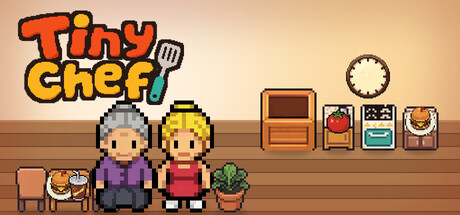
Some of the placeholder art currently in Tiny Chef was generated with AI tools while the game is in development. It is temporary and is being replaced with final artwork drawn by a human artist.
applying filters and effect to artwork for promotional materials on the Steam page
generating simple sounds/audio for later editing and mixing in Audacity
Generative AI was used throughout the development process. It was utilized alongside the developer to assist with tasks. Notably: debugging, localization, asset creation, and marketing materials. All AI-generated content was reviewed, edited, and integrated by the developer to ensure both quality and consistency standards were met.
Generative AI was used in creating pre-rendered SVG assets for the app's UI, logo, and Steam store capsules, along with informational text for the breathing patterns and "Knowledge" section, which was carefully researched and reviewed for accuracy.
Generative AI was used to assist with creating some placeholder and promotional artwork during development. All game design, programming decisions, gameplay systems, and final content were reviewed and curated by the developer.
Generative AI was used during development to create some pre-generated graphical content. This includes several user interface icons used in the game and the hero banner displayed on the Steam store page. The game does not generate any content using AI during runtime.
This game contains pre-generated AI-assisted visual assets, including promotional store images, character illustrations, icons, backgrounds, and other artwork used in the game. All AI-generated assets have been reviewed, selected, and edited by the developer before being included in the final product. The game does not use live or runtime AI or external AI services during gameplay.
Some visual assets (store artwork and logo) and localization text in this app were created with the assistance of generative AI tools. All AI-assisted content was reviewed and edited by the developer. The app does not generate any content with AI at runtime.
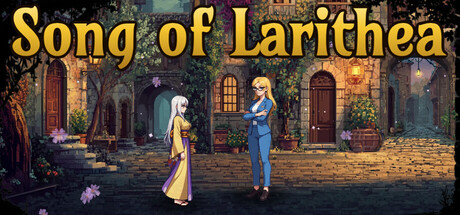
Song of Larithea is made by a solo developer using generative AI across the pipeline: the artwork is AI-generated and then hand-edited in Photoshop, and the voice lines, music, and sound are AI-generated as well. The story is the author's own, adapted from her own novel, with AI helping polish the English text - and future translations will be AI-assisted too. Every asset is reviewed, corrected, and finished by hand before it ships.
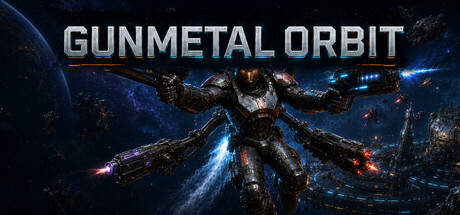
Some of Gunmetal Orbit's art and audio assets - including concept art used to build 3D models, UI icons, sound effects, and the store page key art - were created during development with the help of generative AI tools, then curated, edited, and integrated by the developers. All gameplay code and game design are human-made, and the game does not generate any AI content while you play.
We used generative AI tools (such as Midjourney) to pre-generate some background illustrations and story artworks. All generated assets have been carefully reviewed and edited to ensure they do not violate any copyright or community guidelines.
Pre-generated AI content:
Some of the game's 2D illustrations — world and game-mode cover art, story-scene illustrations, character portraits, and store/promotional images — were created with the assistance of generative AI image tools. Every image was prompted, curated, selected and edited by the developer.
Portions of the game's source code were written with the assistance of an AI coding tool, always under direct human direction, review and testing.
Gameplay sprites, user interface, and fonts come from licensed third-party asset packs or were made by hand.
The game does NOT generate any content with AI at runtime: all content is fixed at development time, and no player data is sent to any AI service.
Generative AI was used to assist with the creation of code-based 3D geometry built in Three.js, as well as some sound assets included in the game. These assets are reviewed, adjusted, and integrated by the developer, and may be revised or replaced throughout development.
The game's art and audio content — including visual assets, UI elements, and store page artwork — was generated with the assistance of AI tools during development and then refined by the team. All AI-generated content was created during development; the game does not generate content while you play.
Generative AI tools were used to assist with drafting and editing Steam store page text and marketing copy. The game does not use generative AI to create live gameplay content.
Generative AI was used as a supporting tool during solo development, mainly to find technical information faster, compare possible solutions, check code, organize notes, and explore early ideas. It saves a lot of time that would otherwise be spent searching through browser tabs and documentation. I also use it to help with translations. The game’s design, development decisions, implementation, and final content remain entirely under my control.. The game does not generate AI content during gameplay.
The characters in Conversation Simulator are played live by an AI language model that runs entirely on your computer — no cloud AI service is involved. All character dialogue and end-of-session feedback is generated locally during play. A built-in safety policy that cannot be disabled keeps generated content within a PG/PG-13 boundary: no sexual content, no content involving minors, no impersonation of real people, no voice cloning, and no claims to be a real therapist, doctor, or lawyer. Self-harm and crisis topics are intercepted and answered with a resource message instead of AI-generated content.
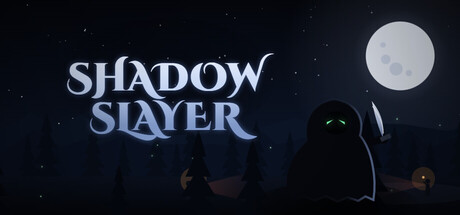
Shadow Slayer is built almost entirely in code. The character and enemy art is
drawn procedurally as vector graphics, and the sound effects and adaptive music
layers are synthesized in real time in the browser - none of that is AI-generated.
Generative AI tools were used to help create some of the content that ships with
the game:
- Music: several of the recorded background-music tracks were produced with the
help of generative AI music tools.
- Localization: the non-English translations were produced with AI-assisted
translation and reviewed by the developer.
- Store page & marketing images: some capsule/promotional artwork was created
with generative AI image tools.
All AI-assisted content was selected, edited, and integrated by a human
developer. No AI content is generated live while you play - everything ships
pre-made and reviewed.
Generative AI was used for brainstorming concepts and ideas during the design process, as well as for creating a few 2D visual assets and posters within the game environment.
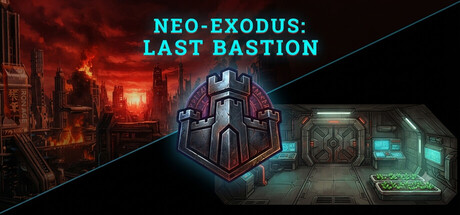
Our game, Neo-Exodus: Last Bastion, utilizes generative AI tools to assist in the creation of certain visual assets. Specifically, AI-generated content is used for some static background images, textures, and promotional art displayed on the store page and within the game. All AI-generated content is pre-generated; there is no real-time generation of content during gameplay. We have manually reviewed and curated all AI-assisted assets to ensure they meet our quality and safety standards.
Some icons and pictures in the game or store page are generated using AI. During gameplay AI does not render anything. AI items are pre-rendered and hard-coded into the game.
Programming: AI tools (Cursor) were utilized to assist with drafting partial code blocks and isolated scripts. The overall core logic, architecture, and system design were manually programmed by the developer.
Art Assets: An AI image generator (PixelLab) was used to help conceptualize and generate some of the pixel art assets. These assets were manually reviewed and integrated to fit the game's retro aesthetic.
Localization / Translation: AI translation tools were used to assist in translating in-game text and store page descriptions into multiple languages.
During development, generative AI was used for programming assistance, drafting UI text and English localization, and assisting with the layout and composition of graphical assets for Steam. Any content incorporated into the final product was reviewed and edited by the developer. No AI-generated content is produced while the game is running.
Some sound effects were created with AI tools, and a small number of background 3D assets were initially AI-generated, then manually optimized. Parts of the promotional artwork were made with AI assistance. Everything else, including all gameplay systems, the driving and economy mechanics, and the street-by-street recreation of Istanbul's historic peninsula, is hand-crafted by a solo developer.
1453 contains pre-generated AI content: in-game illustrations and short ambient video clips created with generative image/video tools, curated and edited under human art direction and reviewed for historical accuracy. The narrative text is human–AI co-written and human-edited under the author's direction; the game design is the author's. No AI content is generated at runtime.
Generative AI tools were used during development to assist in creating and refining some 2D pixel-art assets, animations, and localization text. All AI-assisted content was reviewed, edited, and integrated by the developer.
Generative AI tools assisted with portions of the game's code, comedic written content, and certain original visual assets. The game also includes 12 pre-generated instrumental music tracks made with Suno. All AI-assisted material was reviewed, edited, and integrated by the developer. Grave Danger does not generate AI content during gameplay and does not connect to external AI services.
During development of this game, generative AI was used to assist with writing portions of the source code. All AI-generated code was reviewed, modified, tested, and approved by the developer before being incorporated into the game. The game's design, functionality, and overall quality are the result of developer oversight and implementation.
Generative AI was used during development to create some of the pre-generated images included in the game. All AI-generated content is created in advance and included as static game assets. The game does not generate AI content during gameplay.
Gemfire Survival was developed with assistance from generative AI tools (such as Large Language Models) to help write and structure the source code and draft store descriptions. All AI-generated content was reviewed, edited, and integrated manually. The game does not feature live, runtime generative AI or external API connections during gameplay.
This game includes pre-generated content made with the assistance of generative AI tools during development. AI tools were used to help create and iterate some static story illustrations, character and store-art references, voice and sound-effect materials, texture details, copy polishing, and localization drafts. All such content is selected, edited, assembled, and manually reviewed by the developer before shipping. The game does not connect to a live generative AI service during play and does not generate new player-facing AI content at runtime.
In keeping with the game's premise, many of the in-game AI opponent's answers — along with question prompts, post-game flavor text, and portions of the French localization — were written with the help of generative AI, reviewed and directed throughout by the developer.
Generative AI tools were used throughout development to assist in creating and refining game code, 2D artwork, UI assets, audio, music, and written content, and Steam promotional materials. All AI-assisted content included in the released product is selected, reviewed, integrated, and tested by the developer. The game does not use generative AI at runtime and does not generate content or code during gameplay.
Some of the placeholder art currently in Tiny Chef was generated with AI tools while the game is in development. It is temporary and is being replaced with final artwork drawn by a human artist.
applying filters and effect to artwork for promotional materials on the Steam page
generating simple sounds/audio for later editing and mixing in Audacity
Generative AI was used throughout the development process. It was utilized alongside the developer to assist with tasks. Notably: debugging, localization, asset creation, and marketing materials. All AI-generated content was reviewed, edited, and integrated by the developer to ensure both quality and consistency standards were met.
Generative AI was used in creating pre-rendered SVG assets for the app's UI, logo, and Steam store capsules, along with informational text for the breathing patterns and "Knowledge" section, which was carefully researched and reviewed for accuracy.
Generative AI was used to assist with creating some placeholder and promotional artwork during development. All game design, programming decisions, gameplay systems, and final content were reviewed and curated by the developer.
Generative AI was used during development to create some pre-generated graphical content. This includes several user interface icons used in the game and the hero banner displayed on the Steam store page. The game does not generate any content using AI during runtime.
This game contains pre-generated AI-assisted visual assets, including promotional store images, character illustrations, icons, backgrounds, and other artwork used in the game. All AI-generated assets have been reviewed, selected, and edited by the developer before being included in the final product. The game does not use live or runtime AI or external AI services during gameplay.
Some visual assets (store artwork and logo) and localization text in this app were created with the assistance of generative AI tools. All AI-assisted content was reviewed and edited by the developer. The app does not generate any content with AI at runtime.
Song of Larithea is made by a solo developer using generative AI across the pipeline: the artwork is AI-generated and then hand-edited in Photoshop, and the voice lines, music, and sound are AI-generated as well. The story is the author's own, adapted from her own novel, with AI helping polish the English text - and future translations will be AI-assisted too. Every asset is reviewed, corrected, and finished by hand before it ships.
Some of Gunmetal Orbit's art and audio assets - including concept art used to build 3D models, UI icons, sound effects, and the store page key art - were created during development with the help of generative AI tools, then curated, edited, and integrated by the developers. All gameplay code and game design are human-made, and the game does not generate any AI content while you play.
We used generative AI tools (such as Midjourney) to pre-generate some background illustrations and story artworks. All generated assets have been carefully reviewed and edited to ensure they do not violate any copyright or community guidelines.
Pre-generated AI content:
Some of the game's 2D illustrations — world and game-mode cover art, story-scene illustrations, character portraits, and store/promotional images — were created with the assistance of generative AI image tools. Every image was prompted, curated, selected and edited by the developer.
Portions of the game's source code were written with the assistance of an AI coding tool, always under direct human direction, review and testing.
Gameplay sprites, user interface, and fonts come from licensed third-party asset packs or were made by hand.
The game does NOT generate any content with AI at runtime: all content is fixed at development time, and no player data is sent to any AI service.
Generative AI was used to assist with the creation of code-based 3D geometry built in Three.js, as well as some sound assets included in the game. These assets are reviewed, adjusted, and integrated by the developer, and may be revised or replaced throughout development.
The game's art and audio content — including visual assets, UI elements, and store page artwork — was generated with the assistance of AI tools during development and then refined by the team. All AI-generated content was created during development; the game does not generate content while you play.
Generative AI tools were used to assist with drafting and editing Steam store page text and marketing copy. The game does not use generative AI to create live gameplay content.
Generative AI was used as a supporting tool during solo development, mainly to find technical information faster, compare possible solutions, check code, organize notes, and explore early ideas. It saves a lot of time that would otherwise be spent searching through browser tabs and documentation. I also use it to help with translations. The game’s design, development decisions, implementation, and final content remain entirely under my control.. The game does not generate AI content during gameplay.
The characters in Conversation Simulator are played live by an AI language model that runs entirely on your computer — no cloud AI service is involved. All character dialogue and end-of-session feedback is generated locally during play. A built-in safety policy that cannot be disabled keeps generated content within a PG/PG-13 boundary: no sexual content, no content involving minors, no impersonation of real people, no voice cloning, and no claims to be a real therapist, doctor, or lawyer. Self-harm and crisis topics are intercepted and answered with a resource message instead of AI-generated content.
Shadow Slayer is built almost entirely in code. The character and enemy art is
drawn procedurally as vector graphics, and the sound effects and adaptive music
layers are synthesized in real time in the browser - none of that is AI-generated.
Generative AI tools were used to help create some of the content that ships with
the game:
- Music: several of the recorded background-music tracks were produced with the
help of generative AI music tools.
- Localization: the non-English translations were produced with AI-assisted
translation and reviewed by the developer.
- Store page & marketing images: some capsule/promotional artwork was created
with generative AI image tools.
All AI-assisted content was selected, edited, and integrated by a human
developer. No AI content is generated live while you play - everything ships
pre-made and reviewed.
Generative AI was used for brainstorming concepts and ideas during the design process, as well as for creating a few 2D visual assets and posters within the game environment.
Our game, Neo-Exodus: Last Bastion, utilizes generative AI tools to assist in the creation of certain visual assets. Specifically, AI-generated content is used for some static background images, textures, and promotional art displayed on the store page and within the game. All AI-generated content is pre-generated; there is no real-time generation of content during gameplay. We have manually reviewed and curated all AI-assisted assets to ensure they meet our quality and safety standards.
Some icons and pictures in the game or store page are generated using AI. During gameplay AI does not render anything. AI items are pre-rendered and hard-coded into the game.
Programming: AI tools (Cursor) were utilized to assist with drafting partial code blocks and isolated scripts. The overall core logic, architecture, and system design were manually programmed by the developer.
Art Assets: An AI image generator (PixelLab) was used to help conceptualize and generate some of the pixel art assets. These assets were manually reviewed and integrated to fit the game's retro aesthetic.
Localization / Translation: AI translation tools were used to assist in translating in-game text and store page descriptions into multiple languages.
During development, generative AI was used for programming assistance, drafting UI text and English localization, and assisting with the layout and composition of graphical assets for Steam. Any content incorporated into the final product was reviewed and edited by the developer. No AI-generated content is produced while the game is running.