Public Steam disclosure research25,383 disclosures tracked
Where do games disclose AI use?
Search developers’ Steam disclosures, compare classified AI use across
games, and follow recorded changes.
This index adds cross-game classifications and statistics to
statements published on individual store pages.
Groups reflect automatic analysis of public disclosures; mature records are excluded. These counts do not measure AI use across all of Steam.
Missing or unclear statements cannot establish whether a game uses AI.
Store page artwork (capsule images and header) was created with
the assistance of AI image generation tools (Stable Diffusion /
Flux). All in-game content, text, and gameplay logic is
human-authored. No AI is used to generate content during gameplay.
We use AI to translate the store steam page to different languages. This will be changed on release and we will hire professional translators for this purpose.
Parts of this game were made with the help of generative AI tools. The music and sound effects were created using AI audio generation, then selected, edited, and mixed by us — they ship as fixed assets, not content generated live while you play.
We also used AI-assisted coding tools (such as code autocomplete and programming assistants) during development. Every line that ships was reviewed, tested, and integrated by us; the AI sped up routine work while the design, architecture, and final decisions remained human-led.
The game does not run any AI or collect player data during gameplay.
Some visual assets and concept artwork used in the game were created or assisted by generative AI tools and further modified by the developer. All gameplay systems, story content, level design, and interactive features were created by the developer.
This game used generative AI tools as an aid in creating some of its visual assets, such as background illustrations and character/environment pixel art. All AI-generated output was reviewed, refined, and edited by the developer before being included in the game. No content is generated by AI in real time during gameplay.
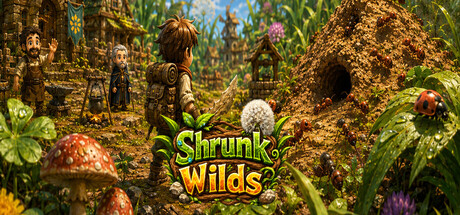
Some visual assets and artwork used during the development of Shrunk Wilds were created with the assistance of AI image generation tools. All generated assets are manually reviewed, modified, and curated by the developer before being implemented into the game. Players do not interact with AI systems during gameplay, and the game does not generate content in real time.
Generative AI was used to assist in the creation of certain UI icons and interface artwork. All generated content was reviewed, modified, and integrated by the developer before being used in the game.
As a solo developer, I used AI tools as a foundation to expand the game's scope, manually refining and finalizing every asset to ensure the final result is a high-quality, handcrafted experience.
We used generative AI tools in a limited capacity during development: some store page descriptions and marketing texts were drafted with AI assistance and finalized with human editing. Some non-Chinese localization texts were translated using AI and reviewed by humans. All core gameplay, programming, and level design were created by the developers.Some in-game artwork / background music was created with the assistance of generative AI tools.
This game utilizes generative artificial intelligence tools in its development to assist our small team. Specifically, AI was used to help localize our Steam store listing text into multiple languages to reach a broader audience. Additionally, AI tools were used to help refine and format certain store promotional images and icons, which are strictly based on and adapted from our original, human-created hand-drawn concept art. No live-generated AI content is used during active gameplay.
Imperium is a solo-developed game that makes extensive use of generative AI
to create its content:
• Visual art and graphical assets — planet surfaces, buildings, species and
ship artwork, interface art, and store/marketing imagery — were generated
using Midjourney and ChatGPT, then extensively edited, composited, and
refined by hand in Photoshop (including Photoshop's AI tools) to fit the
game's art direction.
• Music was generated using Suno.
• Sound effects were generated using ElevenLabs.
Every asset is reviewed, edited, and approved by the developer before it
ships, and the game's design, systems, and balance are the developer's own.
Imperium's in-game opponents use traditional algorithmic AI, not generative AI.
The Early Access build includes some static pre-generated AI placeholder artwork used as temporary in-game assets during development. This content is not generated during gameplay, is not user-generated, and does not connect to any external AI service. Placeholder artwork may be replaced or polished during Early Access as final art is completed.
Character art and event scene illustrations in this game were created using AI image generation tools. All generated images were curated, edited, and refined by the developer to produce the final in-game assets. No AI content is generated in real time during gameplay.
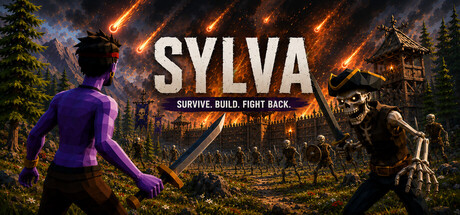
SYLVA contains pre-generated AI-assisted content. Generative AI tools were used during development to create and refine certain store page artwork, capsule images, library assets, loading screen artwork, logos, promotional materials, visual concepts, text drafts, localization assistance, and software development workflows.
All AI-assisted content was reviewed, modified, and approved by the developer before being included in the game or published on the Steam store page. The final game design, gameplay systems, progression, balancing, world design, and creative direction are determined by the developer.
SYLVA does not generate real-time AI content during gameplay.
This game was developed using an agentic AI coding tool, the code was written with AI assistance, under the design, direction, and review of the developer. The game contains no AI-generated assets — models and textures are generated procedurally in-engine, audio (sound effects and music) is pre-synthesized with the developer's own non-AI DSP tools, and UI text uses system fonts. No AI content is generated at runtime.
Artwork note: some visuals were generated with AI models in this early version. For now the focus is on mechanics, so they are placeholders. Over time I will make the style more consistent and replace them with assets designed specifically for AoNW.
This game utilizes generative AI for certain 2D illustrations, backgrounds, and portions of written content. All AI-assisted content was manually reviewed, edited, and refined by the developer to ensure consistency with the game's artistic vision, narrative, and gameplay. No live or real-time AI generation occurs during gameplay.
Hi everyone! I'm currently a student and this is my very first indie game. While I'm completely at home with coding and game engines, handling all the visual design and localization entirely by myself was quite a challenge.
I created all the promotional capsule art and designs you see on the Steam store page manually from scratch. However, I did use AI generation tools as a starting base for some of the in-game UI overlays and minor textures. Afterward, I manually edited and color-corrected them to ensure they perfectly match the game's dark atmosphere. I also used AI text models to assist with translation and localization. There are no real-time AI generation systems running while you play. Thank you so much for your support and understanding!
By My Side is developed by a small independent studio, and we use generative AI as part of our content pipeline:
- 3D models — many in-game models (crops, props, buildings, devices and characters) are generated with Meshy AI, then adjusted, scaled and integrated by hand.
- Music & sound — parts of the soundtrack and sound effects are created with AI audio tools and curated by us.
- Localization — translations are drafted with AI assistance and reviewed before release.
All AI-generated content is reviewed, edited and curated by the developer before it ships. No generative AI runs live during gameplay — everything is pre-generated and fixed.
AI tools were used to assist with concept art direction, store artwork iteration, written content, UI text refinement, and creative planning. All final content was reviewed, edited, and implemented by the developer.
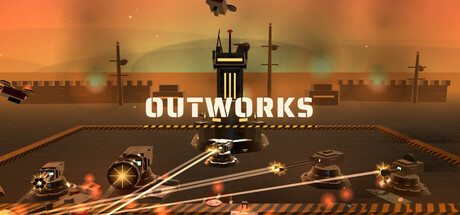
OUTWORKS was developed with the help of AI-based coding assistants, which we used to write parts of the game's source code. Everything you see and hear in the game is then generated procedurally by that code — all graphics are drawn in code (SVG/CSS) and all sound is synthesized in code (Web Audio). The game contains no AI-generated image or audio assets, and no generative AI runs while you play.
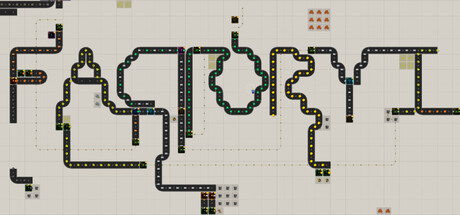
Hey everyone! I’m incredibly excited to finally bring this factory game to Steam.
To be completely transparent, a significant part of this game was crafted through what the cool kids call "Vibe Coding"—leveraging cutting-edge AI to help bring my logic, systems, and visions to life. While the AI helped lay down the bricks, the core factory mechanics, balancing, and gameplay design are all fueled by my own passion for automation.
Think of it as a factory game built by a developer who loves automation so much, they even automated parts of the development process! I hope you enjoy optimizing your factories as much as I enjoyed optimizing this code.
This project uses a mix of human-made and AI-assisted content. The majority of visual assets are human-made. Some 3D character models, item models, and textures were generated with the help of AI tools. All animation, audio, music, sound design, and writing are entirely human-made.
Generative AI tools were used during development to assist with coding, game design ideas, music, dialogue writing, and select texture assets. All content has been reviewed and approved by the developer.
OrderlyWorld currently uses a limited number of pre-generated AI visual assets in the development build and store materials, including the main menu background. These assets are static and curated by the developer. The game does not generate content during play or connect to external AI services.
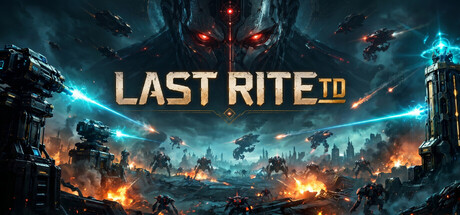
LAST RITE TD uses generative AI tools during development to assist with creating and iterating some visual concepts, marketing artwork, store capsule images, trailer-related promotional materials, voice/audio elements, and certain worldbuilding or text-drafting support.
Some voice/audio elements may also be AI-assisted. All AI-assisted content is reviewed, selected, edited, and integrated by the developer before being used in the game or on the Steam store page.
The game does not use generative AI to create unpredictable real-time gameplay content for players during normal play.
Generative AI was used to create some initial concept imagery during development and marketing. All AI generated content is reviewed, heavily modified, edited and incorporated into final artwork by our art team before use. No AI generated content is produced during gameplay.
Some of the background music in Hold It In comes from a commercially-licensed third-party music pack bought from itch.io ("Hell Metal Songs" by thc555) that was created with AI-assisted music tools. All other audio (voice, sound effects), all art, and all game code were created without generative AI. No AI-generated content is created live during gameplay.
Generative AI tools were used during development to assist in the creation of selected textures, 3D models, 2D graphics, and written text used in the game and on the Steam store page. All AI-assisted assets and text were manually reviewed, edited, and integrated by the developer before release. The game does not use generative AI during gameplay and does not generate live content for players.
The work performed by artificial intelligence (AI)
in creating the game concerns only the music and images,
including store page and library images.
AI was used to create all the music in the game;
you can listen to some of it in the videos on the store page.
The videos use the game's music.
AI was also used as an image generator
during the game's development.
The resulting images were used for the background scenery and to
create textures and geometric shapes (the 3D shape is obtained from the image).
Almost all of the game's textures were created from AI generated images.
The three dimensional geometric models were created using a
group of traditional software; these software used AI generated images as their
"source data".
In practice, many 3D objects you see in the game, such as all the bees and
all the flowers, are a three dimensional reconstruction of objects
drawn over multiple images by AI.
The AI used is that provided by the major industries in the field.
All 3D modeling software is the intellectual property of the game's author.
Store page artwork (capsule images and header) was created with
the assistance of AI image generation tools (Stable Diffusion /
Flux). All in-game content, text, and gameplay logic is
human-authored. No AI is used to generate content during gameplay.
We use AI to translate the store steam page to different languages. This will be changed on release and we will hire professional translators for this purpose.
Parts of this game were made with the help of generative AI tools. The music and sound effects were created using AI audio generation, then selected, edited, and mixed by us — they ship as fixed assets, not content generated live while you play.
We also used AI-assisted coding tools (such as code autocomplete and programming assistants) during development. Every line that ships was reviewed, tested, and integrated by us; the AI sped up routine work while the design, architecture, and final decisions remained human-led.
The game does not run any AI or collect player data during gameplay.
Some visual assets and concept artwork used in the game were created or assisted by generative AI tools and further modified by the developer. All gameplay systems, story content, level design, and interactive features were created by the developer.
This game used generative AI tools as an aid in creating some of its visual assets, such as background illustrations and character/environment pixel art. All AI-generated output was reviewed, refined, and edited by the developer before being included in the game. No content is generated by AI in real time during gameplay.
Some visual assets and artwork used during the development of Shrunk Wilds were created with the assistance of AI image generation tools. All generated assets are manually reviewed, modified, and curated by the developer before being implemented into the game. Players do not interact with AI systems during gameplay, and the game does not generate content in real time.
Generative AI was used to assist in the creation of certain UI icons and interface artwork. All generated content was reviewed, modified, and integrated by the developer before being used in the game.
As a solo developer, I used AI tools as a foundation to expand the game's scope, manually refining and finalizing every asset to ensure the final result is a high-quality, handcrafted experience.
We used generative AI tools in a limited capacity during development: some store page descriptions and marketing texts were drafted with AI assistance and finalized with human editing. Some non-Chinese localization texts were translated using AI and reviewed by humans. All core gameplay, programming, and level design were created by the developers.Some in-game artwork / background music was created with the assistance of generative AI tools.
This game utilizes generative artificial intelligence tools in its development to assist our small team. Specifically, AI was used to help localize our Steam store listing text into multiple languages to reach a broader audience. Additionally, AI tools were used to help refine and format certain store promotional images and icons, which are strictly based on and adapted from our original, human-created hand-drawn concept art. No live-generated AI content is used during active gameplay.
Imperium is a solo-developed game that makes extensive use of generative AI
to create its content:
• Visual art and graphical assets — planet surfaces, buildings, species and
ship artwork, interface art, and store/marketing imagery — were generated
using Midjourney and ChatGPT, then extensively edited, composited, and
refined by hand in Photoshop (including Photoshop's AI tools) to fit the
game's art direction.
• Music was generated using Suno.
• Sound effects were generated using ElevenLabs.
Every asset is reviewed, edited, and approved by the developer before it
ships, and the game's design, systems, and balance are the developer's own.
Imperium's in-game opponents use traditional algorithmic AI, not generative AI.
The Early Access build includes some static pre-generated AI placeholder artwork used as temporary in-game assets during development. This content is not generated during gameplay, is not user-generated, and does not connect to any external AI service. Placeholder artwork may be replaced or polished during Early Access as final art is completed.
Character art and event scene illustrations in this game were created using AI image generation tools. All generated images were curated, edited, and refined by the developer to produce the final in-game assets. No AI content is generated in real time during gameplay.
SYLVA contains pre-generated AI-assisted content. Generative AI tools were used during development to create and refine certain store page artwork, capsule images, library assets, loading screen artwork, logos, promotional materials, visual concepts, text drafts, localization assistance, and software development workflows.
All AI-assisted content was reviewed, modified, and approved by the developer before being included in the game or published on the Steam store page. The final game design, gameplay systems, progression, balancing, world design, and creative direction are determined by the developer.
SYLVA does not generate real-time AI content during gameplay.
This game was developed using an agentic AI coding tool, the code was written with AI assistance, under the design, direction, and review of the developer. The game contains no AI-generated assets — models and textures are generated procedurally in-engine, audio (sound effects and music) is pre-synthesized with the developer's own non-AI DSP tools, and UI text uses system fonts. No AI content is generated at runtime.
Artwork note: some visuals were generated with AI models in this early version. For now the focus is on mechanics, so they are placeholders. Over time I will make the style more consistent and replace them with assets designed specifically for AoNW.
This game utilizes generative AI for certain 2D illustrations, backgrounds, and portions of written content. All AI-assisted content was manually reviewed, edited, and refined by the developer to ensure consistency with the game's artistic vision, narrative, and gameplay. No live or real-time AI generation occurs during gameplay.
Hi everyone! I'm currently a student and this is my very first indie game. While I'm completely at home with coding and game engines, handling all the visual design and localization entirely by myself was quite a challenge.
I created all the promotional capsule art and designs you see on the Steam store page manually from scratch. However, I did use AI generation tools as a starting base for some of the in-game UI overlays and minor textures. Afterward, I manually edited and color-corrected them to ensure they perfectly match the game's dark atmosphere. I also used AI text models to assist with translation and localization. There are no real-time AI generation systems running while you play. Thank you so much for your support and understanding!
By My Side is developed by a small independent studio, and we use generative AI as part of our content pipeline:
- 3D models — many in-game models (crops, props, buildings, devices and characters) are generated with Meshy AI, then adjusted, scaled and integrated by hand.
- Music & sound — parts of the soundtrack and sound effects are created with AI audio tools and curated by us.
- Localization — translations are drafted with AI assistance and reviewed before release.
All AI-generated content is reviewed, edited and curated by the developer before it ships. No generative AI runs live during gameplay — everything is pre-generated and fixed.
AI tools were used to assist with concept art direction, store artwork iteration, written content, UI text refinement, and creative planning. All final content was reviewed, edited, and implemented by the developer.
OUTWORKS was developed with the help of AI-based coding assistants, which we used to write parts of the game's source code. Everything you see and hear in the game is then generated procedurally by that code — all graphics are drawn in code (SVG/CSS) and all sound is synthesized in code (Web Audio). The game contains no AI-generated image or audio assets, and no generative AI runs while you play.
Hey everyone! I’m incredibly excited to finally bring this factory game to Steam.
To be completely transparent, a significant part of this game was crafted through what the cool kids call "Vibe Coding"—leveraging cutting-edge AI to help bring my logic, systems, and visions to life. While the AI helped lay down the bricks, the core factory mechanics, balancing, and gameplay design are all fueled by my own passion for automation.
Think of it as a factory game built by a developer who loves automation so much, they even automated parts of the development process! I hope you enjoy optimizing your factories as much as I enjoyed optimizing this code.
This project uses a mix of human-made and AI-assisted content. The majority of visual assets are human-made. Some 3D character models, item models, and textures were generated with the help of AI tools. All animation, audio, music, sound design, and writing are entirely human-made.
Generative AI tools were used during development to assist with coding, game design ideas, music, dialogue writing, and select texture assets. All content has been reviewed and approved by the developer.
OrderlyWorld currently uses a limited number of pre-generated AI visual assets in the development build and store materials, including the main menu background. These assets are static and curated by the developer. The game does not generate content during play or connect to external AI services.
LAST RITE TD uses generative AI tools during development to assist with creating and iterating some visual concepts, marketing artwork, store capsule images, trailer-related promotional materials, voice/audio elements, and certain worldbuilding or text-drafting support.
Some voice/audio elements may also be AI-assisted. All AI-assisted content is reviewed, selected, edited, and integrated by the developer before being used in the game or on the Steam store page.
The game does not use generative AI to create unpredictable real-time gameplay content for players during normal play.
Generative AI was used to create some initial concept imagery during development and marketing. All AI generated content is reviewed, heavily modified, edited and incorporated into final artwork by our art team before use. No AI generated content is produced during gameplay.
Some of the background music in Hold It In comes from a commercially-licensed third-party music pack bought from itch.io ("Hell Metal Songs" by thc555) that was created with AI-assisted music tools. All other audio (voice, sound effects), all art, and all game code were created without generative AI. No AI-generated content is created live during gameplay.
Generative AI tools were used during development to assist in the creation of selected textures, 3D models, 2D graphics, and written text used in the game and on the Steam store page. All AI-assisted assets and text were manually reviewed, edited, and integrated by the developer before release. The game does not use generative AI during gameplay and does not generate live content for players.
The work performed by artificial intelligence (AI)
in creating the game concerns only the music and images,
including store page and library images.
AI was used to create all the music in the game;
you can listen to some of it in the videos on the store page.
The videos use the game's music.
AI was also used as an image generator
during the game's development.
The resulting images were used for the background scenery and to
create textures and geometric shapes (the 3D shape is obtained from the image).
Almost all of the game's textures were created from AI generated images.
The three dimensional geometric models were created using a
group of traditional software; these software used AI generated images as their
"source data".
In practice, many 3D objects you see in the game, such as all the bees and
all the flowers, are a three dimensional reconstruction of objects
drawn over multiple images by AI.
The AI used is that provided by the major industries in the field.
All 3D modeling software is the intellectual property of the game's author.