Public Steam disclosure research25,380 disclosures tracked
Where do games disclose AI use?
Search developers’ Steam disclosures, compare classified AI use across
games, and follow recorded changes.
This index adds cross-game classifications and statistics to
statements published on individual store pages.
Groups reflect automatic analysis of public disclosures; mature records are excluded. These counts do not measure AI use across all of Steam.
Missing or unclear statements cannot establish whether a game uses AI.
This game was developed with the assistance of generative AI. Generative AI was used to help create portions of the game's source code and some game assets (including certain artwork and prototype assets). All AI-generated content has been reviewed, modified, or integrated by the developer before being included in the game.
English (AI Disclosure)
This game includes AI-assisted NPC dialogue and text generation to create dynamic conversations and world events. AI-generated text is reviewed and integrated by the developer before release.
The game does not generate images, audio, or code on the player's device. AI is used to enhance dialogue variety and immersive world interactions while core gameplay, progression, and game systems are designed by the developer.
Store page artwork (capsule images and header) was created with
the assistance of AI image generation tools (Stable Diffusion /
Flux). All in-game content, text, and gameplay logic is
human-authored. No AI is used to generate content during gameplay.
This game includes live-generated AI features that run locally on the player's computer and do not rely on external AI services.
The game uses AI to:
- interpret the player's spoken voice commands in real time to support gameplay interactions;
- generate voice audio for in-game pilot communications in real time.
The AI systems are used exclusively for these gameplay functions. They do not generate user-visible images, text, or other open-ended content.
The game is designed so that AI-generated output is limited to its intended gameplay purpose and cannot be used to create illegal, infringing, or otherwise prohibited content.
Generative AI tools (such as Gemini) were used to assist in creating the promotional capsule images and description text for this Steam store page. All in-game assets, including art and text, were created entirely by humans.
This game contains some pre-generated AI-created artwork. AI-assisted images are used for certain visual assets, such as event illustrations (for example, cup draw graphics), news imagery, and other decorative artwork. These images are pre-generated during development and are not created dynamically during gameplay. All gameplay, mechanics, and player decisions are authored by the developer.
Some visual assets used in the game and store page were created or modified with the assistance of generative AI, including certain UI elements, icons, and promotional artwork. AI-assisted translation was also used for some store page localizations. All AI-generated content was reviewed, edited, and integrated by the developer.
The development of Mobsteria: Rise to Power used AI-based generative tools to help create some of the art assets that ship in the game.
Some store-page and marketing text was also drafted with AI assistance. All AI-generated content is reviewed, curated, edited, and integrated by a human developer before release.
Artificial intelligence is used exclusively as a tool to assist the developer in editing the source code structure (optimizing Unity script logic), checking compilation errors, and assisting with stylistic design. The AI is not constantly loaded during gameplay.
I use generative AI tools as part of art pipeline. Some visual assets - such as background art and certain textures - are created with AI assistance (e.g. Midjourney, Gemini) and then manually refined, edited, and composited before being integrated into the game. All AI-assisted content is reviewed by me personally to ensure quality and appropriateness. The game does not generate any content live during play.
This game used generative AI tools as an aid in creating some of its visual assets, such as background illustrations and character/environment pixel art. All AI-generated output was reviewed, refined, and edited by the developer before being included in the game. No content is generated by AI in real time during gameplay.
This application uses AI tools in parts of its development process, including creating the in-character dialogue text and some artwork (such as character part images), as well as tuning behavioral algorithms. All AI-generated assets are produced and reviewed in advance and built into the product; no generative AI runs during gameplay.
This game uses pre-generated AI only for certain UI background images and promotional store visuals. These assets were created before release and remain fixed. The game does not include any live AI generation during gameplay.
Cellula was developed with the assistance of generative AI tools. The developer used AI to help write C++ code, generate 3D organelle models from text descriptions, and create UI button artwork. No AI-generated content appears in the final game without human modification, curation, and integration.
This project is itself a demonstration of how AI can democratize game development — allowing a single developer with domain expertise but limited programming experience to build something that previously required a full studio.
All game design, biological accuracy, educational content, and creative direction were provided by a human physician and educator.
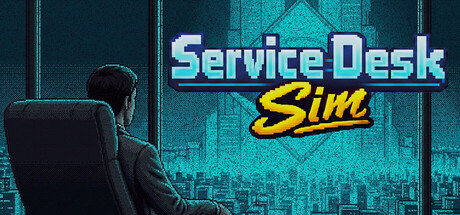
We used advanced AI language models (Claude and Gemini) to help translate
SERVICE DESK SIM into 8 languages: French, German, Spanish, Italian, Hindi,
Urdu, Japanese, and English (UK). The AI handled the initial translation of
all in-game text from UI menus to dialogue, story sequences, and thousands
of unique support tickets. Every translation was then carefully reviewed and
tested by humans to ensure quality and cultural accuracy across all languages.
Some of the 3D models in the game were generated with the assistance of artificial intelligence, and were reviewed and modified by humans before being used as game assets.
This game uses generative AI to assist in generating some text and art resources. All content has been manually reviewed and adjusted, and does not affect core gameplay or content.
Some background and environmental artwork in this game was created with the assistance of generative AI and then reviewed, edited, and integrated by the developer. All story content, dialogue, characters, and game design were created by the developer.
AI tools were only used in the development phase for code, textures, texts, audio and music production. There is no player-accessible AI generation feature or external AI service connection in the released game, and all built-in content has passed full manual compliance review.
During development, we used generative AI tools to assist in creating certain game content. This includes using AI to generate base concepts and visual assets for specific in-game items or backgrounds (which were subsequently refined manually), as well as using AI for multilingual localization and text polishing.
We have carefully crafted a complete set of NPC dialogue without the use of AI. At the same time, we are experimenting with an additional feature powered by AI large language models, allowing players to freely converse with their favorite NPCs. This is an exploratory feature that exists entirely separately from the traditional game content.
These experimental elements are intended to offer players a new additional experience and will not affect the complete single-player experience. Whether this feature will be included in the final release has not yet been decided. Even if it is ultimately implemented, it will be optional rather than required.
This game uses generative AI to assist with parts of the creative process, including some artwork, voice/audio content, written text, localization, and marketing materials. AI-assisted content is reviewed, edited, and selected by the developer before being included in the game.
The overall story direction, game design, character concepts, and final creative decisions are made by the developer.
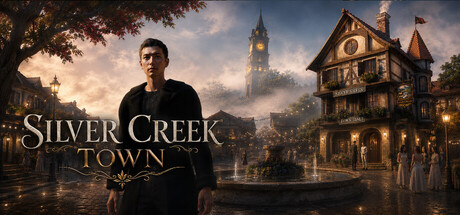
Silver Creek Town uses generative AI to support live NPC dialogue text during gameplay. Player text input may be processed by an AI service to generate in-character fictional NPC responses within the world of Silver Creek Town. Some background music, concept art, character images, text drafts, and marketing materials may also be created or assisted by AI tools during development. We review AI-assisted content before use and apply prompts, content rules, and safety restrictions to reduce inappropriate, illegal, hateful, sexually explicit, infringing, or unsafe output.
Some visuals, text, and promotional materials (including the trailer) were created with the help of AI.
Imperfections, inconsistencies, and “errors” are intentional — they reflect a world where systems don’t always make sense, yet people rely on them anyway.
This is not a bug. It’s the design.
Since english is not my native language.
During the development, I use AI and grammar websites to help me correct my sentences.
But all the text was conceived and finalized by me.
The game's narration engine is a deterministic template system with zero runtime AI. The template/fragment library it draws from was hand-crafted in English, and then mass-localized during development using a large language model and then human-curated. No AI image generation was used: all art, icons, and store assets are procedurally rasterized from hand-authored primitive op-lists. The game contains no live/runtime AI generation.
This game uses AI-generated images for some of its 2D artwork, character
scenes, and store page visuals. All AI-generated content is reviewed, edited,
and curated by our team to fit the game's historical setting. The game's
design, writing, story, and code are created by human developers.
AI was used as an assistive tool for creating specific texture patterns, supporting code development, and producing videos for the game. All generated content was manually reviewed, edited, and refined by our team.
As a small independent game studio, we use AI to support our creative workflow. All final content was created and approved by our team.
Temporary images for furniture and clothing icons within the game, some promotional materials and banners, text translation, and some temporary sound files were created using AI. All in-game content will be replaced with human-made work before the game’s release.
Godwright ships some generative-AI content, all pre-rendered (baked into the build, never live-generated):
Localization: the non-English UI text (Simplified Chinese, Spanish, Portuguese-BR, Russian, German, French, Japanese, Korean, Turkish, Indonesian) was machine-translated.
Google Gemini was utilized during the development phase as an assistive tool for C# scripting, code optimization, debugging, and brainstorming game mechanics. All AI-assisted outputs were manually reviewed, edited, and validated by the developer to ensure proper integration and originality.
This game was developed with the assistance of generative AI. Generative AI was used to help create portions of the game's source code and some game assets (including certain artwork and prototype assets). All AI-generated content has been reviewed, modified, or integrated by the developer before being included in the game.
English (AI Disclosure)
This game includes AI-assisted NPC dialogue and text generation to create dynamic conversations and world events. AI-generated text is reviewed and integrated by the developer before release.
The game does not generate images, audio, or code on the player's device. AI is used to enhance dialogue variety and immersive world interactions while core gameplay, progression, and game systems are designed by the developer.
Store page artwork (capsule images and header) was created with
the assistance of AI image generation tools (Stable Diffusion /
Flux). All in-game content, text, and gameplay logic is
human-authored. No AI is used to generate content during gameplay.
This game includes live-generated AI features that run locally on the player's computer and do not rely on external AI services.
The game uses AI to:
- interpret the player's spoken voice commands in real time to support gameplay interactions;
- generate voice audio for in-game pilot communications in real time.
The AI systems are used exclusively for these gameplay functions. They do not generate user-visible images, text, or other open-ended content.
The game is designed so that AI-generated output is limited to its intended gameplay purpose and cannot be used to create illegal, infringing, or otherwise prohibited content.
Generative AI tools (such as Gemini) were used to assist in creating the promotional capsule images and description text for this Steam store page. All in-game assets, including art and text, were created entirely by humans.
This game contains some pre-generated AI-created artwork. AI-assisted images are used for certain visual assets, such as event illustrations (for example, cup draw graphics), news imagery, and other decorative artwork. These images are pre-generated during development and are not created dynamically during gameplay. All gameplay, mechanics, and player decisions are authored by the developer.
Some visual assets used in the game and store page were created or modified with the assistance of generative AI, including certain UI elements, icons, and promotional artwork. AI-assisted translation was also used for some store page localizations. All AI-generated content was reviewed, edited, and integrated by the developer.
The development of Mobsteria: Rise to Power used AI-based generative tools to help create some of the art assets that ship in the game.
Some store-page and marketing text was also drafted with AI assistance. All AI-generated content is reviewed, curated, edited, and integrated by a human developer before release.
Artificial intelligence is used exclusively as a tool to assist the developer in editing the source code structure (optimizing Unity script logic), checking compilation errors, and assisting with stylistic design. The AI is not constantly loaded during gameplay.
I use generative AI tools as part of art pipeline. Some visual assets - such as background art and certain textures - are created with AI assistance (e.g. Midjourney, Gemini) and then manually refined, edited, and composited before being integrated into the game. All AI-assisted content is reviewed by me personally to ensure quality and appropriateness. The game does not generate any content live during play.
This game used generative AI tools as an aid in creating some of its visual assets, such as background illustrations and character/environment pixel art. All AI-generated output was reviewed, refined, and edited by the developer before being included in the game. No content is generated by AI in real time during gameplay.
This application uses AI tools in parts of its development process, including creating the in-character dialogue text and some artwork (such as character part images), as well as tuning behavioral algorithms. All AI-generated assets are produced and reviewed in advance and built into the product; no generative AI runs during gameplay.
This game uses pre-generated AI only for certain UI background images and promotional store visuals. These assets were created before release and remain fixed. The game does not include any live AI generation during gameplay.
Cellula was developed with the assistance of generative AI tools. The developer used AI to help write C++ code, generate 3D organelle models from text descriptions, and create UI button artwork. No AI-generated content appears in the final game without human modification, curation, and integration.
This project is itself a demonstration of how AI can democratize game development — allowing a single developer with domain expertise but limited programming experience to build something that previously required a full studio.
All game design, biological accuracy, educational content, and creative direction were provided by a human physician and educator.
We used advanced AI language models (Claude and Gemini) to help translate
SERVICE DESK SIM into 8 languages: French, German, Spanish, Italian, Hindi,
Urdu, Japanese, and English (UK). The AI handled the initial translation of
all in-game text from UI menus to dialogue, story sequences, and thousands
of unique support tickets. Every translation was then carefully reviewed and
tested by humans to ensure quality and cultural accuracy across all languages.
Some of the 3D models in the game were generated with the assistance of artificial intelligence, and were reviewed and modified by humans before being used as game assets.
This game uses generative AI to assist in generating some text and art resources. All content has been manually reviewed and adjusted, and does not affect core gameplay or content.
Some background and environmental artwork in this game was created with the assistance of generative AI and then reviewed, edited, and integrated by the developer. All story content, dialogue, characters, and game design were created by the developer.
AI tools were only used in the development phase for code, textures, texts, audio and music production. There is no player-accessible AI generation feature or external AI service connection in the released game, and all built-in content has passed full manual compliance review.
During development, we used generative AI tools to assist in creating certain game content. This includes using AI to generate base concepts and visual assets for specific in-game items or backgrounds (which were subsequently refined manually), as well as using AI for multilingual localization and text polishing.
We have carefully crafted a complete set of NPC dialogue without the use of AI. At the same time, we are experimenting with an additional feature powered by AI large language models, allowing players to freely converse with their favorite NPCs. This is an exploratory feature that exists entirely separately from the traditional game content.
These experimental elements are intended to offer players a new additional experience and will not affect the complete single-player experience. Whether this feature will be included in the final release has not yet been decided. Even if it is ultimately implemented, it will be optional rather than required.
This game uses generative AI to assist with parts of the creative process, including some artwork, voice/audio content, written text, localization, and marketing materials. AI-assisted content is reviewed, edited, and selected by the developer before being included in the game.
The overall story direction, game design, character concepts, and final creative decisions are made by the developer.
Silver Creek Town uses generative AI to support live NPC dialogue text during gameplay. Player text input may be processed by an AI service to generate in-character fictional NPC responses within the world of Silver Creek Town. Some background music, concept art, character images, text drafts, and marketing materials may also be created or assisted by AI tools during development. We review AI-assisted content before use and apply prompts, content rules, and safety restrictions to reduce inappropriate, illegal, hateful, sexually explicit, infringing, or unsafe output.
Some visuals, text, and promotional materials (including the trailer) were created with the help of AI.
Imperfections, inconsistencies, and “errors” are intentional — they reflect a world where systems don’t always make sense, yet people rely on them anyway.
This is not a bug. It’s the design.
Since english is not my native language.
During the development, I use AI and grammar websites to help me correct my sentences.
But all the text was conceived and finalized by me.
The game's narration engine is a deterministic template system with zero runtime AI. The template/fragment library it draws from was hand-crafted in English, and then mass-localized during development using a large language model and then human-curated. No AI image generation was used: all art, icons, and store assets are procedurally rasterized from hand-authored primitive op-lists. The game contains no live/runtime AI generation.
This game uses AI-generated images for some of its 2D artwork, character
scenes, and store page visuals. All AI-generated content is reviewed, edited,
and curated by our team to fit the game's historical setting. The game's
design, writing, story, and code are created by human developers.
AI was used as an assistive tool for creating specific texture patterns, supporting code development, and producing videos for the game. All generated content was manually reviewed, edited, and refined by our team.
As a small independent game studio, we use AI to support our creative workflow. All final content was created and approved by our team.
Temporary images for furniture and clothing icons within the game, some promotional materials and banners, text translation, and some temporary sound files were created using AI. All in-game content will be replaced with human-made work before the game’s release.
Godwright ships some generative-AI content, all pre-rendered (baked into the build, never live-generated):
Localization: the non-English UI text (Simplified Chinese, Spanish, Portuguese-BR, Russian, German, French, Japanese, Korean, Turkish, Indonesian) was machine-translated.
Google Gemini was utilized during the development phase as an assistive tool for C# scripting, code optimization, debugging, and brainstorming game mechanics. All AI-assisted outputs were manually reviewed, edited, and validated by the developer to ensure proper integration and originality.