Public Steam disclosure research25,380 disclosures tracked
Where do games disclose AI use?
Search developers’ Steam disclosures, compare classified AI use across
games, and follow recorded changes.
This index adds cross-game classifications and statistics to
statements published on individual store pages.
Groups reflect automatic analysis of public disclosures; mature records are excluded. These counts do not measure AI use across all of Steam.
Missing or unclear statements cannot establish whether a game uses AI.
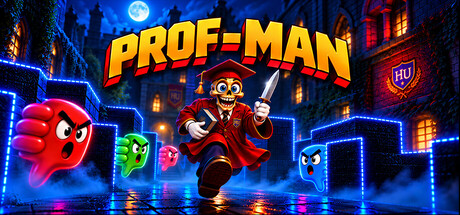
PROF-MAN contains pre-generated visual artwork and voice audio created with the assistance of generative AI tools. Visual assets were created and directed by the developer and subsequently edited and refined as part of the game's art production process. The Professor's voice was created using ElevenLabs. No AI-generated content is created during gameplay.
Generative AI tools were used during development to assist with some artwork, text, localization, and other game content. All AI-assisted content is reviewed and edited by the developers before inclusion in the game.
This game contains content created with the assistance of AI tools. AI was used during development to assist with programming, visual assets, and other creative elements. All generated content was reviewed, edited, and integrated by the dev.
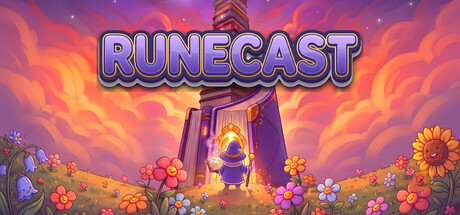
Runecast’s illustrations were generated with AI tools, then curated, edited and integrated by hand. The soundtrack was generated with Suno under a commercial license. The game’s design and code were developed with AI assistance, directed and reviewed by the developer.
Generative AI tools were used during development to assist with pre-generated assets:
- Visual Assets & 3D Models: Concept art, 2D UI elements/icons, and base 3D models and textures were created with the assistance of generative AI tools, then manually and AI assisted cleaned, rigged, and optimized for the engine.
- Narrative & Writing: In-game lore, quest descriptions, and unit flavor text were drafted and refined with AI assistance.
All AI-assisted content is created prior to release and manually curated. There is no real-time or live AI content generation during gameplay.
Generative AI tools were used to assist with translating and proofreading text for the game and its Steam store page. All translated and revised text was reviewed and approved by the developer.
Generative AI was used to create some store page images, in-game images, and concept art for certain 3D models. All generated content was reviewed and edited by the development team.
This game includes AI-generated content created during development.
Character portraits, illustrations and store artwork were generated with an image model and curated by the developer. Background music was generated with Google Lyria and contains SynthID watermarking.
Translations were produced with AI assistance. No AI content is generated while you play.
Some of the artwork and text in this game and on its store page, including the translations, were created with the assistance of AI tools and reviewed by the developer.
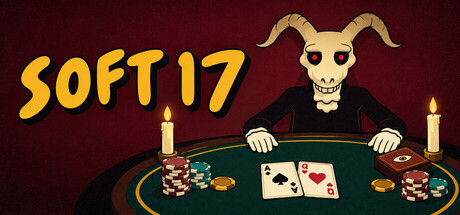
SOFT 17's visuals and audio are generated procedurally from code: the dealers, the
cards, the table and every sound are drawn and synthesized while you play, rather than
imported as files.
Generative AI contributed to some of the content that ships with the game: eight
interface icons in the main menu, the artwork used on this store page, and part of the
in-game text and its English translation. All of it was produced from written briefs,
then reviewed, edited and assembled by hand.
Some of the game's artwork was created with the help of an AI image model and then curated, edited and composited by the developer: companion and character portraits, boss and zone art, and the store page key art. Some in-game item and companion descriptions and patch notes were drafted with AI writing assistance and reviewed by the developer. The game does not generate content with AI while you play and does not connect to any AI service during gameplay.
Some visual assets and store-related materials for this game were created with generative AI assistance, then reviewed and edited by humans before inclusion. In-game opponents use traditional search and position evaluation; moves are not generated by generative AI at runtime.
Generative AI tools were used during development to assist with character artwork, educational text, translations, musical compositions, and store and marketing materials. This content was prepared during development. The game does not use generative AI during gameplay or connect to external AI services.
Some in-app text (character dialogue) and translations were drafted with AI writing assistance and edited by the developer. All graphics are drawn at runtime by hand-written code, and all sounds and music are synthesised by code; no AI image, voice or music models are used, and nothing is AI-generated while you use the app.
AI tools were used to assist with writing and reviewing game code during development. No AI-generated art, audio, or narrative content ships in the final game.
The four cat-origin character portraits were created with generative AI during development. Pack and card artwork is contributed by creators and may also include AI-created images; the creation method of some contributed artwork, including the initial BLEP pack, has not been independently verified. The game does not generate artwork during play or connect to an AI generation service during gameplay. Players can report creator content in the game for operator review and removal.
Generative AI was used to assist in creating promotional artwork for the Steam store page and marketing assets. No live-generated AI content is used during gameplay.
Some of the programming made use of AI tools to assist with identifying bugs.
ALL visual assets in this game are 100% HUMAN MADE, from the ground up. All sound effects and music are also 100% made by me, with NO AI. All in-game imagery is entirely human made. The store page graphics and text description are also 100% human made with no AI.
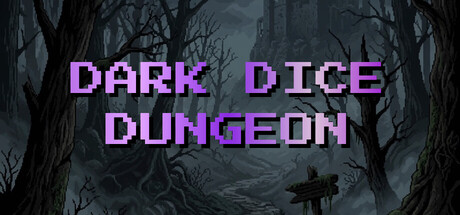
The content of Dark Dice Dungeon was produced with the help of generative AI tools: the illustrations, the music and sound effects, the in-game writing, and the English and Spanish translations. All of it was then selected, edited and assembled by hand by the developer. Nothing is generated while you play: the game ships with fixed assets and never connects to any service.
During development, some of the game's art assets were created with the help of AI image-generation tools, then curated, adjusted, and integrated by hand. The game does not generate any AI content in real time during play.
This game uses AI-generated 2D art assets, including block icons,
character sprites, and tower visuals. These assets were created
with the assistance of generative AI image models and have beenreviewed and curated by our team. All gameplay logic, story,
and sound design are human-authored.
Visual assets and music in Homeward on the Wind were created with the assistance of generative AI tools and were reviewed and refined by the development team. The game does not generate content in real time. All storylines, choices, and interactions are pre-designed.
This game uses pre-generated AI-assisted artwork for character portraits, store images, and some illustrations. No AI content is generated during gameplay.
As a solo developer, I leverage generative AI tools to efficiently create visual assets and UI elements. Much like an automated tool helps a single craftsman, this technology allows me to bring my vision to life independently, maintaining full creative control over the game's mechanics, logic, and design.
We cautiously use AI for extending our 2D elements such as icons. We always start with OUR art first. All in game 3D art is created by artists or uses asset packs from various asset stores.
BitWise was made by a single developer with AI assistance, under the developer's direction and review. It contains no AI-generated images or voices: the game draws all of its art and synthesizes all of its sound with its own code. Nothing is generated by AI while you play.
Generative AI-assisted tools were used during development to assist with programming tasks and to create or refine selected 3D models. All AI-assisted code and 3D assets were reviewed, edited, tested, and integrated by the development team. AI-assisted tools were also used for selected Steam marketing artwork. The game does not generate content with AI during gameplay and does not connect to an external AI service.
During development we use AI-based tools to assist with content creation, including modelling, voice lines, music and translations. All of it is reviewed by the team to ensure the final product stays true to our own vision.
Mythbound features a small portion of generated assets in the form of environmental props for it's Early Access period. No generated assets will be featured in the final release of the game.
Generative AI tools were used to assist with some of the game's translations and localization. The AI-generated translations were reviewed and edited before being included in the game.
Generative AI tools were used during development to assist with language translation and localization, as well as researching historical and contextual lore to ensure narrative accuracy. All final text, gameplay content, and lore were reviewed and edited by human creators.
During development, generative AI is used to explore visual concepts and create prototype. Also used on Translation. Textures, animations, and 3D models are created manually. The game does not generate AI content during gameplay.
Generative AI is used during development to help create store artwork, some character and military prop source assets, and localized store text. Assets are edited and integrated during development. The game does not generate AI content or connect to external AI services during gameplay.
The soundtrack was composed with Suno, and the sound effects and unit/announcer voice lines were generated with ElevenLabs; all were selected, edited and mixed by the developer. The title logo illustration was drafted with an AI image tool and finished by hand. The UI frame art is a licensed commercial kit (not AI). No AI content is generated while the game runs.
PROF-MAN contains pre-generated visual artwork and voice audio created with the assistance of generative AI tools. Visual assets were created and directed by the developer and subsequently edited and refined as part of the game's art production process. The Professor's voice was created using ElevenLabs. No AI-generated content is created during gameplay.
Generative AI tools were used during development to assist with some artwork, text, localization, and other game content. All AI-assisted content is reviewed and edited by the developers before inclusion in the game.
This game contains content created with the assistance of AI tools. AI was used during development to assist with programming, visual assets, and other creative elements. All generated content was reviewed, edited, and integrated by the dev.
Runecast’s illustrations were generated with AI tools, then curated, edited and integrated by hand. The soundtrack was generated with Suno under a commercial license. The game’s design and code were developed with AI assistance, directed and reviewed by the developer.
Generative AI tools were used during development to assist with pre-generated assets:
- Visual Assets & 3D Models: Concept art, 2D UI elements/icons, and base 3D models and textures were created with the assistance of generative AI tools, then manually and AI assisted cleaned, rigged, and optimized for the engine.
- Narrative & Writing: In-game lore, quest descriptions, and unit flavor text were drafted and refined with AI assistance.
All AI-assisted content is created prior to release and manually curated. There is no real-time or live AI content generation during gameplay.
Generative AI tools were used to assist with translating and proofreading text for the game and its Steam store page. All translated and revised text was reviewed and approved by the developer.
Generative AI was used to create some store page images, in-game images, and concept art for certain 3D models. All generated content was reviewed and edited by the development team.
This game includes AI-generated content created during development.
Character portraits, illustrations and store artwork were generated with an image model and curated by the developer. Background music was generated with Google Lyria and contains SynthID watermarking.
Translations were produced with AI assistance. No AI content is generated while you play.
Some of the artwork and text in this game and on its store page, including the translations, were created with the assistance of AI tools and reviewed by the developer.
SOFT 17's visuals and audio are generated procedurally from code: the dealers, the
cards, the table and every sound are drawn and synthesized while you play, rather than
imported as files.
Generative AI contributed to some of the content that ships with the game: eight
interface icons in the main menu, the artwork used on this store page, and part of the
in-game text and its English translation. All of it was produced from written briefs,
then reviewed, edited and assembled by hand.
Some of the game's artwork was created with the help of an AI image model and then curated, edited and composited by the developer: companion and character portraits, boss and zone art, and the store page key art. Some in-game item and companion descriptions and patch notes were drafted with AI writing assistance and reviewed by the developer. The game does not generate content with AI while you play and does not connect to any AI service during gameplay.
Some visual assets and store-related materials for this game were created with generative AI assistance, then reviewed and edited by humans before inclusion. In-game opponents use traditional search and position evaluation; moves are not generated by generative AI at runtime.
Generative AI tools were used during development to assist with character artwork, educational text, translations, musical compositions, and store and marketing materials. This content was prepared during development. The game does not use generative AI during gameplay or connect to external AI services.
Some in-app text (character dialogue) and translations were drafted with AI writing assistance and edited by the developer. All graphics are drawn at runtime by hand-written code, and all sounds and music are synthesised by code; no AI image, voice or music models are used, and nothing is AI-generated while you use the app.
AI tools were used to assist with writing and reviewing game code during development. No AI-generated art, audio, or narrative content ships in the final game.
The four cat-origin character portraits were created with generative AI during development. Pack and card artwork is contributed by creators and may also include AI-created images; the creation method of some contributed artwork, including the initial BLEP pack, has not been independently verified. The game does not generate artwork during play or connect to an AI generation service during gameplay. Players can report creator content in the game for operator review and removal.
Generative AI was used to assist in creating promotional artwork for the Steam store page and marketing assets. No live-generated AI content is used during gameplay.
Some of the programming made use of AI tools to assist with identifying bugs.
ALL visual assets in this game are 100% HUMAN MADE, from the ground up. All sound effects and music are also 100% made by me, with NO AI. All in-game imagery is entirely human made. The store page graphics and text description are also 100% human made with no AI.
The content of Dark Dice Dungeon was produced with the help of generative AI tools: the illustrations, the music and sound effects, the in-game writing, and the English and Spanish translations. All of it was then selected, edited and assembled by hand by the developer. Nothing is generated while you play: the game ships with fixed assets and never connects to any service.
During development, some of the game's art assets were created with the help of AI image-generation tools, then curated, adjusted, and integrated by hand. The game does not generate any AI content in real time during play.
This game uses AI-generated 2D art assets, including block icons,
character sprites, and tower visuals. These assets were created
with the assistance of generative AI image models and have beenreviewed and curated by our team. All gameplay logic, story,
and sound design are human-authored.
Visual assets and music in Homeward on the Wind were created with the assistance of generative AI tools and were reviewed and refined by the development team. The game does not generate content in real time. All storylines, choices, and interactions are pre-designed.
This game uses pre-generated AI-assisted artwork for character portraits, store images, and some illustrations. No AI content is generated during gameplay.
As a solo developer, I leverage generative AI tools to efficiently create visual assets and UI elements. Much like an automated tool helps a single craftsman, this technology allows me to bring my vision to life independently, maintaining full creative control over the game's mechanics, logic, and design.
We cautiously use AI for extending our 2D elements such as icons. We always start with OUR art first. All in game 3D art is created by artists or uses asset packs from various asset stores.
BitWise was made by a single developer with AI assistance, under the developer's direction and review. It contains no AI-generated images or voices: the game draws all of its art and synthesizes all of its sound with its own code. Nothing is generated by AI while you play.
Generative AI-assisted tools were used during development to assist with programming tasks and to create or refine selected 3D models. All AI-assisted code and 3D assets were reviewed, edited, tested, and integrated by the development team. AI-assisted tools were also used for selected Steam marketing artwork. The game does not generate content with AI during gameplay and does not connect to an external AI service.
During development we use AI-based tools to assist with content creation, including modelling, voice lines, music and translations. All of it is reviewed by the team to ensure the final product stays true to our own vision.
Mythbound features a small portion of generated assets in the form of environmental props for it's Early Access period. No generated assets will be featured in the final release of the game.
Generative AI tools were used to assist with some of the game's translations and localization. The AI-generated translations were reviewed and edited before being included in the game.
Generative AI tools were used during development to assist with language translation and localization, as well as researching historical and contextual lore to ensure narrative accuracy. All final text, gameplay content, and lore were reviewed and edited by human creators.
During development, generative AI is used to explore visual concepts and create prototype. Also used on Translation. Textures, animations, and 3D models are created manually. The game does not generate AI content during gameplay.
Generative AI is used during development to help create store artwork, some character and military prop source assets, and localized store text. Assets are edited and integrated during development. The game does not generate AI content or connect to external AI services during gameplay.
The soundtrack was composed with Suno, and the sound effects and unit/announcer voice lines were generated with ElevenLabs; all were selected, edited and mixed by the developer. The title logo illustration was drafted with an AI image tool and finished by hand. The UI frame art is a licensed commercial kit (not AI). No AI content is generated while the game runs.