Public Steam disclosure research25,376 disclosures tracked
Where do games disclose AI use?
Search developers’ Steam disclosures, compare classified AI use across
games, and follow recorded changes.
This index adds cross-game classifications and statistics to
statements published on individual store pages.
Groups reflect automatic analysis of public disclosures; mature records are excluded. These counts do not measure AI use across all of Steam.
Missing or unclear statements cannot establish whether a game uses AI.
I used AI-generated images as inspiration in the creation of visuals. These images served as a starting point, and I then manually refined and adjusted them to create the final banners and promotional materials.
We may utilize procedural and AI-based tools throughout our development process to support content creation, including the use of text-to-speech technology for our voiceover work.
Regardless, every aspect of the final product is a direct result of our team's own creative vision and expression.
Our small indie team has responsibly used generative AI tools to accelerate our development while maintaining full creative control.
We used MidJourney to generate base visual assets, which were then carefully edited, customized, and rendered by our artists to match the game’s artistic direction. These AI-generated elements are part of the final visual content, but were not used “as-is” and underwent human refinement.
For localization, we used AI-based tools to assist with proofreading and translation consistency, ensuring clearer communication across languages.
No AI systems are used during gameplay or in real-time content generation. All interactive and gameplay logic was developed by our team.
We fully comply with Steam’s policies regarding AI use, and all assets were created and integrated within the scope of ethical and legal use.
Transparency and player trust are at the heart of our approach.
The current iteration of the game (the 5th Dimension World Builder application) does not utilize A.I. technology.
However the beta release of the game following the end of early access in 2026, will empower players to create in-game companions called Mechs that will utilize large language model technology to produce humanlike conversational responses to questions and comments from players during the course of gameplay user experience
This game uses artificial intelligence only for narrative content creation.
All dialogue, descriptions, and text were generated with the help of AI during development, with manual review to ensure quality, cohesion, and originality.
AI is not used in real time during gameplay and does not interact directly with the player. All final content was carefully integrated into the game before release.
The tutorial text of each game experience is explained by an AI voice generated using text to speech. This content is specifically designed to provide an audiovisual link and memorization of the controls and game explanation, thus lowering the barrier to entry for younger players and players with literacy deficits.
As we are indie developers, we use some generative ai tools image generator or ai chatbots, to get birds eye view of how the game will look like, and to create a better plan for our game, then we created the content ourselves.
We leverage generative AI technology to assist in the creation of high-fidelity environmental textures and ambient sound effects. Every AI-assisted asset has been manually curated, edited, and integrated by our development team to ensure a cohesive and high-quality experience that aligns with the game's artistic vision.
Based on our Frontline 1 assets, we've leveraged the innovative capabilities of Midjourney to elevate our visuals by enhancing the graphics for some of the background & art images.
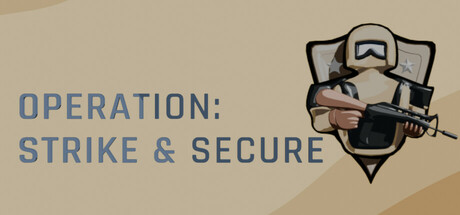
Operation: Strike & Secure uses generative artificial intelligence to create certain visual elements, including the background image of its main menu. This image was generated using an AI tool to bring a unique and immersive aesthetic to the game interface. However, no AI is used to generate real-time content during gameplay, and all other visual and mechanical elements were created and verified by the development team. The AI-generated image meets copyright requirements and has been carefully checked to ensure it fits the theme and atmosphere of the game.
For the demo of Rise of the Vanguard, we have used AI generation primarily to create temporary character voices. This decision was made due to the realities of being a single-developer studio with no funding or external support, and these AI-generated voices are intended only as a stopgap until we can secure funding and hire dedicated professional voice actors. Beyond this, our use of AI has been limited to standard development tooling, such as IDE line-completion features and AI-assisted debugging, which are customary in modern software development. We do not use AI for narrative design, worldbuilding, or core creative direction, and we strongly support creative professionals and the long-term importance of human-created art and performances.
Our game uses GenAI at run time in our game engine to power various gameplay mechanics so that the game can respond to whatever players say and do in the moment.
We're excited to build on both known game dev tools and also develop new capabilities, all to be able to build games that are more improvisational and responsive to player creativity and agency.
We did not use AI generation for any of our art assets, nor for the NPC customer motivations, personalities, or quests.
We used AI technology to generate the music for Proportions. We also used text generation to help us translate the description of Proportions in english.
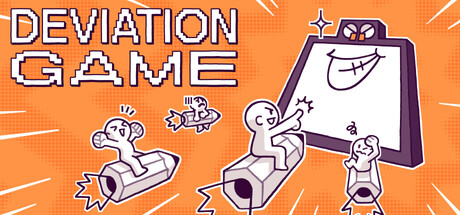
1. The game uses AI only for image recognition, analysing drawings during the guessing phase to produce a guess and a short explanation.
2. The game does not use AI for any form of image generation or sound generation.
3. Players can choose to share their data to potentially improve the game’s image recognition AI. Only data that players have consented to share will be used. All other data will be deleted.
We use procedural and AI-assisted tools to support content creation. However, all final in-game content is shaped and reviewed by our development team reflecting our own creativity and expression.
I used AI-generated images as inspiration in the creation of visuals. These images served as a starting point, and I then manually refined and adjusted them to create the final banners and promotional materials.
We may utilize procedural and AI-based tools throughout our development process to support content creation, including the use of text-to-speech technology for our voiceover work.
Regardless, every aspect of the final product is a direct result of our team's own creative vision and expression.
Our small indie team has responsibly used generative AI tools to accelerate our development while maintaining full creative control.
We used MidJourney to generate base visual assets, which were then carefully edited, customized, and rendered by our artists to match the game’s artistic direction. These AI-generated elements are part of the final visual content, but were not used “as-is” and underwent human refinement.
For localization, we used AI-based tools to assist with proofreading and translation consistency, ensuring clearer communication across languages.
No AI systems are used during gameplay or in real-time content generation. All interactive and gameplay logic was developed by our team.
We fully comply with Steam’s policies regarding AI use, and all assets were created and integrated within the scope of ethical and legal use.
Transparency and player trust are at the heart of our approach.
The current iteration of the game (the 5th Dimension World Builder application) does not utilize A.I. technology.
However the beta release of the game following the end of early access in 2026, will empower players to create in-game companions called Mechs that will utilize large language model technology to produce humanlike conversational responses to questions and comments from players during the course of gameplay user experience
This game uses artificial intelligence only for narrative content creation.
All dialogue, descriptions, and text were generated with the help of AI during development, with manual review to ensure quality, cohesion, and originality.
AI is not used in real time during gameplay and does not interact directly with the player. All final content was carefully integrated into the game before release.
The tutorial text of each game experience is explained by an AI voice generated using text to speech. This content is specifically designed to provide an audiovisual link and memorization of the controls and game explanation, thus lowering the barrier to entry for younger players and players with literacy deficits.
As we are indie developers, we use some generative ai tools image generator or ai chatbots, to get birds eye view of how the game will look like, and to create a better plan for our game, then we created the content ourselves.
We leverage generative AI technology to assist in the creation of high-fidelity environmental textures and ambient sound effects. Every AI-assisted asset has been manually curated, edited, and integrated by our development team to ensure a cohesive and high-quality experience that aligns with the game's artistic vision.
Based on our Frontline 1 assets, we've leveraged the innovative capabilities of Midjourney to elevate our visuals by enhancing the graphics for some of the background & art images.
Operation: Strike & Secure uses generative artificial intelligence to create certain visual elements, including the background image of its main menu. This image was generated using an AI tool to bring a unique and immersive aesthetic to the game interface. However, no AI is used to generate real-time content during gameplay, and all other visual and mechanical elements were created and verified by the development team. The AI-generated image meets copyright requirements and has been carefully checked to ensure it fits the theme and atmosphere of the game.
For the demo of Rise of the Vanguard, we have used AI generation primarily to create temporary character voices. This decision was made due to the realities of being a single-developer studio with no funding or external support, and these AI-generated voices are intended only as a stopgap until we can secure funding and hire dedicated professional voice actors. Beyond this, our use of AI has been limited to standard development tooling, such as IDE line-completion features and AI-assisted debugging, which are customary in modern software development. We do not use AI for narrative design, worldbuilding, or core creative direction, and we strongly support creative professionals and the long-term importance of human-created art and performances.
Our game uses GenAI at run time in our game engine to power various gameplay mechanics so that the game can respond to whatever players say and do in the moment.
We're excited to build on both known game dev tools and also develop new capabilities, all to be able to build games that are more improvisational and responsive to player creativity and agency.
We did not use AI generation for any of our art assets, nor for the NPC customer motivations, personalities, or quests.
We used AI technology to generate the music for Proportions. We also used text generation to help us translate the description of Proportions in english.
1. The game uses AI only for image recognition, analysing drawings during the guessing phase to produce a guess and a short explanation.
2. The game does not use AI for any form of image generation or sound generation.
3. Players can choose to share their data to potentially improve the game’s image recognition AI. Only data that players have consented to share will be used. All other data will be deleted.
We use procedural and AI-assisted tools to support content creation. However, all final in-game content is shaped and reviewed by our development team reflecting our own creativity and expression.