Public Steam disclosure research25,877 disclosures tracked
Where do games disclose AI use?
Search developers’ Steam disclosures, compare classified AI use across
games, and follow recorded changes.
This index adds cross-game classifications and statistics to
statements published on individual store pages.
Groups reflect automatic analysis of public disclosures; mature records are excluded. These counts do not measure AI use across all of Steam.
Missing or unclear statements cannot establish whether a game uses AI.
The masterpieces featured in this game are real public-domain paintings, digitized from high-resolution scans. They are not AI-generated.
Generative AI was used only in the following areas: some artwork other than the masterpieces (UI, characters, backgrounds), some sound, and localization.
Every visual asset in the game is an open-source, licensed, open-source pixel icon, or a real in-game render. no AI image production. Some of the game codes were written with AI-assisted development tools under the direct supervision of the developer, and localization was human-inspired for all sentences after machine translation initials. There is no real-time AI creation in the game
Fish species artwork in Swimcraft is pre-rendered AI-generated imagery. All venue photography is the developer's own, and all audio, UI and game code are non-generated. No AI content is generated live during play.
The game is hanadcrafted by very talented individuals in our team. But as a small studio that is still learning and growing, we leveraged AI to aid us in production. We used AI to generate a few textures for the game. Having said that, we assure everyone that the final game is a result of the hardwork and dedication of a very talented and passionate team.
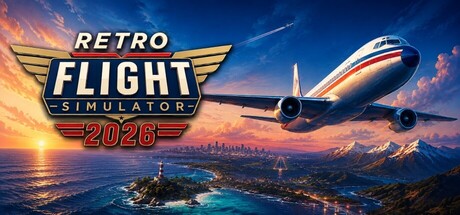
Some pre-rendered artwork and visual assets used in Retro Flight Simulator 2026 were created with the assistance of generative AI and then reviewed and edited by the developer before being included in the game. The game does not use AI-generated content during gameplay and does not rely on external AI services.
During development, AI tools were used to assist in polishing select text descriptions, as well as providing technical support for some of the character art and music assets.
However, the core narrative, setting, and gameplay systems are 100% original, conceived and designed entirely by our team. We wanted to share this with complete transparency and genuinely thank you for your understanding and support. We welcome you to enjoy the game based on your own preferences!
Some 2D art assets in this game were created with the assistance of generative AI tools. All assets were reviewed and edited by the developer before inclusion.
Parts of the in-game text localization were produced with the assistance of AI translation tools, then reviewed by the developer.
Some art assets in this game were created during development with generative AI tools (ChatGPT, Google Gemini, and Leonardo.ai), then manually selected and adjusted by the developer before release.
Music and sound effects are sourced from CC0 assets on OpenGameArt.org and were not AI-generated.
Generative AI (Claude, Anthropic) was used to draft narrative text including level briefing descriptions, objective text, and in-game educational hints. All narrative content was written collaboratively with human review and editing before inclusion in the final game.
In-Game Text Creation and Translation: We use AI to create and translate text for in-game content and store descriptions.
Program Code Generation: We use AI to create and optimize the programming code that implements the game’s features and systems.
Sound Effect Generation: We use AI to generate sound effects used in the game.
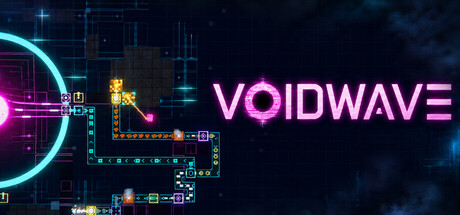
VOIDWAVE's game design, programming, and automation simulation are built by hand. Some visual assets — certain sprites, icons, and UI art — were created with the help of generative AI tools and hand-edited to fit the game's style, and the game's music is AI-generated. Sound effects use procedural synthesis (not AI). All gameplay, systems, and balancing are human-designed, and all content is finalized during development — nothing is AI-generated while you play.
Some character and environment artwork, and portions of marketing/store text, were created with the assistance of generative AI tools. All assets were selected, edited, and integrated by the developer, who has the rights to use them. No AI runs at runtime in the game.
I used AI for some of the voice acting in the game. The selected voice models were shared by their respective voice actors through ElevenLabs.
There are propaganda posters in the game made with the help of AI.
AI tools were used to generate the visual assets, logos, and images featured on this store page and inside the application. The software itself is a local utility and does not dynamically generate any AI content during runtime.
This game was built in a basement by a dad of 3 with claude, gemini, grok, copilot and chat gpt, all pitched in with various parts. some of the backgrounds and icons atrwork had ai refinement in the process but were all reformatted and redrawn as conceptualized by dev
Some art assets in this game were created or assisted by generative AI tools during development, including selected icons, textures, and promotional images. All such assets were pre-generated, manually reviewed, edited, and integrated into the game. The game does not generate AI content during runtime and does not connect to or use any external AI services.
Generative artificial intelligence has been used to create store page thumbnails based on the developer's scene work.
Generative artificial intelligence has been used by the developer to improve the performance of the developers code to achieve incredible in game performance with respect to voxel mesh rendering and voxel lighting calculations. Thanks to the contributions of gen ai Star Journey performs beautifully even on laptops that have no dedicated GPU.
We did use AI generated images, but human edited and perfected images for our Steam Store and logos. Static UI elements and backgrounds were also generated using AI, but again, human edited.
Generative AI was used during development as a supporting tool for parts of the music, selected visual assets, some voice-over lines, portions of the code, and the editing or localization of selected text. The game's concept, design, story, and creative direction are the developer's original work. All AI-assisted content was reviewed and edited as needed by the developer. The game does not use generative AI or generate new AI content during gameplay.
We have used generative AI tools to translate the game into additional languages and make it accessible to a wider audience. The development team has reviewed and overseen the integration of all text to ensure it is displayed correctly and that the interface and menus function properly.
The game uses Generative AI for the following in a Static manner nothing is dynamically generated I have used some of it for: Some Card Art, Some Event Art and finally Localization - Please try the free demo before purchase if you require a language other than English to see if its workable. Thank you!
Some development used generative AI tools to assist with writing code, shaders, and drafting some in-game text. All content was approved by the developer.
This game uses generative AI to create its 2D artwork, including character and avatar portraits, monster and pet illustrations, item and equipment icons, location banners, and store/marketing assets.
All AI-generated art was created during development, then hand-reviewed, curated, and edited by the developer before being included in the game.
No AI content is generated live at runtime — everything players see ships as fixed, pre-made assets. The game's design, writing, code, and balancing are human-made.
Generative AI is used as a production support tool throughout development. It assists with localization, workflow acceleration, and the integration of assets across multiple disciplines into a consistent production pipeline. All AI-assisted content is reviewed, edited, integrated, and quality-controlled by the development team before being included in the final game.
The visual art assets in this game — including character and enemy portraits, item icons, environment/scene artwork, UI elements, the game icon, and the store/library capsule images — were created with the help of generative AI image tools during development. All of this content was manually reviewed, curated, and edited by the team. The game does not use generative AI in real time during gameplay.
Some 2D art assets in Brimir: Pilgrimage to the Heart (such as background illustrations and key art) were created with the help of AI image-generation tools, then reviewed and edited by the development team. Purchased asset packs and tilesets, as well as all game code,
systems, and design, are not AI-generated. We have taken care to ensure the generated content does not infringe on existing intellectual property.
Some visual assets, promotional images, and concept artwork were created or refined with AI-assisted tools. The final game design, gameplay implementation, level structure, UI integration, editing, selection, arrangement, and compilation were completed and reviewed by the developer. The game does not generate AI content during gameplay.
I know many players have reservations about AI-generated content, so I want to be upfront about exactly how it was used in this game.
I'm an ordinary gamer who has played games for almost twenty years and always dreamed of making one of my own. But I can't write code, and I've never been trained in art or music. This game exists because generative AI filled those gaps for me: parts of the code were written with the help of AI coding tools; some character, environment, and UI art was created with image-generation models, then hand-picked and adjusted by me; some animation, music, and sound effects were also made with AI tools.
Everything that makes it an actual game, though — the design, the balancing, the game feel, and every "is this fun?" decision — was done by me, across hundreds of playtests. The game contains no live-generated AI content.
For me, AI wasn't an assembly line making a game in my place. It's what let an ordinary player finally build the game he'd been dreaming about. I hope some of that comes through when you play — and I'd genuinely welcome your feedback.
Generative AI tools were used during development to create and manually refine some illustrations, store page artwork, and music tracks, as well as to assist with text preparation and localization. The game does not generate any AI content in real time.
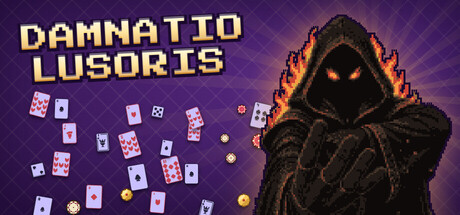
Some of the visual art in this game including card, Relic, and background artwork was created with the help of generative AI tools during development.
All AI generated content was reviewed, curated, and edited by the developer to fit the game's style and quality standards.
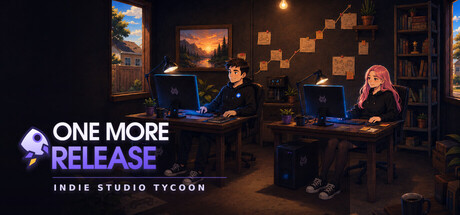
Generative AI tools were used during development to create and refine some pre-generated visual assets, including character illustrations, office environments, decorative objects, and promotional artwork. All generated materials were manually selected, edited, integrated, and reviewed by the developer. The game does not generate any AI content while running.
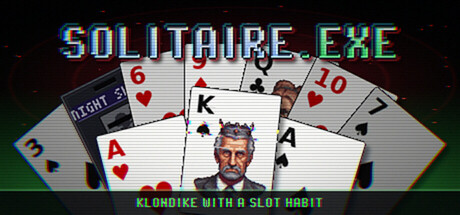
Some 2D art assets in this game (such as certain face-card portraits and mascots) were created with the assistance of AI image-generation tools and then hand-edited and composited. All game design, code, writing, and music are human-authored, and all store screenshots are captured from real gameplay. No AI-generated content is produced live during gameplay.
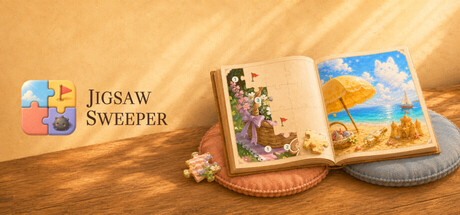
Some static visual assets used for Jigsaw Sweeper were created or refined with generative AI under developer direction, then manually selected, reviewed, edited, and integrated by the developer. This includes Steam achievement icons and may include selected store or marketing artwork.
The game does not generate AI content during gameplay, does not use AI to respond to player input, and does not connect to any external AI service while the game is running.
The Custom Image Puzzle feature lets players import local images from their own device. These images are not generated by the game, are not processed by an AI service, and are not shared through an online service.
This game is primarily built with pre-generated AI-assisted content, including artwork, text, localization, music, video, and marketing materials. All AI-assisted content is reviewed, selected, and edited by the developer before being included in the game or store page. The game does not use live-generated AI during gameplay and does not connect to any external AI service while running.
The masterpieces featured in this game are real public-domain paintings, digitized from high-resolution scans. They are not AI-generated.
Generative AI was used only in the following areas: some artwork other than the masterpieces (UI, characters, backgrounds), some sound, and localization.
Every visual asset in the game is an open-source, licensed, open-source pixel icon, or a real in-game render. no AI image production. Some of the game codes were written with AI-assisted development tools under the direct supervision of the developer, and localization was human-inspired for all sentences after machine translation initials. There is no real-time AI creation in the game
Fish species artwork in Swimcraft is pre-rendered AI-generated imagery. All venue photography is the developer's own, and all audio, UI and game code are non-generated. No AI content is generated live during play.
The game is hanadcrafted by very talented individuals in our team. But as a small studio that is still learning and growing, we leveraged AI to aid us in production. We used AI to generate a few textures for the game. Having said that, we assure everyone that the final game is a result of the hardwork and dedication of a very talented and passionate team.
Some pre-rendered artwork and visual assets used in Retro Flight Simulator 2026 were created with the assistance of generative AI and then reviewed and edited by the developer before being included in the game. The game does not use AI-generated content during gameplay and does not rely on external AI services.
During development, AI tools were used to assist in polishing select text descriptions, as well as providing technical support for some of the character art and music assets.
However, the core narrative, setting, and gameplay systems are 100% original, conceived and designed entirely by our team. We wanted to share this with complete transparency and genuinely thank you for your understanding and support. We welcome you to enjoy the game based on your own preferences!
Some 2D art assets in this game were created with the assistance of generative AI tools. All assets were reviewed and edited by the developer before inclusion.
Parts of the in-game text localization were produced with the assistance of AI translation tools, then reviewed by the developer.
Some art assets in this game were created during development with generative AI tools (ChatGPT, Google Gemini, and Leonardo.ai), then manually selected and adjusted by the developer before release.
Music and sound effects are sourced from CC0 assets on OpenGameArt.org and were not AI-generated.
Generative AI (Claude, Anthropic) was used to draft narrative text including level briefing descriptions, objective text, and in-game educational hints. All narrative content was written collaboratively with human review and editing before inclusion in the final game.
In-Game Text Creation and Translation: We use AI to create and translate text for in-game content and store descriptions.
Program Code Generation: We use AI to create and optimize the programming code that implements the game’s features and systems.
Sound Effect Generation: We use AI to generate sound effects used in the game.
VOIDWAVE's game design, programming, and automation simulation are built by hand. Some visual assets — certain sprites, icons, and UI art — were created with the help of generative AI tools and hand-edited to fit the game's style, and the game's music is AI-generated. Sound effects use procedural synthesis (not AI). All gameplay, systems, and balancing are human-designed, and all content is finalized during development — nothing is AI-generated while you play.
Some character and environment artwork, and portions of marketing/store text, were created with the assistance of generative AI tools. All assets were selected, edited, and integrated by the developer, who has the rights to use them. No AI runs at runtime in the game.
I used AI for some of the voice acting in the game. The selected voice models were shared by their respective voice actors through ElevenLabs.
There are propaganda posters in the game made with the help of AI.
AI tools were used to generate the visual assets, logos, and images featured on this store page and inside the application. The software itself is a local utility and does not dynamically generate any AI content during runtime.
This game was built in a basement by a dad of 3 with claude, gemini, grok, copilot and chat gpt, all pitched in with various parts. some of the backgrounds and icons atrwork had ai refinement in the process but were all reformatted and redrawn as conceptualized by dev
Some art assets in this game were created or assisted by generative AI tools during development, including selected icons, textures, and promotional images. All such assets were pre-generated, manually reviewed, edited, and integrated into the game. The game does not generate AI content during runtime and does not connect to or use any external AI services.
Generative artificial intelligence has been used to create store page thumbnails based on the developer's scene work.
Generative artificial intelligence has been used by the developer to improve the performance of the developers code to achieve incredible in game performance with respect to voxel mesh rendering and voxel lighting calculations. Thanks to the contributions of gen ai Star Journey performs beautifully even on laptops that have no dedicated GPU.
We did use AI generated images, but human edited and perfected images for our Steam Store and logos. Static UI elements and backgrounds were also generated using AI, but again, human edited.
Generative AI was used during development as a supporting tool for parts of the music, selected visual assets, some voice-over lines, portions of the code, and the editing or localization of selected text. The game's concept, design, story, and creative direction are the developer's original work. All AI-assisted content was reviewed and edited as needed by the developer. The game does not use generative AI or generate new AI content during gameplay.
We have used generative AI tools to translate the game into additional languages and make it accessible to a wider audience. The development team has reviewed and overseen the integration of all text to ensure it is displayed correctly and that the interface and menus function properly.
The game uses Generative AI for the following in a Static manner nothing is dynamically generated I have used some of it for: Some Card Art, Some Event Art and finally Localization - Please try the free demo before purchase if you require a language other than English to see if its workable. Thank you!
Some development used generative AI tools to assist with writing code, shaders, and drafting some in-game text. All content was approved by the developer.
This game uses generative AI to create its 2D artwork, including character and avatar portraits, monster and pet illustrations, item and equipment icons, location banners, and store/marketing assets.
All AI-generated art was created during development, then hand-reviewed, curated, and edited by the developer before being included in the game.
No AI content is generated live at runtime — everything players see ships as fixed, pre-made assets. The game's design, writing, code, and balancing are human-made.
Generative AI is used as a production support tool throughout development. It assists with localization, workflow acceleration, and the integration of assets across multiple disciplines into a consistent production pipeline. All AI-assisted content is reviewed, edited, integrated, and quality-controlled by the development team before being included in the final game.
The visual art assets in this game — including character and enemy portraits, item icons, environment/scene artwork, UI elements, the game icon, and the store/library capsule images — were created with the help of generative AI image tools during development. All of this content was manually reviewed, curated, and edited by the team. The game does not use generative AI in real time during gameplay.
Some 2D art assets in Brimir: Pilgrimage to the Heart (such as background illustrations and key art) were created with the help of AI image-generation tools, then reviewed and edited by the development team. Purchased asset packs and tilesets, as well as all game code,
systems, and design, are not AI-generated. We have taken care to ensure the generated content does not infringe on existing intellectual property.
Some visual assets, promotional images, and concept artwork were created or refined with AI-assisted tools. The final game design, gameplay implementation, level structure, UI integration, editing, selection, arrangement, and compilation were completed and reviewed by the developer. The game does not generate AI content during gameplay.
I know many players have reservations about AI-generated content, so I want to be upfront about exactly how it was used in this game.
I'm an ordinary gamer who has played games for almost twenty years and always dreamed of making one of my own. But I can't write code, and I've never been trained in art or music. This game exists because generative AI filled those gaps for me: parts of the code were written with the help of AI coding tools; some character, environment, and UI art was created with image-generation models, then hand-picked and adjusted by me; some animation, music, and sound effects were also made with AI tools.
Everything that makes it an actual game, though — the design, the balancing, the game feel, and every "is this fun?" decision — was done by me, across hundreds of playtests. The game contains no live-generated AI content.
For me, AI wasn't an assembly line making a game in my place. It's what let an ordinary player finally build the game he'd been dreaming about. I hope some of that comes through when you play — and I'd genuinely welcome your feedback.
Generative AI tools were used during development to create and manually refine some illustrations, store page artwork, and music tracks, as well as to assist with text preparation and localization. The game does not generate any AI content in real time.
Some of the visual art in this game including card, Relic, and background artwork was created with the help of generative AI tools during development.
All AI generated content was reviewed, curated, and edited by the developer to fit the game's style and quality standards.
Generative AI tools were used during development to create and refine some pre-generated visual assets, including character illustrations, office environments, decorative objects, and promotional artwork. All generated materials were manually selected, edited, integrated, and reviewed by the developer. The game does not generate any AI content while running.
Some 2D art assets in this game (such as certain face-card portraits and mascots) were created with the assistance of AI image-generation tools and then hand-edited and composited. All game design, code, writing, and music are human-authored, and all store screenshots are captured from real gameplay. No AI-generated content is produced live during gameplay.
Some static visual assets used for Jigsaw Sweeper were created or refined with generative AI under developer direction, then manually selected, reviewed, edited, and integrated by the developer. This includes Steam achievement icons and may include selected store or marketing artwork.
The game does not generate AI content during gameplay, does not use AI to respond to player input, and does not connect to any external AI service while the game is running.
The Custom Image Puzzle feature lets players import local images from their own device. These images are not generated by the game, are not processed by an AI service, and are not shared through an online service.
This game is primarily built with pre-generated AI-assisted content, including artwork, text, localization, music, video, and marketing materials. All AI-assisted content is reviewed, selected, and edited by the developer before being included in the game or store page. The game does not use live-generated AI during gameplay and does not connect to any external AI service while running.