Public Steam disclosure research25,877 disclosures tracked
Where do games disclose AI use?
Search developers’ Steam disclosures, compare classified AI use across
games, and follow recorded changes.
This index adds cross-game classifications and statistics to
statements published on individual store pages.
Groups reflect automatic analysis of public disclosures; mature records are excluded. These counts do not measure AI use across all of Steam.
Missing or unclear statements cannot establish whether a game uses AI.
During Early Access, we use AI-generated voice-overs as temporary placeholders for some characters. These will be replaced with professionally recorded voice-overs during development or, at the latest, after the end of the Early Access period.
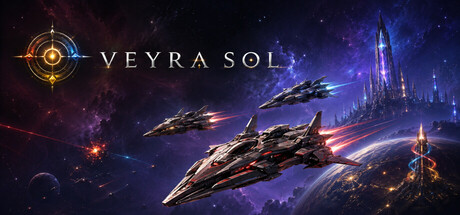
Veyrasol uses generative AI tools as part of its art pipeline. Both 3D models and 2D artwork used in the game (illustrations, backgrounds, UI and unit icons), as well as store page and marketing graphics such as capsule images and banners, were created with the help of generative AI tools and then reviewed, edited and assembled by the developer. Generative AI tools were also used to help write parts of the marketing website and store page copy. The core game (engine, server logic, real-time combat, and systems) is hand-coded by the developer, and no content is generated by AI at runtime during play.
AI Used to Generate SOME Game Aspects such as backend simulations and Graphical Textures. ALL AI Usage is Pre-Rendered and approved by Development team before being built into the game.
AI tools were used to create pre-rendered assets during development, including background illustrations, item images, some video cutscenes, and background music. All AI-generated content was curated, edited, and integrated by the developer. The game does not generate any content at runtime (no live-generated AI content).
Some of the visual and audio assets in Fifth Tier — such as artwork, logos, promotional images, and music — were created with the assistance of generative AI tools. All AI-assisted content was reviewed, edited, and curated by the developer before release. The game does not generate any content in real time during gameplay; all such content is created in advance.
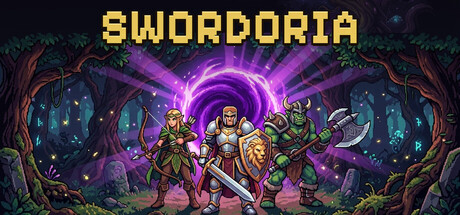
Swordoria was made by a solo developer with the help of generative AI tools. Some of the game's pixel art, music, and sound effects were generated with AI and then cut, edited, recolored, and assembled by hand, and parts of the code were written with the assistance of an AI coding tool. No generative AI runs while you play — all content is created and finalized during development and shipped as fixed assets in the game.
Some pre-made assets (3D models, sound effects, portraits, and some textures) were created with generative AI tools and then curated and integrated by hand. Music is human-composed and licensed. No AI content is generated while you play.
Some graphical assets (capsule images, etc.) and music tracks
were created using AI generation tools.
No AI generates content in real time during gameplay.
All AI-generated materials were reviewed and selected by a human.
Card illustrations and some in-game artwork were pre-generated using generative AI image tools, then curated, edited and integrated by our team. All game design, code, writing and final art direction are human-made. The game does not generate any content with AI at runtime.
This game uses generative artificial intelligence (Midjourney) as a supporting tool in the production of some of its artwork and illustrations. All AI-generated content is selected, edited, and art-directed by the development team, which defines composition, style, and visual coherence before it is integrated into the game.
Generative AI tools were used to create visual assets, including background artwork and in-game target images. Additionally, AI was utilized to assist with code generation during the development process.
Pre-generated AI tools were used during development to assist with the creation of selected 2D artwork, visual assets, and sound effects. All AI-assisted content was reviewed, edited, and integrated by the developer. The game does not use generative AI to create content during gameplay.
We've harnessed the power of Generative AI technology to create several of our game's unique theme background artworks, enhancing your gaming experience with visually stunning designs.
Generative AI was used exclusively to create all of the game's music and some of the promotional artwork (such as posters and banners). No in-game assets, code, or mechanics were created using AI.
AI tools were used to create early drafts and a few base images for certain small visual elements, such as mission briefing cityscape thumbnails. Some initial sprite concepts were generated using AI. These assets were manually edited, adjusted, and integrated into the game’s visual style. No live generative AI is used during gameplay.
The story and game design are an original creation of the developer.
AI was used as a tool to produce certain fixed visuals (store page, logo, illustrations),
in order to faithfully represent the game's artistic vision.
No content is AI-generated during gameplay.
During the development of this game, some codes, texture materials and background music were produced with the help of AI, and all related contents were reviewed and adjusted by the developers.
Generative artificial intelligence was used during the process of creating the game's graphical elements. It was used to generate concepts and 2D graphics, which were then further manually edited and adapted to the needs of the project. The modified graphics were used as backgrounds in the game's main menu.
Some visual assets (creature sprites, plant and background illustrations, and tarot card art, including some store page images) were created using generative AI tools and then curated, edited, and art-directed by the developer. No AI content is generated during gameplay.
Some visual assets used in this game were created or assisted using generative AI and were further edited, refined, and integrated by the developers. No generative AI is used during gameplay.
Color Cup Racing uses generative AI tools as part of the development and content creation process.
AI-assisted tools were used to help create or refine some game content, including development support, visual concepts, marketing materials, and/or music assets. All content included in the game is reviewed, selected, edited, and implemented by the developer before release.
The game does not generate AI content during gameplay. Players do not enter prompts, the game does not create live AI-generated images, audio, text, or code while running, and the game does not connect to external AI services during play.
This game uses generative AI as part of its art and localization pipeline. Specifically:
- Character portrait artwork: The hunters' painted bust portraits (shown on the character-select screen, and reused in store page capsule art and the trailer) were generated using a local Stable Diffusion XL model with a custom LoRA, then composited by hand into final scenes.
- Localization: UI text translations for French, German, Spanish (Spain), Spanish (Latin America), Portuguese (Brazil), Italian, Polish, and Turkish were produced with AI assistance and reviewed before shipping.
All AI-assisted content was reviewed by the development team before inclusion. No content is generated live or in response to player input during gameplay — all AI-assisted assets are fixed at build time.
AI tools assisted with programming and with translating the game's interface text into languages other than English. All translations and text were reviewed by the developer; the game's design, visuals, and audio are not AI-generated.
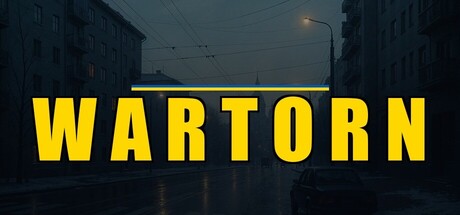
Art. All 2D art in Wartorn is produced with AI image-generation tools and then selected, edited, retouched and composited by hand by the developer. This covers the character portraits, the scene backgrounds, the ending and gallery illustrations, the achievement icons, and the store capsules, screenshots and trailer, which are derived from that same in-game art.
Text. The story, the branching structure and the choice design are the developer's own. AI writing tools were used to assist in drafting the prose and dialogue, and AI translation tools were used to produce the five localizations (English, Traditional Chinese, Simplified Chinese, Russian, Ukrainian). All text is reviewed and edited by the developer before shipping.
Audio. Music and sound effects are royalty-free stock audio licensed from Pixabay. They are not generated by the developer using AI tools.
Runtime. No content is generated while the game is running. Every asset is final and ships with the build, and the game makes no calls to any AI service.
This game uses AI-generated content in the following ways:
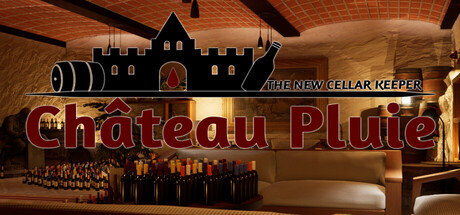
Images: AI tools were used to help compose the wine bottle label artwork.
Music: AI tools were used to compose the in-game radio music and sound effects.
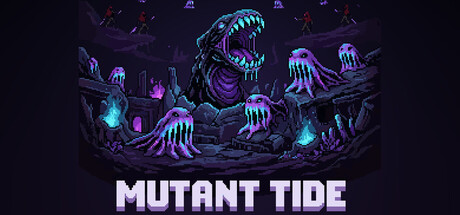
Some 2D art assets in MutantTide (including promotional key art) were created with the assistance of AI based pixel art tools. All game design, code, systems, and gameplay were hand crafted by the developer. No AI generated content is produced live during gameplay.
Generative AI was used to create some in-game visual assets, including skill icons, character art, and equipment/item icons. These assets were reviewed and edited by the developer before release. AI was not used for story writing, audio, or core gameplay logic. AI-assisted assets may also appear on the Steam store page and marketing materials.
This game used AI-assisted tools in the following areas:
Achievement icons: AI-assisted generation
Some game code: AI-assisted writing
Game design, gameplay logic, balancing, core systems, and final testing were done entirely by humans.
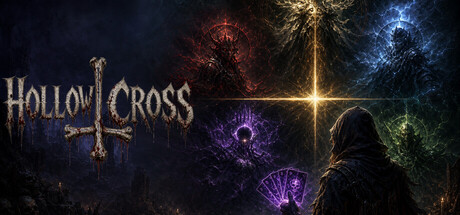
The artwork in Hollowcross — including card illustrations and background scenes — was created with the assistance of AI image‑generation tools. All generated art is curated, selected, and edited by the developer, who has taken steps to ensure the output does not contain illegal or infringing content. The game contains no AI‑generated content produced live during gameplay.
Some artwork in this game was created using generative AI (NightCafe) from text prompts, then edited and incorporated into the final visuals. AI is not used to generate content during gameplay.
Code: Generative AI tools were used to create foundational logic and structural boilerplate, which was then heavily edited and modified manually.
Audio: Generative AI was used to draft the baseline tracks for the main menu and gameplay music, which were subsequently edited by hand.
Marketing Text: AI tools were used to outline the initial structure of the store page descriptions before being manually rewritten.
This game uses VOICEVOX for character voice synthesis (taunt lines, victory lines, etc.).
All voice lines were generated during development and are pre-recorded into the game.
Nothing is generated live during gameplay, and the game does not connect to any external AI service at runtime.
AI (Claude) was also used to help translate this store page into English.
Some character illustrations were refined using generative AI as an assistive tool based on artwork originally designed and created by the developer. The final artwork was then manually reviewed and edited. Generative AI was also used to assist with the initial English localization, which was subsequently reviewed and revised before implementation in the game.
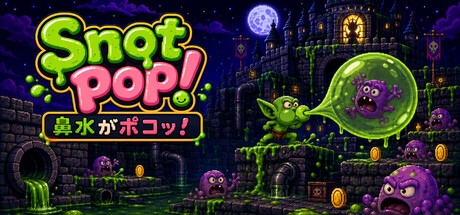
Snot Pop! is an indie project. Like many independent developers, generative AI was used as a tool among many during development; for brainstorming, writing, art and audio design, and working through balancing problems. AI was not the game designer or orchestrator of the project. All content was reviewed, directed, altered, and approved before inclusion. Everything in the game reflects deliberate creative decisions made by the developer.
Generative AI was used during development to assist in creating certain visual assets, dialogue drafts, event text, and marketing artwork. All AI-generated content has been reviewed, edited, and integrated by the developer before being included in the game. The game does not use live-generated AI content during gameplay.
During the development process, I may use procedural generation and AI-based tools to assist with content creation. In all such cases, the final product reflects my own creativity and artistic expression as a solo developer. Examples include the creation of the game's background music and certain graphical assets.
During Early Access, we use AI-generated voice-overs as temporary placeholders for some characters. These will be replaced with professionally recorded voice-overs during development or, at the latest, after the end of the Early Access period.
Veyrasol uses generative AI tools as part of its art pipeline. Both 3D models and 2D artwork used in the game (illustrations, backgrounds, UI and unit icons), as well as store page and marketing graphics such as capsule images and banners, were created with the help of generative AI tools and then reviewed, edited and assembled by the developer. Generative AI tools were also used to help write parts of the marketing website and store page copy. The core game (engine, server logic, real-time combat, and systems) is hand-coded by the developer, and no content is generated by AI at runtime during play.
AI Used to Generate SOME Game Aspects such as backend simulations and Graphical Textures. ALL AI Usage is Pre-Rendered and approved by Development team before being built into the game.
AI tools were used to create pre-rendered assets during development, including background illustrations, item images, some video cutscenes, and background music. All AI-generated content was curated, edited, and integrated by the developer. The game does not generate any content at runtime (no live-generated AI content).
Some of the visual and audio assets in Fifth Tier — such as artwork, logos, promotional images, and music — were created with the assistance of generative AI tools. All AI-assisted content was reviewed, edited, and curated by the developer before release. The game does not generate any content in real time during gameplay; all such content is created in advance.
Swordoria was made by a solo developer with the help of generative AI tools. Some of the game's pixel art, music, and sound effects were generated with AI and then cut, edited, recolored, and assembled by hand, and parts of the code were written with the assistance of an AI coding tool. No generative AI runs while you play — all content is created and finalized during development and shipped as fixed assets in the game.
Some pre-made assets (3D models, sound effects, portraits, and some textures) were created with generative AI tools and then curated and integrated by hand. Music is human-composed and licensed. No AI content is generated while you play.
Some graphical assets (capsule images, etc.) and music tracks
were created using AI generation tools.
No AI generates content in real time during gameplay.
All AI-generated materials were reviewed and selected by a human.
Card illustrations and some in-game artwork were pre-generated using generative AI image tools, then curated, edited and integrated by our team. All game design, code, writing and final art direction are human-made. The game does not generate any content with AI at runtime.
This game uses generative artificial intelligence (Midjourney) as a supporting tool in the production of some of its artwork and illustrations. All AI-generated content is selected, edited, and art-directed by the development team, which defines composition, style, and visual coherence before it is integrated into the game.
Generative AI tools were used to create visual assets, including background artwork and in-game target images. Additionally, AI was utilized to assist with code generation during the development process.
Pre-generated AI tools were used during development to assist with the creation of selected 2D artwork, visual assets, and sound effects. All AI-assisted content was reviewed, edited, and integrated by the developer. The game does not use generative AI to create content during gameplay.
We've harnessed the power of Generative AI technology to create several of our game's unique theme background artworks, enhancing your gaming experience with visually stunning designs.
Generative AI was used exclusively to create all of the game's music and some of the promotional artwork (such as posters and banners). No in-game assets, code, or mechanics were created using AI.
AI tools were used to create early drafts and a few base images for certain small visual elements, such as mission briefing cityscape thumbnails. Some initial sprite concepts were generated using AI. These assets were manually edited, adjusted, and integrated into the game’s visual style. No live generative AI is used during gameplay.
The story and game design are an original creation of the developer.
AI was used as a tool to produce certain fixed visuals (store page, logo, illustrations),
in order to faithfully represent the game's artistic vision.
No content is AI-generated during gameplay.
During the development of this game, some codes, texture materials and background music were produced with the help of AI, and all related contents were reviewed and adjusted by the developers.
Generative artificial intelligence was used during the process of creating the game's graphical elements. It was used to generate concepts and 2D graphics, which were then further manually edited and adapted to the needs of the project. The modified graphics were used as backgrounds in the game's main menu.
Some visual assets (creature sprites, plant and background illustrations, and tarot card art, including some store page images) were created using generative AI tools and then curated, edited, and art-directed by the developer. No AI content is generated during gameplay.
Some visual assets used in this game were created or assisted using generative AI and were further edited, refined, and integrated by the developers. No generative AI is used during gameplay.
Color Cup Racing uses generative AI tools as part of the development and content creation process.
AI-assisted tools were used to help create or refine some game content, including development support, visual concepts, marketing materials, and/or music assets. All content included in the game is reviewed, selected, edited, and implemented by the developer before release.
The game does not generate AI content during gameplay. Players do not enter prompts, the game does not create live AI-generated images, audio, text, or code while running, and the game does not connect to external AI services during play.
This game uses generative AI as part of its art and localization pipeline. Specifically:
- Character portrait artwork: The hunters' painted bust portraits (shown on the character-select screen, and reused in store page capsule art and the trailer) were generated using a local Stable Diffusion XL model with a custom LoRA, then composited by hand into final scenes.
- Localization: UI text translations for French, German, Spanish (Spain), Spanish (Latin America), Portuguese (Brazil), Italian, Polish, and Turkish were produced with AI assistance and reviewed before shipping.
All AI-assisted content was reviewed by the development team before inclusion. No content is generated live or in response to player input during gameplay — all AI-assisted assets are fixed at build time.
AI tools assisted with programming and with translating the game's interface text into languages other than English. All translations and text were reviewed by the developer; the game's design, visuals, and audio are not AI-generated.
Art. All 2D art in Wartorn is produced with AI image-generation tools and then selected, edited, retouched and composited by hand by the developer. This covers the character portraits, the scene backgrounds, the ending and gallery illustrations, the achievement icons, and the store capsules, screenshots and trailer, which are derived from that same in-game art.
Text. The story, the branching structure and the choice design are the developer's own. AI writing tools were used to assist in drafting the prose and dialogue, and AI translation tools were used to produce the five localizations (English, Traditional Chinese, Simplified Chinese, Russian, Ukrainian). All text is reviewed and edited by the developer before shipping.
Audio. Music and sound effects are royalty-free stock audio licensed from Pixabay. They are not generated by the developer using AI tools.
Runtime. No content is generated while the game is running. Every asset is final and ships with the build, and the game makes no calls to any AI service.
This game uses AI-generated content in the following ways:
Images: AI tools were used to help compose the wine bottle label artwork.
Music: AI tools were used to compose the in-game radio music and sound effects.
Some 2D art assets in MutantTide (including promotional key art) were created with the assistance of AI based pixel art tools. All game design, code, systems, and gameplay were hand crafted by the developer. No AI generated content is produced live during gameplay.
Generative AI was used to create some in-game visual assets, including skill icons, character art, and equipment/item icons. These assets were reviewed and edited by the developer before release. AI was not used for story writing, audio, or core gameplay logic. AI-assisted assets may also appear on the Steam store page and marketing materials.
This game used AI-assisted tools in the following areas:
Achievement icons: AI-assisted generation
Some game code: AI-assisted writing
Game design, gameplay logic, balancing, core systems, and final testing were done entirely by humans.
The artwork in Hollowcross — including card illustrations and background scenes — was created with the assistance of AI image‑generation tools. All generated art is curated, selected, and edited by the developer, who has taken steps to ensure the output does not contain illegal or infringing content. The game contains no AI‑generated content produced live during gameplay.
Some artwork in this game was created using generative AI (NightCafe) from text prompts, then edited and incorporated into the final visuals. AI is not used to generate content during gameplay.
Code: Generative AI tools were used to create foundational logic and structural boilerplate, which was then heavily edited and modified manually.
Audio: Generative AI was used to draft the baseline tracks for the main menu and gameplay music, which were subsequently edited by hand.
Marketing Text: AI tools were used to outline the initial structure of the store page descriptions before being manually rewritten.
This game uses VOICEVOX for character voice synthesis (taunt lines, victory lines, etc.).
All voice lines were generated during development and are pre-recorded into the game.
Nothing is generated live during gameplay, and the game does not connect to any external AI service at runtime.
AI (Claude) was also used to help translate this store page into English.
Some character illustrations were refined using generative AI as an assistive tool based on artwork originally designed and created by the developer. The final artwork was then manually reviewed and edited. Generative AI was also used to assist with the initial English localization, which was subsequently reviewed and revised before implementation in the game.
Snot Pop! is an indie project. Like many independent developers, generative AI was used as a tool among many during development; for brainstorming, writing, art and audio design, and working through balancing problems. AI was not the game designer or orchestrator of the project. All content was reviewed, directed, altered, and approved before inclusion. Everything in the game reflects deliberate creative decisions made by the developer.
Generative AI was used during development to assist in creating certain visual assets, dialogue drafts, event text, and marketing artwork. All AI-generated content has been reviewed, edited, and integrated by the developer before being included in the game. The game does not use live-generated AI content during gameplay.
During the development process, I may use procedural generation and AI-based tools to assist with content creation. In all such cases, the final product reflects my own creativity and artistic expression as a solo developer. Examples include the creation of the game's background music and certain graphical assets.