Public Steam disclosure research25,383 disclosures tracked
Where do games disclose AI use?
Search developers’ Steam disclosures, compare classified AI use across
games, and follow recorded changes.
This index adds cross-game classifications and statistics to
statements published on individual store pages.
Groups reflect automatic analysis of public disclosures; mature records are excluded. These counts do not measure AI use across all of Steam.
Missing or unclear statements cannot establish whether a game uses AI.
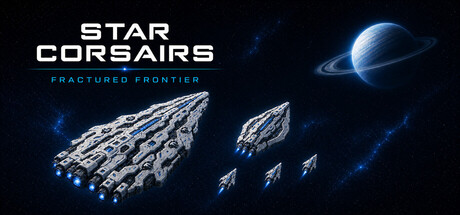
I'm not a professional game developer or artist. Making my own game had been a dream for years, but I never knew how to turn that dream into reality. Generative AI became the tool that finally made it possible.
With its help, I created many of the game's visual and audio assets, including item, UI, skill, and module icons, character portraits, ships, space stations, backgrounds, the game icon, the Steam store artwork, and some of the sound effects. It also assisted me with programming.
But Star Corsairs is not a game that AI simply generated. Every asset was reviewed, rejected, refined, or replaced until it matched the vision I had in mind. Every gameplay system was designed, tested, and reworked repeatedly until it felt right. The economy, ship balance, pirate AI, combat, and progression were all shaped through countless hours of playtesting and manual iteration. The story, world, and all of the writing were created by me.
Without generative AI, this game would probably never have existed. But without the countless creative decisions, revisions, and work behind every part of it, Star Corsairs wouldn't exist either.
Generative AI was used exclusively as a programming assistant during development to help write and optimize the game's code. All creative elements, including the story, game design, and artwork, were entirely crafted by human hand.
Generative AI tools were used during development to assist with portions of the game's pre-generated 2D artwork, marketing artwork, localization drafts, and development code. All player-facing AI-assisted content was generated before release, selected, reviewed, edited where needed, tested, and integrated by the developer. The game does not generate or modify content with AI during gameplay and does not send player input to an external AI service.
Generative AI was used for deep game simulation to assist with designing difficulty curves and testing in game mathmatical calculations. It was also used for designing alternative UI Models for cosmetic changes.
Game Design, layout, original creations, music, sound, story, plots, etc. were Designed entirely by the Creator.
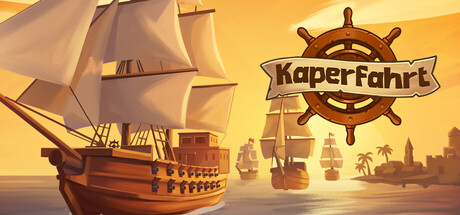
Kaperfahrt uses AI generated assets in two places. Both are placeholders and are being replaced with commissioned work.
The portrait illustrations on the wanted posters of the 23 Blacklist pirates were made with an AI image generator. They were bought as finished assets.
The soundtrack, the ambient audio and the spoken lines of the Blacklist pirates were made with Suno under a paid commercial licence.
Petrivore uses AI-assisted tools in parts of its development: some icons and steam assets were made with AI image generation, the in-game text and steam page was translated with AI translation tools. All of it was reviewed and edited by the developer.
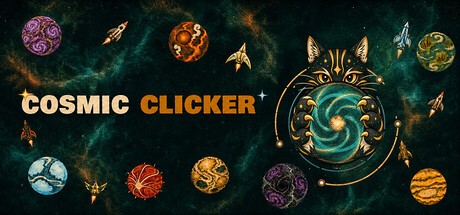
During development, we used generative AI tools to transform early sketches and visual concepts into functional 2D game assets and visual materials that help define Cosmic Clicker’s identity. This included selected in-game assets, Steam store capsules, library artwork, icons, and key art.
The generated results were reviewed, selected, refined, and integrated to maintain consistency with the game’s established art direction.
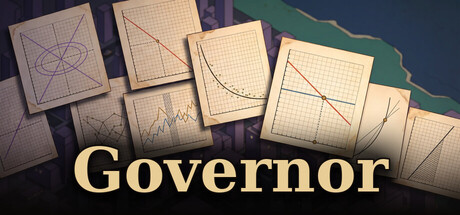
Some of the pre-rendered 2D art shipped with the game (era intermission illustrations, panel icons, campaign cover images and the Economic Association hall with economist portraits) was produced with generative image tools (fal.ai, Krea) from prompts authored by the developer, then post-processed by hand and by scripts in tools/. No generative AI is used at runtime. The game's simulation code, UI, isometric city renderer, world map (built from Natural Earth data) and all text, including the three interface languages, are authored by the developer.
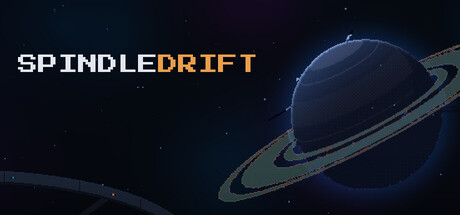
The pixel art was generated with PixelLab. The music was generated with Suno on a paid plan. I wrote the prompts, picked what worked, and threw out what didn't. The game itself, the economy, the systems, the design, the words on screen, I built. Nothing is generated while the game runs. Everything ships as files. There are no AI calls at play time, no AI voice, and no chatbots.
This is a one-person project — just me — and I used AI tools throughout development. All of it is pre-generated: the game doesn't make AI calls while you're playing, and it makes no network calls at all.
Most of the code was written with AI coding assistants. Some of the writing players see was drafted the same way and then edited by me: the word lists the game builds its procedural company names from, the achievement titles, and the templates behind the news items and company filings. Those get assembled in-game by ordinary seeded code, not by a model. The store page copy was drafted with AI help as well.
The app icon was made with an AI image generator. That same icon is also the Steam community icon, the Windows client icon, the store page background, and the base image for the achievement icons.
The rest of the art isn't AI-generated. The capsules and library assets are drawn programmatically from the game's own stylesheet and some seeded procedural drawing code, the screenshots are straight captures of the game running, and the audio is synthesized as you play rather than being generated audio files.
Cigar Tycoon includes pre-generated AI-assisted content created during development, including some promotional artwork, store capsule and library artwork, and a small amount of magazine-style written content. The developer reviewed and edited this content before release. The game does not generate new content with AI during gameplay, does not connect to an external AI service, and does not send player data to an AI service.
Generative AI was used to create and refine some pre-generated visual assets, including the game logo and Steam store capsule artwork. All AI-assisted assets are reviewed, edited, and curated by the developer before inclusion. The game does not generate content during gameplay and does not connect to external AI services.
This game uses pre-generated AI only for certain UI background images and promotional store visuals. These assets were created before release and remain fixed. The game does not include any live AI generation during gameplay.
This game uses generative AI tools to assist in creating some of its text (such as dialogue and descriptions), image assets, and translations. All AI-generated content was reviewed, edited, and curated by humans during development before being included in the game. No content is generated in real time by AI during gameplay.
Parts of this game's code were written with the assistance of AI programming tools; all output was reviewed, tested and integrated by the developer. Store page texts and localizations were also produced with AI assistance and reviewed by the developer. [Some music and sound assets were created using AI generation tools and curated by the developer.] [Some marketing artwork (e.g. capsule images) was created with AI image tools and edited by the developer.] All in-game 3D models and simulation content are authored procedurally or by hand. The game does not generate any content with AI at runtime, and it does not connect to any external AI services.
Some visual assets in this game and on this store page were made with the assistance of generative AI tools and then edited by hand — specifically, the game's logo and the decorative border of the certificate you are awarded at the end of a run. Everything else was authored by the developer: all other art, all interface text, all film titles, and all game data. Nothing is generated while you play. The game makes no network connection of any kind.
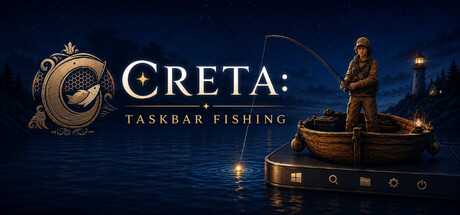
CRETA: Taskbar Fishing uses generative AI tools to assist with the creation of some visual and audio assets used in the game. AI was used as a supporting tool during development, while the game's design, gameplay systems, programming, and overall creative direction were created by the developer.
Music and certain in-game UI icons were created using generative AI tools. All AI-generated assets were reviewed, selected, and, where necessary, edited by the developer before being included in the game. The game does not generate any AI content during gameplay.
This game contains pre-generated AI-assisted visual assets, including promotional images, icons, artwork, character portraits, and some UI elements. No live or runtime AI is used during gameplay. All gameplay, mechanics, code, and player interactions are handcrafted.
Generative AI tools were used during development to assist with the creation of certain pre-rendered visual assets, including selected UI elements, background artwork, promotional images, and store page materials. All generated assets were reviewed, edited, and curated by the development team before inclusion. The game does not generate AI content during gameplay.
This game was developed with the assistance of AI tools. Some visual and audio assets were created using generative AI tools, then reviewed, selected, and refined by the developer. Portions of the game's code were written with the assistance of AI coding tools under the developer's direction and review. Game design, systems, balance, and all final decisions are the developer's own. No AI content is generated live within the game.
Generative AI tools were used during development to create selected pre-generated visual assets, including the application icon, HUD texture, Property Marketplace illustrations, and Legacy Vault artwork. Four background-music tracks were also created using Google Gemini. All AI-assisted content was reviewed by the developer and packaged with the game. Hero Investor does not generate AI content during gameplay or send player data to an AI service.
AI tools are used to assist with the localization of in-game and store page text into other languages. All translations are reviewed by the development team and improved with community feedback.
Some marketing artwork (store capsules and promotional images) was created with AI assistance, based on the game's own assets, characters and art style. All in-game content, gameplay, art assets and audio design are created by the development team.
We view artificial intelligence solely as a supportive tool. Generative AI was used only as a supportive tool for certain visual designs and language translation.
Artificial intelligence helped with grammar corrections in in-game text; these corrections were then carefully reviewed and edited manually.
AI was used to generate code, art prototypes which were then handcrafted in Aseprite, CSS for UIs, and tedious copy stuffed in nooks and crannies to fill out the world.
During development, as a solo developer, Claude Code was especially helpful for debugging, development and testing. There is no LLM usage within Frontier Protocol and no external connection is required to play Frontier Protocol.
The developer uses generative artificial intelligence to create some portions of the game including code and artwork. All creative decisions and testing have been performed by the developer.
I'm not a professional game developer or artist. Making my own game had been a dream for years, but I never knew how to turn that dream into reality. Generative AI became the tool that finally made it possible.
With its help, I created many of the game's visual and audio assets, including item, UI, skill, and module icons, character portraits, ships, space stations, backgrounds, the game icon, the Steam store artwork, and some of the sound effects. It also assisted me with programming.
But Star Corsairs is not a game that AI simply generated. Every asset was reviewed, rejected, refined, or replaced until it matched the vision I had in mind. Every gameplay system was designed, tested, and reworked repeatedly until it felt right. The economy, ship balance, pirate AI, combat, and progression were all shaped through countless hours of playtesting and manual iteration. The story, world, and all of the writing were created by me.
Without generative AI, this game would probably never have existed. But without the countless creative decisions, revisions, and work behind every part of it, Star Corsairs wouldn't exist either.
Generative AI was used exclusively as a programming assistant during development to help write and optimize the game's code. All creative elements, including the story, game design, and artwork, were entirely crafted by human hand.
Generative AI tools were used during development to assist with portions of the game's pre-generated 2D artwork, marketing artwork, localization drafts, and development code. All player-facing AI-assisted content was generated before release, selected, reviewed, edited where needed, tested, and integrated by the developer. The game does not generate or modify content with AI during gameplay and does not send player input to an external AI service.
Generative AI was used for deep game simulation to assist with designing difficulty curves and testing in game mathmatical calculations. It was also used for designing alternative UI Models for cosmetic changes.
Game Design, layout, original creations, music, sound, story, plots, etc. were Designed entirely by the Creator.
Kaperfahrt uses AI generated assets in two places. Both are placeholders and are being replaced with commissioned work.
The portrait illustrations on the wanted posters of the 23 Blacklist pirates were made with an AI image generator. They were bought as finished assets.
The soundtrack, the ambient audio and the spoken lines of the Blacklist pirates were made with Suno under a paid commercial licence.
Petrivore uses AI-assisted tools in parts of its development: some icons and steam assets were made with AI image generation, the in-game text and steam page was translated with AI translation tools. All of it was reviewed and edited by the developer.
During development, we used generative AI tools to transform early sketches and visual concepts into functional 2D game assets and visual materials that help define Cosmic Clicker’s identity. This included selected in-game assets, Steam store capsules, library artwork, icons, and key art.
The generated results were reviewed, selected, refined, and integrated to maintain consistency with the game’s established art direction.
Some of the pre-rendered 2D art shipped with the game (era intermission illustrations, panel icons, campaign cover images and the Economic Association hall with economist portraits) was produced with generative image tools (fal.ai, Krea) from prompts authored by the developer, then post-processed by hand and by scripts in tools/. No generative AI is used at runtime. The game's simulation code, UI, isometric city renderer, world map (built from Natural Earth data) and all text, including the three interface languages, are authored by the developer.
The pixel art was generated with PixelLab. The music was generated with Suno on a paid plan. I wrote the prompts, picked what worked, and threw out what didn't. The game itself, the economy, the systems, the design, the words on screen, I built. Nothing is generated while the game runs. Everything ships as files. There are no AI calls at play time, no AI voice, and no chatbots.
This is a one-person project — just me — and I used AI tools throughout development. All of it is pre-generated: the game doesn't make AI calls while you're playing, and it makes no network calls at all.
Most of the code was written with AI coding assistants. Some of the writing players see was drafted the same way and then edited by me: the word lists the game builds its procedural company names from, the achievement titles, and the templates behind the news items and company filings. Those get assembled in-game by ordinary seeded code, not by a model. The store page copy was drafted with AI help as well.
The app icon was made with an AI image generator. That same icon is also the Steam community icon, the Windows client icon, the store page background, and the base image for the achievement icons.
The rest of the art isn't AI-generated. The capsules and library assets are drawn programmatically from the game's own stylesheet and some seeded procedural drawing code, the screenshots are straight captures of the game running, and the audio is synthesized as you play rather than being generated audio files.
Cigar Tycoon includes pre-generated AI-assisted content created during development, including some promotional artwork, store capsule and library artwork, and a small amount of magazine-style written content. The developer reviewed and edited this content before release. The game does not generate new content with AI during gameplay, does not connect to an external AI service, and does not send player data to an AI service.
Generative AI was used to create and refine some pre-generated visual assets, including the game logo and Steam store capsule artwork. All AI-assisted assets are reviewed, edited, and curated by the developer before inclusion. The game does not generate content during gameplay and does not connect to external AI services.
This game uses pre-generated AI only for certain UI background images and promotional store visuals. These assets were created before release and remain fixed. The game does not include any live AI generation during gameplay.
This game uses generative AI tools to assist in creating some of its text (such as dialogue and descriptions), image assets, and translations. All AI-generated content was reviewed, edited, and curated by humans during development before being included in the game. No content is generated in real time by AI during gameplay.
Parts of this game's code were written with the assistance of AI programming tools; all output was reviewed, tested and integrated by the developer. Store page texts and localizations were also produced with AI assistance and reviewed by the developer. [Some music and sound assets were created using AI generation tools and curated by the developer.] [Some marketing artwork (e.g. capsule images) was created with AI image tools and edited by the developer.] All in-game 3D models and simulation content are authored procedurally or by hand. The game does not generate any content with AI at runtime, and it does not connect to any external AI services.
Some visual assets in this game and on this store page were made with the assistance of generative AI tools and then edited by hand — specifically, the game's logo and the decorative border of the certificate you are awarded at the end of a run. Everything else was authored by the developer: all other art, all interface text, all film titles, and all game data. Nothing is generated while you play. The game makes no network connection of any kind.
CRETA: Taskbar Fishing uses generative AI tools to assist with the creation of some visual and audio assets used in the game. AI was used as a supporting tool during development, while the game's design, gameplay systems, programming, and overall creative direction were created by the developer.
Music and certain in-game UI icons were created using generative AI tools. All AI-generated assets were reviewed, selected, and, where necessary, edited by the developer before being included in the game. The game does not generate any AI content during gameplay.
This game contains pre-generated AI-assisted visual assets, including promotional images, icons, artwork, character portraits, and some UI elements. No live or runtime AI is used during gameplay. All gameplay, mechanics, code, and player interactions are handcrafted.
Generative AI tools were used during development to assist with the creation of certain pre-rendered visual assets, including selected UI elements, background artwork, promotional images, and store page materials. All generated assets were reviewed, edited, and curated by the development team before inclusion. The game does not generate AI content during gameplay.
This game was developed with the assistance of AI tools. Some visual and audio assets were created using generative AI tools, then reviewed, selected, and refined by the developer. Portions of the game's code were written with the assistance of AI coding tools under the developer's direction and review. Game design, systems, balance, and all final decisions are the developer's own. No AI content is generated live within the game.
Generative AI tools were used during development to create selected pre-generated visual assets, including the application icon, HUD texture, Property Marketplace illustrations, and Legacy Vault artwork. Four background-music tracks were also created using Google Gemini. All AI-assisted content was reviewed by the developer and packaged with the game. Hero Investor does not generate AI content during gameplay or send player data to an AI service.
AI tools are used to assist with the localization of in-game and store page text into other languages. All translations are reviewed by the development team and improved with community feedback.
Some marketing artwork (store capsules and promotional images) was created with AI assistance, based on the game's own assets, characters and art style. All in-game content, gameplay, art assets and audio design are created by the development team.
We view artificial intelligence solely as a supportive tool. Generative AI was used only as a supportive tool for certain visual designs and language translation.
Artificial intelligence helped with grammar corrections in in-game text; these corrections were then carefully reviewed and edited manually.
AI was used to generate code, art prototypes which were then handcrafted in Aseprite, CSS for UIs, and tedious copy stuffed in nooks and crannies to fill out the world.
During development, as a solo developer, Claude Code was especially helpful for debugging, development and testing. There is no LLM usage within Frontier Protocol and no external connection is required to play Frontier Protocol.
The developer uses generative artificial intelligence to create some portions of the game including code and artwork. All creative decisions and testing have been performed by the developer.