Public Steam disclosure research25,380 disclosures tracked
Where do games disclose AI use?
Search developers’ Steam disclosures, compare classified AI use across
games, and follow recorded changes.
This index adds cross-game classifications and statistics to
statements published on individual store pages.
Groups reflect automatic analysis of public disclosures; mature records are excluded. These counts do not measure AI use across all of Steam.
Missing or unclear statements cannot establish whether a game uses AI.
In development, we used AI as a support tool for generating ideas and quick concept art in the early stages. The final game is based on ready-made assets and manual tweaking, so AI was used solely as an assistant in the creative process.
During development, procedural and AI-assisted tools may be used to support content creation. Regardless of the tools involved, the final experience reflects the creative vision and craftsmanship of the solo developer behind the project.
Some marketing assets and a few 3D models were created with AI assistance, some sprites were created with AI, while all core gameplay, design, and creative direction were developed by the team.
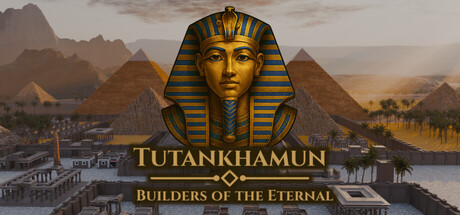
Tutankhamun: Builders of the Eternal is developed by a solo indie developer. It is his first game, representing a labor of love and evoking childhood game favorites. AI-assisted tools were used during development to help create some audio, text, and image assets. All in-game content is static, curated, and manually implemented by the developer. The game does not use live AI generation during gameplay.
Some of the capsule and library images were partially created using AI-assisted tools. These images have been reviewed, edited, and finalized manually to ensure they meet Steam’s content guidelines. All other game assets, including in-game art and content, were created by human artists.
Some UI icons were created using AI.
The English, French, and Russian localizations were made by human translators; all other localizations were made with AI.
I’m a solo developer, and I use generative AI as a creative tool to help bring the game to life, from text, images, or music to bits of code.
Every piece of AI-generated content is carefully reviewed, edited, and refined by me to fit the game’s vision. This helps me create more content, add variety, and make a better, more immersive experience for players.
<3
Story,Localization;
I'm using AI as a tool to assist me, but the main story, characters, and major plot points are all created by me. This way, there's no unnecessarily long or ridiculous AI-generated story; I'm just using it to make things clearer.
This game is primarily hand-drawn and artist-created. A very small number of development assets were lightly assisted with AI tools, but no live AI generation occurs during gameplay. The vast majority of in-game assets, environments, characters, and cinematics are traditionally created by the developer.
Some of the marketing and promotional images used on this store page were created using AI tools to visually represent the game concept. The actual game content, including gameplay mechanics and in-game assets, was entirely developed by the team without any generative AI assistance.
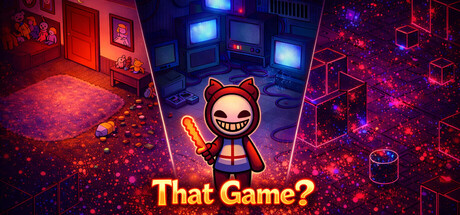
Yes. That Game? uses generative AI (for example ElevenLabs) to create some of the
voice-over lines used in the game. All AI-generated audio is pre-recorded during
development, not generated live while the game is running, and every line is
reviewed and approved by the developer. The game does not allow users to create
their own AI-generated content.
This game uses pre-generated AI images for the game. While navigating the menus, you'll see AI-generated images for menu backgrounds and buttons. The game's runtime (.exe) file icon and store images are also AI-generated.
I use generative AI tools to assist with creating some pre-rendered assets for our Steam store materials and certain in-game UI graphics. All AI-assisted outputs are reviewed and edited before use. No AI-generated content is created live at runtime.
Some of the game's visual assets, including concept art and the cover image, were generated with the help of AI tools and then manually edited to fit the game's style.
1 AI portrait-generated was used inside level-1 of Erik's office's space. This piece of asset was made inside the game as a portrait made by a rich painter for the villain.
All story writing, gameplay logic, and player experiences are entirely human-designed and directed.
Some of the game’s 2D artwork was created by feeding my original 3D models and hand drawn sketches to a generative model. I further edited and refined the output using digital painting to match the game’s style and maintain a cohesive visual identity.
AI is used to generate false definitions for words in real time for this game. It is not used to generate any visual or other content. Additionally, the dictionary of true definitions was created using an LLM; this was far cheaper than acquisition of a professional-level dictionary with associated definitions.
In development, we used AI as a support tool for generating ideas and quick concept art in the early stages. The final game is based on ready-made assets and manual tweaking, so AI was used solely as an assistant in the creative process.
During development, procedural and AI-assisted tools may be used to support content creation. Regardless of the tools involved, the final experience reflects the creative vision and craftsmanship of the solo developer behind the project.
Some marketing assets and a few 3D models were created with AI assistance, some sprites were created with AI, while all core gameplay, design, and creative direction were developed by the team.
Tutankhamun: Builders of the Eternal is developed by a solo indie developer. It is his first game, representing a labor of love and evoking childhood game favorites. AI-assisted tools were used during development to help create some audio, text, and image assets. All in-game content is static, curated, and manually implemented by the developer. The game does not use live AI generation during gameplay.
Some of the capsule and library images were partially created using AI-assisted tools. These images have been reviewed, edited, and finalized manually to ensure they meet Steam’s content guidelines. All other game assets, including in-game art and content, were created by human artists.
Some UI icons were created using AI.
The English, French, and Russian localizations were made by human translators; all other localizations were made with AI.
I’m a solo developer, and I use generative AI as a creative tool to help bring the game to life, from text, images, or music to bits of code.
Every piece of AI-generated content is carefully reviewed, edited, and refined by me to fit the game’s vision. This helps me create more content, add variety, and make a better, more immersive experience for players.
<3
Story,Localization;
I'm using AI as a tool to assist me, but the main story, characters, and major plot points are all created by me. This way, there's no unnecessarily long or ridiculous AI-generated story; I'm just using it to make things clearer.
This game is primarily hand-drawn and artist-created. A very small number of development assets were lightly assisted with AI tools, but no live AI generation occurs during gameplay. The vast majority of in-game assets, environments, characters, and cinematics are traditionally created by the developer.
Some of the marketing and promotional images used on this store page were created using AI tools to visually represent the game concept. The actual game content, including gameplay mechanics and in-game assets, was entirely developed by the team without any generative AI assistance.
Yes. That Game? uses generative AI (for example ElevenLabs) to create some of the
voice-over lines used in the game. All AI-generated audio is pre-recorded during
development, not generated live while the game is running, and every line is
reviewed and approved by the developer. The game does not allow users to create
their own AI-generated content.
This game uses pre-generated AI images for the game. While navigating the menus, you'll see AI-generated images for menu backgrounds and buttons. The game's runtime (.exe) file icon and store images are also AI-generated.
I use generative AI tools to assist with creating some pre-rendered assets for our Steam store materials and certain in-game UI graphics. All AI-assisted outputs are reviewed and edited before use. No AI-generated content is created live at runtime.
Some of the game's visual assets, including concept art and the cover image, were generated with the help of AI tools and then manually edited to fit the game's style.
1 AI portrait-generated was used inside level-1 of Erik's office's space. This piece of asset was made inside the game as a portrait made by a rich painter for the villain.
All story writing, gameplay logic, and player experiences are entirely human-designed and directed.
Some of the game’s 2D artwork was created by feeding my original 3D models and hand drawn sketches to a generative model. I further edited and refined the output using digital painting to match the game’s style and maintain a cohesive visual identity.
AI is used to generate false definitions for words in real time for this game. It is not used to generate any visual or other content. Additionally, the dictionary of true definitions was created using an LLM; this was far cheaper than acquisition of a professional-level dictionary with associated definitions.