Public Steam disclosure research25,383 disclosures tracked
Where do games disclose AI use?
Search developers’ Steam disclosures, compare classified AI use across
games, and follow recorded changes.
This index adds cross-game classifications and statistics to
statements published on individual store pages.
Groups reflect automatic analysis of public disclosures; mature records are excluded. These counts do not measure AI use across all of Steam.
Missing or unclear statements cannot establish whether a game uses AI.
Most of this game's source code was written with the help of generative AI tools. English localization drafts were produced the same way and then reviewed and edited by the developer. All graphics, Korean text, and game design were created by the developer; sound uses CC0-licensed recordings. This game does not use AI at runtime.
This game uses AI to code some features of the game including, but not limited to, the actual game code itself and some of the store page art. However, none of this actually contributes to the actual gameplay itself as all the assets, game trailer and game scenes are still handmade, purchased, or free.
Generative AI tools were used to create the Steam capsule artwork and other promotional images, and to assist with drafting and editing portions of the Steam store page text. All final text was reviewed and revised by the developer, and all promotional artwork was reviewed and selected by the developer. The game does not use generative AI at runtime, and no AI content is generated during gameplay.
Some of this game's art and audio were created with generative AI tools, then selected, edited and assembled by the developer: the ink-wash illustrations and character portraits, part of the interface artwork, and the background music. The store page artwork and the trailer were produced the same way. Everything ships as fixed, pre-rendered assets. The game generates no content while you play and connects to no AI service. Puzzle levels are built and verified by our own deterministic mahjong solver, not by AI.
The game was developed with the help of AI. The background music soundtrack is AI-generated: the pieces were created with a locally run music model, then curated and edited by hand. Puzzles, game design and gameplay are human-made.
Generative AI was used during development to assist with coding, promotional artwork, and store-page copy and localization. All outputs were reviewed by the developer.
I’m truly sorry for using AI‑generated content in the game.
The vast majority of art assets you see in‑game are AI‑produced.
These images have all gone through screening.
Apart from a very small number of cases, most are not easily recognizable as AI‑generated.
Generative AI was used to assist in creating some in-game artwork and promotional artwork for the game, including certain environment backgrounds and Steam store assets.
Generative AI tools were used during development to support creation of the artwork featured on some of the collectible cards and UI. All AI-generated content was created before release, curated and integrated into the game by the developer. No content is generated by AI during gameplay.
We employ generative AI technologies during the creation of some illustrations and music. All elements that make up the core and essence of the game are still done by us - the devs.
Generative AI was used to create of the music included in the game, as well as marketing and promotional materials for Steam.
AI tools were also used for programming and development.
There is no AI used in the gameplay - no content is dynamically generated.
AI used to generate code, including code to procedurally generate graphics/sound.
Artists using Suno marked "(Suno)" after artist name.
AI used for localization.
Used for steam capsule images and card artworks TEMPORARILY. All AI generated assets will be replaced on release if estimated revenue can atleast fund it.
The AI coworkers in this game are voiced by a machine (TTS), and their dialogue was really written by AI together with self portraits, on purpose and under human review. The slop is diegetic. The code was written with AI agents and reviewed by the last human in that loop, the developer. That is also the plot. No AI runs at runtime. Everything was baked and reviewed before shipping.
Generative AI tools were used during development to assist with creating a limited number of 2D inventory icons and portions of written text and localization. All AI-assisted content was reviewed, edited, and integrated by the developer. The game does not generate AI content during gameplay.
Generative AI was used during development to generate suspect mugshot photos, dossier case texts, and to assist with language localization. All generated assets are static and pre-packaged into the game.
This game includes content created with the help of AI during development.
Images (34): backgrounds, the logo and in-game objects were created using OpenAI's image generation (gpt-image), then edited by the developer.
34 of the 66 sprites in the shipping build originate this way.
UI elements and one texture (13) and sound effects (21): these were designed by AI (Claude) and implemented as the developer's own program code. They are not the output of an image or audio generation model; the shapes and waveforms are produced by deterministic processing.
The game does not generate any content with AI at runtime.
Music is licensed from a purchased royalty-free library and involves no
AI. Stage design is the developer's own work.
Generative AI was used to create some of the illustrations featured on collectible cards. The card layouts and designs were manually created and edited.
Generative AI tools were used during development to help create some content, including the English localization, music and sound effects, the 3D-rendered block art pipeline, and parts of the store/marketing materials. All AI-assisted content was reviewed and refined by the developer. No content is generated by AI at runtime.
This game uses content created or assisted by generative AI. Generative AI was used to help create and edit some visual assets, music/sound materials, and scripts. All final content was reviewed, selected, and adjusted by the developer before being included in the game.
This game was created by an independent developer. Generative AI tools were used during development to assist with programming, debugging, text editing, and the initial localization of Simplified Chinese, Traditional Chinese, English, Japanese, and Korean. All AI-assisted content was manually reviewed, edited, and approved by the developer. The game does not use generative AI to create content during gameplay, and player data is not used for AI training.
Some of this game's assets were made with the help of generative AI tools and then edited by hand: the in-game notebook UI sprites, a few background props and set-dressing models, some texture work, and the English localization, which was drafted from our Korean original and reviewed by us.
The original Korean writing, the characters, the level design, and all gameplay systems were made without generative AI. Nothing is generated while you play.
This game contains AI-generated content, including images and audio.
All AI-generated content was pre-generated.
No generative AI is used during gameplay.
Loop 9 uses generative AI to power text-only dialogue with Dragojlo, a fictional in-game coworker. Player-written messages and limited game-state context are sent through our backend to OpenAI to generate brief in-character replies. Some store marketing artwork was created with AI assistance and reviewed and edited by the developer. Player messages and generated replies are not shared with other players.
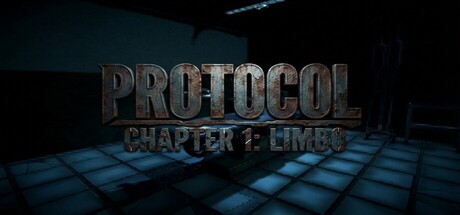
Generative AI tools were used during the development of Protocol as development assistance. AI was used to help with brainstorming, programming assistance, troubleshooting, and other development-related tasks. The final game content was reviewed, edited, and implemented by the developer.
Generative AI was used to assist in the creation of some promotional artwork and to help with the writing and localization of certain text. All such content was reviewed and, where necessary, edited before use. No AI-generated content is created in real time during gameplay.
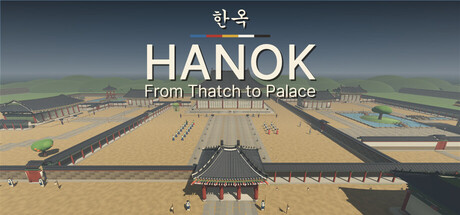
The game's text (Korean and English) was written with the help of an AI assistant, based on the developer's research into traditional Korean architecture, and was fact-checked and reviewed by the developer before shipping. The English text follows a Korean–English glossary of traditional architecture terms prepared and approved by the developer. No other shipped content is AI-generated: all 3D models, buildings and characters are built procedurally in code, and the background music is licensed traditional Korean music (CC BY).
Generative AI has been used solely as a supporting tool to create some of the icons used for the character's abilities and upgrades, as well as to assist with translating the game's text into other languages.
Generative AI tools were used during development to assist with the creation of some visual and audio assets. All AI-assisted content was substantially edited by the developers and paid artists.
Generative AI tools were used during development to assist with certain pre-generated visual elements and sequences in the game. All such materials were reviewed, selected, edited, and integrated into the final video content by the Dev team. The game’s narrative, interactive structure, gameplay logic, and final presentation are created and controlled by the Dev team.
No generative AI is used during gameplay, and no content is generated dynamically for players.
Some of this game's shipped assets were created with the assistance of generative AI and then manually curated and edited by the developers: background artwork (landscape silhouettes), the current music tracks (temporary, until our hand-crafted soundtrack is finished), and parts of the English localization. No content is generated by AI at runtime, and the game does not connect to any AI services.
Generative AI was used to create and/or assist with some promotional and marketing materials for the game, including store capsule artwork, cover images, and other store page visuals. Generative AI was not used to generate gameplay content or content during gameplay.
I developed this game entirely on my own, handling all the game design, hand-drawn artwork, and music composition myself.
Only the translations/localizations were generated by AI.
The store page was translated into 30 languages using AI, from text written by the developer. Store and library images were assembled from artwork the developer made by hand. The game itself contains no AI-generated content, and nothing is generated by AI while you play.
Most of this game's source code was written with the help of generative AI tools. English localization drafts were produced the same way and then reviewed and edited by the developer. All graphics, Korean text, and game design were created by the developer; sound uses CC0-licensed recordings. This game does not use AI at runtime.
This game uses AI to code some features of the game including, but not limited to, the actual game code itself and some of the store page art. However, none of this actually contributes to the actual gameplay itself as all the assets, game trailer and game scenes are still handmade, purchased, or free.
Generative AI tools were used to create the Steam capsule artwork and other promotional images, and to assist with drafting and editing portions of the Steam store page text. All final text was reviewed and revised by the developer, and all promotional artwork was reviewed and selected by the developer. The game does not use generative AI at runtime, and no AI content is generated during gameplay.
Some of this game's art and audio were created with generative AI tools, then selected, edited and assembled by the developer: the ink-wash illustrations and character portraits, part of the interface artwork, and the background music. The store page artwork and the trailer were produced the same way. Everything ships as fixed, pre-rendered assets. The game generates no content while you play and connects to no AI service. Puzzle levels are built and verified by our own deterministic mahjong solver, not by AI.
The game was developed with the help of AI. The background music soundtrack is AI-generated: the pieces were created with a locally run music model, then curated and edited by hand. Puzzles, game design and gameplay are human-made.
Generative AI was used during development to assist with coding, promotional artwork, and store-page copy and localization. All outputs were reviewed by the developer.
I’m truly sorry for using AI‑generated content in the game.
The vast majority of art assets you see in‑game are AI‑produced.
These images have all gone through screening.
Apart from a very small number of cases, most are not easily recognizable as AI‑generated.
Generative AI was used to assist in creating some in-game artwork and promotional artwork for the game, including certain environment backgrounds and Steam store assets.
Generative AI tools were used during development to support creation of the artwork featured on some of the collectible cards and UI. All AI-generated content was created before release, curated and integrated into the game by the developer. No content is generated by AI during gameplay.
We employ generative AI technologies during the creation of some illustrations and music. All elements that make up the core and essence of the game are still done by us - the devs.
Generative AI was used to create of the music included in the game, as well as marketing and promotional materials for Steam.
AI tools were also used for programming and development.
There is no AI used in the gameplay - no content is dynamically generated.
AI used to generate code, including code to procedurally generate graphics/sound.
Artists using Suno marked "(Suno)" after artist name.
AI used for localization.
Used for steam capsule images and card artworks TEMPORARILY. All AI generated assets will be replaced on release if estimated revenue can atleast fund it.
The AI coworkers in this game are voiced by a machine (TTS), and their dialogue was really written by AI together with self portraits, on purpose and under human review. The slop is diegetic. The code was written with AI agents and reviewed by the last human in that loop, the developer. That is also the plot. No AI runs at runtime. Everything was baked and reviewed before shipping.
Generative AI tools were used during development to assist with creating a limited number of 2D inventory icons and portions of written text and localization. All AI-assisted content was reviewed, edited, and integrated by the developer. The game does not generate AI content during gameplay.
Generative AI was used during development to generate suspect mugshot photos, dossier case texts, and to assist with language localization. All generated assets are static and pre-packaged into the game.
This game includes content created with the help of AI during development.
Images (34): backgrounds, the logo and in-game objects were created using OpenAI's image generation (gpt-image), then edited by the developer.
34 of the 66 sprites in the shipping build originate this way.
UI elements and one texture (13) and sound effects (21): these were designed by AI (Claude) and implemented as the developer's own program code. They are not the output of an image or audio generation model; the shapes and waveforms are produced by deterministic processing.
The game does not generate any content with AI at runtime.
Music is licensed from a purchased royalty-free library and involves no
AI. Stage design is the developer's own work.
Generative AI was used to create some of the illustrations featured on collectible cards. The card layouts and designs were manually created and edited.
Generative AI tools were used during development to help create some content, including the English localization, music and sound effects, the 3D-rendered block art pipeline, and parts of the store/marketing materials. All AI-assisted content was reviewed and refined by the developer. No content is generated by AI at runtime.
This game uses content created or assisted by generative AI. Generative AI was used to help create and edit some visual assets, music/sound materials, and scripts. All final content was reviewed, selected, and adjusted by the developer before being included in the game.
This game was created by an independent developer. Generative AI tools were used during development to assist with programming, debugging, text editing, and the initial localization of Simplified Chinese, Traditional Chinese, English, Japanese, and Korean. All AI-assisted content was manually reviewed, edited, and approved by the developer. The game does not use generative AI to create content during gameplay, and player data is not used for AI training.
Some of this game's assets were made with the help of generative AI tools and then edited by hand: the in-game notebook UI sprites, a few background props and set-dressing models, some texture work, and the English localization, which was drafted from our Korean original and reviewed by us.
The original Korean writing, the characters, the level design, and all gameplay systems were made without generative AI. Nothing is generated while you play.
This game contains AI-generated content, including images and audio.
All AI-generated content was pre-generated.
No generative AI is used during gameplay.
Loop 9 uses generative AI to power text-only dialogue with Dragojlo, a fictional in-game coworker. Player-written messages and limited game-state context are sent through our backend to OpenAI to generate brief in-character replies. Some store marketing artwork was created with AI assistance and reviewed and edited by the developer. Player messages and generated replies are not shared with other players.
Generative AI tools were used during the development of Protocol as development assistance. AI was used to help with brainstorming, programming assistance, troubleshooting, and other development-related tasks. The final game content was reviewed, edited, and implemented by the developer.
Generative AI was used to assist in the creation of some promotional artwork and to help with the writing and localization of certain text. All such content was reviewed and, where necessary, edited before use. No AI-generated content is created in real time during gameplay.
The game's text (Korean and English) was written with the help of an AI assistant, based on the developer's research into traditional Korean architecture, and was fact-checked and reviewed by the developer before shipping. The English text follows a Korean–English glossary of traditional architecture terms prepared and approved by the developer. No other shipped content is AI-generated: all 3D models, buildings and characters are built procedurally in code, and the background music is licensed traditional Korean music (CC BY).
Generative AI has been used solely as a supporting tool to create some of the icons used for the character's abilities and upgrades, as well as to assist with translating the game's text into other languages.
Generative AI tools were used during development to assist with the creation of some visual and audio assets. All AI-assisted content was substantially edited by the developers and paid artists.
Generative AI tools were used during development to assist with certain pre-generated visual elements and sequences in the game. All such materials were reviewed, selected, edited, and integrated into the final video content by the Dev team. The game’s narrative, interactive structure, gameplay logic, and final presentation are created and controlled by the Dev team.
No generative AI is used during gameplay, and no content is generated dynamically for players.
Some of this game's shipped assets were created with the assistance of generative AI and then manually curated and edited by the developers: background artwork (landscape silhouettes), the current music tracks (temporary, until our hand-crafted soundtrack is finished), and parts of the English localization. No content is generated by AI at runtime, and the game does not connect to any AI services.
Generative AI was used to create and/or assist with some promotional and marketing materials for the game, including store capsule artwork, cover images, and other store page visuals. Generative AI was not used to generate gameplay content or content during gameplay.
I developed this game entirely on my own, handling all the game design, hand-drawn artwork, and music composition myself.
Only the translations/localizations were generated by AI.
The store page was translated into 30 languages using AI, from text written by the developer. Store and library images were assembled from artwork the developer made by hand. The game itself contains no AI-generated content, and nothing is generated by AI while you play.