Public Steam disclosure research26,769 disclosures tracked
Where do games disclose AI use?
Search developers’ Steam disclosures, compare classified AI use across
games, and follow recorded changes.
This index adds cross-game classifications and statistics to
statements published on individual store pages.
Groups reflect automatic analysis of public disclosures; mature records are excluded. These counts do not measure AI use across all of Steam.
Missing or unclear statements cannot establish whether a game uses AI.
Certain visual assets incorporated into the final product were subject to a multi-stage development, revision, and production process involving, at intermediate stages of asset preparation, generative AI-assisted material, together with subsequent developer-directed editing, alteration, reconstruction, and final implementation.
Pre-generated AI-assisted visual content is used in this game. AI was used to create and iterate on card illustrations, character portraits, backgrounds, icons, and selected promotional artwork. AI was used to generate source video clips for pre-rendered chapter cinematics. These assets were selected, edited, composited, cropped, color-adjusted, and integrated by the developer. The game does not generate AI content during play, does not accept player prompts, and does not connect to an external AI service at runtime.
Most of the game’s art, music, and other audiovisual assets were first generated with AI tools, then hand-picked, cropped, retouched, and reworked by the developer so they fit this game’s look, feel, and systems.
Nothing is generated by AI while you play. Combat, cooking, exploration, and story presentation use only content that shipped with the game after that human edit pass.
Generative AI was used during development as a coding assistant and to assist with drafting and translating store-page and marketing text. Some pixel-art assets were rendered by deterministic drawing code written with AI assistance; the final images were not directly output by a text-to-image or diffusion model. All shipped and published content was reviewed and edited by the developer. No generative AI runs in the game, and no content is generated from player input.
Some art assets (UI, icons, and monster sprites) were initially generated with AI assistance. Every asset was then manually edited, refined, and adjusted by the developer to fit the game's art direction. No AI-generated content is produced during gameplay.
Generative AI was used during development as a coding assistant and to assist with drafting and translating store-page and marketing text. Some pixel-art assets were rendered by deterministic drawing code written with AI assistance; the final images were not directly output by a text-to-image or diffusion model. All shipped and published content was reviewed and edited by the developer. No generative AI runs in the game, and no content is generated from player input.
Pixel art assets (characters, monsters, bosses, projectiles, spirits, tiles) were created with PixelLab, an AI pixel-art tool, and then edited by hand to fit the game. No AI is used at runtime. All code, game design, sound effects and music are human-authored (audio is synthesized in code).
This game uses generative AI to create a portion of its image assets. Specifically, some illustrations and background images were pre-generated during development using Kling AI and Microsoft Copilot. All AI-generated images were reviewed, selected, and edited by the developer before being included in the game. No generative AI content is generated live during gameplay, and no generative AI was used for the scenario, music, or voices.
Generative AI was used to assist in the creation of some promotional artwork and to help with the writing and localization of certain text. All such content was reviewed and, where necessary, edited before use. No AI-generated content is created in real time during gameplay.
This game uses generative AI in two ways. (1) Live generation: narrative text and NPC dialogue are generated in real time based on the player's choices and current game state. Illustrative images for locations, scenes and items are also generated on demand the first time such an element appears, then cached and reused. Core game rules, numerical outcomes, inventory changes, and progression are always resolved by deterministic game systems. Live text generation is governed by server-side content rules that cannot be directly modified by player input. Live image generation uses server-controlled prompt templates based on structured game data (entity type, name, and a short in-world description) within a fixed ink-painting style; players cannot directly provide image-generation prompts. (2) Development-time generation: some static art assets (including location, scene, item and background illustrations) were generated with image-generation AI tools during development. Store-facing marketing assets and selected screenshots containing such artwork were reviewed by a human before publication. Store page copy was drafted with AI assistance and reviewed by a human.
本游戏以两种方式使用生成式AI。(1)实时生成:叙事文本与NPC对话根据玩家选择与当前游戏状态实时生成;地点/场景/物品的插画也会在其首次出现时按需生成,之后缓存复用。核心规则、数值结算、物品变动与进度始终由确定性游戏系统裁定。实时文本生成受服务端内容规则约束(玩家输入无法直接修改);实时图像生成使用服务端控制的提示词模板,基于结构化游戏数据(实体类别、名称与简短的世界内描述)并锁定水墨画风格,玩家不能直接书写图像提示词。(2)开发期生成:部分静态美术素材(包括地点、场景、物品与背景插画)在开发过程中使用图像生成AI制作;用于商店宣传以及所选商店截图中的相关素材均经过人工审阅后发布。商店页文案由AI辅助创作、经人工审定。
The game's text (Korean and English) and its code were co-written with an AI assistant; the developer directed the work, fact-checked and reviewed the text, and tested and verified the code. No AI image or 3D generators were used. Background music is licensed traditional Korean music (CC BY); the rooster call is a public-domain recording and the other ambient sounds are synthesized by the game's own code.
All artwork (characters, monsters, environments, visual effects) and much of the game's code were created with generative AI tools. No content is AI-generated while the game runs.
Some title and UI illustration assets were created with image generation tools during development, then selected and implemented by the developer. Audio is procedurally synthesized in-engine and is not generative-AI music. The game does not generate AI content at runtime.
Some promotional and store assets for this game, including the capsule images, library artwork and application icons, were created with the assistance of generative AI tools.
All in game visuals are generated procedurally by the game's own code at runtime: characters, buildings, terrain, animals and effects are drawn from algorithmic vector shapes, not from AI generated images. All audio is synthesised in real time by the game engine. All game code was written by the developer.
This game was developed with the assistance of generative AI tools. Some graphical assets were created using AI and then reviewed, edited, and integrated by the developer. AI tools were also used to assist with writing code. All game design, gameplay mechanics, and final content decisions were made by the developer. The game does not generate AI content at runtime.
Pre-generated content only. This game does not run any AI at runtime.
Visual art: 444 image files were created with generative AI during development —
equipment sprites, ability icons, monster sheets, character portraits, building
art, terrain and UI textures, the title screen and the game icon. The tool was
ChatGPT (OpenAI), web interface, image generation, in sessions between 13 July
and 1 August 2026. The author recalls the model as GPT-5.5, but the interface did
not record the exact model version, so only the date range is documented.
Text: the in-game text — tutorial, mission and event wording, item and interface
strings — was drafted with generative AI assistance and then reviewed and edited
by the author. Spanish is the original language.
Translations: the English, German and Italian versions of the in-game text were
produced from the Spanish original with generative AI.
Not AI-generated: all remaining art comes from CC0, CC BY 3.0 and CC BY-SA 3.0
sources (Liberated Pixel Cup, 7Soul, Kenney), credited in full on the in-game
credits screen. All music and sound effects are CC0 or CC BY. No AI-generated
voice or music ships with the game.
Generative AI was used during development to assist in the creation of some visual assets and music. All AI-assisted content was reviewed, selected, and integrated by the development team. The game does not use generative AI to create content in real time during gameplay.
Generative AI tools were used during development to assist with the creation of some visual and audio assets. All AI-assisted content was substantially edited by the developers and paid artists.
Some artwork and visual assets in this game were created with the assistance of generative AI tools during development. All such content was reviewed, edited, and integrated into the game by the developer.
This game uses AI-generated imagery. Character portraits, backgrounds, card illustrations, and UI assets were created with generative AI image tools, then reviewed, edited to fit the game's art direction. Store page capsules use the same artwork.
Writing, game design, code, and systems are authored by a human developer. Nothing is generated while the game is running.
This game uses generative AI tools in the creation of some of its pre-rendered content, including parts of its artwork and store page assets. All AI-assisted material was reviewed, edited, and approved by the development team before being included in the final product. No content is generated by AI during gameplay, and the game does not connect to any external AI service while running.
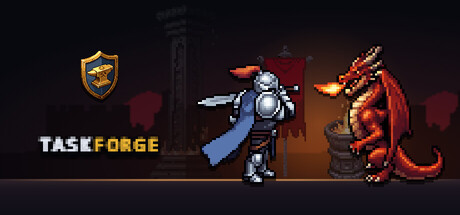
The pixel art in Taskforge — character and enemy sprites, animation frames, item and UI icons, scenery pieces and the game's emblem — was produced with the help of an AI image generation tool during development. Every generated asset was reviewed, selected, edited and assembled by hand, and ships as a fixed image file. Nothing is generated while you play: the game contains only static assets and never calls an AI service at runtime. Code, game design, balance data and all written text were made by the developer.
Generative AI tools were used during development to assist with selected 2D and 3D visual assets, sounds, localization, and marketing materials.
All AI-assisted content was reviewed, edited, and integrated by the developer to ensure consistency with the game's visual style and intended design.
The application includes a small set of pre-generated pixel-art example assets, including default cat character poses, icons, and promotional visuals. They were created with generative AI assistance during development and curated as static demonstration content shipped with the application.
The product does not generate AI content at runtime and does not embed, call, or operate a generative AI model or service. Its AI Material Assistant only provides editable prompt templates and links to third-party services outside the application. Players may import their own images, GIFs, audio, and Workshop content.
All art, sound and music in Iron Frame are human-made. The sprites and sound
effects are CC0 assets by Kenney, the music is CC0 work by nene, and the store
capsules are composed from those same sprites — nothing you see or hear was
generated by AI.
Generative AI was used as a writing assistant for some in-game text: weapon,
frame and enemy names and their one-line descriptions, and this store page.
Everything was reviewed and edited by the developer, and no content is generated
while you play.
Some pre-generated visual and audio assets used in TOWERPULSE were created with the assistance of generative AI tools during development. These assets were selected, edited, and integrated by the developer.
TOWERPULSE does not use generative AI at runtime. No player prompts, gameplay content, dialogue, or other assets are generated live while the game is running.
The pixel art in this game was created with an AI image generation tool (Pixellab).
Generated art is never used as-is: the style, proportions and palette standards are set by a human,
every sprite is reviewed by eye, and anything off-standard is rejected and redone. Grounding,
animation continuity and color consistency are likewise human-checked before adoption.
Game design, balance and specification decisions are made by a human. AI-assisted tools are also
used in the development process.
Nothing is generated by AI at runtime (pre-generated content only).