Public Steam disclosure research26,829 disclosures tracked
Where do games disclose AI use?
Search developers’ Steam disclosures, compare classified AI use across
games, and follow recorded changes.
This index adds cross-game classifications and statistics to
statements published on individual store pages.
Groups reflect automatic analysis of public disclosures; mature records are excluded. These counts do not measure AI use across all of Steam.
Missing or unclear statements cannot establish whether a game uses AI.
Generative AI tools were only used to assist with writing some C# code scripts during development and to translate/draft the text descriptions for the Steam Store page. There are no AI-generated visual (art/UI) or audio assets included in the game.
We used a Gen AI powered tool to localize the following:
- (in some languages) In-game text
- (in some languages) Steam store descriptions
We plan to replace these with human translation and LQA when we can afford it.
Until then, we are using Gen AI temporarily.
Aftergrowth's code was written with the help of an AI coding assistant, and some of the game's text — including parts of this store page — was first drafted with it and then edited by hand.
Nothing you see or hear is AI-generated. Every sprite, tile and icon is drawn by deterministic Python scripts rather than by an image model. The music is synthesised and the sound effects are CC0 recordings by Kenney, both credited in the game's CREDITS file. No generative AI runs while you play: nothing is generated live, and the game makes no request to any AI service.
We used Artificial Intelligence tools as an aid during development and in the creation of some game content. All AI-assisted material was personally reviewed and adjusted by our team, who were involved throughout every stage of the creative process.
Generative AI was used as an assistive tool for translating parts of the scenario and in-game text. All translated content has been thoroughly reviewed, refined, and proofread manually by the developer to ensure natural phrasing and quality.
I created this game solo, using generative AI as one of the tools.
It helped me write the code and also generated the ambient music and
some of the planet textures. Everything else was crafted by hand: the
interface, Fjord and the seals orbiting the Earth aren't drawn images —
they're rendered in code.
Nothing is generated while you play: the game runs fully offline.
And no, I didn't just sit around drinking coffee while the AI did the
work — though I certainly did consume an obscene amount of coffee.
Generative AI was used during development to create selected pre-generated store graphics, story illustrations, and in-game art. These assets were reviewed and edited before inclusion. The game does not generate AI content at runtime and does not send player input or personal data to AI services.
Generative AI was used to write, edit, and translate text on this Steam store page. It is not used during gameplay, and no AI-generated images, audio, or in-game assets are included.
Policy on the Use of Generative AI Technology in Our Titles
HUGA INC. (hereinafter referred to as "the Company") actively adopts and utilizes generative AI technology—including code assistance tools for development efficiency and image generation—in our titles. This is positioned as part of our development process to pursue new possibilities of artistic expression and high productivity in small-scale indie game development.
In utilizing AI technology, the Company strictly adheres to the following compliance and development standards:
■ Compliance with Laws and Intellectual Property Rights
Our development process complies with the Copyright Act of Japan (including the provisions for information analysis under Article 30-4) as well as the laws and regulations of relevant countries. Generative AI tools are used strictly within legally permitted boundaries.
■ Adherence to Distribution Platform Guidelines
We strictly comply with the disclosure obligations and various guidelines regarding generative AI established by Steam and other distribution platforms, ensuring appropriate information disclosure and proper registration processes.
■ Establishment of Creative Direction as a Proprietary Product
All AI-generated assets are integrated into our games only after undergoing our strict creative direction, editing, processing, and reconstruction within the overall game design. Our products do not rely on mere automated output.
The Company positions the proactive adoption of new technologies to deliver next-generation entertainment as a core innovation strategy for an indie developer.
Please note that while the Company closely monitors the ongoing social and ethical debates surrounding AI technology, we conduct our business lawfully based on current regulations and platform rules. Therefore, we do not issue individual statements or respond to inquiries regarding legal interpretations or related debates. Thank you for your understanding.
Generative AI tools were used during development to assist with programming, debugging, optimization, gameplay design, and the review or translation of some written content. The game does not use live-generated AI and does not connect to an AI service during gameplay.
The written text for Rikogol — this store page, its marketing copy and the game's in-game text — was drafted with AI assistance. No generative AI model produced any of the game's visuals or audio: everything you see in a match is drawn at runtime by our own code from plain geometric shapes, every sound effect is synthesised procedurally in code, and the store artwork comes from a deterministic drawing script. The game generates no content while you play and connects to no AI service.
Generative AI was used selectively during development for certain materials; all final content was refined by the developer. No real-time AI generation is used.
This game supports optional third‑party AI tool integration. Players may choose to use AI tools such as Claude Code via interfaces provided by the game to assist with in‑game actions, for example balloon‑shooting and feeding. These AI tools are not built‑in features of the game. The game itself does not connect to or call any generative‑AI services, and no story, dialogue, artwork, music or other in‑game content is generated by AI within the game.
During development, generative AI tools were used to assist with programming and the creation of some pre‑generated text. All AI‑assisted text contained in the game was reviewed, manually edited and approved by the development team before use.
No AI was used to generate the game’s artwork or music. All artwork and music were created by human artists and musicians.
Contenu visuel pré-généré uniquement. Des outils d'IA générative ont servi à
produire une partie des illustrations livrées avec le jeu (portraits de
personnages, décors, illustrations de cartes, icônes de succès) ainsi que des
ressources graphiques de la page du magasin. Toutes les images ont été
sélectionnées, retouchées et validées manuellement par le développeur avant
intégration. Aucune génération en temps réel pendant le jeu.
Some of the game’s art (3D models and icons) was created with generative AI tools, then edited and reviewed before shipping. The game does not use AI to generate content during play.
Generative AI technologies were utilized during the development of this project in the following ways:
1. Visual Art: AI tools were used to assist in generating and optimizing certain visual assets (such as table backgrounds, card backs, and UI elements).
2. Translation: AI was used to assist in the multi-language localization of in-game text and rule descriptions.
This game contains pre-generated 2D artwork and source code created with ChatGPT during development. All game source code was generated with ChatGPT, then reviewed, tested, debugged, and integrated by the developer. The artwork was generated from original prompts written for Gravefire Tavern, then reviewed, selected, edited, composited, cropped, and integrated by the developer. No generative AI runs during gameplay, and no player input is sent to an AI service.
The developers describe how their game uses AI Generated Content like this:
The main Campaign story, characters, and dialogue were written by a team of human writers and voiced in English by human actors. AI tools were used to localize text and voice overs.
The optional Free Ride mode includes AI-generated passenger missions and localized dialogue. Free Ride mode is separate from the main Campaign and can be skipped by players who prefer to experience only human-written narrative content.
Both game modes include radio stations featuring a mix of human-made music and AI-generated music. Stations containing AI-generated music are clearly labeled as such in the game.
Generative AI tools were used during the development of this game and in the creation of some of its visual, audio, and technical content.
AI was used to create and refine the background, logo, and related visual elements.
AI-assisted tools were used to create and prepare some of the sound effects.
AI-powered coding tools were used for code generation, autocomplete, and development assistance.
AI-generated designs were selected, edited, and enhanced for use in some of the game's visual content.
Some visuals were selected from AI-generated designs and subsequently enhanced and upscaled.
All AI-generated or AI-assisted content was reviewed, selected, edited, and adapted by the developer before being used in the game.
This game uses an open-source language model (Qwen2.5) bundled with the game to generate real-time NPC dialogue and ambient chatter entirely offline on the player's own machine via llama.cpp. No external server, no third-party API, and no internet connection are required. Players can toggle this feature on or off. The model runs locally using the player's CPU — no data is uploaded, collected, stored, or used for training.
Generative AI is used to assist with research or as rough internal placeholders. No AI-generated art, animation, music, text, or in-game live generation is used. All game content is created, shaped, reviewed, and approved by our team.
Generative AI technology is used in a supplementary capacity during the creation of some 2D prop assets.
Any such assets are replaced through our production pipeline by our art and development teams, ensuring they meet our quality standards and creative direction.
Generative AI was used to create artwork, and some sound effects. All generated content was tested automatically and reviewed by human.
Background Music, and some sound effects are licensed from third-party libraries and are not AI-generated.
No AI content is generated during gameplay. The game does not connect to an external AI service during gameplay, and all shipped content is finalized and static.
AI tools were used during development to provide feedback on artwork and assist with localization. No AI-generated artwork or other AI-generated assets are included in the final game.
Some 2D‑art assets in this game are created with the assistance of generative‑AI tools. These assets have been filtered, edited, composited and manually reviewed by the developer before being used in‑game. The game does not perform real‑time content generation based on player input during runtime, nor does it send any player input to generative‑AI services.
Crystal Keeper is made by one person. I used generative AI tools during development to help create some of the game's assets, such as artwork and music, every asset was hand-picked and integrated by me. No AI is used at runtime: nothing is generated while you play.
Generative AI tools were used during development to create or process some pre-generated voice audio and selected 2D visual assets, including stylized character and news-related images.
All AI-assisted content is created before release and manually reviewed, edited, and curated by the developer before being included in the game.
No generative AI runs during gameplay, and no player input or data is sent to generative AI services.
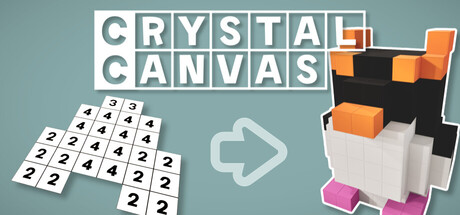
CrystalCanvas uses generative AI in parts of its development process.
For the sound effects played when placing voxels, we aimed to create sounds that remain pleasant and unobtrusive even during extended play sessions. After exploring a variety of sound assets and recordings, we ultimately used generative AI as part of the sound design process to achieve the desired result.
Generative AI is also used as a development aid through Claude Code for generating and assisting with parts of the code related to voxel space management and rendering.
Generative AI is not used to generate the voxel artwork or gameplay content itself.
Some visual assets in the game, including certain card illustrations and UI elements, were created with the assistance of generative AI tools. These assets were generated during development and are included as pre-generated content in the game.
This game may include content created with the assistance of generative artificial intelligence, including artwork, music, sound, narrative, or other assets. The use of generative AI may change over the course of development and future updates, including the introduction of further AI-generated content.
Text content only, all pre-generated during development and reviewed by the developer. AI assistance was used to write the in-game story text, the user interface translations for the 8 supported languages, the achievement names and descriptions, and the store page copy. Nothing is generated live at runtime and the game does not connect to any AI service. Art, sprites, capsule images, icons and the soundtrack are NOT AI-generated: they are produced by procedural scripts written by the developer and included in the project source.
3D models used in the game were pre-generated or generated with the assistance of AI technology prior to build deployment. All models have been reviewed, integrated, and verified to ensure they comply with rights, quality standards, and platform policies.
All AI involvement is pre-generated and human-reviewed: nothing is generated while you play, the game runs no AI models, and it never sends your data anywhere.