Public Steam disclosure research25,383 disclosures tracked
Where do games disclose AI use?
Search developers’ Steam disclosures, compare classified AI use across
games, and follow recorded changes.
This index adds cross-game classifications and statistics to
statements published on individual store pages.
Groups reflect automatic analysis of public disclosures; mature records are excluded. These counts do not measure AI use across all of Steam.
Missing or unclear statements cannot establish whether a game uses AI.
AI was used to assist with code, art, and sfx. I have manually edited and polished all AI-assisted elements by hand to make them as unsloppy as I possibly can. If anything feels like slop, please let me know in the Community Discussions / Discord, and I'll do my best to fix it. Thanks! :)
Setter uses generative AI in a limited way. The portrait images for fictional and youth players were created with AI image tools during development and ship as fixed assets: the game does not generate any content live while you play. Some promotional materials on this store page may also include AI-assisted artwork.
"AI tools (LLMs and image generators) were used to assist in writing/optimizing C# scripts and generating minor 2D visual assets (e.g., UI or achievement icons). All AI-assisted content was strictly reviewed, modified, and integrated manually by the developer."
Generative AI tools were used during development to assist with programming, translation/localization, and the creation of most of the game's artwork and music. All AI-assisted content was reviewed, selected, edited, and integrated by the developer. The game does not generate AI content during gameplay and does not connect to external AI services.
This game uses generative artificial intelligence in its development.
Some visual assets — including character sprites, unit artwork, and related
game graphics — were created or assisted with generative AI tools and then
integrated into the game. AI was also used during development to assist with
programming and production workflows.
Generative AI is not used to create content live during gameplay. The game
does not connect to external AI services while you are playing.
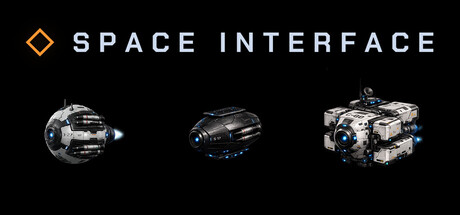
The drone images on the website and Steam game page, (not used in the actual game), were generated by AI. The Symbology of the in-game tactical display was generated by AI under close human supervision and iteration. The music in this game was not generated by AI.
Some character portrait sprite sheets and brand/division imagery shipped with Bankr are produced with generative AI tools during development, then reviewed and edited by the team before inclusion. All game text, simulation code, balance-sheet math, ratio logic, and gameplay systems are human-authored. No content is AI-generated at runtime — every asset is pre-rendered and pinned in the build.
AI was used for some translations and visual assets. The game does not generate AI content during gameplay, and AI was not used to write the game's code.
Some of the background music in Aquora was produced using a generative audio tool. Those tracks are placeholder. They are being replaced with commissioned
original music, and any remaining generated audio will be phased out of the game over time.
All visual art in Aquora is procedurally generated by the developer's own custom tooling, drawn from hand-authored colour palettes, explicit shape instructions
and seeded random number generation. No image generation model is involved at any point in the art pipeline, and no AI generated images appear in the game.
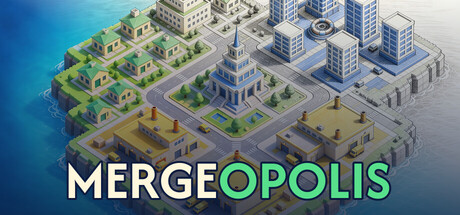
Generative AI was used throughout nearly every aspect of this game's development and production. AI and a human developer formed an unholy union of sound and mind (a merge, if you will) to birth this production.
No generative AI runs during gameplay. Its contributions were created during development.
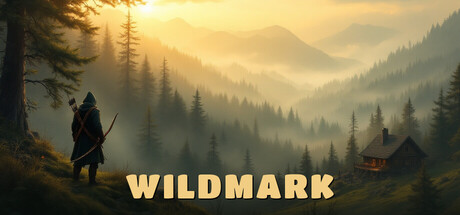
Wildmark was made by one person. The story and all of its dialogue are my own, written by me. But without a studio's budget to commission artists, composers, and voice actors, I used generative AI tools to help create much of what you see. Nothing ships as a raw, untouched generation: every asset was hand-directed, chosen, refined, and assembled to fit a single cohesive, hand-crafted style and world, and reviewed by me to make sure it belonged. In the end, what matters is whether the game is enjoyable and worth your time, not which tools helped build it.
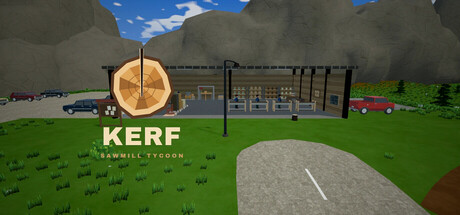
Kerf - Sawmill Tycoon was made almost entirely with AI tools. The developer directed the work, chose what went into the game and approved every result, but did not model, rig or write code by hand. What that means for the content that ships in the game:
- Code: written by an AI coding assistant.
- Characters: generated by an AI 3D tool from AI-generated reference images, then rigged and set up in the game by the AI assistant.
- Other 3D models: some came from an AI 3D tool - a vehicle and environment props such as rocks, mountains and bushes. The rest, including the valley, the buildings, the machines and the trees, were built in 3D software by the AI assistant writing scripts.
- Animation: all character animation was generated with an AI motion tool.
- Music: all of the in-game music was generated with an AI music tool.
- Sound: some sound effects were generated with an AI sound tool; the rest were sourced from sound libraries by the developer.
- Text: the in-game text was written with AI assistance, and the translations from English and Polish into the other 13 supported languages were made with AI.
Everything was reviewed and approved by the developer before release.
No content is generated by AI while the game is running. The Twitch integration only displays messages typed by real viewers.
Business And Life Simulator, uses generative AI-assisted artwork in some packaging visuals for in-game products/items. Generative AI is not used in any other part of the game, and we are working to remove these AI-assisted visuals before the full release.
This game was developed with the assistance of generative AI tools during production. AI-generated 2D artwork (building icons, unit portraits, background illustrations, and UI elements) was created and curated by the development team as part of the game's visual assets. AI is not used to generate content dynamically during gameplay -- all art assets are fixed and shipped with the game. In-game opponent behavior uses traditional programmed game logic, not generative AI.
Generative AI was used during development to support early concept exploration and rapid prototyping, including testing visual directions, compositions, and placeholder ideas. All AI-assisted material was reviewed and refined by the development team, with final creative and design decisions made by humans. The game does not generate content using AI during gameplay.
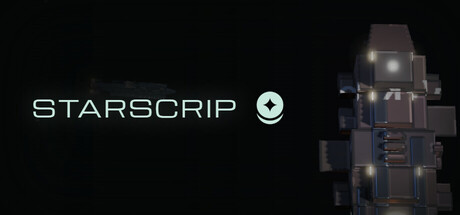
Starscrip uses short-form in-game text content that was created with the assistance of generative artificial intelligence.
Player facing marketing content, like release notes, may also be created with the assistance of generative artificial intelligence.
Generative AI was used to assist in creating selected promotional capsule and library artwork for this Steam store page. These assets were reviewed and selected by the developer. No generative AI features are used during gameplay, and no content is generated at runtime.
This is not actually required to disclose but since it crosses the line for some people, I should admit that AI coding tools were used during the game's production.
No AI was used to generate any images, audio, text, or design.
Its purpose was to help code mechanics according to my design, assist in debugging, and (most importantly) eliminate crunch.
The game's code, writing (company names, event text, narrative flavor), and 2D art were created during development with AI assistance (Anthropic's Claude), directed, curated, and edited by the developer. All content is pre-generated: the game generates no AI content at runtime and connects to no AI services while you play.
Some of the game’s visual assets were created with the assistance of generative AI. All generated artwork is reviewed, edited, refined, and adapted by the development team to maintain a consistent visual identity and ensure that it matches the game’s artistic direction and design choices.
This approach was necessary due to the high cost of commissioning the full amount of artwork required from one or more professional artists or illustrators. Using AI-assisted tools helped keep the project financially viable, speed up production, and bring the game to players sooner while preserving a cohesive and recognizable style.
This game's localization (including English text) was created with the assistance of AI translation tools, reviewed by the developer. No AI-generated content is created live during gameplay.
Bar Baron's game design, code, simulation systems, balance and all in-game text are written by hand.Generative AI was used as a production tool in two places: some of the game's 3D props-furniture,
bar equipment, kitchen and decor items-were produced with AI tools, and part of the soundtrack is
AI-generated music.
Those props were made specifically for Bar Baron, following our own art direction, and were then
reviewed, optimized and placed by hand-this is not a game assembled from generic asset packs.
Character models are not AI-generated.
Nothing is generated while you play. The game runs no generative AI at runtime: every system, every
event and every number in the simulation was authored by a person.
This game uses AI-generated artwork for static marketplace listing images including cars, homes, investment properties, boats, and businesses shown in the Assets and Business panels, as well as for Steam achievement icons. All AI-generated content is created during development and shipped as fixed image files. The game does not generate any content live during gameplay and does not connect to any AI service while you play.
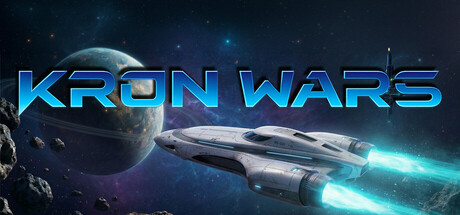
Some visual assets in Kron Wars — including spaceship designs, environment artwork, and promotional videos — were created with the assistance of generative AI tools. All AI-generated content has been reviewed, curated, and integrated by our development team. No AI is used to generate gameplay content, in-game text, or player-facing decisions at runtime.
AI was used for some translations, music, and visual assets. The game does not create AI-generated content during gameplay, and AI was not used to write the game’s code.
CivEconomy: Future Leader uses locally-running AI for two optional gameplay features. All AI processing runs entirely on the player's machine — no data is sent to external servers.
Text AI (Command Processing): An on-device language model (Llama 3.2 1B via Ollama) interprets natural language player commands and classifies them into game actions. A keyword-matching fallback system works identically without AI enabled.
Image AI (Chieftain Portraits): An on-device Stable Diffusion 1.5 model generates decorative chieftain portrait images. These are purely cosmetic with no gameplay impact.
Both features are completely optional. The game is fully functional and playable without any AI features active.
Character portraits, scene art, and voice performances were generated with licensed AI tools (PixelLab, ElevenLabs) under paid subscriptions, then curated, edited, and directed by hand.
The soundtrack is built on the developer's original compositions, produced and arranged with Suno under a paid subscription.
All game design, writing, and code are human-made. No AI generation occurs at runtime.
Ice Coast Revival is built by a small team working with AI tools. Some pre-made content that ships with the game, including in-game text and some audio, was created with generative AI and then human-reviewed. All of it is fixed at build time: the game does not generate content live with AI while you play.
AI was used to assist with code, art, and sfx. I have manually edited and polished all AI-assisted elements by hand to make them as unsloppy as I possibly can. If anything feels like slop, please let me know in the Community Discussions / Discord, and I'll do my best to fix it. Thanks! :)
Setter uses generative AI in a limited way. The portrait images for fictional and youth players were created with AI image tools during development and ship as fixed assets: the game does not generate any content live while you play. Some promotional materials on this store page may also include AI-assisted artwork.
"AI tools (LLMs and image generators) were used to assist in writing/optimizing C# scripts and generating minor 2D visual assets (e.g., UI or achievement icons). All AI-assisted content was strictly reviewed, modified, and integrated manually by the developer."
Generative AI tools were used during development to assist with programming, translation/localization, and the creation of most of the game's artwork and music. All AI-assisted content was reviewed, selected, edited, and integrated by the developer. The game does not generate AI content during gameplay and does not connect to external AI services.
This game uses generative artificial intelligence in its development.
Some visual assets — including character sprites, unit artwork, and related
game graphics — were created or assisted with generative AI tools and then
integrated into the game. AI was also used during development to assist with
programming and production workflows.
Generative AI is not used to create content live during gameplay. The game
does not connect to external AI services while you are playing.
The drone images on the website and Steam game page, (not used in the actual game), were generated by AI. The Symbology of the in-game tactical display was generated by AI under close human supervision and iteration. The music in this game was not generated by AI.
Some character portrait sprite sheets and brand/division imagery shipped with Bankr are produced with generative AI tools during development, then reviewed and edited by the team before inclusion. All game text, simulation code, balance-sheet math, ratio logic, and gameplay systems are human-authored. No content is AI-generated at runtime — every asset is pre-rendered and pinned in the build.
AI was used for some translations and visual assets. The game does not generate AI content during gameplay, and AI was not used to write the game's code.
Some of the background music in Aquora was produced using a generative audio tool. Those tracks are placeholder. They are being replaced with commissioned
original music, and any remaining generated audio will be phased out of the game over time.
All visual art in Aquora is procedurally generated by the developer's own custom tooling, drawn from hand-authored colour palettes, explicit shape instructions
and seeded random number generation. No image generation model is involved at any point in the art pipeline, and no AI generated images appear in the game.
Generative AI was used throughout nearly every aspect of this game's development and production. AI and a human developer formed an unholy union of sound and mind (a merge, if you will) to birth this production.
No generative AI runs during gameplay. Its contributions were created during development.
Wildmark was made by one person. The story and all of its dialogue are my own, written by me. But without a studio's budget to commission artists, composers, and voice actors, I used generative AI tools to help create much of what you see. Nothing ships as a raw, untouched generation: every asset was hand-directed, chosen, refined, and assembled to fit a single cohesive, hand-crafted style and world, and reviewed by me to make sure it belonged. In the end, what matters is whether the game is enjoyable and worth your time, not which tools helped build it.
Kerf - Sawmill Tycoon was made almost entirely with AI tools. The developer directed the work, chose what went into the game and approved every result, but did not model, rig or write code by hand. What that means for the content that ships in the game:
- Code: written by an AI coding assistant.
- Characters: generated by an AI 3D tool from AI-generated reference images, then rigged and set up in the game by the AI assistant.
- Other 3D models: some came from an AI 3D tool - a vehicle and environment props such as rocks, mountains and bushes. The rest, including the valley, the buildings, the machines and the trees, were built in 3D software by the AI assistant writing scripts.
- Animation: all character animation was generated with an AI motion tool.
- Music: all of the in-game music was generated with an AI music tool.
- Sound: some sound effects were generated with an AI sound tool; the rest were sourced from sound libraries by the developer.
- Text: the in-game text was written with AI assistance, and the translations from English and Polish into the other 13 supported languages were made with AI.
Everything was reviewed and approved by the developer before release.
No content is generated by AI while the game is running. The Twitch integration only displays messages typed by real viewers.
Business And Life Simulator, uses generative AI-assisted artwork in some packaging visuals for in-game products/items. Generative AI is not used in any other part of the game, and we are working to remove these AI-assisted visuals before the full release.
This game was developed with the assistance of generative AI tools during production. AI-generated 2D artwork (building icons, unit portraits, background illustrations, and UI elements) was created and curated by the development team as part of the game's visual assets. AI is not used to generate content dynamically during gameplay -- all art assets are fixed and shipped with the game. In-game opponent behavior uses traditional programmed game logic, not generative AI.
Generative AI was used during development to support early concept exploration and rapid prototyping, including testing visual directions, compositions, and placeholder ideas. All AI-assisted material was reviewed and refined by the development team, with final creative and design decisions made by humans. The game does not generate content using AI during gameplay.
Starscrip uses short-form in-game text content that was created with the assistance of generative artificial intelligence.
Player facing marketing content, like release notes, may also be created with the assistance of generative artificial intelligence.
Generative AI was used to assist in creating selected promotional capsule and library artwork for this Steam store page. These assets were reviewed and selected by the developer. No generative AI features are used during gameplay, and no content is generated at runtime.
This is not actually required to disclose but since it crosses the line for some people, I should admit that AI coding tools were used during the game's production.
No AI was used to generate any images, audio, text, or design.
Its purpose was to help code mechanics according to my design, assist in debugging, and (most importantly) eliminate crunch.
The game's code, writing (company names, event text, narrative flavor), and 2D art were created during development with AI assistance (Anthropic's Claude), directed, curated, and edited by the developer. All content is pre-generated: the game generates no AI content at runtime and connects to no AI services while you play.
Some of the game’s visual assets were created with the assistance of generative AI. All generated artwork is reviewed, edited, refined, and adapted by the development team to maintain a consistent visual identity and ensure that it matches the game’s artistic direction and design choices.
This approach was necessary due to the high cost of commissioning the full amount of artwork required from one or more professional artists or illustrators. Using AI-assisted tools helped keep the project financially viable, speed up production, and bring the game to players sooner while preserving a cohesive and recognizable style.
This game's localization (including English text) was created with the assistance of AI translation tools, reviewed by the developer. No AI-generated content is created live during gameplay.
Bar Baron's game design, code, simulation systems, balance and all in-game text are written by hand.Generative AI was used as a production tool in two places: some of the game's 3D props-furniture,
bar equipment, kitchen and decor items-were produced with AI tools, and part of the soundtrack is
AI-generated music.
Those props were made specifically for Bar Baron, following our own art direction, and were then
reviewed, optimized and placed by hand-this is not a game assembled from generic asset packs.
Character models are not AI-generated.
Nothing is generated while you play. The game runs no generative AI at runtime: every system, every
event and every number in the simulation was authored by a person.
This game uses AI-generated artwork for static marketplace listing images including cars, homes, investment properties, boats, and businesses shown in the Assets and Business panels, as well as for Steam achievement icons. All AI-generated content is created during development and shipped as fixed image files. The game does not generate any content live during gameplay and does not connect to any AI service while you play.
Some visual assets in Kron Wars — including spaceship designs, environment artwork, and promotional videos — were created with the assistance of generative AI tools. All AI-generated content has been reviewed, curated, and integrated by our development team. No AI is used to generate gameplay content, in-game text, or player-facing decisions at runtime.
AI was used for some translations, music, and visual assets. The game does not create AI-generated content during gameplay, and AI was not used to write the game’s code.
CivEconomy: Future Leader uses locally-running AI for two optional gameplay features. All AI processing runs entirely on the player's machine — no data is sent to external servers.
Text AI (Command Processing): An on-device language model (Llama 3.2 1B via Ollama) interprets natural language player commands and classifies them into game actions. A keyword-matching fallback system works identically without AI enabled.
Image AI (Chieftain Portraits): An on-device Stable Diffusion 1.5 model generates decorative chieftain portrait images. These are purely cosmetic with no gameplay impact.
Both features are completely optional. The game is fully functional and playable without any AI features active.
Character portraits, scene art, and voice performances were generated with licensed AI tools (PixelLab, ElevenLabs) under paid subscriptions, then curated, edited, and directed by hand.
The soundtrack is built on the developer's original compositions, produced and arranged with Suno under a paid subscription.
All game design, writing, and code are human-made. No AI generation occurs at runtime.
Ice Coast Revival is built by a small team working with AI tools. Some pre-made content that ships with the game, including in-game text and some audio, was created with generative AI and then human-reviewed. All of it is fixed at build time: the game does not generate content live with AI while you play.