Public Steam disclosure research25,383 disclosures tracked
Where do games disclose AI use?
Search developers’ Steam disclosures, compare classified AI use across
games, and follow recorded changes.
This index adds cross-game classifications and statistics to
statements published on individual store pages.
Groups reflect automatic analysis of public disclosures; mature records are excluded. These counts do not measure AI use across all of Steam.
Missing or unclear statements cannot establish whether a game uses AI.
Art direction steered asset creation, SFX, store capsule artwork and the logo were produced with generative AI assistance then hand-edited. No generative AI runs at runtime; the game generates no content live.
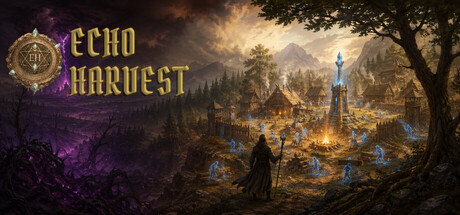
Generative AI was used during development to assist in creating some pre-generated visual artwork and illustrative assets, including artwork used within the Chronicle system. All AI-assisted content is created and reviewed during development and is included in the game as finished assets. Echo Harvest does not use generative AI to create content dynamically during gameplay.
Generative AI tools were used to assist with programming and translation/localization during development. All artwork and original dialogue were created by the developer. AI-assisted translations were reviewed and edited by the developer before being included in the game. No generative AI is used during gameplay.
Generative AI tools were used during development to assist in the creation of certain game assets. For visual assets such as units and characters, the developer first created original line art manually, then used AI-assisted coloring as part of the workflow, followed by additional manual editing and refinement. For music, AI was used to generate an initial melodic idea, which was then manually edited, arranged, and refined by the developer in LMMS. All AI-assisted content is pre-generated and reviewed by the developer before being included in the game. The game does not use live-generated AI during gameplay.
Generative AI tools were used during development to create certain visual and audio assets:
- 2D Visual Assets: Some 2D icons, UI symbols, and graphic elements were generated or assisted using AI image generation tools and polished for final in-game use.
- Audio (BGM): Background music (BGM) tracks were generated with the assistance of generative AI music tools.
This game uses generative AI tools as part of its art creation process. Visual assets — including background and environment art, character and unit art, and card illustrations — were generated with the assistance of AI and then reviewed and refined by hand. All AI-assisted content is checked to ensure it meets our quality and originality standards.
Generative AI tools were used to assist in the creation of some promotional artwork and marketing assets for the game. Final assets were reviewed and edited by the development team.
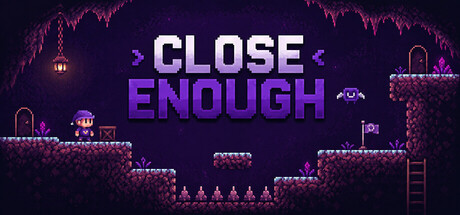
Close Enough was built with generative AI. The code, the in-game text, the level layouts and all seven translations were written by an AI assistant (Claude) working to the developer's direction, and most of what you see on screen — the objects, the whole interface — is drawn by that code rather than loaded from image files.
The doodle recognition inside the game is not generative. It is a small image classifier bundled with the game, trained on Google's Quick, Draw! dataset of human-drawn doodles. It runs entirely on your own computer, sorts each drawing into one of 100 pre-defined objects and creates nothing. Your drawings are never uploaded, and the release build contains no code that could upload them.
The sprites, tiles, music, sound effects and font are licensed assets made by people, not by AI. Every one of them is credited inside the game under Esc → Credits.
A moonlighting project from a husband and father of two, where late evenings and early mornings were made a little easier by generative AI tooling. The game's art, the pilot voice-over, and the music all started as AI-generated assets that I then reviewed, edited, and shaped into the game. The direction and the decisions are mine; nothing is generated while you play. Always open to constructive feedback.
Generative AI is used in a supplementary capacity, at two points. First, as a drafting step for some of the game's 2D illustrations: every such asset is then rebuilt through our own production pipeline — reduced to a strict 1-bit black-and-white format, curated, and animated frame by frame with in-house tools — so that it matches our art direction. Second, the game is written in French, and its translations into the eight other supported languages are AI-assisted. No generative AI runs in the game itself: all content ships fixed with the build.
AI was used in the coding and content creation for this game. That should not take away from this project the thousands of hours spent on its creation, honing and reshaping its style, direction and gameplay which was all done by a human.
I’m a solo developer doing my first-ever coding project. With no prior coding experience, I relied heavily on tons of tutorials to write the code and used AI to assist when troubleshooting some bugs. I also used AI to generate some of the project's visual content and images but mainly tried to use actual human work. It's been a massive learning experience, so thanks for your time, and I hope you can enjoy my project :)
Some small props and interface icons in this game began as AI-generated meshes and textures (text-to-3D / image-to-3D), which were then reworked by hand, retopologised, re-scaled, colour-graded and assembled before shipping. All other art comes from licensed asset packs and hand kitbashing. Nothing is generated live: no AI runs during play, and no player input is sent to an AI service.
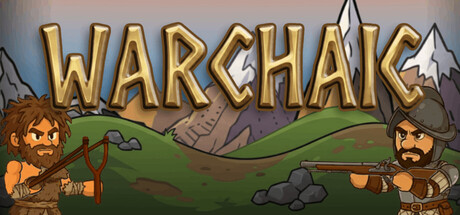
Generative AI was used to assist in the creation of some visual assets, UI elements, sound effects, and music featured in Warchaic. Software development was handled by our development team, while animations and visual effects (VFX) were either created by our team or sourced from licensed asset packages.
AI-based tools were used solely as a supportive aid for creating select pre-rendered in-game assets and text, with all final content thoroughly reviewed and refined by the development team. The game contains no live-generated AI content during gameplay.
This game uses generative AI tools during development to assist with some content creation, including concept art, visual references, promotional materials, text drafts, and placeholder voice or sound assets. All content used in the game and on the store page is manually reviewed, edited, integrated, and approved by the developer. The game does not use real-time AI generation during gameplay and does not connect to external AI services while the player is playing.
Generative AI was used during development to assist in creating some pre-generated 2D artwork and written text used in the game. All AI-assisted content was reviewed, edited, and integrated by the developers. The game does not use generative AI to create new content at runtime.
Some of the placeholder unit and terrain sprites that I'm using while the game is in development were generated with the help of AI (with a lot of manual curation and editing... I promise that you will not be confronted by any noticeably ugly slop).
Initial sales will contribute toward creating hand-drawn, unique sprites for as many units as possible.
Some of Card Slay's pre-generated content was created with the help of generative AI tools and then reviewed and finished by hand. No content is generated by AI during gameplay.
AI was primarily used in two sections of the game. To aid and assist with turning 2d sprites that were created into animated variations of them.
Steam store page pictures use AI to create variants of my logo. The background itself is AI the logo was designed by me and AI was used to adjust it in the photo.
AI was used to assist with writing the game source code.
All visual assets are handmade pixel art by the author.
All audio assets are licensed from 3rd party sample banks.
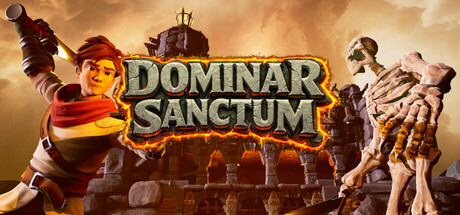
The vast majority of Dominar Sanctum has been created and developed without generative AI. Generative AI has only been used selectively for a small number of 2D icons, slide narration and a narrative voiceover, primarily for early prototyping and development. Even those icons have been manually reworked.
These few AI-assisted assets are not representative of the game's overall art, design, programming, or development process. They may be replaced or further refined before the full release.
Generative AI was used during development to assist with coding and the creation of pre-generated visual assets. No AI content is generated during gameplay.
Pre-generated AI-assisted visual content is used in this game. AI was used to create and iterate on card illustrations, character portraits, backgrounds, icons, and selected promotional artwork. AI was used to generate source video clips for pre-rendered chapter cinematics. These assets were selected, edited, composited, cropped, color-adjusted, and integrated by the developer. The game does not generate AI content during play, does not accept player prompts, and does not connect to an external AI service at runtime.
Generative AI was used during development as a coding assistant and to assist with drafting and translating store-page and marketing text. Some pixel-art assets were rendered by deterministic drawing code written with AI assistance; the final images were not directly output by a text-to-image or diffusion model. All shipped and published content was reviewed and edited by the developer. No generative AI runs in the game, and no content is generated from player input.
Generative AI was used to assist in the creation of some promotional artwork and to help with the writing and localization of certain text. All such content was reviewed and, where necessary, edited before use. No AI-generated content is created in real time during gameplay.
Pre-generated content only. This game does not run any AI at runtime.
Visual art: 444 image files were created with generative AI during development —
equipment sprites, ability icons, monster sheets, character portraits, building
art, terrain and UI textures, the title screen and the game icon. The tool was
ChatGPT (OpenAI), web interface, image generation, in sessions between 13 July
and 1 August 2026. The author recalls the model as GPT-5.5, but the interface did
not record the exact model version, so only the date range is documented.
Text: the in-game text — tutorial, mission and event wording, item and interface
strings — was drafted with generative AI assistance and then reviewed and edited
by the author. Spanish is the original language.
Translations: the English, German and Italian versions of the in-game text were
produced from the Spanish original with generative AI.
Not AI-generated: all remaining art comes from CC0, CC BY 3.0 and CC BY-SA 3.0
sources (Liberated Pixel Cup, 7Soul, Kenney), credited in full on the in-game
credits screen. All music and sound effects are CC0 or CC BY. No AI-generated
voice or music ships with the game.
Generative AI was used during development to assist in the creation of some visual assets and music. All AI-assisted content was reviewed, selected, and integrated by the development team. The game does not use generative AI to create content in real time during gameplay.
Generative AI tools were used during development to assist with the creation of some visual and audio assets. All AI-assisted content was substantially edited by the developers and paid artists.
During development, generative tools were used for selected textures and supporting visual elements in the game and store artwork. These assets were reviewed and integrated by the developer. All content is fixed in the shipped game; nothing is generated during gameplay.
Generative AI tools were used during development to assist in creating some pre-generated promotional artwork and 2D art assets. No AI-generated content is created during gameplay.
This game includes AI-generated voice performances for certain characters. Players have the option to disable AI-generated voices in the game settings. During development, AI-assisted tools were also used as part of the concept and reference creation process for some visual assets. Final in-game artwork has been substantially modified or created by the development team and is not presented as raw AI-generated content.
Art direction steered asset creation, SFX, store capsule artwork and the logo were produced with generative AI assistance then hand-edited. No generative AI runs at runtime; the game generates no content live.
Generative AI was used during development to assist in creating some pre-generated visual artwork and illustrative assets, including artwork used within the Chronicle system. All AI-assisted content is created and reviewed during development and is included in the game as finished assets. Echo Harvest does not use generative AI to create content dynamically during gameplay.
Generative AI tools were used to assist with programming and translation/localization during development. All artwork and original dialogue were created by the developer. AI-assisted translations were reviewed and edited by the developer before being included in the game. No generative AI is used during gameplay.
Generative AI tools were used during development to assist in the creation of certain game assets. For visual assets such as units and characters, the developer first created original line art manually, then used AI-assisted coloring as part of the workflow, followed by additional manual editing and refinement. For music, AI was used to generate an initial melodic idea, which was then manually edited, arranged, and refined by the developer in LMMS. All AI-assisted content is pre-generated and reviewed by the developer before being included in the game. The game does not use live-generated AI during gameplay.
Generative AI tools were used during development to create certain visual and audio assets:
- 2D Visual Assets: Some 2D icons, UI symbols, and graphic elements were generated or assisted using AI image generation tools and polished for final in-game use.
- Audio (BGM): Background music (BGM) tracks were generated with the assistance of generative AI music tools.
This game uses generative AI tools as part of its art creation process. Visual assets — including background and environment art, character and unit art, and card illustrations — were generated with the assistance of AI and then reviewed and refined by hand. All AI-assisted content is checked to ensure it meets our quality and originality standards.
Generative AI tools were used to assist in the creation of some promotional artwork and marketing assets for the game. Final assets were reviewed and edited by the development team.
Close Enough was built with generative AI. The code, the in-game text, the level layouts and all seven translations were written by an AI assistant (Claude) working to the developer's direction, and most of what you see on screen — the objects, the whole interface — is drawn by that code rather than loaded from image files.
The doodle recognition inside the game is not generative. It is a small image classifier bundled with the game, trained on Google's Quick, Draw! dataset of human-drawn doodles. It runs entirely on your own computer, sorts each drawing into one of 100 pre-defined objects and creates nothing. Your drawings are never uploaded, and the release build contains no code that could upload them.
The sprites, tiles, music, sound effects and font are licensed assets made by people, not by AI. Every one of them is credited inside the game under Esc → Credits.
A moonlighting project from a husband and father of two, where late evenings and early mornings were made a little easier by generative AI tooling. The game's art, the pilot voice-over, and the music all started as AI-generated assets that I then reviewed, edited, and shaped into the game. The direction and the decisions are mine; nothing is generated while you play. Always open to constructive feedback.
Generative AI is used in a supplementary capacity, at two points. First, as a drafting step for some of the game's 2D illustrations: every such asset is then rebuilt through our own production pipeline — reduced to a strict 1-bit black-and-white format, curated, and animated frame by frame with in-house tools — so that it matches our art direction. Second, the game is written in French, and its translations into the eight other supported languages are AI-assisted. No generative AI runs in the game itself: all content ships fixed with the build.
AI was used in the coding and content creation for this game. That should not take away from this project the thousands of hours spent on its creation, honing and reshaping its style, direction and gameplay which was all done by a human.
I’m a solo developer doing my first-ever coding project. With no prior coding experience, I relied heavily on tons of tutorials to write the code and used AI to assist when troubleshooting some bugs. I also used AI to generate some of the project's visual content and images but mainly tried to use actual human work. It's been a massive learning experience, so thanks for your time, and I hope you can enjoy my project :)
Some small props and interface icons in this game began as AI-generated meshes and textures (text-to-3D / image-to-3D), which were then reworked by hand, retopologised, re-scaled, colour-graded and assembled before shipping. All other art comes from licensed asset packs and hand kitbashing. Nothing is generated live: no AI runs during play, and no player input is sent to an AI service.
Generative AI was used to assist in the creation of some visual assets, UI elements, sound effects, and music featured in Warchaic. Software development was handled by our development team, while animations and visual effects (VFX) were either created by our team or sourced from licensed asset packages.
AI-based tools were used solely as a supportive aid for creating select pre-rendered in-game assets and text, with all final content thoroughly reviewed and refined by the development team. The game contains no live-generated AI content during gameplay.
This game uses generative AI tools during development to assist with some content creation, including concept art, visual references, promotional materials, text drafts, and placeholder voice or sound assets. All content used in the game and on the store page is manually reviewed, edited, integrated, and approved by the developer. The game does not use real-time AI generation during gameplay and does not connect to external AI services while the player is playing.
Generative AI was used during development to assist in creating some pre-generated 2D artwork and written text used in the game. All AI-assisted content was reviewed, edited, and integrated by the developers. The game does not use generative AI to create new content at runtime.
Some of the placeholder unit and terrain sprites that I'm using while the game is in development were generated with the help of AI (with a lot of manual curation and editing... I promise that you will not be confronted by any noticeably ugly slop).
Initial sales will contribute toward creating hand-drawn, unique sprites for as many units as possible.
Some of Card Slay's pre-generated content was created with the help of generative AI tools and then reviewed and finished by hand. No content is generated by AI during gameplay.
AI was primarily used in two sections of the game. To aid and assist with turning 2d sprites that were created into animated variations of them.
Steam store page pictures use AI to create variants of my logo. The background itself is AI the logo was designed by me and AI was used to adjust it in the photo.
AI was used to assist with writing the game source code.
All visual assets are handmade pixel art by the author.
All audio assets are licensed from 3rd party sample banks.
The vast majority of Dominar Sanctum has been created and developed without generative AI. Generative AI has only been used selectively for a small number of 2D icons, slide narration and a narrative voiceover, primarily for early prototyping and development. Even those icons have been manually reworked.
These few AI-assisted assets are not representative of the game's overall art, design, programming, or development process. They may be replaced or further refined before the full release.
Generative AI was used during development to assist with coding and the creation of pre-generated visual assets. No AI content is generated during gameplay.
Pre-generated AI-assisted visual content is used in this game. AI was used to create and iterate on card illustrations, character portraits, backgrounds, icons, and selected promotional artwork. AI was used to generate source video clips for pre-rendered chapter cinematics. These assets were selected, edited, composited, cropped, color-adjusted, and integrated by the developer. The game does not generate AI content during play, does not accept player prompts, and does not connect to an external AI service at runtime.
Generative AI was used during development as a coding assistant and to assist with drafting and translating store-page and marketing text. Some pixel-art assets were rendered by deterministic drawing code written with AI assistance; the final images were not directly output by a text-to-image or diffusion model. All shipped and published content was reviewed and edited by the developer. No generative AI runs in the game, and no content is generated from player input.
Generative AI was used to assist in the creation of some promotional artwork and to help with the writing and localization of certain text. All such content was reviewed and, where necessary, edited before use. No AI-generated content is created in real time during gameplay.
Pre-generated content only. This game does not run any AI at runtime.
Visual art: 444 image files were created with generative AI during development —
equipment sprites, ability icons, monster sheets, character portraits, building
art, terrain and UI textures, the title screen and the game icon. The tool was
ChatGPT (OpenAI), web interface, image generation, in sessions between 13 July
and 1 August 2026. The author recalls the model as GPT-5.5, but the interface did
not record the exact model version, so only the date range is documented.
Text: the in-game text — tutorial, mission and event wording, item and interface
strings — was drafted with generative AI assistance and then reviewed and edited
by the author. Spanish is the original language.
Translations: the English, German and Italian versions of the in-game text were
produced from the Spanish original with generative AI.
Not AI-generated: all remaining art comes from CC0, CC BY 3.0 and CC BY-SA 3.0
sources (Liberated Pixel Cup, 7Soul, Kenney), credited in full on the in-game
credits screen. All music and sound effects are CC0 or CC BY. No AI-generated
voice or music ships with the game.
Generative AI was used during development to assist in the creation of some visual assets and music. All AI-assisted content was reviewed, selected, and integrated by the development team. The game does not use generative AI to create content in real time during gameplay.
Generative AI tools were used during development to assist with the creation of some visual and audio assets. All AI-assisted content was substantially edited by the developers and paid artists.
During development, generative tools were used for selected textures and supporting visual elements in the game and store artwork. These assets were reviewed and integrated by the developer. All content is fixed in the shipped game; nothing is generated during gameplay.
Generative AI tools were used during development to assist in creating some pre-generated promotional artwork and 2D art assets. No AI-generated content is created during gameplay.
This game includes AI-generated voice performances for certain characters. Players have the option to disable AI-generated voices in the game settings. During development, AI-assisted tools were also used as part of the concept and reference creation process for some visual assets. Final in-game artwork has been substantially modified or created by the development team and is not presented as raw AI-generated content.