Public Steam disclosure research25,380 disclosures tracked
Where do games disclose AI use?
Search developers’ Steam disclosures, compare classified AI use across
games, and follow recorded changes.
This index adds cross-game classifications and statistics to
statements published on individual store pages.
Groups reflect automatic analysis of public disclosures; mature records are excluded. These counts do not measure AI use across all of Steam.
Missing or unclear statements cannot establish whether a game uses AI.
AI-assisted tools were used during development to support the creation of visual assets, music, text, and store page materials, as well as for prototyping and scripting assistance. All content was curated, edited, and integrated by the developer, with final creative and technical decisions made by a human.
This game utilized AI tools exclusively to assist in writing and optimizing a portion of the underlying code during development. All other elements, including visual assets, 3D models, music, and sound effects, were created entirely without the use of AI. All AI-assisted code underwent manual review and testing to ensure game quality and stability.
As a solo developer, generative AI was used only for the Steam capsule images. I plan to replace them with hand drawn artwork before the game is released.
We used generative AI tools during development for some marketing images, certain UI elements, store page text drafting, and code suggestions. All outputs were reviewed and edited by the developer. The game does not use AI to generate content during gameplay.
No AI is used in core development. We use AI sparingly for some initial aspects such as toy mock ups - all final models are made by our team. We also use to aid in ideation, some social media graphics, voices, sound track and renders. All core aspects, such as development work, maps, VFX, final toy models and code are done by hand and our development team of 30.
I want to be fully transparent with you. Some of the visual assets in this game were created with the help of generative AI tools. However, AI was used strictly as a tool, not as a replacement for creativity or craftsmanship.
No image generated by AI was used “as is.” Every asset went through heavy manual modification, repainting, redesigning, compositional changes, color correction, detailing, and integration into the game’s visual language.
I spent hundreds of hours in GIMP reworking compositions, adjusting lighting and color palettes, redrawing shapes and much more.
The final result you see in the game is the outcome of extensive manual work and artistic decisions. I'm not an artist at all, and AI simply helped accelerate early-stage iteration. Without this help the game could not exist.
The game’s design, mechanics, balance, progression systems, and overall vision are entirely human-made.
Thank you for supporting indie development.
Generative AI was used during the development process as an assistant for writing code scripts and debugging. Additionally, AI tools were utilized to assist with the translation of in-game text for localization purposes. All AI-generated content has been reviewed and edited by the developers.
We use AI to generate the music you hear in the trailer(s), and have used it to refine our descriptions of the game as you see on Steam. Occasionally we may use AI to assist us in coding the game, or completely write parts of code for our game. However, during gameplay there are no parts of AI used, what you see in the game when it comes to art, 3D-models, effects, etc., is made manually without AI, with the exception being parts of the code.
Generative artificial intelligence tools were used in a limited capacity during development to assist with asset creation and efficiency. In-game content and materials were manually reviewed, refined, and finalized by the developer.
AI tools were used to generate content for both the game and its store presence. Specifically, AI was used to create marketing materials and capsule images for the store page. In-game, AI was utilized to create visual assets for units and buildings, as well as video elements for the studio intro and the main menu.
AI used only for promo materials:
- Logos: AI-generated (image tools).
- Trailer & banners: AI-assisted.
All in-game content handcrafted. No runtime AI.
No AI art, no AI music, no AI sounds, no AI dialouges/descriptions/names, no vibe coding was used during development of game. Only: very small misc UI elements, some smaller closed coding elements like some shaders and AI machine translation for every steam supported language excluding English, Polish and Chinese (Traditional and Simplified).
Few background images in "AVG"part of this game was adjusted by AI.
All these adjusted images was originally real-world photograph.
other content of this game was not ai pre-rendered
This game does not use AI to generate any runtime content during gameplay. AI tools were used only for marketing and promotional materials and do not affect the game itself or player experience.
Generative AI tools were used during development to assist with visual materials, texture design, localization, marketing texts, and partially for coding assistance. No AI is used during gameplay or for generating real-time content.
Marketing materials, pre-rendered in-game visual effects, textures and materials for characters, props, and environments and translations are partly or completly AI-generated.
The game and its Steam store page include some AI-generated images and translated text content (all non-Chinese text was generated using AI translation).
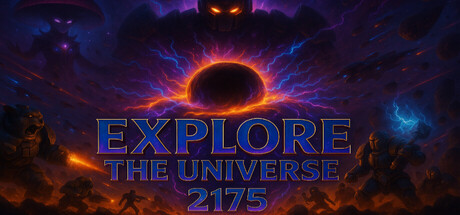
Explore the Universe 2175 uses AI in two distinct ways, and we want to be clear about both.
Real-time simulation (the core of the game). The galaxy is driven by a custom AI system we built ourselves. Faction behavior, MEGABOT's roaming strategy, enemy tactics, and the way wars unfold across sectors are all computed live in our own engine — not generated text or assets. This is procedural and rule-based simulation: the "intelligence" you fight against is real-time decision-making, the same category as the AI in any strategy game, just deeper.
Dialogue is human-written, scripted in advance.
Music and sound are human-created.
Some in-game entity visuals and animations are AI-generated (created during development, not dynamically while you play).
Some marketing and store-page images are AI-generated. Gameplay screenshots are authentic.
No AI-generated content is used to deceive players or misrepresent the game.
To focus more on the gameplay itself, some of the icons, sprites and logos have had AI-assisted rendering for the purpose of improving the final artistic presentation to the end user. Text to Speech tools have assisted in the generation of voice audio used within the menus and the main levels of the game.
This game was developed with the assistance of AI tools in the following areas:
Coding assistance: AI was used to support programming tasks and speed up development.
Art & Concepting: AI was used for generating early concept art and references.
3D Workflow: AI-assisted tools were used to reduce production time for certain 3D models.
All in-game assets, gameplay systems, and final art were reviewed, modified, and integrated by the development team to ensure originality, quality, and compliance.
Some of the game's artwork and marketing materials were created with the help of AI tools. All final assets were curated and refined by our art team to ensure quality and consistency with the game’s style.
The music in the trailer, title screen graphics, game over screen graphics, bouncy ball graphic, and airplane graphic were all generated with AI. Everything else was produced by the people who helped develop this product.
AI-assisted tools were used during development to support the creation of visual assets, music, text, and store page materials, as well as for prototyping and scripting assistance. All content was curated, edited, and integrated by the developer, with final creative and technical decisions made by a human.
This game utilized AI tools exclusively to assist in writing and optimizing a portion of the underlying code during development. All other elements, including visual assets, 3D models, music, and sound effects, were created entirely without the use of AI. All AI-assisted code underwent manual review and testing to ensure game quality and stability.
As a solo developer, generative AI was used only for the Steam capsule images. I plan to replace them with hand drawn artwork before the game is released.
We used generative AI tools during development for some marketing images, certain UI elements, store page text drafting, and code suggestions. All outputs were reviewed and edited by the developer. The game does not use AI to generate content during gameplay.
No AI is used in core development. We use AI sparingly for some initial aspects such as toy mock ups - all final models are made by our team. We also use to aid in ideation, some social media graphics, voices, sound track and renders. All core aspects, such as development work, maps, VFX, final toy models and code are done by hand and our development team of 30.
I want to be fully transparent with you. Some of the visual assets in this game were created with the help of generative AI tools. However, AI was used strictly as a tool, not as a replacement for creativity or craftsmanship.
No image generated by AI was used “as is.” Every asset went through heavy manual modification, repainting, redesigning, compositional changes, color correction, detailing, and integration into the game’s visual language.
I spent hundreds of hours in GIMP reworking compositions, adjusting lighting and color palettes, redrawing shapes and much more.
The final result you see in the game is the outcome of extensive manual work and artistic decisions. I'm not an artist at all, and AI simply helped accelerate early-stage iteration. Without this help the game could not exist.
The game’s design, mechanics, balance, progression systems, and overall vision are entirely human-made.
Thank you for supporting indie development.
Generative AI was used during the development process as an assistant for writing code scripts and debugging. Additionally, AI tools were utilized to assist with the translation of in-game text for localization purposes. All AI-generated content has been reviewed and edited by the developers.
We use AI to generate the music you hear in the trailer(s), and have used it to refine our descriptions of the game as you see on Steam. Occasionally we may use AI to assist us in coding the game, or completely write parts of code for our game. However, during gameplay there are no parts of AI used, what you see in the game when it comes to art, 3D-models, effects, etc., is made manually without AI, with the exception being parts of the code.
Generative artificial intelligence tools were used in a limited capacity during development to assist with asset creation and efficiency. In-game content and materials were manually reviewed, refined, and finalized by the developer.
AI tools were used to generate content for both the game and its store presence. Specifically, AI was used to create marketing materials and capsule images for the store page. In-game, AI was utilized to create visual assets for units and buildings, as well as video elements for the studio intro and the main menu.
AI used only for promo materials:
- Logos: AI-generated (image tools).
- Trailer & banners: AI-assisted.
All in-game content handcrafted. No runtime AI.
No AI art, no AI music, no AI sounds, no AI dialouges/descriptions/names, no vibe coding was used during development of game. Only: very small misc UI elements, some smaller closed coding elements like some shaders and AI machine translation for every steam supported language excluding English, Polish and Chinese (Traditional and Simplified).
Few background images in "AVG"part of this game was adjusted by AI.
All these adjusted images was originally real-world photograph.
other content of this game was not ai pre-rendered
This game does not use AI to generate any runtime content during gameplay. AI tools were used only for marketing and promotional materials and do not affect the game itself or player experience.
Generative AI tools were used during development to assist with visual materials, texture design, localization, marketing texts, and partially for coding assistance. No AI is used during gameplay or for generating real-time content.
Marketing materials, pre-rendered in-game visual effects, textures and materials for characters, props, and environments and translations are partly or completly AI-generated.
The game and its Steam store page include some AI-generated images and translated text content (all non-Chinese text was generated using AI translation).
Explore the Universe 2175 uses AI in two distinct ways, and we want to be clear about both.
Real-time simulation (the core of the game). The galaxy is driven by a custom AI system we built ourselves. Faction behavior, MEGABOT's roaming strategy, enemy tactics, and the way wars unfold across sectors are all computed live in our own engine — not generated text or assets. This is procedural and rule-based simulation: the "intelligence" you fight against is real-time decision-making, the same category as the AI in any strategy game, just deeper.
Dialogue is human-written, scripted in advance.
Music and sound are human-created.
Some in-game entity visuals and animations are AI-generated (created during development, not dynamically while you play).
Some marketing and store-page images are AI-generated. Gameplay screenshots are authentic.
No AI-generated content is used to deceive players or misrepresent the game.
To focus more on the gameplay itself, some of the icons, sprites and logos have had AI-assisted rendering for the purpose of improving the final artistic presentation to the end user. Text to Speech tools have assisted in the generation of voice audio used within the menus and the main levels of the game.
This game was developed with the assistance of AI tools in the following areas:
Coding assistance: AI was used to support programming tasks and speed up development.
Art & Concepting: AI was used for generating early concept art and references.
3D Workflow: AI-assisted tools were used to reduce production time for certain 3D models.
All in-game assets, gameplay systems, and final art were reviewed, modified, and integrated by the development team to ensure originality, quality, and compliance.
Some of the game's artwork and marketing materials were created with the help of AI tools. All final assets were curated and refined by our art team to ensure quality and consistency with the game’s style.
The music in the trailer, title screen graphics, game over screen graphics, bouncy ball graphic, and airplane graphic were all generated with AI. Everything else was produced by the people who helped develop this product.