Public Steam disclosure research25,497 disclosures tracked
Where do games disclose AI use?
Search developers’ Steam disclosures, compare classified AI use across
games, and follow recorded changes.
This index adds cross-game classifications and statistics to
statements published on individual store pages.
Groups reflect automatic analysis of public disclosures; mature records are excluded. These counts do not measure AI use across all of Steam.
Missing or unclear statements cannot establish whether a game uses AI.
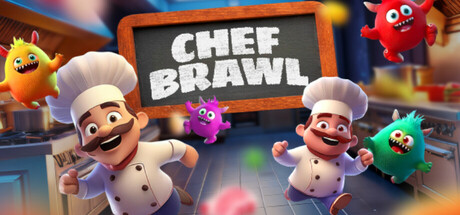
"In Chef Brawl, we have utilized AI in the following ways:
Content Generation: Some game content was initially generated using AI tools. This served as a starting point for our creative process.
Design References: AI was used to create design references and inspiration for our final product.
Human Refinement: While AI assisted in the initial stages, all AI-generated content and designs were reviewed, refined, and finalized by our human development team to ensure quality and coherence with our game vision.
No core gameplay mechanics or critical narrative elements rely on real-time AI processing. The AI was primarily used as a tool in our development process to enhance creativity and efficiency."
AI has been used for prototyping scripts in early stages of the demo, which are no longer in the final game.
The entire localization has been done by hired native translators.
There is not a single image generated with AI in the latest build of the game, every images have been commissioned.
AI was used in the process of creating the images used in the game. Each element generated by the neural network was carefully edited and refined by a 2D artist to ensure high quality content and a unified artistic style of in-game visual materials.
Some of the pictures in the mansion are generated with AI to achieve a bigger diversity and more interesting world set up. The voice over is AI generated.
The games logo / icon was improved with the help of AI.
Throughout the development of our game, we may leverage AI-based tools to assist our team in content creation. Please rest assured that what you see in the game reflects the creativity and hard work of our team. Examples may include pictures and/or posters used in some of our environments.
This game features open dialog, where players can talk freely with NPCs. The dialog for NPCs is prewritten in book-length stories per character - a language model is used to interpolate between these prewritten statements, and to smoothly and grammatically map prewritten text into the appropriate place in conversations.
We utilized AI tools to generate internal references for composition and framing. These outputs were then used as a base to manually create handcrafted pixel art assets, ensuring all final in-game visuals follow our custom palettes and artistic standards.
All voices heard in the game are generated by ElevenLabs AI audio.
ElevenLabs provides a platform for voice actors to earn revenue by sharing an AI model of their voice. All rights to use their voice are provided by the actor and have been attained for use in this game.
AI was used for the Movie Poster art, the Family Picture art, the sleeved VHS tape art, store and library art. The final product reflects our own design intentions and creativity.
The Everest Encounter leverages cutting-edge AI to create a uniquely immersive VR experience. Our game features Katherine, an AI-driven flight attendant powered by advanced language models and NVIDIA's AI technology. Players engage in natural conversations and dynamic interactions, with Katherine adapting her responses and behavior based on the player's choices and emotions. While the game's core content is pre-rendered for optimal performance, Katherine's dialogue and decision-making occur in real-time, ensuring each playthrough is unique. This innovative use of AI pushes the boundaries of narrative gaming, offering players an unparalleled level of engagement and realism in a virtual world.
We utilized AI tools to generate internal references for composition and framing. These outputs were then used as a base to manually create handcrafted pixel art assets, ensuring all final in-game visuals follow our custom palettes and artistic standards.
Although the game's soundtrack was composed by artist Python Blue, some filler music was generated by AI to facilitate development work. The few dubbing voices present in the game were also generated by AI. The game was made almost single-handedly and on a shoestring budget, and the use of AI helped bring it to life and celebrate the series' 10th anniversary.
The art for the backgrounds were initially created by AI. I am in the process of converting all AI art into commissioned art. There are 5 AI art PNGs left. Soon they will all be replaced.
A special thanks to all the support that makes buying commissioned art possible!
Some images that are later modified or edited for higher quality and to reflect what the image is intended to represent. Not all images in the game are AI generated.
The photos in the store (excluding in-game screenshots) were created with the help of AI. The visuals in the achievements were created with the support of AI.
The game includes an unholy amount of AI-generated content, including:
- Textures
- Images
- Music
- Audio effects
- Voice lines
- Facial and body animations
- Code
Game allows player to use voice as a main input tool. To achieve great quality of speech to text, a base version of openai's whisper model is used.
The content seen in the game is not live-generated. The player's input is embedded into a vector through a small model with 278M parameters.
Model:
paraphrase-multilingual-mpnet-base-v2
(Used primarily for wide support of languages)
Then, the game uses Faiss to match the player's input to known, predefined inputs. Each of those describes a reaction and change in the state of the game.
Icon was made with local diffusion model.
In my game development process, I used GitHub Copilot to enhance coding efficiency.
During the creation of promotional images and videos, I may have used images generated by Stable Diffusion or music generated by Suno.
But these assets will NOT appear in the actual game!
We used AI to generated the background images for the store page and then edited them in a photo editing software.
We also generated some tapestries for our battle types.
The game uses images generated by AI to illustrate the story and offer visual interactions.
The main content of game, the text of the story, is NOT using AI.
AI has been utilized in our game to add an extra layer of immersion. We've used AI-generated static background images to create captivating atmospheres within the game world. Additionally, AI-driven voice synthesis brings some of our characters to life, giving them unique and expressive voices. This use of AI contributes to a more engaging and dynamic experience for players.
- Use of AI to generate photographic images used in the document: The Regis Family Files.
- Use of AI to assist with linguistic translation in the game.
"In Chef Brawl, we have utilized AI in the following ways:
Content Generation: Some game content was initially generated using AI tools. This served as a starting point for our creative process.
Design References: AI was used to create design references and inspiration for our final product.
Human Refinement: While AI assisted in the initial stages, all AI-generated content and designs were reviewed, refined, and finalized by our human development team to ensure quality and coherence with our game vision.
No core gameplay mechanics or critical narrative elements rely on real-time AI processing. The AI was primarily used as a tool in our development process to enhance creativity and efficiency."
AI has been used for prototyping scripts in early stages of the demo, which are no longer in the final game.
The entire localization has been done by hired native translators.
There is not a single image generated with AI in the latest build of the game, every images have been commissioned.
AI was used in the process of creating the images used in the game. Each element generated by the neural network was carefully edited and refined by a 2D artist to ensure high quality content and a unified artistic style of in-game visual materials.
Some of the pictures in the mansion are generated with AI to achieve a bigger diversity and more interesting world set up. The voice over is AI generated.
The games logo / icon was improved with the help of AI.
Throughout the development of our game, we may leverage AI-based tools to assist our team in content creation. Please rest assured that what you see in the game reflects the creativity and hard work of our team. Examples may include pictures and/or posters used in some of our environments.
This game features open dialog, where players can talk freely with NPCs. The dialog for NPCs is prewritten in book-length stories per character - a language model is used to interpolate between these prewritten statements, and to smoothly and grammatically map prewritten text into the appropriate place in conversations.
We utilized AI tools to generate internal references for composition and framing. These outputs were then used as a base to manually create handcrafted pixel art assets, ensuring all final in-game visuals follow our custom palettes and artistic standards.
All voices heard in the game are generated by ElevenLabs AI audio.
ElevenLabs provides a platform for voice actors to earn revenue by sharing an AI model of their voice. All rights to use their voice are provided by the actor and have been attained for use in this game.
AI was used for the Movie Poster art, the Family Picture art, the sleeved VHS tape art, store and library art. The final product reflects our own design intentions and creativity.
The Everest Encounter leverages cutting-edge AI to create a uniquely immersive VR experience. Our game features Katherine, an AI-driven flight attendant powered by advanced language models and NVIDIA's AI technology. Players engage in natural conversations and dynamic interactions, with Katherine adapting her responses and behavior based on the player's choices and emotions. While the game's core content is pre-rendered for optimal performance, Katherine's dialogue and decision-making occur in real-time, ensuring each playthrough is unique. This innovative use of AI pushes the boundaries of narrative gaming, offering players an unparalleled level of engagement and realism in a virtual world.
We utilized AI tools to generate internal references for composition and framing. These outputs were then used as a base to manually create handcrafted pixel art assets, ensuring all final in-game visuals follow our custom palettes and artistic standards.
Although the game's soundtrack was composed by artist Python Blue, some filler music was generated by AI to facilitate development work. The few dubbing voices present in the game were also generated by AI. The game was made almost single-handedly and on a shoestring budget, and the use of AI helped bring it to life and celebrate the series' 10th anniversary.
The art for the backgrounds were initially created by AI. I am in the process of converting all AI art into commissioned art. There are 5 AI art PNGs left. Soon they will all be replaced.
A special thanks to all the support that makes buying commissioned art possible!
Some images that are later modified or edited for higher quality and to reflect what the image is intended to represent. Not all images in the game are AI generated.
The photos in the store (excluding in-game screenshots) were created with the help of AI. The visuals in the achievements were created with the support of AI.
The game includes an unholy amount of AI-generated content, including:
- Textures
- Images
- Music
- Audio effects
- Voice lines
- Facial and body animations
- Code
Game allows player to use voice as a main input tool. To achieve great quality of speech to text, a base version of openai's whisper model is used.
The content seen in the game is not live-generated. The player's input is embedded into a vector through a small model with 278M parameters.
Model:
paraphrase-multilingual-mpnet-base-v2
(Used primarily for wide support of languages)
Then, the game uses Faiss to match the player's input to known, predefined inputs. Each of those describes a reaction and change in the state of the game.
Icon was made with local diffusion model.
In my game development process, I used GitHub Copilot to enhance coding efficiency.
During the creation of promotional images and videos, I may have used images generated by Stable Diffusion or music generated by Suno.
But these assets will NOT appear in the actual game!
We used AI to generated the background images for the store page and then edited them in a photo editing software.
We also generated some tapestries for our battle types.
The game uses images generated by AI to illustrate the story and offer visual interactions.
The main content of game, the text of the story, is NOT using AI.
AI has been utilized in our game to add an extra layer of immersion. We've used AI-generated static background images to create captivating atmospheres within the game world. Additionally, AI-driven voice synthesis brings some of our characters to life, giving them unique and expressive voices. This use of AI contributes to a more engaging and dynamic experience for players.
- Use of AI to generate photographic images used in the document: The Regis Family Files.
- Use of AI to assist with linguistic translation in the game.