Public Steam disclosure research25,497 disclosures tracked
Where do games disclose AI use?
Search developers’ Steam disclosures, compare classified AI use across
games, and follow recorded changes.
This index adds cross-game classifications and statistics to
statements published on individual store pages.
Groups reflect automatic analysis of public disclosures; mature records are excluded. These counts do not measure AI use across all of Steam.
Missing or unclear statements cannot establish whether a game uses AI.
Services claiming copyright protection/indemnification: None. I do not use any third-party copyright filtering, detection, or indemnification service; the optional local assistant is offline and restricted to in-game data only.
As placeholder voiced narrative, this game uses a Unity Asset Store asset which uses a database of non-copyrighted human voices to generate character voices.
We have used AI to generate a part of the story text, story images and story voice. We are also using AI to make the opponents move automatically in direction of the player.
AI has been used in a limited way* for the following aspects: Text Localization, Speech Localization and Musical Audio.
*The base was AI-generated, but the transformative creation built upon it stands as an original work. (Text was controlled by a human, the voice and musical audio were edited and reworked by a human)
The game uses artificial intelligence (AI) as assistance for language translations and the creation of some secondary character avatars. All main story content, dialogue, and core design elements were handcrafted by our team.
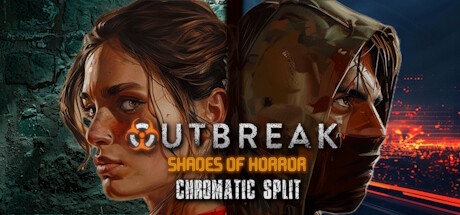
This game uses generative AI tools in part of the visual production process. The tools are used to process and transform original designs and character materials created by the development team, in order to express trauma, psychological distortion, and instability. AI-generated output is not used directly as-is. It is reviewed, selected, adjusted, and edited by the development team before being used as part of the in-game visual direction.
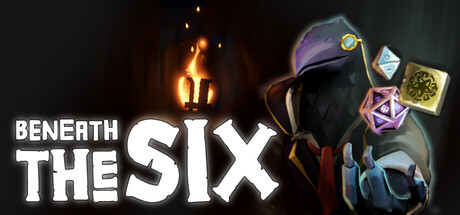
Beneath The Six features an AI narrator who serves as a dungeon master to guide you and comment on your experiences in the daily generated content.
We commissioned actor Tom Canton (The Witcher TV series) to record a library of dialogue. This was then used by ElevenLabs to train the AI voice. Both Magicave and ElevenLabs have a commitment to ensuring the rights of voice actors are protected. Magicave has assigned ownership of the AI voice to Tom Canton, licensing it from him for use in the game, while allowing him the freedom to use his AI voice in other media – whether games, voiceovers, animations, audiobooks or movies (https://www.gamewatcher.com/news/beneath-the-six-turn-based-roguelike).
Each day we generate new daily content for the dungeon and arena. As part of this we pass the generation data to an LLM to create dialogue for the AI narrator so they can comment on the content included for that day.
Some of the daily generated content for the arena and dungeon modes use an LLM to create names for two other purposes. One is for creating the name of any Champion enemies which appear in the dungeon. The other is for creating a name for the daily arena run.
The images of the game on Steam (not screenshots) are made partly with the help of AI, but are heavily modified manually by the artist.
Also, translation into all languages except Russian was created using AI.
Some content in this game was created using artificial intelligence. We ensure all AI-generated material meets our quality standards and enhances your experience.
This game does not use generative AI to create live gameplay content or code.
However, during development and marketing, certain assets were created or assisted using AI tools:
Visual assets:
Some in-game artwork, UI elements (including icons, buttons, and portraits), as well as promotional visuals used on the Steam store page were initially generated or assisted using AI image generation tools.
In addition, achievement icons were created with the help of AI and later manually refined and finalized by the developer to ensure consistency with the game’s artistic direction.
Localizations:
All translations (except Russian and Ukrainian) were produced using AI-powered translation services without human proofreading.
Audio assets:
A portion of the sound effects was generated or assisted using AI tools and then mixed, processed, and adjusted by the developer.
All AI-assisted content was manually reviewed, edited, and approved by the developer to ensure it aligns with the game’s visual style, tone, and quality standards.
Artificial Intelligence has been utilized to create various visuals within the game, with the primary goal of enriching players' gaming experiences aesthetically and providing a visually captivating environment. This technology has been chosen to enhance the quality of visuals in the game, allowing users to experience a more realistic, detailed, and visually impressive environment.
Some basic components like door opening and closing, and light switching were automatically mounted by Yahaha Studio's AI tools (a UGC game editor).
The 3D scenes were constructed using Yahaha Studio's AI tools (a UGC game editor), with art assets recognized and used by the AI tools being copyright-compliant.
AI has been used to generate responses to questions which the player can ask, which is a core gameplay feature. AI has not been used in any other parts of the game.
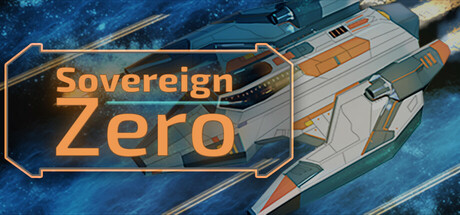
This game's development leveraged Gen-AI to sample in-game sprites for the player and enemy ships. These same sprites have been sent over to paid artists to create their own renditions of these sprites. All other assets such as music, sound effects, and steam page capsules were created by paid artists.
Neuro-prompt engineering is the profession of the future, enabling the structuring of queries based on experience so that the subject matter fully matches the task. I use my initial knowledge of programming and integrated AI assistants in various applications to optimize the code development process. This allows me to automate many repetitive tasks, such as code refactoring and formatting, enabling me to focus on more complex and creative aspects of development. My ideas remain unique and original, with AI helping to shape them as a framework, preserving my creative decisions.
Services claiming copyright protection/indemnification: None. I do not use any third-party copyright filtering, detection, or indemnification service; the optional local assistant is offline and restricted to in-game data only.
As placeholder voiced narrative, this game uses a Unity Asset Store asset which uses a database of non-copyrighted human voices to generate character voices.
We have used AI to generate a part of the story text, story images and story voice. We are also using AI to make the opponents move automatically in direction of the player.
AI has been used in a limited way* for the following aspects: Text Localization, Speech Localization and Musical Audio.
*The base was AI-generated, but the transformative creation built upon it stands as an original work. (Text was controlled by a human, the voice and musical audio were edited and reworked by a human)
The game uses artificial intelligence (AI) as assistance for language translations and the creation of some secondary character avatars. All main story content, dialogue, and core design elements were handcrafted by our team.
This game uses generative AI tools in part of the visual production process. The tools are used to process and transform original designs and character materials created by the development team, in order to express trauma, psychological distortion, and instability. AI-generated output is not used directly as-is. It is reviewed, selected, adjusted, and edited by the development team before being used as part of the in-game visual direction.
Beneath The Six features an AI narrator who serves as a dungeon master to guide you and comment on your experiences in the daily generated content.
We commissioned actor Tom Canton (The Witcher TV series) to record a library of dialogue. This was then used by ElevenLabs to train the AI voice. Both Magicave and ElevenLabs have a commitment to ensuring the rights of voice actors are protected. Magicave has assigned ownership of the AI voice to Tom Canton, licensing it from him for use in the game, while allowing him the freedom to use his AI voice in other media – whether games, voiceovers, animations, audiobooks or movies (https://www.gamewatcher.com/news/beneath-the-six-turn-based-roguelike).
Each day we generate new daily content for the dungeon and arena. As part of this we pass the generation data to an LLM to create dialogue for the AI narrator so they can comment on the content included for that day.
Some of the daily generated content for the arena and dungeon modes use an LLM to create names for two other purposes. One is for creating the name of any Champion enemies which appear in the dungeon. The other is for creating a name for the daily arena run.
The images of the game on Steam (not screenshots) are made partly with the help of AI, but are heavily modified manually by the artist.
Also, translation into all languages except Russian was created using AI.
Some content in this game was created using artificial intelligence. We ensure all AI-generated material meets our quality standards and enhances your experience.
This game does not use generative AI to create live gameplay content or code.
However, during development and marketing, certain assets were created or assisted using AI tools:
Visual assets:
Some in-game artwork, UI elements (including icons, buttons, and portraits), as well as promotional visuals used on the Steam store page were initially generated or assisted using AI image generation tools.
In addition, achievement icons were created with the help of AI and later manually refined and finalized by the developer to ensure consistency with the game’s artistic direction.
Localizations:
All translations (except Russian and Ukrainian) were produced using AI-powered translation services without human proofreading.
Audio assets:
A portion of the sound effects was generated or assisted using AI tools and then mixed, processed, and adjusted by the developer.
All AI-assisted content was manually reviewed, edited, and approved by the developer to ensure it aligns with the game’s visual style, tone, and quality standards.
Artificial Intelligence has been utilized to create various visuals within the game, with the primary goal of enriching players' gaming experiences aesthetically and providing a visually captivating environment. This technology has been chosen to enhance the quality of visuals in the game, allowing users to experience a more realistic, detailed, and visually impressive environment.
Some basic components like door opening and closing, and light switching were automatically mounted by Yahaha Studio's AI tools (a UGC game editor).
The 3D scenes were constructed using Yahaha Studio's AI tools (a UGC game editor), with art assets recognized and used by the AI tools being copyright-compliant.
AI has been used to generate responses to questions which the player can ask, which is a core gameplay feature. AI has not been used in any other parts of the game.
This game's development leveraged Gen-AI to sample in-game sprites for the player and enemy ships. These same sprites have been sent over to paid artists to create their own renditions of these sprites. All other assets such as music, sound effects, and steam page capsules were created by paid artists.
Neuro-prompt engineering is the profession of the future, enabling the structuring of queries based on experience so that the subject matter fully matches the task. I use my initial knowledge of programming and integrated AI assistants in various applications to optimize the code development process. This allows me to automate many repetitive tasks, such as code refactoring and formatting, enabling me to focus on more complex and creative aspects of development. My ideas remain unique and original, with AI helping to shape them as a framework, preserving my creative decisions.