Public Steam disclosure research25,383 disclosures tracked
Where do games disclose AI use?
Search developers’ Steam disclosures, compare classified AI use across
games, and follow recorded changes.
This index adds cross-game classifications and statistics to
statements published on individual store pages.
Groups reflect automatic analysis of public disclosures; mature records are excluded. These counts do not measure AI use across all of Steam.
Missing or unclear statements cannot establish whether a game uses AI.
Certain early-stage visual or audio assets were created using generative AI tools as part of the development workflow. All such content has been manually edited and integrated by the developer. The game does not generate AI content during gameplay.
This game was developed by a solo developer with the assistance of generative AI tools during production.
AI tools such as ChatGPT were used as a development aid for Unreal Engine guidance, technical explanations, spell-checking, and drafting some in-game text and UI messaging. ChatGPT was also used to generate some placeholder images and audio assets during early development.
Some 3D models and textures were created using AI-assisted tools such as Tripo3D.ai. These assets may be refined, replaced, or improved over time as the project evolves and budget allows.
All gameplay systems, mechanics, design decisions, Blueprint scripting, and overall game implementation were created and assembled by the developer. No AI system autonomously generated gameplay code or core systems.
Additional assets were purchased through the Unreal Engine Fab Marketplace where noted.
AI tools were used strictly as production assistants to support solo development.
During the early prototyping phase, I use AI tools to visualize initial concepts and create temporary placeholders. All of these have been completely replaced in the final game with hand-crafted art created by myself and talented freelancers.
Generative AI was utilized in the process of creating and optimizing UI background images and certain in-game text content, such as item descriptions and lore. All AI-generated assets were carefully reviewed, retouched, and edited by the developer to ensure they align with the game's unique atmosphere and artistic vision.
Generative AI tools may be used during production for some localization and minor audio elements. Core gameplay content and game artwork are not created using AI.
The in-game graphics and sound are generated by AI and then modified and adjusted by creators before being used.
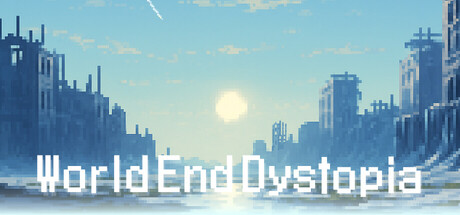
In World End Dystopia, AI technology is used as a supplementary tool in certain parts of the production process. AI supports tasks such as prototyping, comparison, and organization, while the worldbuilding, narrative, game design, and all final expressions and decisions are created entirely by human hands.
Just as the AI “EDEN” depicted in the game exists to support human choice, AI in the real-world development process is likewise limited to an assistive role—supporting human understanding and judgment rather than replacing creativity or decision-making.
Select visual assets and base scripts in this title were created with the assistance of generative AI. All AI-generated content was manually edited and strictly reviewed by the developer before final inclusion.
This product uses pre-generated AI-assisted content during development. AI tools were used to help create some promotional artwork, selected visual assets, and some development-support content such as text or localization assistance. The game does not use live-generated AI during gameplay.
I am a single developer. AI is used to speed up some processes, some marketing and concept materials are made with AI as a base to improve on and deliver better game.
There are optional AI soundtracks in the game.
Some of the images and in game models and sounds are created using AI to speed up the development process and allow focus on core gameplay elements.
All elements are reviewed by devs.
No AI is running or applied during gameplay.
A few pieces of art were generated: the battle background, the fire aura on the marketing assets, and a few projectiles for units like the white beetle.
Generative AI (LLM) was used to assist in translating in-game text.
Additionally, AI tools provided assistance in writing, optimizing, and debugging source code.
This game uses generative AI for its multi-language localization to provide immediate support for French, German, Spanish, Portuguese, Russian, Japanese and Korean. While we strive for accuracy, some linguistic nuances may vary.
At current development stage, the AI generated pre-rendered content are only used for placeholders. Later they will be replaced by the actual hand drawn artworks.
AI tools were used to assist in the conceptualization of store page art and background art. The final in-game assets are hand-crafted pixel art based on these AI-generated concepts.
Some minor visual elements such as parts of the logo design and a few user-interface textures were originally assisted by generative tools and then refined manually.
This game uses generative AI tools to assist with some pre-generated visual assets, including background art, character-related promotional art, item imagery, and store page materials. All AI-assisted content is reviewed, selected, and edited by the developer before release. The game does not generate AI content during gameplay.
I use AI in this project for generation of some static art assets such as title screens, UI elements, Steam store assets, item images in inventory, and the large world map.
AI is NOT used for generating the engine-rendered gameplay, with exception of an image of an item dropped to the ground.
All environment tiles, objects and decorations, as well as animated entities (humans, monsters, etc) are generated by human artists.
This is a very demanding project; should I get more money and access to artists, ideally I would replace all AI assets. Ideally...
During development, we used AI-assisted tools to support the localization of in-game text into multiple languages. All AI-generated translations were reviewed and edited by our team to ensure accuracy and consistency with the game's tone and characters. Additionally, some food and cooking-related props were initially generated with AI-assisted tools and then manually refined by our artists to match the game's visual style and quality standards.
This game was developed independently by a solo developer. Generative AI tools were used in a limited capacity during production, specifically to assist with the texturing of certain visual assets and the conception of some written content. All gameplay systems, models, game design, art direction, music, and core creative decisions were made entirely by the developer.
Certain early-stage visual or audio assets were created using generative AI tools as part of the development workflow. All such content has been manually edited and integrated by the developer. The game does not generate AI content during gameplay.
This game was developed by a solo developer with the assistance of generative AI tools during production.
AI tools such as ChatGPT were used as a development aid for Unreal Engine guidance, technical explanations, spell-checking, and drafting some in-game text and UI messaging. ChatGPT was also used to generate some placeholder images and audio assets during early development.
Some 3D models and textures were created using AI-assisted tools such as Tripo3D.ai. These assets may be refined, replaced, or improved over time as the project evolves and budget allows.
All gameplay systems, mechanics, design decisions, Blueprint scripting, and overall game implementation were created and assembled by the developer. No AI system autonomously generated gameplay code or core systems.
Additional assets were purchased through the Unreal Engine Fab Marketplace where noted.
AI tools were used strictly as production assistants to support solo development.
During the early prototyping phase, I use AI tools to visualize initial concepts and create temporary placeholders. All of these have been completely replaced in the final game with hand-crafted art created by myself and talented freelancers.
Generative AI was utilized in the process of creating and optimizing UI background images and certain in-game text content, such as item descriptions and lore. All AI-generated assets were carefully reviewed, retouched, and edited by the developer to ensure they align with the game's unique atmosphere and artistic vision.
Generative AI tools may be used during production for some localization and minor audio elements. Core gameplay content and game artwork are not created using AI.
The in-game graphics and sound are generated by AI and then modified and adjusted by creators before being used.
In World End Dystopia, AI technology is used as a supplementary tool in certain parts of the production process. AI supports tasks such as prototyping, comparison, and organization, while the worldbuilding, narrative, game design, and all final expressions and decisions are created entirely by human hands.
Just as the AI “EDEN” depicted in the game exists to support human choice, AI in the real-world development process is likewise limited to an assistive role—supporting human understanding and judgment rather than replacing creativity or decision-making.
Select visual assets and base scripts in this title were created with the assistance of generative AI. All AI-generated content was manually edited and strictly reviewed by the developer before final inclusion.
This product uses pre-generated AI-assisted content during development. AI tools were used to help create some promotional artwork, selected visual assets, and some development-support content such as text or localization assistance. The game does not use live-generated AI during gameplay.
I am a single developer. AI is used to speed up some processes, some marketing and concept materials are made with AI as a base to improve on and deliver better game.
There are optional AI soundtracks in the game.
Some of the images and in game models and sounds are created using AI to speed up the development process and allow focus on core gameplay elements.
All elements are reviewed by devs.
No AI is running or applied during gameplay.
A few pieces of art were generated: the battle background, the fire aura on the marketing assets, and a few projectiles for units like the white beetle.
Generative AI (LLM) was used to assist in translating in-game text.
Additionally, AI tools provided assistance in writing, optimizing, and debugging source code.
This game uses generative AI for its multi-language localization to provide immediate support for French, German, Spanish, Portuguese, Russian, Japanese and Korean. While we strive for accuracy, some linguistic nuances may vary.
At current development stage, the AI generated pre-rendered content are only used for placeholders. Later they will be replaced by the actual hand drawn artworks.
AI tools were used to assist in the conceptualization of store page art and background art. The final in-game assets are hand-crafted pixel art based on these AI-generated concepts.
Some minor visual elements such as parts of the logo design and a few user-interface textures were originally assisted by generative tools and then refined manually.
This game uses generative AI tools to assist with some pre-generated visual assets, including background art, character-related promotional art, item imagery, and store page materials. All AI-assisted content is reviewed, selected, and edited by the developer before release. The game does not generate AI content during gameplay.
I use AI in this project for generation of some static art assets such as title screens, UI elements, Steam store assets, item images in inventory, and the large world map.
AI is NOT used for generating the engine-rendered gameplay, with exception of an image of an item dropped to the ground.
All environment tiles, objects and decorations, as well as animated entities (humans, monsters, etc) are generated by human artists.
This is a very demanding project; should I get more money and access to artists, ideally I would replace all AI assets. Ideally...
During development, we used AI-assisted tools to support the localization of in-game text into multiple languages. All AI-generated translations were reviewed and edited by our team to ensure accuracy and consistency with the game's tone and characters. Additionally, some food and cooking-related props were initially generated with AI-assisted tools and then manually refined by our artists to match the game's visual style and quality standards.
This game was developed independently by a solo developer. Generative AI tools were used in a limited capacity during production, specifically to assist with the texturing of certain visual assets and the conception of some written content. All gameplay systems, models, game design, art direction, music, and core creative decisions were made entirely by the developer.