Public Steam disclosure research25,981 disclosures tracked
Where do games disclose AI use?
Search developers’ Steam disclosures, compare classified AI use across
games, and follow recorded changes.
This index adds cross-game classifications and statistics to
statements published on individual store pages.
Groups reflect automatic analysis of public disclosures; mature records are excluded. These counts do not measure AI use across all of Steam.
Missing or unclear statements cannot establish whether a game uses AI.
This game uses generative AI only for content prepared prior to release, not while you play.
• Store and marketing images (such as library artwork and app icons) may include elements created with generative image tools, then reviewed and edited by the developer.
• Non-English interface text and localized Steam store descriptions may be produced or assisted by machine translation (including automated translation services), then reviewed where possible.
Gameplay visuals are primarily programmatic pixel-style graphics generated by the game engine. Zone layouts are procedurally arranged by game logic, not by a generative AI model during play.
The game does not use generative AI to create new images, audio, or narrative for you during gameplay, and it does not connect to third-party generative AI services while you are playing.
This game uses AI-generated content in the following areas: background artwork and visual assets, background music, and sound effects. All AI-generated content was reviewed, edited, and approved by the developer before inclusion in the game.
This game is developed using the commercial engine RPG Bakin. The core game logic, systems, and all promotional videos are 100% handcrafted and created without the use of any AI tools.
To enhance the overall experience of this indie project, generative AI tools were utilized to assist in specific asset creation, video sequences, and localization:
Pre-rendered Content & Video Sequences:
The introductory cinematic video showcasing the game’s backstory was generated with the assistance of AI and manually edited.
The short animations for the item forging and dismantling systems were generated using AI and manually refined.
Some 2D character portraits, equipment icons (initial concepts), and background music (BGM) were generated with the assistance of AI and subsequently polished.
Character Voiceovers: The Japanese battle voice lines for characters were created using modern AI voice generation tools.
Language & Localization: The English translation and localization of the game's scripts and dialogues were assisted by AI translation tools.
We ensure that all AI-assisted processes and content comply with legal standards, aiming to deliver an authentic wuxia RPG experience with rich audio-visuals and smooth language accessibility for players worldwide.
Terra Concordia was created by the solo developer at NCB Company with extensive use of generative artificial intelligence tools throughout the development process.
Content created with AI assistance during development:
• The 142 game cards (buildings, technologies, wonders, events, objectives): names, descriptions, costs, effects, and art were conceived and adjusted with AI assistance, under review and final decision by the human developer.
• SVG vector art (cards, board, civilizations, store capsule arts, achievement icons, page banners): programmatically generated by scripts written with AI assistance.
• Game mechanics and rules: brainstorming, balancing, and iteration done with AI assistance, always validated manually across hundreds of internal playtests.
• The 6 solo-mode scenarios: themes, victory conditions, and difficulty designed with AI assistance, adjusted through playtesting.
• Website, store descriptions, manuals, and Civilopedia: drafted with AI assistance, reviewed by the developer.
• English and Spanish translations: pre-translated with AI, manually reviewed and polished.
• Solo-mode opponent (Automa) logic: the script was written with AI assistance, but it is a fixed deterministic algorithm with no machine learning components.
No content is generated by AI in real time during play. There are no images, texts, cards, or behaviors dynamically generated by AI while you play. The "Automa" (solo-mode AI opponent) is a script already embedded in the game code, executing pre-defined rules — without any alteration, generation, or learning during the match.
All AI-assisted content was reviewed, tested, and approved by the human developer before release.
Some card illustrations were created with the assistance of image-generation tools, then hand-selected, edited, and arranged by the developer. Game design, rules, code, UI, and writing are human-made
We are a small indie team of only two brothers, and all core gameplay mechanics, level design, story, programming, and animations were 100% handcrafted by us.
AI was used strictly for supplementary audio and minor environmental details: specifically, background music, ambient soundscapes, eerie sound effects, and select in-game textures/posters.
AI tools were used to assist in the creation of temporary promotional artwork and concept visuals for the Steam store page. Gameplay systems, implementation, balancing, and final game integration are developed manually.
All 2D visual artwork used in the game was created or edited with the assistance of generative AI tools, then manually reviewed, selected, adjusted, and implemented by the developer.
This includes in-game sprites, visual assets, Steam store artwork, and promotional material.
Generative AI was used during development to assist with the creation of certain visual assets and development content. All AI-generated content was reviewed, modified, and integrated by the developer before inclusion in the final game. The game does not generate AI content during gameplay and does not connect to external AI services.
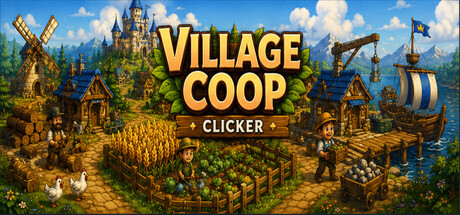
Village Coop Clicker is a small hobby project created with extensive use of AI-assisted tools for programming, artwork, audio, localization, and store assets.
The game design, balancing, progression systems, and overall creative direction were created and curated manually by the developer.
Some visual assets in this game (including 19 case file illustrations and the game icon) were created using generative AI tools during development and are embedded as static assets. The game does not use any real-time AI generation during gameplay. All player experiences are consistent and reproducible.
Pre-Generated Content:
We used generative AI tools to create some of the background music (BGM) and environmental sounds. Additionally, some 2D background artwork, such as loading screens, was generated using AI. All AI-generated assets have been strictly reviewed and heavily edited by the developer to fit the game's stylized direction and ensure they do not infringe on any third-party copyrights.
Live-Generated Content:
This game does not contain any live-generated AI content.
We only use artificial intelligence tools to generate background music for the game (such as the background music for starting the game interface), promotional videos (CG promotional videos), and some UI background images (background images for the backpack interface), which are directly embedded into the game's assets. During the game, no artificial intelligence models were used to create or generate new content in real-time. No AI generated code was used either.
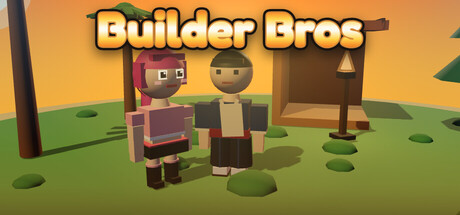
The developers used generative AI tools in the creation of this game. Portions of the game's content — including visual art and 3D assets, audio, in-game narrative and text, and translations into the supported languages — were produced with the assistance of generative AI and then reviewed, edited, and curated by the developer. All AI-assisted content is generated ahead of time and is fixed in the shipped game. Builder Bros does not generate any content using AI during gameplay, and does not connect to any external AI service.
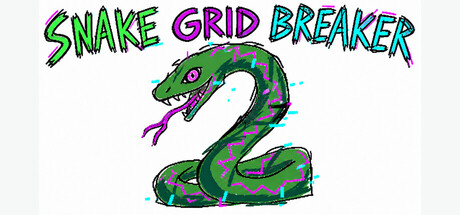
Generative AI was used as one of many development tools while creating Snake: Gridbreaker.
As a solo developer, I used it to support programming, localization, UI work, visual assets, icons, and the development of quality-of-life and accessibility improvements.
Every AI-assisted element was reviewed, edited, tested, and implemented by me. I designed the game, its mechanics, progression, and creative direction, and I remain fully responsible for the final experience.
The game does not generate content with AI during gameplay.
Some in-game audio, including phone call voices and ambient sounds, were generated using AI tools. Additionally, certain stickers and visual assets found in the Cancer's living area were created with the assistance of generative AI.
Generative AI was used to assist in the creation of some art assets. All AI-assisted content was reviewed and edited by the developer before being included in the game.
Generative AI was used during development as a production tool for portions of the game's source code, music production workflow, and synthetic voice-over generation.
AI-assisted code was reviewed, tested, modified where necessary, and integrated under the direct supervision of the developer. Some music tracks originated from AI-generated compositions or stems and were subsequently edited, arranged, mixed, and produced by the developer. Voice-over content is generated using commercially licensed AI voice technology from developer-written scripts.
The game's gameplay systems, game design, balancing, progression systems, procedural visual generation technology, world generation systems, writing, and overall creative direction were conceived, designed, and maintained by the developer.
The game does not use generative AI at runtime. No player-facing content is generated on-the-fly during gameplay. Visuals are created through deterministic procedural generation systems and pre-authored assets rather than generative image AI.
Character portraits, UI icons, and background art in this game were generated using AI image tools (Google Gemini) and then edited, composited, and finalized by the developer. Music and sound effects were AI-generated (Suno / ElevenLabs) and edited by the developer. AI (Claude Code) was also used as a coding assistant during development. No AI content is generated live during gameplay — all assets are fixed and authored before release.
Generative AI was used as a supplementary tool for certain visual and audio assets. Every AI-assisted asset underwent substantial manual editing, refinement, quality control, and integration by the development team.
Some visual assets used in the game and store page were created using a combination of licensed art assets, generative AI-assisted imagery, and manual editing by the developer.
All AI-assisted content was reviewed and modified before being included in the final project.
Pre-generated 2D visual assets were created using AI tools. This includes the skill icons used in the game's UI, as well as the promotional capsule and cover artwork for the Steam store page.
This game includes pre-generated assets created with the assistance of generative AI tools. AI-assisted content may include selected store capsule artwork, promotional artwork, UI-related graphics, and selected music/audio elements. All AI-assisted content is reviewed and edited by the developer before being included in the game or store presentation. The game does not use live generative AI during gameplay.
AI Generated Content Disclosure
The developers describe how their game uses AI Generated Content like this:
Generative AI tools were used in limited cases during the production of certain game assets. AI-generated content was not used as-is, and any such assets were revised, refined, and finalized by our art and development teams to ensure they meet our quality standards and creative direction.
This game uses generative AI only for content prepared prior to release, not while you play.
• Store and marketing images (such as library artwork and app icons) may include elements created with generative image tools, then reviewed and edited by the developer.
• Non-English interface text and localized Steam store descriptions may be produced or assisted by machine translation (including automated translation services), then reviewed where possible.
Gameplay visuals are primarily programmatic pixel-style graphics generated by the game engine. Zone layouts are procedurally arranged by game logic, not by a generative AI model during play.
The game does not use generative AI to create new images, audio, or narrative for you during gameplay, and it does not connect to third-party generative AI services while you are playing.
This game uses AI-generated content in the following areas: background artwork and visual assets, background music, and sound effects. All AI-generated content was reviewed, edited, and approved by the developer before inclusion in the game.
This game is developed using the commercial engine RPG Bakin. The core game logic, systems, and all promotional videos are 100% handcrafted and created without the use of any AI tools.
To enhance the overall experience of this indie project, generative AI tools were utilized to assist in specific asset creation, video sequences, and localization:
Pre-rendered Content & Video Sequences:
The introductory cinematic video showcasing the game’s backstory was generated with the assistance of AI and manually edited.
The short animations for the item forging and dismantling systems were generated using AI and manually refined.
Some 2D character portraits, equipment icons (initial concepts), and background music (BGM) were generated with the assistance of AI and subsequently polished.
Character Voiceovers: The Japanese battle voice lines for characters were created using modern AI voice generation tools.
Language & Localization: The English translation and localization of the game's scripts and dialogues were assisted by AI translation tools.
We ensure that all AI-assisted processes and content comply with legal standards, aiming to deliver an authentic wuxia RPG experience with rich audio-visuals and smooth language accessibility for players worldwide.
Terra Concordia was created by the solo developer at NCB Company with extensive use of generative artificial intelligence tools throughout the development process.
Content created with AI assistance during development:
• The 142 game cards (buildings, technologies, wonders, events, objectives): names, descriptions, costs, effects, and art were conceived and adjusted with AI assistance, under review and final decision by the human developer.
• SVG vector art (cards, board, civilizations, store capsule arts, achievement icons, page banners): programmatically generated by scripts written with AI assistance.
• Game mechanics and rules: brainstorming, balancing, and iteration done with AI assistance, always validated manually across hundreds of internal playtests.
• The 6 solo-mode scenarios: themes, victory conditions, and difficulty designed with AI assistance, adjusted through playtesting.
• Website, store descriptions, manuals, and Civilopedia: drafted with AI assistance, reviewed by the developer.
• English and Spanish translations: pre-translated with AI, manually reviewed and polished.
• Solo-mode opponent (Automa) logic: the script was written with AI assistance, but it is a fixed deterministic algorithm with no machine learning components.
No content is generated by AI in real time during play. There are no images, texts, cards, or behaviors dynamically generated by AI while you play. The "Automa" (solo-mode AI opponent) is a script already embedded in the game code, executing pre-defined rules — without any alteration, generation, or learning during the match.
All AI-assisted content was reviewed, tested, and approved by the human developer before release.
Some card illustrations were created with the assistance of image-generation tools, then hand-selected, edited, and arranged by the developer. Game design, rules, code, UI, and writing are human-made
We are a small indie team of only two brothers, and all core gameplay mechanics, level design, story, programming, and animations were 100% handcrafted by us.
AI was used strictly for supplementary audio and minor environmental details: specifically, background music, ambient soundscapes, eerie sound effects, and select in-game textures/posters.
AI tools were used to assist in the creation of temporary promotional artwork and concept visuals for the Steam store page. Gameplay systems, implementation, balancing, and final game integration are developed manually.
All 2D visual artwork used in the game was created or edited with the assistance of generative AI tools, then manually reviewed, selected, adjusted, and implemented by the developer.
This includes in-game sprites, visual assets, Steam store artwork, and promotional material.
Generative AI was used during development to assist with the creation of certain visual assets and development content. All AI-generated content was reviewed, modified, and integrated by the developer before inclusion in the final game. The game does not generate AI content during gameplay and does not connect to external AI services.
Village Coop Clicker is a small hobby project created with extensive use of AI-assisted tools for programming, artwork, audio, localization, and store assets.
The game design, balancing, progression systems, and overall creative direction were created and curated manually by the developer.
Some visual assets in this game (including 19 case file illustrations and the game icon) were created using generative AI tools during development and are embedded as static assets. The game does not use any real-time AI generation during gameplay. All player experiences are consistent and reproducible.
Pre-Generated Content:
We used generative AI tools to create some of the background music (BGM) and environmental sounds. Additionally, some 2D background artwork, such as loading screens, was generated using AI. All AI-generated assets have been strictly reviewed and heavily edited by the developer to fit the game's stylized direction and ensure they do not infringe on any third-party copyrights.
Live-Generated Content:
This game does not contain any live-generated AI content.
We only use artificial intelligence tools to generate background music for the game (such as the background music for starting the game interface), promotional videos (CG promotional videos), and some UI background images (background images for the backpack interface), which are directly embedded into the game's assets. During the game, no artificial intelligence models were used to create or generate new content in real-time. No AI generated code was used either.
The developers used generative AI tools in the creation of this game. Portions of the game's content — including visual art and 3D assets, audio, in-game narrative and text, and translations into the supported languages — were produced with the assistance of generative AI and then reviewed, edited, and curated by the developer. All AI-assisted content is generated ahead of time and is fixed in the shipped game. Builder Bros does not generate any content using AI during gameplay, and does not connect to any external AI service.
Generative AI was used as one of many development tools while creating Snake: Gridbreaker.
As a solo developer, I used it to support programming, localization, UI work, visual assets, icons, and the development of quality-of-life and accessibility improvements.
Every AI-assisted element was reviewed, edited, tested, and implemented by me. I designed the game, its mechanics, progression, and creative direction, and I remain fully responsible for the final experience.
The game does not generate content with AI during gameplay.
Some in-game audio, including phone call voices and ambient sounds, were generated using AI tools. Additionally, certain stickers and visual assets found in the Cancer's living area were created with the assistance of generative AI.
Generative AI was used to assist in the creation of some art assets. All AI-assisted content was reviewed and edited by the developer before being included in the game.
Generative AI was used during development as a production tool for portions of the game's source code, music production workflow, and synthetic voice-over generation.
AI-assisted code was reviewed, tested, modified where necessary, and integrated under the direct supervision of the developer. Some music tracks originated from AI-generated compositions or stems and were subsequently edited, arranged, mixed, and produced by the developer. Voice-over content is generated using commercially licensed AI voice technology from developer-written scripts.
The game's gameplay systems, game design, balancing, progression systems, procedural visual generation technology, world generation systems, writing, and overall creative direction were conceived, designed, and maintained by the developer.
The game does not use generative AI at runtime. No player-facing content is generated on-the-fly during gameplay. Visuals are created through deterministic procedural generation systems and pre-authored assets rather than generative image AI.
Character portraits, UI icons, and background art in this game were generated using AI image tools (Google Gemini) and then edited, composited, and finalized by the developer. Music and sound effects were AI-generated (Suno / ElevenLabs) and edited by the developer. AI (Claude Code) was also used as a coding assistant during development. No AI content is generated live during gameplay — all assets are fixed and authored before release.
Generative AI was used as a supplementary tool for certain visual and audio assets. Every AI-assisted asset underwent substantial manual editing, refinement, quality control, and integration by the development team.
Some visual assets used in the game and store page were created using a combination of licensed art assets, generative AI-assisted imagery, and manual editing by the developer.
All AI-assisted content was reviewed and modified before being included in the final project.
Pre-generated 2D visual assets were created using AI tools. This includes the skill icons used in the game's UI, as well as the promotional capsule and cover artwork for the Steam store page.
This game includes pre-generated assets created with the assistance of generative AI tools. AI-assisted content may include selected store capsule artwork, promotional artwork, UI-related graphics, and selected music/audio elements. All AI-assisted content is reviewed and edited by the developer before being included in the game or store presentation. The game does not use live generative AI during gameplay.
AI Generated Content Disclosure
The developers describe how their game uses AI Generated Content like this:
Generative AI tools were used in limited cases during the production of certain game assets. AI-generated content was not used as-is, and any such assets were revised, refined, and finalized by our art and development teams to ensure they meet our quality standards and creative direction.