Public Steam disclosure research26,450 disclosures tracked
Where do games disclose AI use?
Search developers’ Steam disclosures, compare classified AI use across
games, and follow recorded changes.
This index adds cross-game classifications and statistics to
statements published on individual store pages.
Groups reflect automatic analysis of public disclosures; mature records are excluded. These counts do not measure AI use across all of Steam.
Missing or unclear statements cannot establish whether a game uses AI.
Generative AI was used to assist with selected in-game decorative artwork, including posters, promotional artwork for the Steam store page, and text localization. AI-assisted content is prepared in advance and reviewed before use. The game does not use generative AI during gameplay.
Character art, event illustrations, backgrounds and gift pictures were generated with open-weight image models (Animagine XL 4.0, Qwen-Image-2512 and Qwen-Image-Edit-2511) under the developer's direction, from a fixed design sheet for each heroine, and checked for consistency (same face, hands and outfit) with automated tests and visual reviews. The heroines' voices are synthetic: designed from written descriptions with open-weight speech models (Qwen3-TTS, Maya1, FireRedTTS3), not cloned from any real person. Background music was generated with ACE-Step 1.5; some sound effects with Stable Audio Open 1.0. The story, characters and dialogue were written with the help of AI writing tools under the developer's direction.
During conversations, a small language model that runs entirely on your own computer (Qwen3-4B-Instruct) phrases the heroine's replies inside story scenes designed in advance; it does not decide the plot. It also writes translations when you ask and short coaching notes after a date. Unrecorded lines are voiced on your computer (Kokoro-82M), and speech you say into the microphone is transcribed on your computer. Nothing you type or say is sent over the internet. Every generated reply is checked while it appears and when it is complete; replies with sexual wording, hateful language, mixed languages, references to being an AI or to its instructions, or that ignore what you said are removed, and if no reply passes, the heroine says a pre-written line.
Generative AI tools were used during development to assist with the creation and refinement of some asset textures, audio and visual content. All AI-assisted content was reviewed before integration. No generative AI content is created live during gameplay.
The soundtrack (title music, theme song and in-game music) was created with the help of generative AI music tools, and the store page text was written with AI assistance. The game world itself is procedurally generated by the game's own code; no generative AI is used while you play.
The game's code, its English translation and the store texts were written with the help of an AI assistant. All characters, worlds and music are generated procedurally by the game's own engine code (crayon-style drawing and synthesized sound), and every piece was reviewed and approved by the developer. No content is generated by AI while you play.
Some artwork in the game and on this store page was created with generative AI tools and then edited. Terrum DeepDrill does not generate images, text, audio, or code while you play, and it does not connect to an external AI service.
I believe in transparency and respect that players have a wide range of opinions on AI use in game development. Here’s how AI and other tools are used in my game:
Coding: Cursor is my primary development tool.
Sprite artwork: Generated using a custom tool I developed from my own art + local Ai.
Logos and branding: Combination of Gimp, Canva, and other editing tools.
Particle effects: Built using Godot’s native particle systems.
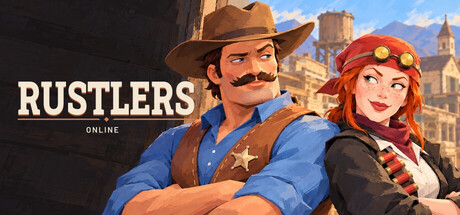
RUSTLERS is made by a small team with the help of generative AI tools. Every AI output was selected, edited and integrated into the game by the team.
Pre-generated AI content in the game and on this store page:
• Most character and weapon 3D models, generated with AI 3D tools and then cleaned up, rigged and adjusted by the team
• Some character animations
• Music, announcer and character voice lines, and some sound effects
• Promotional key art used in the menus and on the store page, including store page header images
• Store page text, drafted with AI assistance and edited by the team
Gameplay, game modes, maps and balancing are designed by the team. The game does not generate any AI content during gameplay.
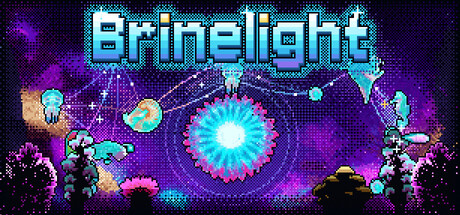
The game's graphics (zone backdrops) began as images rendered an image model we ran on our own computer. Our own tools then turned every render into pixel art. Nothing is generated while you play.
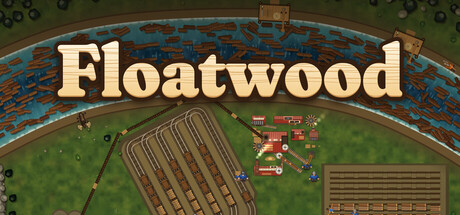
Every image in Floatwood is drawn by the game's own code: the forest, the river, the logs, the buildings, the workers, the user interface and the achievement icons are all rendered procedurally, NOT generated by an AI image model. The one exception is the Floatwood logo, which was created with the help of AI tools and then finished by hand. The English and Swedish text are written by a human but the other eighteen languages are translated using AI. All sound recordings are human-made.
Some of the 2D artwork in My Gaming Shop was created with the help of generative AI tools: textures, posters, product packaging and interface icons. Every generated image was reviewed, edited and integrated by hand, and none of it is produced while the game is running
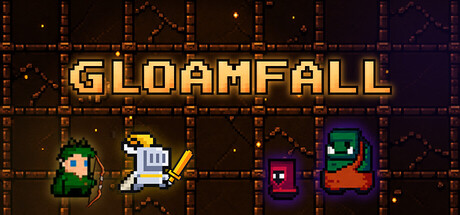
Gloamfall's in-game text (item, skill and enemy descriptions, lore and dialogue) and its translations into Spanish, Portuguese, Russian, Turkish and Indonesian were written with the help of generative AI tools under the developer's direction. The same goes for this store page's text, the trailer captions, the logo lettering and a few small sprites drawn in code. Characters, enemies, environments, music and sound effects come from credited asset packs. Nothing is generated by AI while you play.
Some of the artwork (store illustrations, capsules, icon and some in-game assets) was created with the help of generative AI tools and was reviewed and edited by the developer. The game does not generate any AI content in real time.
Generative AI was used to assist with selected textures, text, voice, and music. All such assets were reviewed and edited by the team before release. The game does not generate AI content during gameplay.
Generative AI tools were used in the developer's workflows to create many of the visual assets (both in the game and in promotion), as well as a small handful of audio assets (primarily music). These assets were then carefully reviewed, edited, modified and iterated on by the developers to match the style and artistic vision of the game. No content is generated by AI within the game.
The opening illustrations, the junk dealer's portraits and the achievement icons were made from still images created with generative AI, then converted into 32-color pixel art with our own tools. All in-game 3D models, materials, sound effects and music are generated procedurally in code without AI. The game does not generate any content with AI while running.
VTuberPro Workstation uses locally running AI models to separate user-provided character illustrations into avatar parts, reconstruct hidden areas, and estimate depth. The AI processing runs on the user's PC rather than an external AI service. Some pre-generated artwork, including the app icon and built-in accessories, and interface translations were created with AI assistance. Automatic results vary with the input artwork and may require manual editing.
Some store page text and placeholder store/achievement artwork were created with the help of AI tools. In-game art comes from licensed asset packs, and the music is composed by a human composer. No AI content is generated during gameplay.
I used AI to help with the design after my sketches.
There is no sudden changes. The music is a tone made in the codeing program I used.
The dog characters are made after my own dogs, and AI helped me with the designs
The pixel art (the forest, the creatures, the worlds, the icons and the store images) was generated with ChatGPT image generation and then adapted by hand-written tools to the game's palette and pixel grid. The story, the dialogue and the item texts were written with the help of an AI model (Claude). The game code, including the code that makes the music and sounds at run time, was written with the help of an AI model (Claude). The game generates no AI content while you play.
Character portraits, card illustrations, scene backgrounds, faction emblems,
card backs, and the store page capsule and trailer assets were pre-generated
with generative AI tools during development, then selected and post-processed
by hand. Background music was produced with an AI music platform under a full
commercial license. The game does not call any AI model at runtime and
contains no real-time generated content.
Some UI elements, the game icon, and store, library and marketing artwork were created with the help of generative AI. No content is generated by AI during gameplay.
AI tools were used during development to create pre-generated creature and environment artwork, character portraits and sound effects. The game uses authored assets and local gameplay logic; it does not generate content with AI or call generative AI services during play.
Some 3D prop models were generated with AI tools and then edited and optimized by our team. All other content is human-made.
Some translations were created with AI assistance.
Generative AI tools were used during development to assist in creating selected pre-generated visual artwork used in the game and Steam store. All such content was reviewed and curated before inclusion.
Parts of the 2D artwork in this game were created with the help of generative AI image tools and then edited by hand. Some of this artwork also appears in the store assets and screenshots. All other content, including the game's design, rules, sound effects and text, was created without generative AI. The game does not generate any content at runtime.
We use AI tools while developing our game. We generally use them to increase coding efficiency.
In addition, we use AI tools to create the game’s background music, 3D models of some buildings, and some images for the game’s store page.
Generally, we try to use the elements provided by AI tools only after customizing them to suit our specific needs.
Finally, we also use AI translation tools for the text in different languages within the game and on the store page.
Generative AI tools were used during development to create source artwork for some visual assets. These source images are curated and further processed, edited, pixelized, rigged, and/or manually adjusted before inclusion in the game. No generative AI is used at runtime, and no content is generated live for players.
I’m not a fan of generative AI, and I’ve tried to keep the game’s creative work human-made either by making things myself or by commissioning people.
I did use generative AI for a very small number of visual assets. An initial AI-generated concept was used for the game logo, which I redesigned and expanded myself. I also used AI assistance for a simple pattern used in the disco spotlight effect (literally just white circles on a black background), as well as for a couple of UI sprites.
So basically nothing you see is a product of "ChatGPT give me a steam capsule!". But because AI did have even the smallest part in the creation of these few assets I feel better sharing this with you instead of lying and saying I never used it.
I hope this doesn't stop you from playing the game since all the people that made material for it really put work and love into it.
Also, no AI is used to generate any content during gameplay.
Generative AI tools were used during development to assist in creating some 3D models, vector graphics, and sound effects, as well as to assist with programming and localization.
Some assets in this game were created with the help of generative AI tools during development. All such content is pre-generated: it was produced during development, reviewed and edited by the developer, and shipped as static files. The game does not call any AI model at runtime.
- Art: character standing illustrations and expressions, portraits, item icons, badges, chapter cards, key art, title backgrounds, UI backgrounds, HUD frames, window borders, button plates and rims, ground decals and ground textures were generated with OpenAI image models (gpt-image) and then hand-selected, cropped and colour-corrected by the developer.
- Video: the opening and ending cinematics, the animated chapter cards and title screen backgrounds, and the cinematic shots in the trailer were generated with a video model (ByteDance Seedance 2.0) from developer-authored keyframes and storyboards.
- Music: the cinematic scores were generated with ElevenLabs Music, and the trailer score with Google Lyria 3. The in-game background music was generated with Google Lyria 3 from developer-written prompts, then loop-edited and loudness-matched by the developer.
- Voice: all spoken dialogue lines and the narration of the opening and ending cinematics, in Korean, English and Spanish, are text-to-speech synthesised with Google Gemini 3.8 Flash TTS from scripts written by the developer. Every speaker uses the model's built-in voices; no real person's voice is cloned and no reference recording of any person was used. No AI model is called while the game is running.
- Expression tagging: during development a text model (gpt-6-luna) was used to pick which of the pre-made portrait expressions is shown for each dialogue line. It did not write or change any dialogue or other player-facing content.
- Translation: the English and Spanish text was translated from the developer's Korean script with Anthropic Claude.
Game design, the original Korean writing, level design, code and all gameplay systems are authored by the developer. Historical text quoted in game is public domain.
Generative AI was used during development to create music and sound effects and to assist with story dialogue, store descriptions, and marketing text. This content is prepared before release. AI coding tools were used extensively to generate and revise game code, including gameplay systems and procedural visuals, under human direction and review. The game does not generate AI content or connect to AI services during gameplay.
We use AI to create stylized versions of original artwork, generate character videos, and assist with translation and localization. These assets and translations are prepared during development. No AI content is generated during gameplay, and the game does not connect to external AI services during gameplay.
Generative AI tools were used to assist in the creation of very few selected pre generated visual assets and artwork. No AI generated content is created during game play.
AI tools were used during development: the code and the in-game writing were made with an AI assistant, and the store capsule and logo art were generated with an AI image tool and edited by the developer. The in-game pixel art and music are licensed packs by human artists; most sound effects come from licensed libraries, a few were made procedurally by the AI assistant.
Generative AI was used to assist in the creation most of visual assets and promotional materials. All generated content was reviewed and edited before being included in the game or its marketing materials.