Public Steam disclosure research25,376 disclosures tracked
Where do games disclose AI use?
Search developers’ Steam disclosures, compare classified AI use across
games, and follow recorded changes.
This index adds cross-game classifications and statistics to
statements published on individual store pages.
Groups reflect automatic analysis of public disclosures; mature records are excluded. These counts do not measure AI use across all of Steam.
Missing or unclear statements cannot establish whether a game uses AI.
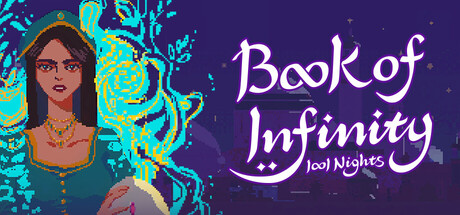
1001 Nights is a story-crafting game that started development as early as 2020, exploring creative narrative gameplay to bring players novel experiences they've never had before: telling stories and turning those stories into reality.All traditional game art assets are hand-crafted by our talented human artists. This includes character illustrations, scene models, UI elements, and all visual components that form the core aesthetic of our game. The game features an adaptive LLM-based storytelling system that responds to your unique inputs based on a language model called Qwen. Our narrative engine draws from the rich tradition of Persian folklore and our original hand-written story frameworks by paid writers, then dynamically adapts these materials to create personalized experiences based on your inputs. Each playthrough becomes a unique collaboration between you and our narrative system.Our guiding principle has always been to create gaming experiences that were previously impossible - where technology serves as a creative collaborator rather than a replacement for human imagination. The soul of 1001 Nights comes from our human creators, inspired by ancient Persian folklore and brought to life through innovative narrative systems.For technical details about our implementation and the academic research behind our systems, please refer to the in-game introduction, and our published papers available on our official website. We're a small indie team committed to pushing the boundaries of interactive storytelling while respecting both player creativity and artistic integrity.We welcome any questions or feedback about our creative process via adaeden1001[at]gmail[dot]com or through our Discord community. Your input helps us continue improving this unique storytelling experience.
We used AI service to make chatting with some NPCs in our game more fun and personalized for you. Your chat with the NPCs you can talk to will be periodic. You will have to wait for a while before you can talk to them again.
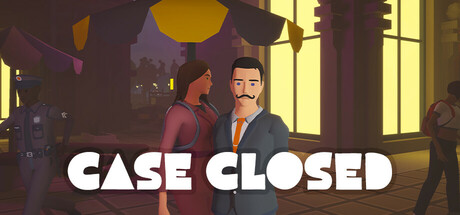
Our game leverages sophisticated artificial intelligence to create an immersive and unpredictable gameplay experience. Each citizen is powered by AI, enabling them to exhibit distinct personalities, react dynamically to player actions, and contribute uniquely to the mystery. This AI integration not only enhances the realism of the city environment but also ensures that no two playthroughs are the same, providing a fresh challenge every time.
Traditionally, NPCs (non-player characters) do not play active roles in video games. However, with the use of AI, they become the main characters of the game. Players can communicate with NPCs verbally through a microphone, and it is the AI that responds
* Contents below are copied from the game, the soundtrack does not use any Generative AI technology.
User will be able to talk in freeform with the NPCs within the game world according to the environment given to them.
Some of the evidence (photos on the wall, book covers) have been created using AI tools
This application allows usage of elevenlab's text to speech feature. Shall the user choose to use this feature, they should create an account over elevenlabs.com and import their API key. It's entirely optional and subject to both Noise-o-matic's EULA as well as elevenlab's EULA.
The TTS feature also uses Sherpa TTS. Some of the redistributable models available from Sherpa's project (https://github.com/k2-fsa/sherpa-onnx/releases/tag/asr-models) are downloadable in-app.
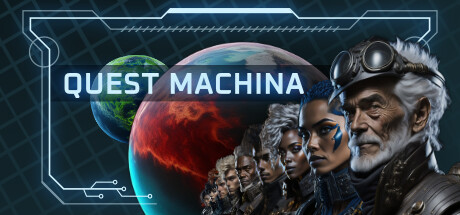
Quest Machina uses generative AI combined with your input to create a unique world just for you. Story, descriptions, and dialog are generated using OpenAI. Character portraits, planet sprites, and location art are generated using Leonardo.ai.
In this game Akpala, there is a feature that allows players to converse with NPC characters during gameplay.
For the responses to the player's voice input, we use AI-generated text.
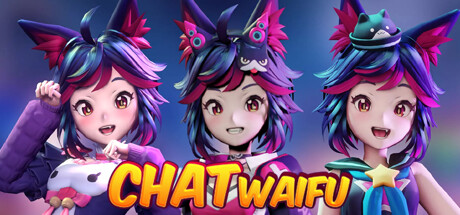
ChatWaifu does not include any large language models by default but supports importing custom large language model files by user. When interacting with the 3D character on the desktop via voice or keyboard input, ChatWaifu utilizes these models to generate and vocalize the conversation text.
The AI integrated into Mental creates a dynamic experience by automatically generating text, textures, sound, lighting, and gameplay mechanics. Each session offers unique stories, customized visual environments, and challenges adapted in real-time to your actions, ensuring a consistently fresh and immersive adventure.
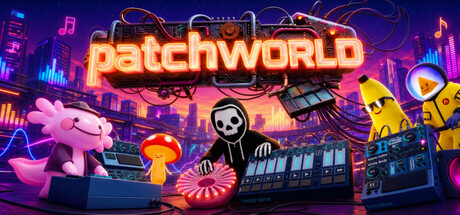
PatchWorld includes optional generative AI tools that players can use to create custom content for their worlds and devices.
Players can generate images, 360° skyboxes, 3D meshes, and audio samples by entering text prompts using in-game tools such as the GenieBox device or scripting blocks. Each generation is initiated directly by the player and takes a short amount of time to complete.
Generated content can be used to decorate worlds, create sound effects, and build custom musical instruments. By default, all generated content remains private to the creator and is only shared with others if the player chooses to publish their world.
Generative AI features are entirely optional and are designed to support creativity, experimentation, and collaborative world-building.
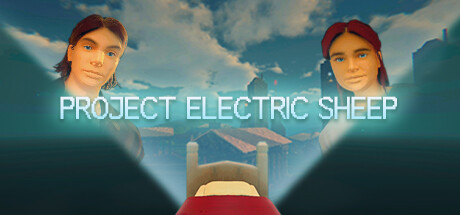
Project Electric Sheep uses generative AI to create character conversations inspired by your dream prompts, as well as to tailor dream worlds to your chosen topics. Below is some more information about which generative AI services we're using in PES, and how:
1. We use ChatGPT to generate NPC dialogue when dream worlds are created and when you reply to an NPC. We use AWS to generate voices for our NPCs.
2. We also use ChatGPT to write in-game world building details, such as graffiti and advertisements, as well as to create the dream description that displays on the dream loading screen.
3. We use DALL·E 2 to paint in-game murals inspired by your dream prompt.
4. Lastly, during the dream generation phase, we use ChatGPT to make creative decisions about world design based on the given dream prompt.
Players can create and modify games using text prompts. The game uses AI (LLM) to understand the player's request and then uses LLM to construct the game using a pre-defined asset library.
If your ingame choices are inconsistent or raise moral questions, you’ll have to justify them in writing. An AI will read your defense and decide whether it counts as a solution. Convince it — because its verdict carries real consequences in the game.
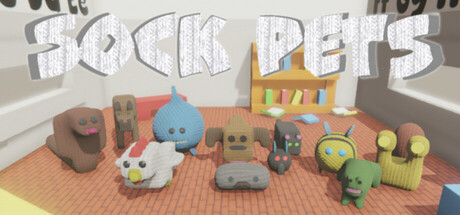
Uses AI engine to generate dialog with your Sock Pets, based off pre-scripted prompts, such as family-friendly and age-appropriate fun facts or jokes. No user-end prompting is allowed.
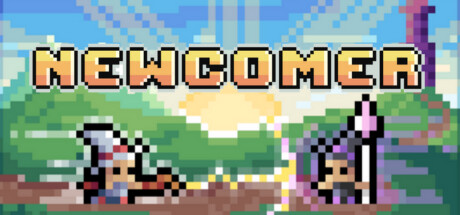
(Newcomer uses AI in a variety of contexts. If you have moral conundrums about AI usage or you do not want to use a resource with AI translations, I recommend finding learner/teacher curated non-AI resources. Thankyou!)
Text to speech (TTS): Newcomer uses text to speech to generate voices for anything the user or NPC might say.
Translations: Newcomer uses Google's Gemini to generate translations across all content (dialogue, stories, etc.) for all language pair combinations.
Grammar Explanations: Newcomer uses Google's Gemini to allow users to click on any word to receive a localized grammar explanation.
NPC Response Generation: Beginner mode dialogue is handcrafted and planned. However, the majority of NPC responses in intermediate mode are generated using Google Gemini. This allows Newcomer to handle any type of response the player might communicate.
Developer response: I am using AI primarily to help me provide the best RPG experience I can for as many language learners as possible while I continue to build the game. Thankyou! - Jason
Airtaxi Coach is an AI trained game character called Diana that is trained on the latest flight manuals, as well as the latest industry knowledge on airtaxis, flying cars and the future of mobility. You can ask her any question about the game Metapilot or flight in general, and she will help you navigate the game as well as help you to earn tokens in the game and earn cool perks! Metapilot perks include invited to events, tokens you can spend on our website, and even the chance to get training to become a real airtaxi pilot!
You engage in direct dialogue with artificial intelligence via a radio, which becomes a key element of the gameplay. Your conversations with the AI can directly influence the course of the story and the outcome of missions. The artificial intelligence, implemented using the advanced ChatGPT technology from OpenAI, is capable not only of conducting natural dialogues but also of exhibiting emotional reactions that alter its behavior and attitude towards the player.
The background of the games Steam Shop main capsule image is AI generated.
The game uses AI-generated voices for all characters where no voice actors are available yet. You can disable AI voices in the audio settings.
This game heavily uses AI to live-generate in-game content such as text, images, and sound effects. It also uses AI to make a variety of game mechanics decisions in real time.
The game features a small local language model used to generate dynamic storylines and events based on character traits and relationships. Generative AI is also used to assist in the creation of various 2D textures, marketing materials, portraits and UI elements.
This game uses a Large Language Model to help parse out in-game player character data (quests, allied factions, in-game world events, NPCs the player has interacted with, etc.) to customize quest objectives and reword hand written dialogue to fit that particular player character's playthrough.
Dialogue Generation: An on-board AI character named AURORA uses a local offline LLM to generate procedural dialogue in response to player actions or voice input. This allows for varied, context-sensitive replies that maintain the tone and lore of the game world.
Voice Interaction (optional): Players may speak to AURORA using voice recognition, which is then interpreted and processed to generate in-character responses, offering a more immersive narrative experience.
There are two A.I. Minds within BQ. The first mind creates the content/visuals. The second mind interacts with the player in the form of attackable NPCs or friendly NPCs. But both minds never communicate with each other, and the first mind never communicates with the player.
Regarding AI usage: The game employs AI in only two areas
1. Character voice lines (disabled by default)
The ultra-large script (800k words) makes authentic voice acting financially unaffordable for our small studio.
2. "Seek Answers" function in the game lobby’s Sosoth (NPC) interaction interface
For entertainment purposes, we used AI chat.
What we can guarantee: Beyond these, translation, scripts, design, art, animation, and other game components absolutely did not use AI.
Puzzle Together includes the option for players to generate puzzle images using generative AI. All AI-generated images are clearly marked "AI" in the puzzle library.
Super Sketchy Party is using optional Image Recognition AI to guess what a player drew. The result is then presented as an additional guess the other players can pick. Especially with a small party size this gives the players more options to choose from.
It not only rewards clear drawing skills but also encourages players to think outside the box with their guesses, as the AI handles the more predictable responses.
This game used AI to help quickly iterate through designs for some UI elements using our own artwork as a baseline. AI is also used to help translate the game; and is used for the AlienGPT custom species system using player inputs.
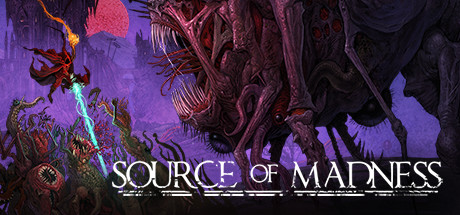
In Source of Madness, AI shapes the player experience by procedurally generating the Loam Lands, its monsters, and environments. Each encounter is unique, with neural-network-driven animations and behavior, ensuring that exploration, combat, and loot are always unpredictable and tailored to the player’s journey.
In-game patient responses are generated in real time with offline local language model. Game logo animation and part of game music samples/loops have been produced with tools utilizing generative technology.
By integrating OpenAI's technology, users can generate unique high-quality images that serve as components for their tabletop games. This feature requires a free external account created with your email address. The core application remains fully functional without registration.
Our team utilizes AI in a variety of ways to improve the quality of our game. Here are a few examples of how our team incorporates AI into our development process:
1. We use AI to translate dialogue, subtitles, and (more infrequently) music into a variety of different languages spoken by players of our game. This allows more players from different regions to enjoy playing Operation: Harsh Doorstop in their own language, and helps us reach more players throughout the world.
2. We utilize machine learning to help train our NPC bots, giving non-player characters more realistic and adaptive behavior on the battlefield.
3. We utilize AI to assist with finding bugs and other issues in the game, which our developers can then diagnose and fix.
We currently work with the RevoltGPT team to help us incorporate AI into our development workflows. If you're interested in learning more, you can visit their website at https://rvt.dev
A revolutionary new era in game development and entertainment, in Synthasia users can bring to life their stories or live those designed by others.
Multiple LLM models will be responsible of bringing to life a potentially infinite number of adventures.
In Synthasia players load "World files" which include locations and descriptions and other informations pertinent to the story they want to tell, LLMs will then take those elements and create a rich text adventure around them with lively characters and unscripted consequences. .
1001 Nights is a story-crafting game that started development as early as 2020, exploring creative narrative gameplay to bring players novel experiences they've never had before: telling stories and turning those stories into reality.All traditional game art assets are hand-crafted by our talented human artists. This includes character illustrations, scene models, UI elements, and all visual components that form the core aesthetic of our game. The game features an adaptive LLM-based storytelling system that responds to your unique inputs based on a language model called Qwen. Our narrative engine draws from the rich tradition of Persian folklore and our original hand-written story frameworks by paid writers, then dynamically adapts these materials to create personalized experiences based on your inputs. Each playthrough becomes a unique collaboration between you and our narrative system.Our guiding principle has always been to create gaming experiences that were previously impossible - where technology serves as a creative collaborator rather than a replacement for human imagination. The soul of 1001 Nights comes from our human creators, inspired by ancient Persian folklore and brought to life through innovative narrative systems.For technical details about our implementation and the academic research behind our systems, please refer to the in-game introduction, and our published papers available on our official website. We're a small indie team committed to pushing the boundaries of interactive storytelling while respecting both player creativity and artistic integrity.We welcome any questions or feedback about our creative process via adaeden1001[at]gmail[dot]com or through our Discord community. Your input helps us continue improving this unique storytelling experience.
We used AI service to make chatting with some NPCs in our game more fun and personalized for you. Your chat with the NPCs you can talk to will be periodic. You will have to wait for a while before you can talk to them again.
Our game leverages sophisticated artificial intelligence to create an immersive and unpredictable gameplay experience. Each citizen is powered by AI, enabling them to exhibit distinct personalities, react dynamically to player actions, and contribute uniquely to the mystery. This AI integration not only enhances the realism of the city environment but also ensures that no two playthroughs are the same, providing a fresh challenge every time.
Traditionally, NPCs (non-player characters) do not play active roles in video games. However, with the use of AI, they become the main characters of the game. Players can communicate with NPCs verbally through a microphone, and it is the AI that responds
* Contents below are copied from the game, the soundtrack does not use any Generative AI technology.
User will be able to talk in freeform with the NPCs within the game world according to the environment given to them.
Some of the evidence (photos on the wall, book covers) have been created using AI tools
This application allows usage of elevenlab's text to speech feature. Shall the user choose to use this feature, they should create an account over elevenlabs.com and import their API key. It's entirely optional and subject to both Noise-o-matic's EULA as well as elevenlab's EULA.
The TTS feature also uses Sherpa TTS. Some of the redistributable models available from Sherpa's project (https://github.com/k2-fsa/sherpa-onnx/releases/tag/asr-models) are downloadable in-app.
Quest Machina uses generative AI combined with your input to create a unique world just for you. Story, descriptions, and dialog are generated using OpenAI. Character portraits, planet sprites, and location art are generated using Leonardo.ai.
In this game Akpala, there is a feature that allows players to converse with NPC characters during gameplay.
For the responses to the player's voice input, we use AI-generated text.
ChatWaifu does not include any large language models by default but supports importing custom large language model files by user. When interacting with the 3D character on the desktop via voice or keyboard input, ChatWaifu utilizes these models to generate and vocalize the conversation text.
The AI integrated into Mental creates a dynamic experience by automatically generating text, textures, sound, lighting, and gameplay mechanics. Each session offers unique stories, customized visual environments, and challenges adapted in real-time to your actions, ensuring a consistently fresh and immersive adventure.
PatchWorld includes optional generative AI tools that players can use to create custom content for their worlds and devices.
Players can generate images, 360° skyboxes, 3D meshes, and audio samples by entering text prompts using in-game tools such as the GenieBox device or scripting blocks. Each generation is initiated directly by the player and takes a short amount of time to complete.
Generated content can be used to decorate worlds, create sound effects, and build custom musical instruments. By default, all generated content remains private to the creator and is only shared with others if the player chooses to publish their world.
Generative AI features are entirely optional and are designed to support creativity, experimentation, and collaborative world-building.
Project Electric Sheep uses generative AI to create character conversations inspired by your dream prompts, as well as to tailor dream worlds to your chosen topics. Below is some more information about which generative AI services we're using in PES, and how:
1. We use ChatGPT to generate NPC dialogue when dream worlds are created and when you reply to an NPC. We use AWS to generate voices for our NPCs.
2. We also use ChatGPT to write in-game world building details, such as graffiti and advertisements, as well as to create the dream description that displays on the dream loading screen.
3. We use DALL·E 2 to paint in-game murals inspired by your dream prompt.
4. Lastly, during the dream generation phase, we use ChatGPT to make creative decisions about world design based on the given dream prompt.
Players can create and modify games using text prompts. The game uses AI (LLM) to understand the player's request and then uses LLM to construct the game using a pre-defined asset library.
If your ingame choices are inconsistent or raise moral questions, you’ll have to justify them in writing. An AI will read your defense and decide whether it counts as a solution. Convince it — because its verdict carries real consequences in the game.
Uses AI engine to generate dialog with your Sock Pets, based off pre-scripted prompts, such as family-friendly and age-appropriate fun facts or jokes. No user-end prompting is allowed.
(Newcomer uses AI in a variety of contexts. If you have moral conundrums about AI usage or you do not want to use a resource with AI translations, I recommend finding learner/teacher curated non-AI resources. Thankyou!)
Text to speech (TTS): Newcomer uses text to speech to generate voices for anything the user or NPC might say.
Translations: Newcomer uses Google's Gemini to generate translations across all content (dialogue, stories, etc.) for all language pair combinations.
Grammar Explanations: Newcomer uses Google's Gemini to allow users to click on any word to receive a localized grammar explanation.
NPC Response Generation: Beginner mode dialogue is handcrafted and planned. However, the majority of NPC responses in intermediate mode are generated using Google Gemini. This allows Newcomer to handle any type of response the player might communicate.
Developer response: I am using AI primarily to help me provide the best RPG experience I can for as many language learners as possible while I continue to build the game. Thankyou! - Jason
Airtaxi Coach is an AI trained game character called Diana that is trained on the latest flight manuals, as well as the latest industry knowledge on airtaxis, flying cars and the future of mobility. You can ask her any question about the game Metapilot or flight in general, and she will help you navigate the game as well as help you to earn tokens in the game and earn cool perks! Metapilot perks include invited to events, tokens you can spend on our website, and even the chance to get training to become a real airtaxi pilot!
You engage in direct dialogue with artificial intelligence via a radio, which becomes a key element of the gameplay. Your conversations with the AI can directly influence the course of the story and the outcome of missions. The artificial intelligence, implemented using the advanced ChatGPT technology from OpenAI, is capable not only of conducting natural dialogues but also of exhibiting emotional reactions that alter its behavior and attitude towards the player.
The background of the games Steam Shop main capsule image is AI generated.
The game uses AI-generated voices for all characters where no voice actors are available yet. You can disable AI voices in the audio settings.
This game heavily uses AI to live-generate in-game content such as text, images, and sound effects. It also uses AI to make a variety of game mechanics decisions in real time.
The game features a small local language model used to generate dynamic storylines and events based on character traits and relationships. Generative AI is also used to assist in the creation of various 2D textures, marketing materials, portraits and UI elements.
This game uses a Large Language Model to help parse out in-game player character data (quests, allied factions, in-game world events, NPCs the player has interacted with, etc.) to customize quest objectives and reword hand written dialogue to fit that particular player character's playthrough.
Dialogue Generation: An on-board AI character named AURORA uses a local offline LLM to generate procedural dialogue in response to player actions or voice input. This allows for varied, context-sensitive replies that maintain the tone and lore of the game world.
Voice Interaction (optional): Players may speak to AURORA using voice recognition, which is then interpreted and processed to generate in-character responses, offering a more immersive narrative experience.
There are two A.I. Minds within BQ. The first mind creates the content/visuals. The second mind interacts with the player in the form of attackable NPCs or friendly NPCs. But both minds never communicate with each other, and the first mind never communicates with the player.
Regarding AI usage: The game employs AI in only two areas
1. Character voice lines (disabled by default)
The ultra-large script (800k words) makes authentic voice acting financially unaffordable for our small studio.
2. "Seek Answers" function in the game lobby’s Sosoth (NPC) interaction interface
For entertainment purposes, we used AI chat.
What we can guarantee: Beyond these, translation, scripts, design, art, animation, and other game components absolutely did not use AI.
Puzzle Together includes the option for players to generate puzzle images using generative AI. All AI-generated images are clearly marked "AI" in the puzzle library.
Super Sketchy Party is using optional Image Recognition AI to guess what a player drew. The result is then presented as an additional guess the other players can pick. Especially with a small party size this gives the players more options to choose from.
It not only rewards clear drawing skills but also encourages players to think outside the box with their guesses, as the AI handles the more predictable responses.
This game used AI to help quickly iterate through designs for some UI elements using our own artwork as a baseline. AI is also used to help translate the game; and is used for the AlienGPT custom species system using player inputs.
In Source of Madness, AI shapes the player experience by procedurally generating the Loam Lands, its monsters, and environments. Each encounter is unique, with neural-network-driven animations and behavior, ensuring that exploration, combat, and loot are always unpredictable and tailored to the player’s journey.
In-game patient responses are generated in real time with offline local language model. Game logo animation and part of game music samples/loops have been produced with tools utilizing generative technology.
By integrating OpenAI's technology, users can generate unique high-quality images that serve as components for their tabletop games. This feature requires a free external account created with your email address. The core application remains fully functional without registration.
Our team utilizes AI in a variety of ways to improve the quality of our game. Here are a few examples of how our team incorporates AI into our development process:
1. We use AI to translate dialogue, subtitles, and (more infrequently) music into a variety of different languages spoken by players of our game. This allows more players from different regions to enjoy playing Operation: Harsh Doorstop in their own language, and helps us reach more players throughout the world.
2. We utilize machine learning to help train our NPC bots, giving non-player characters more realistic and adaptive behavior on the battlefield.
3. We utilize AI to assist with finding bugs and other issues in the game, which our developers can then diagnose and fix.
We currently work with the RevoltGPT team to help us incorporate AI into our development workflows. If you're interested in learning more, you can visit their website at https://rvt.dev
A revolutionary new era in game development and entertainment, in Synthasia users can bring to life their stories or live those designed by others.
Multiple LLM models will be responsible of bringing to life a potentially infinite number of adventures.
In Synthasia players load "World files" which include locations and descriptions and other informations pertinent to the story they want to tell, LLMs will then take those elements and create a rich text adventure around them with lively characters and unscripted consequences. .