Public Steam disclosure research25,383 disclosures tracked
Where do games disclose AI use?
Search developers’ Steam disclosures, compare classified AI use across
games, and follow recorded changes.
This index adds cross-game classifications and statistics to
statements published on individual store pages.
Groups reflect automatic analysis of public disclosures; mature records are excluded. These counts do not measure AI use across all of Steam.
Missing or unclear statements cannot establish whether a game uses AI.
All spoken voice lines in the game were created using AI text-to-speech (ElevenLabs) from scripts written by the developer. The generated audio was selected, edited and mixed by hand. Some sound effects use licensed stock audio. The game does not generate any content live at runtime — all AI-assisted content is pre-generated and reviewed before shipping.
Character portraits and environment artwork were generated using AI tools and reviewed, curated, and refined by the developer for final use. Narrator voice acting was generated using AI voice synthesis, directed and selected by the developer.
Marketing and Store Visuals: AI tools were utilized during the concept design and background detailing phases for the thumbnail images, posters, and promotional materials on the Steam store page.
Sound Design and Trailer Music: AI-powered sound and music production tools were used in the prototyping and production processes for the game’s promotional trailers and in-game atmospheric background sounds.
Text and Localization Support: AI assistants were used to edit store page descriptions, marketing copy, and language optimization.
We use AI to polish and iterate on the human prepared concepts, textures, sometimes the achieved final version is used in game.
For game code, occasionally, we use a reliable snippet based generation, reviewed and ebmedded into the game by developers, for maximum stability.
Some of the artwork in this game was created with the help of generative AI during development. Every asset was reviewed, edited and approved by hand before shipping. Nothing is generated at runtime, and no player data is sent to any AI service. The computer opponents in the game use traditional rule-based decision logic and are unrelated to generative AI.
WICKLING was built with AI assistance. Generative AI was used during development to help write the game's code, its pixel art, its level layouts and some of its writing, and to help produce this store page and its artwork.
The soundtrack is not AI-generated. Every note is a hand-written 2A03 chiptune, synthesised by the game as it runs rather than played back from audio files, which is why the horror systems can bend the music live.
Nothing in WICKLING is generated while you play. Every level, sprite, line of text and piece of music is fixed and identical for every player, and the game makes no network requests of any kind.
Setlist Shuffle ships two categories of pre-generated, player-facing AI content. They are the card illustrations and the genre music tracks.
Both sets were reviewed and hand-selected before release and ship as fixed assets. No content is generated live during play, and the game contains no AI-driven chat or dialogue.
Everything else is not AI-generated: the achievement icons are hand-drawn vectors, and all game text, design and simulation logic are the developer's own.
Some 2D art in this game was created with the assistance of AI image generation tools and then curated, pixel-processed and hand-corrected by the developer: backgrounds, story cutscene illustrations, card art, the title logo, and the Steam store assets. All game design, systems, balance, code and the original Korean script were written by the developer. The nine non-Korean localizations were produced with AI translation assistance and then reviewed and corrected in-game. The game does not generate any content with AI while you play, and it never connects to an AI service.
Generative AI tools were used during development to assist in creating some environmental artwork, textures, and 3D models. The generated assets were subsequently selected, edited, optimized, and integrated into the game by the developer. No generative AI is used during gameplay.
Ai-assisted tools were used during development for programming support. Some visuals and audio were created through developer-directed, deterministic code and exported as fixed assets—not generated by image, video, or audio models. Screenshots and trailers show actual gameplay footage.
AI tools were used during development to assist with code, artwork, music, and other production tasks. All creative direction, design decisions, implementation, integration, testing, and final selection of content were handled by the developer.
Generative AI supported the creation of selected pre-generated visual assets, music, narrative drafts, and localized text. All AI-assisted materials were reviewed, edited, and integrated to match the game’s original world, tone, and creative direction.
Generative AI was used during development to create and refine some pre-generated artwork, character animation source material, written content, localization, and marketing scenes. All such content was reviewed, selected, and fixed before release. The game does not generate content with AI during play and does not include AI chat.
The game will connect to an open-source local large language model that is already built into the game upon first launch, and use it during gameplay to generate NPC dialogues, host responses, and reasoning review feedback. Players may also choose to access compatible third‑party large language model APIs. The text generated at runtime is based on player questions and current story data.
Some pre-generated visual assets in the game were created or assisted with generative AI tools, including environment artwork, interface illustrations, textures, and source material used for certain 3D assets. All such material was reviewed, edited, integrated, and tested by the developer. The game does not generate AI content during gameplay or connect to external AI services while running.
During the development of Cash & Stash: A Vaultkeeper Story, we used tools that include AI-assisted features to help streamline production. However, no game content was created using generative AI.
Pre-generated AI tools were used for in-game character voice dubbing (such as voicemails and phone calls) as well as textures for interior framed pictures and props. All assets have been thoroughly reviewed to ensure there are no copyright infringements or unlawful elements.
The games code is made by AI, but everything else is made by the creator (story, models, design, animations, some textures and other stuff) and some assets are made by real people NOT AI (credits are in the end of the game)
Starflare Dominion uses generative AI in two ways. Some visual assets, music, and sound effects were created with assistance from generative AI tools and were selected, edited, processed, and integrated by Whimstead LLC. During Story play, hosted OpenAI models may generate bounded narrative text, including pilot backgrounds, quotes, Cantina news, Old Man Rich stories, campaign consequences, and final legends. Players do not directly prompt an unrestricted chatbot. Generated text is checked by structured rules and validators, with retries and curated local fallback content when needed.
Some of the text in this product was drafted with generative AI and then edited by the developer: parts of this store page description and some in-game text. Parts of the source code were also written with AI coding assistance and reviewed by hand.
The art, 3D models, animation and audio in this game are not AI-generated, and no generative AI runs while you play.
Generative AI was used during development to create some character, environment, and prop models, as well as music, sound effects, character voiceovers, and UI assets. These AI-generated assets were subsequently edited and refined by the development team before being integrated into the game.
Our team used AI tools to assist with improving some existing sketches and character elements, creating some background elements, and producing/ improving translations and character voices.
The vast majority of the game was created by our team without AI.
Generating base images and materials for certain environmental textures (such as doors and labels), which are then manually edited, dithered, and color-crushed to fit the game's low-poly PSX aesthetic.
Generating video clips, audio, and visual concepts for the television broadcasts (like the in-game cooking shows) that play on CRT monitors throughout the world.
This game uses AI-assisted tools during the development process to support the solo developer's workflow:
- 2D Art & Textures: Some background textures, UI elements, and concept art references were initially drafted using AI tools, followed by extensive manual repainting, editing, and refinement. All character designs, 3D models, are fully crafted and hand-painted by human artists. The story context is designed by myself.
- Audio: Certain background music tracks and ambient prototypes were generated with AI assistance. Character voice acting in story and core themes are produced by human creators.
No real-time (live-generated) AI is used during runtime.
Generative AI tools were used during the creation of some visual materials for the game. These materials were subsequently manually edited, refined, and adapted to match the project’s visual style. The game does not generate AI content during gameplay.
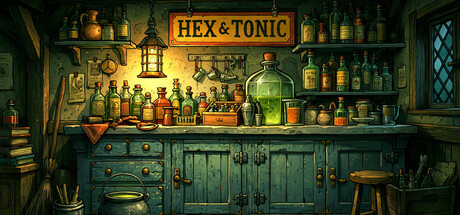
I am a professional artist who lost the majority of my vision many years ago. Now legally blind, I use AI to generate base images and I create what I call "Hybrid Art", in which I combine my own art and skills with the generations to still create art that I love. This technique has been used in Hex & Tonic for card art, store page art, etc. I hope it brings you as much joy as I got creating for you.
Program code, UI text, the thirteen-language interface localization and store page copy were produced with the assistance of generative AI tools. The character model was hand-made by a 3D artist; environment models, music and sound effects come from credited human authors and licensed asset packs; all screenshots and promotional images are rendered in-engine. No AI-generated imagery or audio is included.
The area background artwork in this game is based on images created with a generative AI tool. This covers 96 images across six themes; the generated images were reviewed, selected, and processed into the game's format during development. Some title logos were produced the same way and then post-processed.
All other assets — cell graphics, clouds, sound effects, background music, planet textures, and the app icon — are generated procedurally in code and do not use AI.
No AI runs while the game is playing.
3D character and prop models, their textures, and pre-rendered cutscene video clips were created with generative AI tools. Character voice lines were synthesized with AI text-to-speech. Dialogue and story text were written with AI assistance. All AI-generated content is pre-rendered; nothing is generated during gameplay.
All spoken voice lines in the game were created using AI text-to-speech (ElevenLabs) from scripts written by the developer. The generated audio was selected, edited and mixed by hand. Some sound effects use licensed stock audio. The game does not generate any content live at runtime — all AI-assisted content is pre-generated and reviewed before shipping.
Character portraits and environment artwork were generated using AI tools and reviewed, curated, and refined by the developer for final use. Narrator voice acting was generated using AI voice synthesis, directed and selected by the developer.
Marketing and Store Visuals: AI tools were utilized during the concept design and background detailing phases for the thumbnail images, posters, and promotional materials on the Steam store page.
Sound Design and Trailer Music: AI-powered sound and music production tools were used in the prototyping and production processes for the game’s promotional trailers and in-game atmospheric background sounds.
Text and Localization Support: AI assistants were used to edit store page descriptions, marketing copy, and language optimization.
We use AI to polish and iterate on the human prepared concepts, textures, sometimes the achieved final version is used in game.
For game code, occasionally, we use a reliable snippet based generation, reviewed and ebmedded into the game by developers, for maximum stability.
Some of the artwork in this game was created with the help of generative AI during development. Every asset was reviewed, edited and approved by hand before shipping. Nothing is generated at runtime, and no player data is sent to any AI service. The computer opponents in the game use traditional rule-based decision logic and are unrelated to generative AI.
WICKLING was built with AI assistance. Generative AI was used during development to help write the game's code, its pixel art, its level layouts and some of its writing, and to help produce this store page and its artwork.
The soundtrack is not AI-generated. Every note is a hand-written 2A03 chiptune, synthesised by the game as it runs rather than played back from audio files, which is why the horror systems can bend the music live.
Nothing in WICKLING is generated while you play. Every level, sprite, line of text and piece of music is fixed and identical for every player, and the game makes no network requests of any kind.
Setlist Shuffle ships two categories of pre-generated, player-facing AI content. They are the card illustrations and the genre music tracks.
Both sets were reviewed and hand-selected before release and ship as fixed assets. No content is generated live during play, and the game contains no AI-driven chat or dialogue.
Everything else is not AI-generated: the achievement icons are hand-drawn vectors, and all game text, design and simulation logic are the developer's own.
Some 2D art in this game was created with the assistance of AI image generation tools and then curated, pixel-processed and hand-corrected by the developer: backgrounds, story cutscene illustrations, card art, the title logo, and the Steam store assets. All game design, systems, balance, code and the original Korean script were written by the developer. The nine non-Korean localizations were produced with AI translation assistance and then reviewed and corrected in-game. The game does not generate any content with AI while you play, and it never connects to an AI service.
Generative AI tools were used during development to assist in creating some environmental artwork, textures, and 3D models. The generated assets were subsequently selected, edited, optimized, and integrated into the game by the developer. No generative AI is used during gameplay.
Ai-assisted tools were used during development for programming support. Some visuals and audio were created through developer-directed, deterministic code and exported as fixed assets—not generated by image, video, or audio models. Screenshots and trailers show actual gameplay footage.
AI tools were used during development to assist with code, artwork, music, and other production tasks. All creative direction, design decisions, implementation, integration, testing, and final selection of content were handled by the developer.
Generative AI supported the creation of selected pre-generated visual assets, music, narrative drafts, and localized text. All AI-assisted materials were reviewed, edited, and integrated to match the game’s original world, tone, and creative direction.
Generative AI was used during development to create and refine some pre-generated artwork, character animation source material, written content, localization, and marketing scenes. All such content was reviewed, selected, and fixed before release. The game does not generate content with AI during play and does not include AI chat.
The game will connect to an open-source local large language model that is already built into the game upon first launch, and use it during gameplay to generate NPC dialogues, host responses, and reasoning review feedback. Players may also choose to access compatible third‑party large language model APIs. The text generated at runtime is based on player questions and current story data.
Some pre-generated visual assets in the game were created or assisted with generative AI tools, including environment artwork, interface illustrations, textures, and source material used for certain 3D assets. All such material was reviewed, edited, integrated, and tested by the developer. The game does not generate AI content during gameplay or connect to external AI services while running.
During the development of Cash & Stash: A Vaultkeeper Story, we used tools that include AI-assisted features to help streamline production. However, no game content was created using generative AI.
Pre-generated AI tools were used for in-game character voice dubbing (such as voicemails and phone calls) as well as textures for interior framed pictures and props. All assets have been thoroughly reviewed to ensure there are no copyright infringements or unlawful elements.
The games code is made by AI, but everything else is made by the creator (story, models, design, animations, some textures and other stuff) and some assets are made by real people NOT AI (credits are in the end of the game)
Starflare Dominion uses generative AI in two ways. Some visual assets, music, and sound effects were created with assistance from generative AI tools and were selected, edited, processed, and integrated by Whimstead LLC. During Story play, hosted OpenAI models may generate bounded narrative text, including pilot backgrounds, quotes, Cantina news, Old Man Rich stories, campaign consequences, and final legends. Players do not directly prompt an unrestricted chatbot. Generated text is checked by structured rules and validators, with retries and curated local fallback content when needed.
Some of the text in this product was drafted with generative AI and then edited by the developer: parts of this store page description and some in-game text. Parts of the source code were also written with AI coding assistance and reviewed by hand.
The art, 3D models, animation and audio in this game are not AI-generated, and no generative AI runs while you play.
Generative AI was used during development to create some character, environment, and prop models, as well as music, sound effects, character voiceovers, and UI assets. These AI-generated assets were subsequently edited and refined by the development team before being integrated into the game.
Our team used AI tools to assist with improving some existing sketches and character elements, creating some background elements, and producing/ improving translations and character voices.
The vast majority of the game was created by our team without AI.
Generating base images and materials for certain environmental textures (such as doors and labels), which are then manually edited, dithered, and color-crushed to fit the game's low-poly PSX aesthetic.
Generating video clips, audio, and visual concepts for the television broadcasts (like the in-game cooking shows) that play on CRT monitors throughout the world.
This game uses AI-assisted tools during the development process to support the solo developer's workflow:
- 2D Art & Textures: Some background textures, UI elements, and concept art references were initially drafted using AI tools, followed by extensive manual repainting, editing, and refinement. All character designs, 3D models, are fully crafted and hand-painted by human artists. The story context is designed by myself.
- Audio: Certain background music tracks and ambient prototypes were generated with AI assistance. Character voice acting in story and core themes are produced by human creators.
No real-time (live-generated) AI is used during runtime.
Generative AI tools were used during the creation of some visual materials for the game. These materials were subsequently manually edited, refined, and adapted to match the project’s visual style. The game does not generate AI content during gameplay.
I am a professional artist who lost the majority of my vision many years ago. Now legally blind, I use AI to generate base images and I create what I call "Hybrid Art", in which I combine my own art and skills with the generations to still create art that I love. This technique has been used in Hex & Tonic for card art, store page art, etc. I hope it brings you as much joy as I got creating for you.
Program code, UI text, the thirteen-language interface localization and store page copy were produced with the assistance of generative AI tools. The character model was hand-made by a 3D artist; environment models, music and sound effects come from credited human authors and licensed asset packs; all screenshots and promotional images are rendered in-engine. No AI-generated imagery or audio is included.
The area background artwork in this game is based on images created with a generative AI tool. This covers 96 images across six themes; the generated images were reviewed, selected, and processed into the game's format during development. Some title logos were produced the same way and then post-processed.
All other assets — cell graphics, clouds, sound effects, background music, planet textures, and the app icon — are generated procedurally in code and do not use AI.
No AI runs while the game is playing.
3D character and prop models, their textures, and pre-rendered cutscene video clips were created with generative AI tools. Character voice lines were synthesized with AI text-to-speech. Dialogue and story text were written with AI assistance. All AI-generated content is pre-rendered; nothing is generated during gameplay.