Public Steam disclosure research25,383 disclosures tracked
Where do games disclose AI use?
Search developers’ Steam disclosures, compare classified AI use across
games, and follow recorded changes.
This index adds cross-game classifications and statistics to
statements published on individual store pages.
Groups reflect automatic analysis of public disclosures; mature records are excluded. These counts do not measure AI use across all of Steam.
Missing or unclear statements cannot establish whether a game uses AI.
Temporary images for furniture and clothing icons within the game, some promotional materials and banners, text translation, and some temporary sound files were created using AI. All in-game content will be replaced with human-made work before the game’s release.
Ultimate Jam uses generative AI for all coding and select pre-made assets (announcer voice and/or music), created from robot-human-written scripts and prompts, then edited by the team. Gameplay, controls, and AI opponents use traditional code — not generative AI. Nothing is generated live while you play.
Generative AI technology is used in a supplementary capacity during the localization of select languages. Any such languages are indicated in the in-game language selection menu.
Generative AI was used to assist with drafts of some visual, audio, narrative, and localization assets, as well as marketing materials. All AI-assisted content was reviewed, edited, and finalized manually by the developer.
The game does not generate AI content during gameplay and does not connect to any external AI service.
Generative AI was utilized exclusively during development to assist with writing and optimizing code. The game does not contain any AI-generated art, music, or other in-game assets.
Generative AI is used for a single feature: to allow players to create a custom illustration of their character reflecting their personalized appearance and equipped items for in-game use. There is no other use of Generative AI assets in MapleStory.
We use generative AI tools to help create some pre-rendered 2D artwork, such as logo and promotional/marketing images. All such content is reviewed and edited by us before use. The game itself contains no live-generated AI content during gameplay.
Generative AI tools were used during the development of certain visual and promotional assets for this game. All final content was reviewed and curated by the developer.
This game was developed by a solo developer with the assistance of generative AI tools in areas including programming logic, visual asset creation, and music and sound effects. Not all content was AI-generated — game design, mechanics, systems, level structure, and overall creative direction were conceived and built by the developer. All AI-assisted content was curated, directed, and refined to serve the game's creative vision.
Generative AI tools were used during development to assist in the creation of selected textures, 3D models, 2D graphics, and written text used in the game and on the Steam store page. All AI-assisted assets and text were manually reviewed, edited, and integrated by the developer before release. The game does not use generative AI during gameplay and does not generate live content for players.
We use AI-assisted tools in parts of our development process to assist with content creation, improve productivity, and streamline routine tasks so our team has more time for creative work. Where we use these tools, the work is directed, reviewed, and finalized by our team.
Network Engineer leverages generative artificial intelligence to enhance gameplay immersion and realism. AI-driven systems dynamically simulate customer behavior, hardware issues, and environmental challenges, creating unique scenarios and ensuring no two playthroughs are alike. Your feedback will help refine these systems!
Some assets within the game are generated with the help of AI, this includes but is not limited to:
- Contracts (Company Names, Locations etc.)
- Hardware Names (For the networking device)
- Company Logos
Some temporary placeholder visuals currently used in the game were created with the help of AI-assisted image generation tools. These assets are only used during early development and will gradually be replaced with original or professionally refined artwork.
VoidCraft uses generative AI in two ways. During development, AI tools assisted in creating written content that ships with the game (lore, item and research descriptions, mission templates, NPC flavour text) and in exploring marketing artwork concepts; all of it was reviewed by the developer before inclusion. During gameplay, two features generate text live using large language models: the optional in-game Advisor, which analyses your empire and offers strategy advice in character, and contract mission briefings (titles, short stories, and NPC names) on station contract boards. Players cannot type free-form prompts into these systems - the AI receives only structured game-state data assembled by our servers, and every output is validated server-side before it appears in the game. Core gameplay (combat, economy, progression, rewards) is governed by deterministic game rules, not by AI.
Finesse uses generative AI tools for select pre-generated content created during development:
- Meshy — 3D model generation for some character and environment assets
- ElevenLabs — voice line generation for in-game audio
- Suno — music track generation for soundtrack and ambient audio
- Anthropic Claude — assistance with in-game text content (descriptions, narrative copy)
All AI-generated content is pre-rendered during development and shipped as static assets. No generative AI runs at runtime; nothing is generated live or unique per player. All AI outputs are reviewed, edited, and curated by the developer before being included in the final game.
AI is used on an ad hoc basis for: 3D model texturing, code assistance, and references for asset modeling. It does not affect gameplay or interactive content.
Generative AI were used to assist in the creation of assets, and artwork. All generated content was reviewed and modified by the developers before inclusion in the final game.
AI tools were used during development to assist with code review, debugging, and localization. The game does not use generative AI during gameplay. Music is generated in real time using procedural audio systems and custom algorithms.
Village Coop Clicker is a small hobby project created with extensive use of AI-assisted tools for programming, artwork, audio, localization, and store assets.
The game design, balancing, progression systems, and overall creative direction were created and curated manually by the developer.
AI tools were used to assist with some code development and selected Steam store page text. The core game design, gameplay, and creative direction are created by the development team. No live generative AI content is created during gameplay.
Some in-game audio, including phone call voices and ambient sounds, were generated using AI tools. Additionally, certain stickers and visual assets found in the Cancer's living area were created with the assistance of generative AI.
AI Generated Content Disclosure
The developers describe how their game uses AI Generated Content like this:
Generative AI tools were used in limited cases during the production of certain game assets. AI-generated content was not used as-is, and any such assets were revised, refined, and finalized by our art and development teams to ensure they meet our quality standards and creative direction.
Generative AI tools were used to assist in the creation of some music, sound effects, and promotional artwork associated with the game. The game's programming, design, and in-game visual content were created by the developer.
I use AI tools to assist with code review, translations, Steam capsule design, and music production tasks. All final game design, programming, and implementation decisions are made, reviewed, and supervised by me.
Small quantity of images/textures are ai-generated.
Small quantity of sound waves are ai-generated.
Some parts of code are ai-genereted and ai-assissted always tested by a human.
I used AI to generate much of the code for this game. I did a lot of reviewing and tweaking the code, but a large portion of the core code for the game was generated by AI.
The AI also generate the player and enemy "models". I had them generate to game scene files (tscn files in Godot) which are just simple text files. I tweaked many of them after initial generation.
I also used AI to generate the various store page and icon art, and 4 images that are findable in the game as items
AI was not used for the music in game, or the various art assets and SFX not mentioned above.
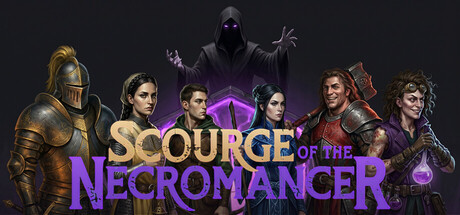
Scourge of the Necromancer makes significant use of generative AI in its production. We want to be fully upfront about it.
Visual assets (2D images + video) — all AI-generated, then human-curated and human-edited. Every shipped image and video in the game and on the Steam store page was produced with AI tools, then reviewed, edited, and selected by hand by the developer. This covers: Steam store capsules and library art, the store-page background, all in-game achievement icons, hero portraits, the Necromancer concept art, decorative UI elements, all real-time cinematics (the defeat sequence and all victory variants), and the marketing trailer's atmospheric segments. Image models used: Google Imagen 4, Google Veo 3.1 (video), Nano Banana Pro / Gemini 3 Pro Image (Google), Black Forest Labs FLUX.2, Recraft V4 Pro, Ideogram V3, and Bria RMBG-2.0 (background removal). Final assets received human editing — compositing, color correction, retouching, frame extraction, masking, and rejection of unusable outputs.
3D models — AI-generated base meshes, then human-edited in Blender. The in-game hero character models (Knight, Cleric, Ranger, Wizard, Warrior, Alchemist) started as outputs from Tripo AI's generative 3D model service (FBX + texture PNGs), but each model was then opened in Blender by the developer for hand editing — mesh cleanup, geometry adjustments, and texture fixes — before being exported for use in the game. Each finished model was imported into Unity with hand-tuned scale, rotation, material configuration, and import-setting curation. Unsatisfactory generations were discarded and re-prompted; the Blender editing step is substantial enough that the shipped models are not pure AI output.
Music — AI-generated, then human-curated and post-processed. All music tracks in the game (menu, gameplay layers, boss phases, victory, defeat) were produced with Google Gemini's music generation, then human-selected, trimmed, looped, and mixed by the developer.
Necromancer voice — AI-generated, then human-edited. The Necromancer's spoken syllables were synthesized with ElevenLabs Text-to-Speech (Eleven Multilingual v2 model), then pitch-shifted, EQ'd, and processed with reverb in Audacity by the developer to produce the final in-game delivery. No other character has spoken voice lines in the shipped game.
Sound effects — all AI-generated. Every SFX in the game (ability sounds, ambient layers, UI sounds, footsteps, kill/spawn cues, tile state cues, boss audio) was produced with ElevenLabs Sound Effects, then human-selected, trimmed, processed, and mixed by the developer. The Necromancer voice lines use ElevenLabs Text-to-Speech (covered separately above).
Runtime behavior. The game does NOT use live-generated AI content at runtime. Every shipped asset is a fixed, pre-rendered file. Player-facing text, dialogue, narrative, lore, and game design were written by the developer without AI generation.
Code. Code development used Claude (Anthropic) as an AI coding assistant. This is behind-the-scenes efficiency tooling not consumed by players, but we mention it here for full transparency.
We used AI to generate initial music tracks, concept art, and temporary translations into some languages.
All materials were then thoroughly edited, reworked, and finalized by humans.
Nothing went straight from the generator into the game.
As a solo developer working on a passion project with very limited resources, I utilized generative AI as a workflow tool to help sketch out the initial base meshes and textures for the miniatures and terrain elements. However, every single asset was then manually refined, over painted, and fully optimized by me to ensure a consistent, high-quality art style and solid performance.
Generative AI was used only for a small portion of the game's visual and marketing materials, which were subsequently refined by the developer. The overwhelming majority of graphics and content were created manually or obtained from licensed sources.
Some visual assets in this game were created with the assistance of generative AI tools. All generated content has been reviewed and curated by the developer before being included in the game.
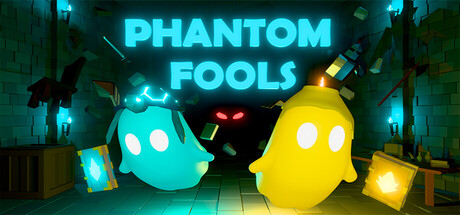
Generative AI was used during the development of Phantom Fools as a helper tool. It was used for some images, sound effects, music, and small parts of code. The 3D models, animations, most of the code, and the main game design were made by the developers without generative AI. Everything made with AI was checked, edited, and added to the game manually.
The game does not use generative AI during gameplay. No live AI-generated content is shown to players.
Temporary images for furniture and clothing icons within the game, some promotional materials and banners, text translation, and some temporary sound files were created using AI. All in-game content will be replaced with human-made work before the game’s release.
Ultimate Jam uses generative AI for all coding and select pre-made assets (announcer voice and/or music), created from robot-human-written scripts and prompts, then edited by the team. Gameplay, controls, and AI opponents use traditional code — not generative AI. Nothing is generated live while you play.
Generative AI technology is used in a supplementary capacity during the localization of select languages. Any such languages are indicated in the in-game language selection menu.
Generative AI was used to assist with drafts of some visual, audio, narrative, and localization assets, as well as marketing materials. All AI-assisted content was reviewed, edited, and finalized manually by the developer.
The game does not generate AI content during gameplay and does not connect to any external AI service.
Generative AI was utilized exclusively during development to assist with writing and optimizing code. The game does not contain any AI-generated art, music, or other in-game assets.
Generative AI is used for a single feature: to allow players to create a custom illustration of their character reflecting their personalized appearance and equipped items for in-game use. There is no other use of Generative AI assets in MapleStory.
We use generative AI tools to help create some pre-rendered 2D artwork, such as logo and promotional/marketing images. All such content is reviewed and edited by us before use. The game itself contains no live-generated AI content during gameplay.
Generative AI tools were used during the development of certain visual and promotional assets for this game. All final content was reviewed and curated by the developer.
This game was developed by a solo developer with the assistance of generative AI tools in areas including programming logic, visual asset creation, and music and sound effects. Not all content was AI-generated — game design, mechanics, systems, level structure, and overall creative direction were conceived and built by the developer. All AI-assisted content was curated, directed, and refined to serve the game's creative vision.
Generative AI tools were used during development to assist in the creation of selected textures, 3D models, 2D graphics, and written text used in the game and on the Steam store page. All AI-assisted assets and text were manually reviewed, edited, and integrated by the developer before release. The game does not use generative AI during gameplay and does not generate live content for players.
We use AI-assisted tools in parts of our development process to assist with content creation, improve productivity, and streamline routine tasks so our team has more time for creative work. Where we use these tools, the work is directed, reviewed, and finalized by our team.
Network Engineer leverages generative artificial intelligence to enhance gameplay immersion and realism. AI-driven systems dynamically simulate customer behavior, hardware issues, and environmental challenges, creating unique scenarios and ensuring no two playthroughs are alike. Your feedback will help refine these systems!
Some assets within the game are generated with the help of AI, this includes but is not limited to:
- Contracts (Company Names, Locations etc.)
- Hardware Names (For the networking device)
- Company Logos
Some temporary placeholder visuals currently used in the game were created with the help of AI-assisted image generation tools. These assets are only used during early development and will gradually be replaced with original or professionally refined artwork.
VoidCraft uses generative AI in two ways. During development, AI tools assisted in creating written content that ships with the game (lore, item and research descriptions, mission templates, NPC flavour text) and in exploring marketing artwork concepts; all of it was reviewed by the developer before inclusion. During gameplay, two features generate text live using large language models: the optional in-game Advisor, which analyses your empire and offers strategy advice in character, and contract mission briefings (titles, short stories, and NPC names) on station contract boards. Players cannot type free-form prompts into these systems - the AI receives only structured game-state data assembled by our servers, and every output is validated server-side before it appears in the game. Core gameplay (combat, economy, progression, rewards) is governed by deterministic game rules, not by AI.
Finesse uses generative AI tools for select pre-generated content created during development:
- Meshy — 3D model generation for some character and environment assets
- ElevenLabs — voice line generation for in-game audio
- Suno — music track generation for soundtrack and ambient audio
- Anthropic Claude — assistance with in-game text content (descriptions, narrative copy)
All AI-generated content is pre-rendered during development and shipped as static assets. No generative AI runs at runtime; nothing is generated live or unique per player. All AI outputs are reviewed, edited, and curated by the developer before being included in the final game.
AI is used on an ad hoc basis for: 3D model texturing, code assistance, and references for asset modeling. It does not affect gameplay or interactive content.
Generative AI were used to assist in the creation of assets, and artwork. All generated content was reviewed and modified by the developers before inclusion in the final game.
AI tools were used during development to assist with code review, debugging, and localization. The game does not use generative AI during gameplay. Music is generated in real time using procedural audio systems and custom algorithms.
Village Coop Clicker is a small hobby project created with extensive use of AI-assisted tools for programming, artwork, audio, localization, and store assets.
The game design, balancing, progression systems, and overall creative direction were created and curated manually by the developer.
AI tools were used to assist with some code development and selected Steam store page text. The core game design, gameplay, and creative direction are created by the development team. No live generative AI content is created during gameplay.
Some in-game audio, including phone call voices and ambient sounds, were generated using AI tools. Additionally, certain stickers and visual assets found in the Cancer's living area were created with the assistance of generative AI.
AI Generated Content Disclosure
The developers describe how their game uses AI Generated Content like this:
Generative AI tools were used in limited cases during the production of certain game assets. AI-generated content was not used as-is, and any such assets were revised, refined, and finalized by our art and development teams to ensure they meet our quality standards and creative direction.
Generative AI tools were used to assist in the creation of some music, sound effects, and promotional artwork associated with the game. The game's programming, design, and in-game visual content were created by the developer.
I use AI tools to assist with code review, translations, Steam capsule design, and music production tasks. All final game design, programming, and implementation decisions are made, reviewed, and supervised by me.
Small quantity of images/textures are ai-generated.
Small quantity of sound waves are ai-generated.
Some parts of code are ai-genereted and ai-assissted always tested by a human.
I used AI to generate much of the code for this game. I did a lot of reviewing and tweaking the code, but a large portion of the core code for the game was generated by AI.
The AI also generate the player and enemy "models". I had them generate to game scene files (tscn files in Godot) which are just simple text files. I tweaked many of them after initial generation.
I also used AI to generate the various store page and icon art, and 4 images that are findable in the game as items
AI was not used for the music in game, or the various art assets and SFX not mentioned above.
Scourge of the Necromancer makes significant use of generative AI in its production. We want to be fully upfront about it.
Visual assets (2D images + video) — all AI-generated, then human-curated and human-edited. Every shipped image and video in the game and on the Steam store page was produced with AI tools, then reviewed, edited, and selected by hand by the developer. This covers: Steam store capsules and library art, the store-page background, all in-game achievement icons, hero portraits, the Necromancer concept art, decorative UI elements, all real-time cinematics (the defeat sequence and all victory variants), and the marketing trailer's atmospheric segments. Image models used: Google Imagen 4, Google Veo 3.1 (video), Nano Banana Pro / Gemini 3 Pro Image (Google), Black Forest Labs FLUX.2, Recraft V4 Pro, Ideogram V3, and Bria RMBG-2.0 (background removal). Final assets received human editing — compositing, color correction, retouching, frame extraction, masking, and rejection of unusable outputs.
3D models — AI-generated base meshes, then human-edited in Blender. The in-game hero character models (Knight, Cleric, Ranger, Wizard, Warrior, Alchemist) started as outputs from Tripo AI's generative 3D model service (FBX + texture PNGs), but each model was then opened in Blender by the developer for hand editing — mesh cleanup, geometry adjustments, and texture fixes — before being exported for use in the game. Each finished model was imported into Unity with hand-tuned scale, rotation, material configuration, and import-setting curation. Unsatisfactory generations were discarded and re-prompted; the Blender editing step is substantial enough that the shipped models are not pure AI output.
Music — AI-generated, then human-curated and post-processed. All music tracks in the game (menu, gameplay layers, boss phases, victory, defeat) were produced with Google Gemini's music generation, then human-selected, trimmed, looped, and mixed by the developer.
Necromancer voice — AI-generated, then human-edited. The Necromancer's spoken syllables were synthesized with ElevenLabs Text-to-Speech (Eleven Multilingual v2 model), then pitch-shifted, EQ'd, and processed with reverb in Audacity by the developer to produce the final in-game delivery. No other character has spoken voice lines in the shipped game.
Sound effects — all AI-generated. Every SFX in the game (ability sounds, ambient layers, UI sounds, footsteps, kill/spawn cues, tile state cues, boss audio) was produced with ElevenLabs Sound Effects, then human-selected, trimmed, processed, and mixed by the developer. The Necromancer voice lines use ElevenLabs Text-to-Speech (covered separately above).
Runtime behavior. The game does NOT use live-generated AI content at runtime. Every shipped asset is a fixed, pre-rendered file. Player-facing text, dialogue, narrative, lore, and game design were written by the developer without AI generation.
Code. Code development used Claude (Anthropic) as an AI coding assistant. This is behind-the-scenes efficiency tooling not consumed by players, but we mention it here for full transparency.
We used AI to generate initial music tracks, concept art, and temporary translations into some languages.
All materials were then thoroughly edited, reworked, and finalized by humans.
Nothing went straight from the generator into the game.
As a solo developer working on a passion project with very limited resources, I utilized generative AI as a workflow tool to help sketch out the initial base meshes and textures for the miniatures and terrain elements. However, every single asset was then manually refined, over painted, and fully optimized by me to ensure a consistent, high-quality art style and solid performance.
Generative AI was used only for a small portion of the game's visual and marketing materials, which were subsequently refined by the developer. The overwhelming majority of graphics and content were created manually or obtained from licensed sources.
Some visual assets in this game were created with the assistance of generative AI tools. All generated content has been reviewed and curated by the developer before being included in the game.
Generative AI was used during the development of Phantom Fools as a helper tool. It was used for some images, sound effects, music, and small parts of code. The 3D models, animations, most of the code, and the main game design were made by the developers without generative AI. Everything made with AI was checked, edited, and added to the game manually.
The game does not use generative AI during gameplay. No live AI-generated content is shown to players.