Public Steam disclosure research25,383 disclosures tracked
Where do games disclose AI use?
Search developers’ Steam disclosures, compare classified AI use across
games, and follow recorded changes.
This index adds cross-game classifications and statistics to
statements published on individual store pages.
Groups reflect automatic analysis of public disclosures; mature records are excluded. These counts do not measure AI use across all of Steam.
Missing or unclear statements cannot establish whether a game uses AI.
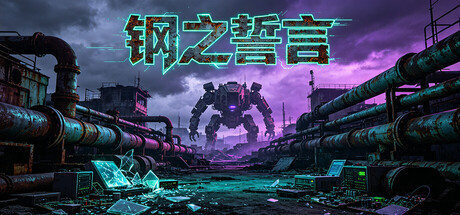
We only use artificial intelligence tools to generate background music for the game (such as the background music for starting the game interface), promotional videos (CG promotional videos), and some UI background images (background images for the backpack interface), which are directly embedded into the game's assets. During the game, no artificial intelligence models were used to create or generate new content in real-time. No AI generated code was used either.
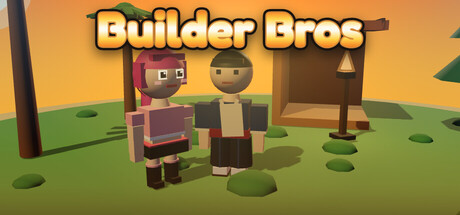
The developers used generative AI tools in the creation of this game. Portions of the game's content — including visual art and 3D assets, audio, in-game narrative and text, and translations into the supported languages — were produced with the assistance of generative AI and then reviewed, edited, and curated by the developer. All AI-assisted content is generated ahead of time and is fixed in the shipped game. Builder Bros does not generate any content using AI during gameplay, and does not connect to any external AI service.
Generative AI was used during development as a production tool for portions of the game's source code, music production workflow, and synthetic voice-over generation.
AI-assisted code was reviewed, tested, modified where necessary, and integrated under the direct supervision of the developer. Some music tracks originated from AI-generated compositions or stems and were subsequently edited, arranged, mixed, and produced by the developer. Voice-over content is generated using commercially licensed AI voice technology from developer-written scripts.
The game's gameplay systems, game design, balancing, progression systems, procedural visual generation technology, world generation systems, writing, and overall creative direction were conceived, designed, and maintained by the developer.
The game does not use generative AI at runtime. No player-facing content is generated on-the-fly during gameplay. Visuals are created through deterministic procedural generation systems and pre-authored assets rather than generative image AI.
AI-assisted tools were used as part of the development workflow for prototyping, implementation support, and content iteration. The released game content was selected, edited, and curated by the developer. The game does not use live generative AI during gameplay.
Some visual assets used in the game and store page were created using a combination of licensed art assets, generative AI-assisted imagery, and manual editing by the developer.
All AI-assisted content was reviewed and modified before being included in the final project.
All AI used to make this game has been limited to coordinating tasks and making minor images that will be replaced before release. Code assistance was a major portion of its use to find errors and fix script as needed.
No AI is connecting to any third party or outside source during/before/after gameplay.
AI tools were used during development to assist with the creation of promotional images, marketing videos, music generation, translations, code optimization, and programming support. All gameplay systems, game design decisions, balancing, and 3D models were created and reviewed by the developer. No generative AI is used during gameplay or in real-time player interactions.
Generative AI tools were used only to assist with the creation and editing of some Steam store page content, including store page text and promotional visual assets. The game itself does not use generative AI during gameplay. No AI-generated content is produced live while the player is playing, and the game does not connect to any external third-party AI service.
We used AI to generate initial music tracks, concept art, and temporary translations into some languages.
All materials were then thoroughly edited, reworked, and finalized by humans.
Nothing went straight from the generator into the game.
This game uses generative AI in the following areas:
• Background artwork: All static background images displayed in menus and screen backdrops (e.g. brewery interior, fields, market, taverns) were created using generative AI. All images were carefully curated, selected, and post-processed by the developer to fit the game's "Soft Cinematic" 19th-century Belle Époque visual style.
• Sound effects and ambient audio: Some in-game sounds were generated using AI audio tools under appropriate commercial licenses. All sounds were reviewed and selected by the developer.
• Mission and narrative text: The campaign concept, story arc, and game design are the original work of the developer. Some campaign mission descriptions and in-game event texts were initially drafted with AI assistance based on the developer's outlines, and then reviewed, edited, and adapted to fit the game's tone and historical setting.
No generative AI is used during gameplay. All gameplay logic, mechanics, character behaviors, and AI competitor strategies are implemented as deterministic code that does not generate content at runtime. The game does not connect to any external AI services.
Some ingame models and textures are AI generated to help speed up the production pipeline. These will eventually be replaced and I simply refuse to charge money for a game which uses AI assets, so until then this game will be free until all AI assets are replaced.
Warning: This game contains trace amounts of human effort—mostly restricted to pressing "Ctrl+C" and "Ctrl+V."
In the spirit of our title, "AI Slop" was created using generative artificial intelligence for practically every asset, line of code, and marketing material in existence.
Here is exactly how we let the machine do our jobs:
- Art & Assets: Every single visual asset, from the UI to the 6-fingered anime girls and the melting hands of our characters, was generated using text-to-image AI tools. No digital painters were harmed in the making of this game, because we didn't hire any.
- Narrative & Writing: The dialogue, item descriptions, and this very disclosure statement were generated by LLMs. We simply prompted a chatbot to "be funny and cynical" and copied the output without editing the typos.
- Code & Mechanics: The logic powering our card games and botnet automation was largely assembled by AI coding assistants. If the game crashes, please blame the algorithm, as our "lead developer" is actually just a prompt engineer.
- Music & Sound: The background tracks were generated by synthetic audio engines to ensure a continuous stream of procedurally generated slop-lofi beats.
We believe in a future where humans do not have to create things, freeing us up to spend more time looking at screens. We hope you enjoy consuming this premium, 100% synthetic digital garbage.
Generative AI was used to assist in the creation of promotional artwork, marketing images, and store page assets. No AI-generated content is produced during gameplay, and no gameplay features rely on generative AI.
Generative AI tools were used to assist in the creation of certain visual assets and sound effects. All content was reviewed, edited, and implemented manually by the developer.
Since this is a large project for a two-person team, we used AI assistance to refine some code and create certain images that were difficult for us to capture in the real world. All AI-assisted content was reviewed, adjusted, and approved by us before being included in the game.
Generative AI tools were used as part of the development process.
For store page materials, AI-generated outputs were used as reference material. The final store assets were manually edited and assembled by the developer.
For the game itself, generative AI tools were used to assist with the creation of some in-game visual assets, such as sprites, and to support programming and implementation work. All AI-assisted content is reviewed, edited, and integrated by the developer before inclusion.
The game does not use live generative AI during gameplay and does not generate images, text, audio, or other content at runtime.
Some visual assets in OMNICORIUM were generated using AI tools, either directly during development or sourced from third-party creators who used AI-assisted generation.
AI is used exclusively for selected visual assets. It is not used for gameplay systems, player interactions, procedural mechanics, or dynamic content generation.
Generative AI tools were used during development as an assistance tool for programming, debugging, design iteration, documentation, and store-page text drafting. All final game content, gameplay systems, assets, and published materials are reviewed, selected, and implemented by the developer.
Sol Survivor does not use live generative AI during gameplay. Players do not interact with an AI text, image, audio, or content-generation system while playing.
Parts of the localization and most character portraits were created with the assistance of AI. All relevant content was manually reviewed and edited by me where possible and necessary.
Generative AI tools are used exclusively during the development process to assist with creating store page and community-related visual materials. No generative AI content is used in the core gameplay experience or real-time in-game systems.
RogueScape may use generative AI tools as part of the development workflow, primarily to assist with programming, debugging, prototyping, workflow automation, and occasional asset or copy iteration. Any AI-assisted content used in the game, store page, or related marketing materials is reviewed, edited, and approved by the developer before publication.
Generative AI tools were used to assist with localization drafts, wording review, store text preparation, research into real-world goods and price references, code debugging, and optimization suggestions. All final text, translations, game design, data, UI implementation, pricing decisions, and release decisions are reviewed and controlled by the developer.
WizKitty uses generative AI-assisted artwork for some visual assets. These assets were creatively directed, curated, edited, and integrated by the developer to fit the game’s visual style. WizKitty does not use live generative AI during gameplay.
Generative AI tools were used to assist with parts of the game's visual concepts and promotional materials. All final content was reviewed and edited by the developer.
Some of the in-game 2D textures and visual effects were created using AI-based tools. These elements are modified in terms of art and development throughout the production process to ensure they meet our quality standards and creative vision.
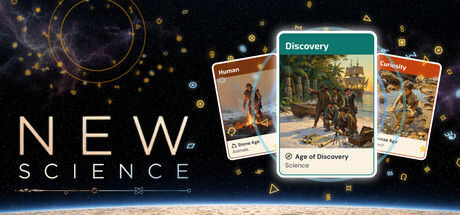
New Science uses generative AI as a core part of its discovery system. When a player attempts a combination, an AI model may be used to determine whether the two selected objects can logically produce a new result. Generative AI is also used to create an illustration for newly discovered objects. Known discoveries are stored and reused, so the same established combination does not need to be generated again for every player. This system allows New Science to support open-ended experimentation beyond a small, completely predefined recipe list. Players may therefore encounter newly generated combinations and images that have not previously been seen by the development team.
Generative AI was used to develop a portion of the content of this game. Specifically it was used for development assistance, some music and art assets.
This application uses local AI technology for interaction, although the chosen TTS and STT plugins have not yet been selected because the word game is still under development.
However, it is confirmed that plugins from the FAB marketplace will be used. And AI processing will run offline on player's device. No internet connection will be required.
AI tools were used to assist with code generation. All visual art is hand-drawn by the developer. All AI-assisted content has been manually reviewed and refined.
This title was developed with substantial assistance from generative AI.[Store Assets — Visual Content]The key visual, store capsule images, library assets (including the library hero), and certain screenshot backgrounds were produced using image generation AI ("Midjourney v7 / Niji v7") under a commercial license (Standard tier).[Source Code, Game Design, and In-Game Text]The C++ source code, data structures, system architecture, gameplay mechanics specifications, in-game text, item naming conventions, job names, and skill names were developed in collaboration with conversational AI ("Claude" by Anthropic and "Gemini" by Google).[The Developer's Role]Quench Forge handles concept, product vision, product management, final specification decisions, hands-on PIE (Play-In-Editor) testing, bug reports, and release decisions.Code generation, code review, test design, system architecture, game mechanics specifications, in-game text, and marketing materials are all created in collaboration with Claude (Anthropic) and Gemini (Google). Every AI-generated artifact is filtered through the developer's "appraiser's eye" — selected, approved, and revised through specification feedback — before being incorporated into the product.This game applies its own core theme — "an appraiser-shopkeeper who reads materials and Modifiers to forge the right blade" — to its own development process.[Runtime Behavior]No generative AI runs during gameplay. All in-game mechanics operate on compiled, deterministic algorithms (with optional reproducible random seeds). The game does not require any online connection to AI services during play.
The game content, including gameplay mechanics, visuals, and audio, as well as the store page content — including descriptions, images, and other assets — were generated with the assistance of AI tools.
We only use artificial intelligence tools to generate background music for the game (such as the background music for starting the game interface), promotional videos (CG promotional videos), and some UI background images (background images for the backpack interface), which are directly embedded into the game's assets. During the game, no artificial intelligence models were used to create or generate new content in real-time. No AI generated code was used either.
The developers used generative AI tools in the creation of this game. Portions of the game's content — including visual art and 3D assets, audio, in-game narrative and text, and translations into the supported languages — were produced with the assistance of generative AI and then reviewed, edited, and curated by the developer. All AI-assisted content is generated ahead of time and is fixed in the shipped game. Builder Bros does not generate any content using AI during gameplay, and does not connect to any external AI service.
Generative AI was used during development as a production tool for portions of the game's source code, music production workflow, and synthetic voice-over generation.
AI-assisted code was reviewed, tested, modified where necessary, and integrated under the direct supervision of the developer. Some music tracks originated from AI-generated compositions or stems and were subsequently edited, arranged, mixed, and produced by the developer. Voice-over content is generated using commercially licensed AI voice technology from developer-written scripts.
The game's gameplay systems, game design, balancing, progression systems, procedural visual generation technology, world generation systems, writing, and overall creative direction were conceived, designed, and maintained by the developer.
The game does not use generative AI at runtime. No player-facing content is generated on-the-fly during gameplay. Visuals are created through deterministic procedural generation systems and pre-authored assets rather than generative image AI.
AI-assisted tools were used as part of the development workflow for prototyping, implementation support, and content iteration. The released game content was selected, edited, and curated by the developer. The game does not use live generative AI during gameplay.
Some visual assets used in the game and store page were created using a combination of licensed art assets, generative AI-assisted imagery, and manual editing by the developer.
All AI-assisted content was reviewed and modified before being included in the final project.
All AI used to make this game has been limited to coordinating tasks and making minor images that will be replaced before release. Code assistance was a major portion of its use to find errors and fix script as needed.
No AI is connecting to any third party or outside source during/before/after gameplay.
AI tools were used during development to assist with the creation of promotional images, marketing videos, music generation, translations, code optimization, and programming support. All gameplay systems, game design decisions, balancing, and 3D models were created and reviewed by the developer. No generative AI is used during gameplay or in real-time player interactions.
Generative AI tools were used only to assist with the creation and editing of some Steam store page content, including store page text and promotional visual assets. The game itself does not use generative AI during gameplay. No AI-generated content is produced live while the player is playing, and the game does not connect to any external third-party AI service.
We used AI to generate initial music tracks, concept art, and temporary translations into some languages.
All materials were then thoroughly edited, reworked, and finalized by humans.
Nothing went straight from the generator into the game.
This game uses generative AI in the following areas:
• Background artwork: All static background images displayed in menus and screen backdrops (e.g. brewery interior, fields, market, taverns) were created using generative AI. All images were carefully curated, selected, and post-processed by the developer to fit the game's "Soft Cinematic" 19th-century Belle Époque visual style.
• Sound effects and ambient audio: Some in-game sounds were generated using AI audio tools under appropriate commercial licenses. All sounds were reviewed and selected by the developer.
• Mission and narrative text: The campaign concept, story arc, and game design are the original work of the developer. Some campaign mission descriptions and in-game event texts were initially drafted with AI assistance based on the developer's outlines, and then reviewed, edited, and adapted to fit the game's tone and historical setting.
No generative AI is used during gameplay. All gameplay logic, mechanics, character behaviors, and AI competitor strategies are implemented as deterministic code that does not generate content at runtime. The game does not connect to any external AI services.
Some ingame models and textures are AI generated to help speed up the production pipeline. These will eventually be replaced and I simply refuse to charge money for a game which uses AI assets, so until then this game will be free until all AI assets are replaced.
Warning: This game contains trace amounts of human effort—mostly restricted to pressing "Ctrl+C" and "Ctrl+V."
In the spirit of our title, "AI Slop" was created using generative artificial intelligence for practically every asset, line of code, and marketing material in existence.
Here is exactly how we let the machine do our jobs:
- Art & Assets: Every single visual asset, from the UI to the 6-fingered anime girls and the melting hands of our characters, was generated using text-to-image AI tools. No digital painters were harmed in the making of this game, because we didn't hire any.
- Narrative & Writing: The dialogue, item descriptions, and this very disclosure statement were generated by LLMs. We simply prompted a chatbot to "be funny and cynical" and copied the output without editing the typos.
- Code & Mechanics: The logic powering our card games and botnet automation was largely assembled by AI coding assistants. If the game crashes, please blame the algorithm, as our "lead developer" is actually just a prompt engineer.
- Music & Sound: The background tracks were generated by synthetic audio engines to ensure a continuous stream of procedurally generated slop-lofi beats.
We believe in a future where humans do not have to create things, freeing us up to spend more time looking at screens. We hope you enjoy consuming this premium, 100% synthetic digital garbage.
Generative AI was used to assist in the creation of promotional artwork, marketing images, and store page assets. No AI-generated content is produced during gameplay, and no gameplay features rely on generative AI.
Generative AI tools were used to assist in the creation of certain visual assets and sound effects. All content was reviewed, edited, and implemented manually by the developer.
Since this is a large project for a two-person team, we used AI assistance to refine some code and create certain images that were difficult for us to capture in the real world. All AI-assisted content was reviewed, adjusted, and approved by us before being included in the game.
Generative AI tools were used as part of the development process.
For store page materials, AI-generated outputs were used as reference material. The final store assets were manually edited and assembled by the developer.
For the game itself, generative AI tools were used to assist with the creation of some in-game visual assets, such as sprites, and to support programming and implementation work. All AI-assisted content is reviewed, edited, and integrated by the developer before inclusion.
The game does not use live generative AI during gameplay and does not generate images, text, audio, or other content at runtime.
Some visual assets in OMNICORIUM were generated using AI tools, either directly during development or sourced from third-party creators who used AI-assisted generation.
AI is used exclusively for selected visual assets. It is not used for gameplay systems, player interactions, procedural mechanics, or dynamic content generation.
Generative AI tools were used during development as an assistance tool for programming, debugging, design iteration, documentation, and store-page text drafting. All final game content, gameplay systems, assets, and published materials are reviewed, selected, and implemented by the developer.
Sol Survivor does not use live generative AI during gameplay. Players do not interact with an AI text, image, audio, or content-generation system while playing.
Parts of the localization and most character portraits were created with the assistance of AI. All relevant content was manually reviewed and edited by me where possible and necessary.
Generative AI tools are used exclusively during the development process to assist with creating store page and community-related visual materials. No generative AI content is used in the core gameplay experience or real-time in-game systems.
RogueScape may use generative AI tools as part of the development workflow, primarily to assist with programming, debugging, prototyping, workflow automation, and occasional asset or copy iteration. Any AI-assisted content used in the game, store page, or related marketing materials is reviewed, edited, and approved by the developer before publication.
Generative AI tools were used to assist with localization drafts, wording review, store text preparation, research into real-world goods and price references, code debugging, and optimization suggestions. All final text, translations, game design, data, UI implementation, pricing decisions, and release decisions are reviewed and controlled by the developer.
WizKitty uses generative AI-assisted artwork for some visual assets. These assets were creatively directed, curated, edited, and integrated by the developer to fit the game’s visual style. WizKitty does not use live generative AI during gameplay.
Generative AI tools were used to assist with parts of the game's visual concepts and promotional materials. All final content was reviewed and edited by the developer.
Some of the in-game 2D textures and visual effects were created using AI-based tools. These elements are modified in terms of art and development throughout the production process to ensure they meet our quality standards and creative vision.
New Science uses generative AI as a core part of its discovery system. When a player attempts a combination, an AI model may be used to determine whether the two selected objects can logically produce a new result. Generative AI is also used to create an illustration for newly discovered objects. Known discoveries are stored and reused, so the same established combination does not need to be generated again for every player. This system allows New Science to support open-ended experimentation beyond a small, completely predefined recipe list. Players may therefore encounter newly generated combinations and images that have not previously been seen by the development team.
Generative AI was used to develop a portion of the content of this game. Specifically it was used for development assistance, some music and art assets.
This application uses local AI technology for interaction, although the chosen TTS and STT plugins have not yet been selected because the word game is still under development.
However, it is confirmed that plugins from the FAB marketplace will be used. And AI processing will run offline on player's device. No internet connection will be required.
AI tools were used to assist with code generation. All visual art is hand-drawn by the developer. All AI-assisted content has been manually reviewed and refined.
This title was developed with substantial assistance from generative AI.[Store Assets — Visual Content]The key visual, store capsule images, library assets (including the library hero), and certain screenshot backgrounds were produced using image generation AI ("Midjourney v7 / Niji v7") under a commercial license (Standard tier).[Source Code, Game Design, and In-Game Text]The C++ source code, data structures, system architecture, gameplay mechanics specifications, in-game text, item naming conventions, job names, and skill names were developed in collaboration with conversational AI ("Claude" by Anthropic and "Gemini" by Google).[The Developer's Role]Quench Forge handles concept, product vision, product management, final specification decisions, hands-on PIE (Play-In-Editor) testing, bug reports, and release decisions.Code generation, code review, test design, system architecture, game mechanics specifications, in-game text, and marketing materials are all created in collaboration with Claude (Anthropic) and Gemini (Google). Every AI-generated artifact is filtered through the developer's "appraiser's eye" — selected, approved, and revised through specification feedback — before being incorporated into the product.This game applies its own core theme — "an appraiser-shopkeeper who reads materials and Modifiers to forge the right blade" — to its own development process.[Runtime Behavior]No generative AI runs during gameplay. All in-game mechanics operate on compiled, deterministic algorithms (with optional reproducible random seeds). The game does not require any online connection to AI services during play.
The game content, including gameplay mechanics, visuals, and audio, as well as the store page content — including descriptions, images, and other assets — were generated with the assistance of AI tools.