Public Steam disclosure research25,383 disclosures tracked
Where do games disclose AI use?
Search developers’ Steam disclosures, compare classified AI use across
games, and follow recorded changes.
This index adds cross-game classifications and statistics to
statements published on individual store pages.
Groups reflect automatic analysis of public disclosures; mature records are excluded. These counts do not measure AI use across all of Steam.
Missing or unclear statements cannot establish whether a game uses AI.
Generative AI was used as an assistive tool in preparing parts of the game’s Steam store presence and marketing materials. This includes some store page artwork and promotional assets, short and long descriptions, store metadata, and localized versions of these materials.
All AI-assisted content was reviewed, edited, and approved by the development team before publication. No content is generated by AI during gameplay.
We use generative AI to help identify coding errors that could otherwise take a significant amount of time to find manually.
We also use it during brainstorming to generate textures that would take a long time to create by hand and may ultimately be discarded.
All AI-generated feedback/content is reviewed and modified by a team member until it fits what we really want to do.
Generative AI tools were used during development to assist with pre-generated content only.
AI-assisted content includes one promotional artwork asset used in the Steam store capsule and library assets, AI-generated imagery used in the game's story description, some in-game sound assets, localization and translation, and portions of certain 3D models.
All AI-assisted outputs were reviewed, selected, edited where necessary, and integrated by the developer before being included in the game or on the Steam store page.
The game does not generate content using AI while it is running, does not connect players to any generative AI service, and does not send player input to an AI service.
This game used generative AI during the development process to assist with the creation and modeling visual assets, including characters designs and environmental textures like buildings.
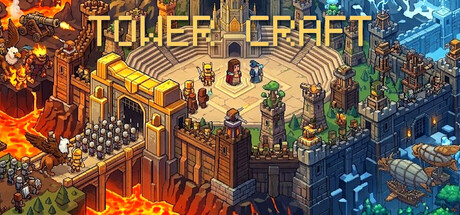
Tower Craft was developed with AI-assisted tools. All 3D models, animations and sound effects are procedurally generated by code that was written with AI assistance; the interface translations for the game's 14 languages were produced with AI assistance and reviewed by the developer. Store page text and marketing materials were also created with AI assistance. The game does not generate any content with AI at runtime — every battle plays out through deterministic, hand-tuned game logic.
The two announcer voices, BroadcASH and BOBcast, are generated with ElevenLabs from scripts we write and edit ourselves. Every line is approved, levelled and listened to by hand before it ships.
Nothing else in the game is AI generated. The card art is emoji placeholder today, and is being replaced with original illustrations commissioned from human artists. The music is composed in-house by our own procedural scripts, and every track has a written provenance log. The rules, the design and the natural history research are ours.
Some marketing and store copy is drafted with AI assistance and edited before use.
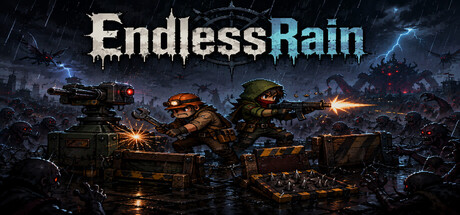
Some of the 2D pixel art assets in EndlessRain were created with the assistance of AI-based pixel art generation tools. This includes character and enemy sprites, item and ability icons, and environment art.
All generated assets were reviewed, edited, and assembled by the developer before being included in the game. Code, game design, and game text were written by the developer without AI-generated content.
No content is generated by AI while the game is running. All assets are pre-generated and ship as static files.
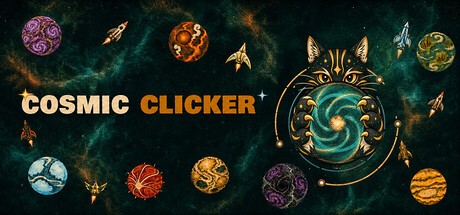
During development, we used generative AI tools to transform early sketches and visual concepts into functional 2D game assets and visual materials that help define Cosmic Clicker’s identity. This included selected in-game assets, Steam store capsules, library artwork, icons, and key art.
The generated results were reviewed, selected, refined, and integrated to maintain consistency with the game’s established art direction.
Some of the content shipping with this game was created using generative AI:
• Images: the title/loading screen, the store graphics (capsules) and the five faction portraits were generated with an image AI. • Audio: the title music, intro music, sector music tracks and the sound effects were created with AI tools. • Text: the store description was drafted with AI assistance.
All of this content was selected, reviewed and integrated by hand. Not AI-generated: the 3D world, the ships, stations and effects — those are built procedurally and in Blender. The source code was developed with AI assistance; we mention this for completeness, even though development tools are exempt from disclosure.
Some of the artwork in this game was made with AI image generators and edited by hand afterwards. This covers the two player characters, the logo, the menu icons and the curtain texture. The English interface texts were written with the help of a language model and reviewed afterwards. The German texts are written by hand.
The bundled Pack Creator uses a speech recognition model to find the spoken parts of a video you supply yourself and turn them into the lines you read out. An AI noise filter for your microphone recordings and AI-based separation of speech and background audio work the same way. All of this runs locally on your own machine and never sends data to an external service. These models only process material you provide yourself, they do not invent content of their own, and the result stays inside your own lobby.
Some of the assets in this game were created with the help of generative AI tools: part of the background music and sound effects, some of the 2D images and textures used in the game and on the store page, some of the 3D models, and part of the source code. Every AI-assisted asset was reviewed and adjusted by the developer before it was included in the game, and we do not knowingly use material that infringes the rights of third parties. This game does not generate any content with AI while it is running; NPC dialogue is randomly selected from text written in advance by the developer.
Guild Management Simulator began as an AI-assisted prototype. Generative AI tools were used during early development to assist with portions of programming, written game content, interface copy, design iteration, and the current Steam marketing artwork. All AI-assisted material is pre-generated and reviewed before inclusion. The game does not generate content while running, connect players to an AI service, or send player data to an AI system. The long-term goal is to replace AI-assisted material with original, developer-created work as the project is rebuilt in a dedicated game engine.
In the interest of transparency, illustrations were created with the help of AI-assisted tools, used as creative support within a human-led artistic process.
AI tools were used during development to assist with concept art, visual references, and certain promotional assets. All gameplay systems, mechanics, and core design were created and implemented by the development team.
AI was used strictly as a supportive tool and does not directly control gameplay or player experience.
Some shipped visual assets, narrative text, localization, and store or marketing artwork were created or iterated with the assistance of generative AI tools. All output was selected, edited, reviewed, integrated, and tested by the developer. The game performs no live AI generation
and sends no player input or data to an AI service.
In game development, artificial intelligence is used solely as a supporting tool. We employ neural networks to enhance and refine 2D art (loading screens and promo banners) created using our in-game screenshots, after which they undergo manual color correction and artifact removal. AI also assists us with translating in-game text and generating the announcer's voice for racing modes. All key game elements, including 3D car models, tuning, and the open world, are created entirely by hand by our team.
Generative AI tools were used during development to assist in the creation of certain visual and audio assets. This includes some concept art, textures, UI elements, loading screens, promotional artwork, graphical assets, music, and sound effects.
AI-assisted content may be edited, modified, retouched, mixed, or otherwise integrated by the development team before being included in the game or promotional materials.
Generative AI is not used to dynamically generate content during gameplay.
AI was used only to generate the music and sound effects for BitBeasts. No AI was used to generate the game's visual assets, gameplay systems, code, or other core game content.
Parts of this game's code were written with the assistance of AI programming tools; all output was reviewed, tested and integrated by the developer. Store page texts and localizations were also produced with AI assistance and reviewed by the developer. [Some music and sound assets were created using AI generation tools and curated by the developer.] [Some marketing artwork (e.g. capsule images) was created with AI image tools and edited by the developer.] All in-game 3D models and simulation content are authored procedurally or by hand. The game does not generate any content with AI at runtime, and it does not connect to any external AI services.
CRETA: Taskbar Fishing uses generative AI tools to assist with the creation of some visual and audio assets used in the game. AI was used as a supporting tool during development, while the game's design, gameplay systems, programming, and overall creative direction were created by the developer.
This game was developed with AI assistance for localization, in-game text (tutorial, lore, item descriptions, UI), monster/enemy artwork, and store page artwork (including the game's capsule image). All AI-assisted content was reviewed and edited by the developer before release. No content is generated by AI during gameplay.
Generative AI tools were used during development to assist with some pre-generated 2D artwork, text editing, localization, and development support. All AI-assisted content was reviewed, edited, and approved by the developer before being included. The game does not generate AI content during gameplay.
This game contains pre-generated AI-assisted visual assets, including promotional images, icons, artwork, character portraits, and some UI elements. No live or runtime AI is used during gameplay. All gameplay, mechanics, code, and player interactions are handcrafted.
Some store page artwork (capsule images) was created with the assistance of generative AI tools and then edited and reviewed by the developer. Some 2D art (card artwork, backgrounds, UI) and in-game text (card descriptions, flavor text) were created with the help of generative AI tools.
RagNext Studio includes pre-rendered sample background artwork, character portraits, and icons created with Generative AI tools within sample demonstration projects. Additionally, RagNext Studio provides optional AI-assisted narrative and dialogue drafting tools for game creators during the design process. The software operates 100% complete offline out-of-the-box using built-in rule-based generators and offline templates.
Some 2D vector artwork and portions of game text/localization were created with the assistance of generative AI (Claude); all AI-generated content was reviewed by the developer
Some environment and concept art in Stick Together was created with the help of generative AI tools, then edited and approved by our team. All visuals are fixed at release, and players cannot generate their own AI content in‑game.
Hearthfield's world is built in code and from CC0 model packs, and everything you
see in play is made by hand. Our Steam store art, the capsules, the icons and the
logo, was created with the help of AI image tools and then finished by us. We also
use an AI coding assistant while building the game, and AI help when drafting store
text. Our screenshots are always genuine captures from the real game. Nothing in
Hearthfield is generated by AI while you play.
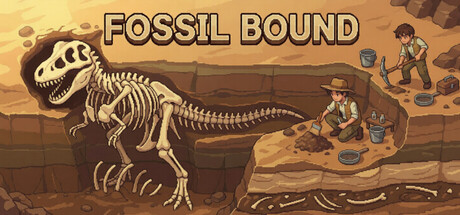
Generative AI tools were used during development to create and refine some pre-generated 2D artwork used in the game and its marketing, including environmental backgrounds, character and item art, fossil and museum visuals, capsule and library artwork, and achievement imagery. All AI-assisted assets were selected, edited, and integrated by the developer before shipping. The game does not generate AI content during gameplay and does not connect to a live AI service.
Generative AI was used as an assistive tool in preparing parts of the game’s Steam store presence and marketing materials. This includes some store page artwork and promotional assets, short and long descriptions, store metadata, and localized versions of these materials.
All AI-assisted content was reviewed, edited, and approved by the development team before publication. No content is generated by AI during gameplay.
We use generative AI to help identify coding errors that could otherwise take a significant amount of time to find manually.
We also use it during brainstorming to generate textures that would take a long time to create by hand and may ultimately be discarded.
All AI-generated feedback/content is reviewed and modified by a team member until it fits what we really want to do.
Generative AI tools were used during development to assist with pre-generated content only.
AI-assisted content includes one promotional artwork asset used in the Steam store capsule and library assets, AI-generated imagery used in the game's story description, some in-game sound assets, localization and translation, and portions of certain 3D models.
All AI-assisted outputs were reviewed, selected, edited where necessary, and integrated by the developer before being included in the game or on the Steam store page.
The game does not generate content using AI while it is running, does not connect players to any generative AI service, and does not send player input to an AI service.
This game used generative AI during the development process to assist with the creation and modeling visual assets, including characters designs and environmental textures like buildings.
Tower Craft was developed with AI-assisted tools. All 3D models, animations and sound effects are procedurally generated by code that was written with AI assistance; the interface translations for the game's 14 languages were produced with AI assistance and reviewed by the developer. Store page text and marketing materials were also created with AI assistance. The game does not generate any content with AI at runtime — every battle plays out through deterministic, hand-tuned game logic.
The two announcer voices, BroadcASH and BOBcast, are generated with ElevenLabs from scripts we write and edit ourselves. Every line is approved, levelled and listened to by hand before it ships.
Nothing else in the game is AI generated. The card art is emoji placeholder today, and is being replaced with original illustrations commissioned from human artists. The music is composed in-house by our own procedural scripts, and every track has a written provenance log. The rules, the design and the natural history research are ours.
Some marketing and store copy is drafted with AI assistance and edited before use.
Some of the 2D pixel art assets in EndlessRain were created with the assistance of AI-based pixel art generation tools. This includes character and enemy sprites, item and ability icons, and environment art.
All generated assets were reviewed, edited, and assembled by the developer before being included in the game. Code, game design, and game text were written by the developer without AI-generated content.
No content is generated by AI while the game is running. All assets are pre-generated and ship as static files.
During development, we used generative AI tools to transform early sketches and visual concepts into functional 2D game assets and visual materials that help define Cosmic Clicker’s identity. This included selected in-game assets, Steam store capsules, library artwork, icons, and key art.
The generated results were reviewed, selected, refined, and integrated to maintain consistency with the game’s established art direction.
Some of the content shipping with this game was created using generative AI:
• Images: the title/loading screen, the store graphics (capsules) and the five faction portraits were generated with an image AI. • Audio: the title music, intro music, sector music tracks and the sound effects were created with AI tools. • Text: the store description was drafted with AI assistance.
All of this content was selected, reviewed and integrated by hand. Not AI-generated: the 3D world, the ships, stations and effects — those are built procedurally and in Blender. The source code was developed with AI assistance; we mention this for completeness, even though development tools are exempt from disclosure.
Some of the artwork in this game was made with AI image generators and edited by hand afterwards. This covers the two player characters, the logo, the menu icons and the curtain texture. The English interface texts were written with the help of a language model and reviewed afterwards. The German texts are written by hand.
The bundled Pack Creator uses a speech recognition model to find the spoken parts of a video you supply yourself and turn them into the lines you read out. An AI noise filter for your microphone recordings and AI-based separation of speech and background audio work the same way. All of this runs locally on your own machine and never sends data to an external service. These models only process material you provide yourself, they do not invent content of their own, and the result stays inside your own lobby.
Some of the assets in this game were created with the help of generative AI tools: part of the background music and sound effects, some of the 2D images and textures used in the game and on the store page, some of the 3D models, and part of the source code. Every AI-assisted asset was reviewed and adjusted by the developer before it was included in the game, and we do not knowingly use material that infringes the rights of third parties. This game does not generate any content with AI while it is running; NPC dialogue is randomly selected from text written in advance by the developer.
Guild Management Simulator began as an AI-assisted prototype. Generative AI tools were used during early development to assist with portions of programming, written game content, interface copy, design iteration, and the current Steam marketing artwork. All AI-assisted material is pre-generated and reviewed before inclusion. The game does not generate content while running, connect players to an AI service, or send player data to an AI system. The long-term goal is to replace AI-assisted material with original, developer-created work as the project is rebuilt in a dedicated game engine.
In the interest of transparency, illustrations were created with the help of AI-assisted tools, used as creative support within a human-led artistic process.
AI tools were used during development to assist with concept art, visual references, and certain promotional assets. All gameplay systems, mechanics, and core design were created and implemented by the development team.
AI was used strictly as a supportive tool and does not directly control gameplay or player experience.
Some shipped visual assets, narrative text, localization, and store or marketing artwork were created or iterated with the assistance of generative AI tools. All output was selected, edited, reviewed, integrated, and tested by the developer. The game performs no live AI generation
and sends no player input or data to an AI service.
In game development, artificial intelligence is used solely as a supporting tool. We employ neural networks to enhance and refine 2D art (loading screens and promo banners) created using our in-game screenshots, after which they undergo manual color correction and artifact removal. AI also assists us with translating in-game text and generating the announcer's voice for racing modes. All key game elements, including 3D car models, tuning, and the open world, are created entirely by hand by our team.
Generative AI tools were used during development to assist in the creation of certain visual and audio assets. This includes some concept art, textures, UI elements, loading screens, promotional artwork, graphical assets, music, and sound effects.
AI-assisted content may be edited, modified, retouched, mixed, or otherwise integrated by the development team before being included in the game or promotional materials.
Generative AI is not used to dynamically generate content during gameplay.
AI was used only to generate the music and sound effects for BitBeasts. No AI was used to generate the game's visual assets, gameplay systems, code, or other core game content.
Parts of this game's code were written with the assistance of AI programming tools; all output was reviewed, tested and integrated by the developer. Store page texts and localizations were also produced with AI assistance and reviewed by the developer. [Some music and sound assets were created using AI generation tools and curated by the developer.] [Some marketing artwork (e.g. capsule images) was created with AI image tools and edited by the developer.] All in-game 3D models and simulation content are authored procedurally or by hand. The game does not generate any content with AI at runtime, and it does not connect to any external AI services.
CRETA: Taskbar Fishing uses generative AI tools to assist with the creation of some visual and audio assets used in the game. AI was used as a supporting tool during development, while the game's design, gameplay systems, programming, and overall creative direction were created by the developer.
This game was developed with AI assistance for localization, in-game text (tutorial, lore, item descriptions, UI), monster/enemy artwork, and store page artwork (including the game's capsule image). All AI-assisted content was reviewed and edited by the developer before release. No content is generated by AI during gameplay.
Generative AI tools were used during development to assist with some pre-generated 2D artwork, text editing, localization, and development support. All AI-assisted content was reviewed, edited, and approved by the developer before being included. The game does not generate AI content during gameplay.
This game contains pre-generated AI-assisted visual assets, including promotional images, icons, artwork, character portraits, and some UI elements. No live or runtime AI is used during gameplay. All gameplay, mechanics, code, and player interactions are handcrafted.
Some store page artwork (capsule images) was created with the assistance of generative AI tools and then edited and reviewed by the developer. Some 2D art (card artwork, backgrounds, UI) and in-game text (card descriptions, flavor text) were created with the help of generative AI tools.
RagNext Studio includes pre-rendered sample background artwork, character portraits, and icons created with Generative AI tools within sample demonstration projects. Additionally, RagNext Studio provides optional AI-assisted narrative and dialogue drafting tools for game creators during the design process. The software operates 100% complete offline out-of-the-box using built-in rule-based generators and offline templates.
Some 2D vector artwork and portions of game text/localization were created with the assistance of generative AI (Claude); all AI-generated content was reviewed by the developer
Some environment and concept art in Stick Together was created with the help of generative AI tools, then edited and approved by our team. All visuals are fixed at release, and players cannot generate their own AI content in‑game.
Hearthfield's world is built in code and from CC0 model packs, and everything you
see in play is made by hand. Our Steam store art, the capsules, the icons and the
logo, was created with the help of AI image tools and then finished by us. We also
use an AI coding assistant while building the game, and AI help when drafting store
text. Our screenshots are always genuine captures from the real game. Nothing in
Hearthfield is generated by AI while you play.
Generative AI tools were used during development to create and refine some pre-generated 2D artwork used in the game and its marketing, including environmental backgrounds, character and item art, fossil and museum visuals, capsule and library artwork, and achievement imagery. All AI-assisted assets were selected, edited, and integrated by the developer before shipping. The game does not generate AI content during gameplay and does not connect to a live AI service.