Public Steam disclosure research25,383 disclosures tracked
Where do games disclose AI use?
Search developers’ Steam disclosures, compare classified AI use across
games, and follow recorded changes.
This index adds cross-game classifications and statistics to
statements published on individual store pages.
Groups reflect automatic analysis of public disclosures; mature records are excluded. These counts do not measure AI use across all of Steam.
Missing or unclear statements cannot establish whether a game uses AI.
Generative AI tools were used during development to create selected pre-generated textures, sound effects, and promotional artwork. These materials are used as individual components within the game and its marketing rather than being generated dynamically.
AI-assisted materials are selected, edited, adapted, composed, and integrated by the developer to fit the game's original visual and audio direction. The game's design, gameplay systems, implementation, world building, and overall creative direction are developed by the developer.
No generative AI is used during gameplay, and the game does not connect to external AI services while running.
Card illustrations, portraits, faction banners and store capsule artwork were created with generative AI image tools, then curated, edited and integrated by the developer. All game design, rules, card text, writing and music selection are human-made. No AI-generated content is produced at runtime.
This game's early development utilized local AI systems for generating initial ideas and imagery surrounding the stage layouts and the initial musical passages, then further edited manually through various pieces of software (Art software and DAWs + numerous VSTs).
Generative AI tools are used during development to write and revise game code, create artwork, music and sound effects, and assist with writing and localization. This includes content in the game and its store and promotional materials. The developer directs and reviews the work before inclusion. No content is generated using generative AI during gameplay.
In the process of creating some 2D prop assets, generative AI technology was used in an assistive capacity. Any such assets are subject to our production pipeline, where they will be reviewed and replaced by our art and development teams to ensure they meet our quality standards and creative direction.
Generative AI tools were used as development assistants, including assistance drafting and editing portions of store-page marketing text. All player-facing content is reviewed and edited by the developer. Main Street Operator does not use generative AI during gameplay and does not connect to external AI services while the game is running.
Some of the content in this game was created with the help of generative AI tools.
This includes parts of the visual assets (icons, textures and UI images), some audio
(music and sound effects), parts of the in-game text (item descriptions, dialogue and
story text), and the translations of the game's text into other languages.
All of this content was generated during development, then reviewed, edited and
assembled by hand before being included in the game. The game itself does not generate
any content with AI while you play, and it does not send any player data to AI services.
Generative AI was used to assist with bug fixes, text editing, and portions of the game's music. Generative AI was not used for the game's direction, art direction, or gameplay mechanics.
Generative AI tools were used during development to create some artwork, including character art, environments, and promotional images. These are pre-made assets. No content is generated by AI during gameplay.
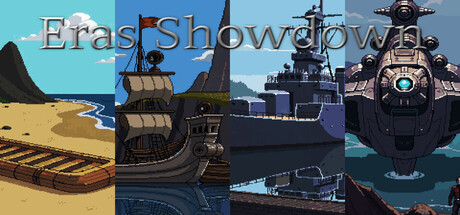
The visual assets in Eras Showdown were created using generative AI: the icons for units, items and materials, the background images, and the user-interface graphics. Every result was selected, reworked and integrated into the game by hand.
This content is pre-generated in full and ships with the installation. Eras Showdown does not generate any content via AI while playing, and it does not connect to any AI service.
Generative AI tools were used as part of the production process to assist in creating and refining some 2D artwork and visual assets. All such content is pre-generated and reviewed before being included in the game. No AI-generated content is created during gameplay.
This game may include developer-directed generative AI content used during development for select visual assets, concept art, marketing materials, store/community artwork, placeholder imagery, and/or edited production assets.
All AI-assisted content is reviewed, selected, edited, and implemented by the developer. The game does not use live generative AI to create gameplay, dialogue, or player-facing content at runtime.
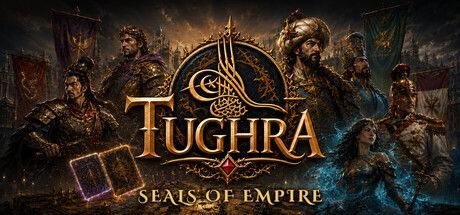
Some of this game's content was created with the assistance of generative AI tools and was then reviewed, edited and curated by the developer. This includes a portion of the 3D weapon and armor models (generated with AI 3D tools and hand-adjusted), the game logo and store/marketing artwork (AI image tools), and the translation of interface text into languages other than Turkish and English. No content is generated by AI at runtime and the game does not connect to any AI service.
Crappy Corp uses a small amount of pre-generated AI content, all created
during development and shipped as fixed assets: the looping background
video on the main menu, and the game's achievement icons. Both were made
with AI image and video tools and then edited and finished by hand.
Parts of the game's code were also written with AI assistance.
Everything else is not AI generated. The 3D models, characters,
environments and animations are licensed commercial asset packs or made
by us, and all sound effects and music come from licensed sound
libraries. The in-game crew voice is Steam voice chat between real
players, not synthesized speech.
No AI content is generated while you play.
Pre-generated AI artwork was used for characters, enemies, bosses, environments, interface icons, and store and promotional artwork. These assets were selected, edited, and integrated during development. The game does not generate AI content during play or connect to external AI services.
Generative AI was used to draft text only: the in-game interface strings, the achievement names and descriptions, their translations into 13 non-English languages, and this store page. All of it was reviewed and edited by the developer before release.
No AI-generated images, audio or video are used. This game ships with no image or audio files at all — every shape, sound and note is produced by the game's own code at run time.
Nothing is generated while you play. The game makes no network calls and contacts no AI service.
Pre-generated AI content: TROPHY FLEET's visual assets and its synthetic character voice performances were produced using AI image and voice generation as a starting point during development. Every generated asset was then selected, chroma-keyed against a solid key background, retouched, resized and hand-aligned by the developer before shipping. Boss artwork is collision-aligned to gameplay: each visible weak point on a boss sprite corresponds to an actual targetable hitbox at that exact position. Source masters and shipped runtime assets are both retained in the project repository.
The soundtrack is not AI-generated. It consists of 39 CC0-licensed music tracks, curated per world and normalized to -16 LUFS, with full attribution shipped in the game's THIRD_PARTY_NOTICES file.
All game design, code, level authoring, enemy behaviour, boss mechanics and balance systems are the developer's own work.
The game generates no content while it is running. It sends no player data or prompts to any AI service or any other service, requires no network connection, and functions fully offline.
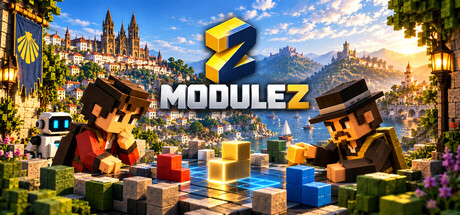
Generative AI was used to assist in the creation of some pre-generated promotional artwork for the Steam store page. ModuleZ does not use generative AI to generate content during gameplay.
Generative AI tools were used during development to create and refine some pre-generated visual and other game assets. All AI-assisted content was reviewed and edited by the developer before being included in the game. No AI content is generated during gameplay.
Generative AI tools were used throughout development to create all of the game's visual art assets and program code, as well as localization and promotional materials. All outputs were directed, reviewed, edited, tested, and integrated under the developer's supervision. The game does not generate AI content during gameplay or connect to external AI services.
Parts of this store page description, along with the in-game achievement names and descriptions, were drafted with the help of an AI assistant and then reviewed and edited by the developer. All artwork, animation, music, sound design, level design and gameplay content in Boomfrog was made by hand or generated procedurally in code. The game does not use generative AI while you play. Nothing in Boomfrog is created or altered by AI at runtime.
Generative AI tools were used to assist in the creation or editing of certain visual assets, promotional materials, cinematic elements, draft copy, and audio elements.
All final outputs were reviewed and selected by the development team, and were revised where necessary before being incorporated into the game and related materials.
Generative AI is not used during gameplay, and the game does not connect to any generative AI services.
Pre-generated generative AI was used during development to assist with the creation and refinement of some 2D pixel-art assets, including characters, animals, equipment, environments, and user-interface elements, as well as localized text. All AI-assisted content was reviewed, edited, and integrated by the developer. The game does not use live-generated AI and does not generate content during gameplay.
This game uses a large language model to generate the AI companion’s dialogue and ending titles in real time. Dialogue responses are generated based on player input and conversation context. Generative AI tools were also used to help create or edit some store and promotional artwork and assist with text translation and localization.
Generative AI tools were used to assist in the creation of some 3D models and textures in this game. All such content was pre-generated during development, reviewed and adjusted as necessary by the developer before being included in the game. The game does not use generative AI to generate content during gameplay.
Generative AI was used during development to create and refine some 2D visual assets, Steam store artwork, trailer imagery, and localization drafts. All output was reviewed and edited by the developer before inclusion. The game does not generate AI content during play and does not connect to external AI services.
Neon Bastion uses pre-generated AI-assisted artwork and some written game/interface text. All content was reviewed and integrated by the developer. No AI content is generated during gameplay.
Store marketing images (Steam capsule art — header, main, small, and vertical capsules) were created with AI image generation tools and then edited/reviewed by the development team. In-game screenshots and gameplay footage represent the actual game.
AI tools were used during the development of this game to assist with brainstorming, development, and content refinement. All final content was reviewed and integrated by the development team. The game does not generate AI content in real time during gameplay.
This game uses generative AI to assist in the creation of chimera image assets and text content used in the game. Generative AI is also used to assist with game planning and design, programming and development, and translation into English. All AI-generated content and AI-assisted translation are produced during development. Generative AI is not used to generate new content during gameplay.
This game uses generative AI extensively during development to assist with programming and to create art, music, and some written materials. All content included in the final game is manually reviewed, edited, and integrated; no content is generated in real time while the game is running.
Pre-generated AI tools were used during development to assist with portions of source code and localization, and to create the store capsule/key artwork. All outputs were reviewed, edited, and curated by the developers. The game's playable visuals are rendered procedurally by the shipped code. The product contains no live-generative AI, does not accept AI prompts from players, and does not send player data to an AI service.
Generative AI was used during development to assist with drafting and refining some localization text and selected promotional artwork. All AI-assisted material is pre-generated, reviewed, and edited by the developer before inclusion. The game does not generate AI content during gameplay and does not connect to external AI services.
Some 2D visual assets and videos in the game may have been produced using AI‑assisted tools. Every AI‑generated element has been manually inspected, verified, and approved to ensure quality and consistency. All remaining content — such as 3D models, audio, effects, and programming — is fully handcrafted by human creators.
Generative AI tools were used during development to assist with selected pre-generated visual references, 3D vehicle and cosmetic assets, promotional images and video, and draft localization. All AI-assisted content was reviewed, edited, curated, and integrated by the developer. The game does not generate AI content during gameplay and does not connect to external AI services.
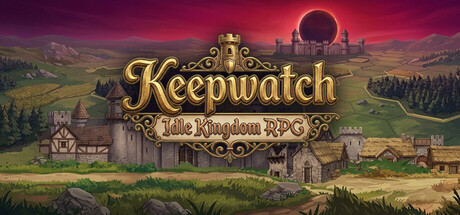
Some assets in Keepwatch were created with the assistance of generative AI
tools. This includes portions of the icon set, UI elements, a number of sound
effects, and some character animations.
All AI-assisted output is reviewed, edited and integrated by hand to match the
game's hand-painted art direction, and none of it ships in the state it was
generated in.
Game code, systems design, economy balance and all written content are
authored entirely by hand.
Keepwatch does not use any AI systems at runtime. Nothing is generated on the
player's machine while the game is running.
Generative AI tools were used during development to create selected pre-generated textures, sound effects, and promotional artwork. These materials are used as individual components within the game and its marketing rather than being generated dynamically.
AI-assisted materials are selected, edited, adapted, composed, and integrated by the developer to fit the game's original visual and audio direction. The game's design, gameplay systems, implementation, world building, and overall creative direction are developed by the developer.
No generative AI is used during gameplay, and the game does not connect to external AI services while running.
Card illustrations, portraits, faction banners and store capsule artwork were created with generative AI image tools, then curated, edited and integrated by the developer. All game design, rules, card text, writing and music selection are human-made. No AI-generated content is produced at runtime.
This game's early development utilized local AI systems for generating initial ideas and imagery surrounding the stage layouts and the initial musical passages, then further edited manually through various pieces of software (Art software and DAWs + numerous VSTs).
Generative AI tools are used during development to write and revise game code, create artwork, music and sound effects, and assist with writing and localization. This includes content in the game and its store and promotional materials. The developer directs and reviews the work before inclusion. No content is generated using generative AI during gameplay.
In the process of creating some 2D prop assets, generative AI technology was used in an assistive capacity. Any such assets are subject to our production pipeline, where they will be reviewed and replaced by our art and development teams to ensure they meet our quality standards and creative direction.
Generative AI tools were used as development assistants, including assistance drafting and editing portions of store-page marketing text. All player-facing content is reviewed and edited by the developer. Main Street Operator does not use generative AI during gameplay and does not connect to external AI services while the game is running.
Some of the content in this game was created with the help of generative AI tools.
This includes parts of the visual assets (icons, textures and UI images), some audio
(music and sound effects), parts of the in-game text (item descriptions, dialogue and
story text), and the translations of the game's text into other languages.
All of this content was generated during development, then reviewed, edited and
assembled by hand before being included in the game. The game itself does not generate
any content with AI while you play, and it does not send any player data to AI services.
Generative AI was used to assist with bug fixes, text editing, and portions of the game's music. Generative AI was not used for the game's direction, art direction, or gameplay mechanics.
Generative AI tools were used during development to create some artwork, including character art, environments, and promotional images. These are pre-made assets. No content is generated by AI during gameplay.
The visual assets in Eras Showdown were created using generative AI: the icons for units, items and materials, the background images, and the user-interface graphics. Every result was selected, reworked and integrated into the game by hand.
This content is pre-generated in full and ships with the installation. Eras Showdown does not generate any content via AI while playing, and it does not connect to any AI service.
Generative AI tools were used as part of the production process to assist in creating and refining some 2D artwork and visual assets. All such content is pre-generated and reviewed before being included in the game. No AI-generated content is created during gameplay.
This game may include developer-directed generative AI content used during development for select visual assets, concept art, marketing materials, store/community artwork, placeholder imagery, and/or edited production assets.
All AI-assisted content is reviewed, selected, edited, and implemented by the developer. The game does not use live generative AI to create gameplay, dialogue, or player-facing content at runtime.
Some of this game's content was created with the assistance of generative AI tools and was then reviewed, edited and curated by the developer. This includes a portion of the 3D weapon and armor models (generated with AI 3D tools and hand-adjusted), the game logo and store/marketing artwork (AI image tools), and the translation of interface text into languages other than Turkish and English. No content is generated by AI at runtime and the game does not connect to any AI service.
Crappy Corp uses a small amount of pre-generated AI content, all created
during development and shipped as fixed assets: the looping background
video on the main menu, and the game's achievement icons. Both were made
with AI image and video tools and then edited and finished by hand.
Parts of the game's code were also written with AI assistance.
Everything else is not AI generated. The 3D models, characters,
environments and animations are licensed commercial asset packs or made
by us, and all sound effects and music come from licensed sound
libraries. The in-game crew voice is Steam voice chat between real
players, not synthesized speech.
No AI content is generated while you play.
Pre-generated AI artwork was used for characters, enemies, bosses, environments, interface icons, and store and promotional artwork. These assets were selected, edited, and integrated during development. The game does not generate AI content during play or connect to external AI services.
Generative AI was used to draft text only: the in-game interface strings, the achievement names and descriptions, their translations into 13 non-English languages, and this store page. All of it was reviewed and edited by the developer before release.
No AI-generated images, audio or video are used. This game ships with no image or audio files at all — every shape, sound and note is produced by the game's own code at run time.
Nothing is generated while you play. The game makes no network calls and contacts no AI service.
Pre-generated AI content: TROPHY FLEET's visual assets and its synthetic character voice performances were produced using AI image and voice generation as a starting point during development. Every generated asset was then selected, chroma-keyed against a solid key background, retouched, resized and hand-aligned by the developer before shipping. Boss artwork is collision-aligned to gameplay: each visible weak point on a boss sprite corresponds to an actual targetable hitbox at that exact position. Source masters and shipped runtime assets are both retained in the project repository.
The soundtrack is not AI-generated. It consists of 39 CC0-licensed music tracks, curated per world and normalized to -16 LUFS, with full attribution shipped in the game's THIRD_PARTY_NOTICES file.
All game design, code, level authoring, enemy behaviour, boss mechanics and balance systems are the developer's own work.
The game generates no content while it is running. It sends no player data or prompts to any AI service or any other service, requires no network connection, and functions fully offline.
Generative AI was used to assist in the creation of some pre-generated promotional artwork for the Steam store page. ModuleZ does not use generative AI to generate content during gameplay.
Generative AI tools were used during development to create and refine some pre-generated visual and other game assets. All AI-assisted content was reviewed and edited by the developer before being included in the game. No AI content is generated during gameplay.
Generative AI tools were used throughout development to create all of the game's visual art assets and program code, as well as localization and promotional materials. All outputs were directed, reviewed, edited, tested, and integrated under the developer's supervision. The game does not generate AI content during gameplay or connect to external AI services.
Parts of this store page description, along with the in-game achievement names and descriptions, were drafted with the help of an AI assistant and then reviewed and edited by the developer. All artwork, animation, music, sound design, level design and gameplay content in Boomfrog was made by hand or generated procedurally in code. The game does not use generative AI while you play. Nothing in Boomfrog is created or altered by AI at runtime.
Generative AI tools were used to assist in the creation or editing of certain visual assets, promotional materials, cinematic elements, draft copy, and audio elements.
All final outputs were reviewed and selected by the development team, and were revised where necessary before being incorporated into the game and related materials.
Generative AI is not used during gameplay, and the game does not connect to any generative AI services.
Pre-generated generative AI was used during development to assist with the creation and refinement of some 2D pixel-art assets, including characters, animals, equipment, environments, and user-interface elements, as well as localized text. All AI-assisted content was reviewed, edited, and integrated by the developer. The game does not use live-generated AI and does not generate content during gameplay.
This game uses a large language model to generate the AI companion’s dialogue and ending titles in real time. Dialogue responses are generated based on player input and conversation context. Generative AI tools were also used to help create or edit some store and promotional artwork and assist with text translation and localization.
Generative AI tools were used to assist in the creation of some 3D models and textures in this game. All such content was pre-generated during development, reviewed and adjusted as necessary by the developer before being included in the game. The game does not use generative AI to generate content during gameplay.
Generative AI was used during development to create and refine some 2D visual assets, Steam store artwork, trailer imagery, and localization drafts. All output was reviewed and edited by the developer before inclusion. The game does not generate AI content during play and does not connect to external AI services.
Neon Bastion uses pre-generated AI-assisted artwork and some written game/interface text. All content was reviewed and integrated by the developer. No AI content is generated during gameplay.
Store marketing images (Steam capsule art — header, main, small, and vertical capsules) were created with AI image generation tools and then edited/reviewed by the development team. In-game screenshots and gameplay footage represent the actual game.
AI tools were used during the development of this game to assist with brainstorming, development, and content refinement. All final content was reviewed and integrated by the development team. The game does not generate AI content in real time during gameplay.
This game uses generative AI to assist in the creation of chimera image assets and text content used in the game. Generative AI is also used to assist with game planning and design, programming and development, and translation into English. All AI-generated content and AI-assisted translation are produced during development. Generative AI is not used to generate new content during gameplay.
This game uses generative AI extensively during development to assist with programming and to create art, music, and some written materials. All content included in the final game is manually reviewed, edited, and integrated; no content is generated in real time while the game is running.
Pre-generated AI tools were used during development to assist with portions of source code and localization, and to create the store capsule/key artwork. All outputs were reviewed, edited, and curated by the developers. The game's playable visuals are rendered procedurally by the shipped code. The product contains no live-generative AI, does not accept AI prompts from players, and does not send player data to an AI service.
Generative AI was used during development to assist with drafting and refining some localization text and selected promotional artwork. All AI-assisted material is pre-generated, reviewed, and edited by the developer before inclusion. The game does not generate AI content during gameplay and does not connect to external AI services.
Some 2D visual assets and videos in the game may have been produced using AI‑assisted tools. Every AI‑generated element has been manually inspected, verified, and approved to ensure quality and consistency. All remaining content — such as 3D models, audio, effects, and programming — is fully handcrafted by human creators.
Generative AI tools were used during development to assist with selected pre-generated visual references, 3D vehicle and cosmetic assets, promotional images and video, and draft localization. All AI-assisted content was reviewed, edited, curated, and integrated by the developer. The game does not generate AI content during gameplay and does not connect to external AI services.
Some assets in Keepwatch were created with the assistance of generative AI
tools. This includes portions of the icon set, UI elements, a number of sound
effects, and some character animations.
All AI-assisted output is reviewed, edited and integrated by hand to match the
game's hand-painted art direction, and none of it ships in the state it was
generated in.
Game code, systems design, economy balance and all written content are
authored entirely by hand.
Keepwatch does not use any AI systems at runtime. Nothing is generated on the
player's machine while the game is running.