Public Steam disclosure research27,820 disclosures tracked
Where do games disclose AI use?
Search developers’ Steam disclosures, compare classified AI use across
games, and follow recorded changes.
This index adds cross-game classifications and statistics to
statements published on individual store pages.
Groups reflect automatic analysis of public disclosures; mature records are excluded. These counts do not measure AI use across all of Steam.
Missing or unclear statements cannot establish whether a game uses AI.
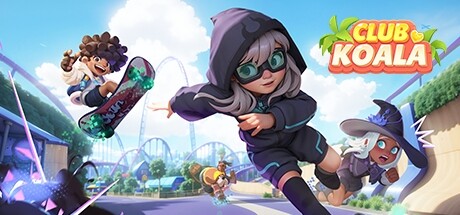
Club Koala uses AI integration regarding NPCs (non-playable characters). Our NPCS are intelligent, adaptable and will grow alongside players to enhance gaming experience. Think of Club Koala’s AI NPCs as your pals as they will foster unique interactions and dialogues. This results in personalized experiences tailored to each player's unique play style, maximizing engagement and enjoyment.
They are there to assist you and offer personalised challenges and quests, elevating the overall gaming experience. NPCs dynamically evolve and contribute to intricate narratives through AI. This allows players to shape their own stories, immersing themselves in a fantasy world where choices and actions shape the evolving plot. In Club Koala you are bound to experience gameplay like never before.
GPT technology is used in the development of Hysteria in Howlsbend to power conversations between players and the cast of characters. The technology generates responses based on the input provided by the player, and a tailored AI context carefully crafted by the team. This enables the characters to generate natural dialogues, and evolve over the game experience by having emotional curves.
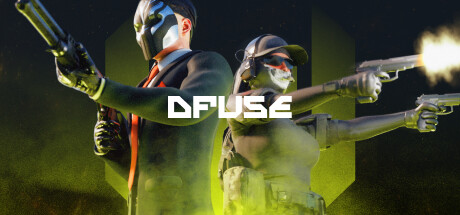
We provide an AI assisted tool for players to create their own cosmetics for our game. It exclusively is used as a UGC tool, so players do not need to achieve high technical skills to be able to create new content for DFUSE.
In "Stay Alive My Son," artificial intelligence (AI) plays a crucial role at two distinct points in the game to enhance player immersion and emotional engagement. Specifically, AI is employed during an interaction with Yathay Pin's digital replica in Level 01 and once again in Level 06. This is programmed directly using existing Unreal Engine Blueprints nodes.
The AI integration is meticulously designed to enable Yathay's digital eyes to follow the player's movements continuously. This technology ensures that Yathay appears to be directly engaging with the player, fostering a deeper emotional connection. The purpose behind this AI application is to intensify the sense of direct communication and interaction with Yathay, thereby amplifying the player's emotional investment and empathy towards his journey and experiences.
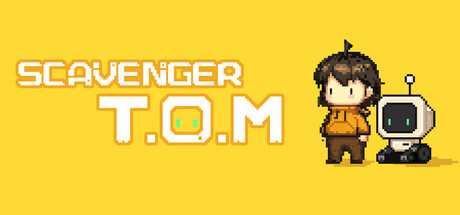
Scavenger T.O.M utilizes AI-based environment generation technology to explore and reconstruct the radiation-ravaged surface in real-time. In hazardous areas where players cannot venture directly, AI acts as T.O.M’s eyes and analytical core, dynamically processing the environment based on movement paths.
The Diffusion model-based AI system goes beyond simple image generation, creating explorable spaces at the object level and seamlessly integrating them into the game environment to enhance interactivity.
Through this technology, Scavenger T.O.M provides a unique survival environment that evolves with the player's exploration. Step into the AI-generated wasteland and craft your own survival strategy.
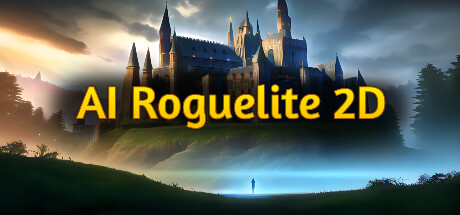
This game uses AI to generate text, game mechanics, images, and sound effects on the fly based on the player's world description. Some in-world interactions are also powered by an LLM in real time.
RaceOnLife uses AI-driven NPC systems to create more dynamic interactions inside the game world.
Some NPCs are designed to remember previous conversations, react to the player’s behavior, and respond differently depending on how the player communicates with them. These interactions may affect how NPCs guide, assist, ignore, challenge, or oppose the player during gameplay.
Our goal is to make the island feel more alive, where conversations with non-player characters are not just static dialogue lines, but part of the player’s personal journey through the story and open world.
AI features are used to support NPC behavior, dialogue variation, and player interaction systems. Core gameplay, world design, missions, vehicles, races, combat, progression, and major story content are created and directed by our development team.
For live AI interactions, we are working with safety rules and moderation limits to reduce the risk of inappropriate, harmful, or illegal generated content.
Connects to 3rd-Party Service for AI Content Generation: openai.com
The key idea behind this game is to allow players to generate their own situations, scenarios, effects etc, and for that content to be visible by other players. This demands the use of AI and without AI this game can't exist.
The specific art and style shown so far is subject to change based on the general player feedback.
We believe AI can create new experiences for the player not possible before. In this game AI is used to generate text responses to make the NPC's in the game dynamically act and respond like humans. This differs from previously available technologies since all responses are tailored to this player input.
This game utilizes the GPT interface provided by OpenAI to generate text. Specifically, in the text adventure, it generates game objectives, story backgrounds, and character information. In the journey mode, it generates game events, interactive items, all real-time dialogue content, and descriptions for generated images. The pre-rendered image resources are generated using stable diffusion and DALL·E.
This game uses a locally-run language model to power live, on-device conversations with an AI character — no data leaves your computer. All visual and audio assets are human-made or commercially licensed. A small number of assets used AI generation as an early drafting tool; each was subsequently revised and finalized by human artists to meet our visual and quality standards.
Tel-AI-phone uses AI image generation, generating images based off of user's inputs. The images are passed between players who then describe and generate their own version of the image. Another AI is used to generate descriptions of images submitted by users.
This app will generate all its responses using:
- OpenAI (ChatGPT) and Google TTS for its paid version.
- LMStudio, Overtone, or VoiceVOX for its free version
Suck Up! uses advanced AI to create dynamic gameplay. Players interact with AI characters using their voice, and the AI responds in real time based on tone and strategy. With unique personalities and behaviors, the AI challenges players to outwit them, ensuring immersive and unpredictable experiences.
The game will provide an opportunity to try yourself in a story led by a non-human.
The AI explained exactly how it would act and interact with the player if they had a certain personality. And we recreated it in a game. All dialogue with the player is written by AI.
This game makes use of state of the art generative text and voice services. Shouldermen relies on OpenAI GPT-5 for dialog and Eleven Labs for custom voices and Deepgram for voice input.
Our game is about shooting movies. We also allow players to create their own movies, including having characters say the lines of the movie script. Players can write dialogue and generate audio. The 3D animated characters act out the script.
In our application, ChatGPT is used to periodically provide players with tips and advice during their gaming sessions. This service is designed to offer personalized guidance based on the player's specific situations and challenges, supporting the improvement of their gaming skills. Players can receive advice that is custom-fitted to their gameplay style and preferences, enriching their gaming experience with continuous support. This ensures that both children and adults can receive the best advice suitable for their current skill level, making the journey towards becoming a gaming pro more accessible and enjoyable.
We integrated with Meshy to allow players to generate 3D furniture and decor for their rooms using a text prompt. Any 3D assets generated in this way are purely for personal use and cannot be placed on our download center.
Generative AI was not used in the making of our 2D artwork or included 3D assets.
Connects to 3rd-Party Service for AI Content Generation: Meshy
This is a creative application, meant for users to piece together an AI character bot for use in VR Social Chat Platforms, social media, and streaming services. It let's users use various models and services of their choice to create an AI Companion.
The game uses real-time AI models to simulate immersive conversations with the non-player characters you meet in-game. Each character has a hand-written backstory that impacts how the conversation goes. This technology complements the manual worldbuilding and lore writing, and I would love your feedback on how well you think this works!
We provide free AI speech synthesis sources to users within a limited budget, and the services come from several third-party commercial cloud service providers such as Microsoft and Alibaba Cloud.
In the heart of a captivating murder mystery, 'Quiet on Set' employs advanced AI technology to dynamically craft dialogue in real-time. Immerse yourself in a world of intrigue as you interact with the enigmatic characters, employing natural language input, whether through typing or microphone interaction. Every conversation, every interaction, is a unique piece of the puzzle, offering an unrivaled level of immersion in the suspenseful unraveling of the mystery.
1001 Nights is a story-crafting game that started development as early as 2020, exploring creative narrative gameplay to bring players novel experiences they've never had before: telling stories and turning those stories into reality.All traditional game art assets are hand-crafted by our talented human artists. This includes character illustrations, scene models, UI elements, and all visual components that form the core aesthetic of our game. The game features an adaptive LLM-based storytelling system that responds to your unique inputs based on a language model called Qwen. Our narrative engine draws from the rich tradition of Persian folklore and our original hand-written story frameworks by paid writers, then dynamically adapts these materials to create personalized experiences based on your inputs. Each playthrough becomes a unique collaboration between you and our narrative system.Our guiding principle has always been to create gaming experiences that were previously impossible - where technology serves as a creative collaborator rather than a replacement for human imagination. The soul of 1001 Nights comes from our human creators, inspired by ancient Persian folklore and brought to life through innovative narrative systems.For technical details about our implementation and the academic research behind our systems, please refer to the in-game introduction, and our published papers available on our official website. We're a small indie team committed to pushing the boundaries of interactive storytelling while respecting both player creativity and artistic integrity.We welcome any questions or feedback about our creative process via adaeden1001[at]gmail[dot]com or through our Discord community. Your input helps us continue improving this unique storytelling experience.
We used AI service to make chatting with some NPCs in our game more fun and personalized for you. Your chat with the NPCs you can talk to will be periodic. You will have to wait for a while before you can talk to them again.
Our game leverages sophisticated artificial intelligence to create an immersive and unpredictable gameplay experience. Each citizen is powered by AI, enabling them to exhibit distinct personalities, react dynamically to player actions, and contribute uniquely to the mystery. This AI integration not only enhances the realism of the city environment but also ensures that no two playthroughs are the same, providing a fresh challenge every time.
Traditionally, NPCs (non-player characters) do not play active roles in video games. However, with the use of AI, they become the main characters of the game. Players can communicate with NPCs verbally through a microphone, and it is the AI that responds
* Contents below are copied from the game, the soundtrack does not use any Generative AI technology.
User will be able to talk in freeform with the NPCs within the game world according to the environment given to them.
Some of the evidence (photos on the wall, book covers) have been created using AI tools
This application allows usage of elevenlab's text to speech feature. Shall the user choose to use this feature, they should create an account over elevenlabs.com and import their API key. It's entirely optional and subject to both Noise-o-matic's EULA as well as elevenlab's EULA.
The TTS feature also uses Sherpa TTS. Some of the redistributable models available from Sherpa's project (https://github.com/k2-fsa/sherpa-onnx/releases/tag/asr-models) are downloadable in-app.
Quest Machina uses generative AI combined with your input to create a unique world just for you. Story, descriptions, and dialog are generated using OpenAI. Character portraits, planet sprites, and location art are generated using Leonardo.ai.
In this game Akpala, there is a feature that allows players to converse with NPC characters during gameplay.
For the responses to the player's voice input, we use AI-generated text.
ChatWaifu does not include any large language models by default but supports importing custom large language model files by user. When interacting with the 3D character on the desktop via voice or keyboard input, ChatWaifu utilizes these models to generate and vocalize the conversation text.
The AI integrated into Mental creates a dynamic experience by automatically generating text, textures, sound, lighting, and gameplay mechanics. Each session offers unique stories, customized visual environments, and challenges adapted in real-time to your actions, ensuring a consistently fresh and immersive adventure.
PatchWorld includes optional generative AI tools that players can use to create custom content for their worlds and devices.
Players can generate images, 360° skyboxes, 3D meshes, and audio samples by entering text prompts using in-game tools such as the GenieBox device or scripting blocks. Each generation is initiated directly by the player and takes a short amount of time to complete.
Generated content can be used to decorate worlds, create sound effects, and build custom musical instruments. By default, all generated content remains private to the creator and is only shared with others if the player chooses to publish their world.
Generative AI features are entirely optional and are designed to support creativity, experimentation, and collaborative world-building.
Project Electric Sheep uses generative AI to create character conversations inspired by your dream prompts, as well as to tailor dream worlds to your chosen topics. Below is some more information about which generative AI services we're using in PES, and how:
1. We use ChatGPT to generate NPC dialogue when dream worlds are created and when you reply to an NPC. We use AWS to generate voices for our NPCs.
2. We also use ChatGPT to write in-game world building details, such as graffiti and advertisements, as well as to create the dream description that displays on the dream loading screen.
3. We use DALL·E 2 to paint in-game murals inspired by your dream prompt.
4. Lastly, during the dream generation phase, we use ChatGPT to make creative decisions about world design based on the given dream prompt.
Players can create and modify games using text prompts. The game uses AI (LLM) to understand the player's request and then uses LLM to construct the game using a pre-defined asset library.
If your ingame choices are inconsistent or raise moral questions, you’ll have to justify them in writing. An AI will read your defense and decide whether it counts as a solution. Convince it — because its verdict carries real consequences in the game.
Uses AI engine to generate dialog with your Sock Pets, based off pre-scripted prompts, such as family-friendly and age-appropriate fun facts or jokes. No user-end prompting is allowed.