Public Steam disclosure research25,380 disclosures tracked
Where do games disclose AI use?
Search developers’ Steam disclosures, compare classified AI use across
games, and follow recorded changes.
This index adds cross-game classifications and statistics to
statements published on individual store pages.
Groups reflect automatic analysis of public disclosures; mature records are excluded. These counts do not measure AI use across all of Steam.
Missing or unclear statements cannot establish whether a game uses AI.
Some visual assets used in the game and on this Steam page were created with the assistance of AI-generated imagery. These elements have been significantly modified and manually edited to align with the game's overall art direction and art style.
In order to create better backgrounds and focus on the core parts of the game, we used AI to help create some of the backgrounds and props in the game. After the AI generates these images, our artists still need to make detailed modifications to them to ensure that the style of the backgrounds and props matches the environment, worldview, UI, and characters drawn by our talented artists.
We used generative AI during development to draft some artwork. The game does not generate content at runtime and players cannot create AI content.
All assets are cleared for copyright and policy-compliant commercial use.
Some visual assets, such as icons and illustrations, were generated or enhanced using AI tools, and were further refined and integrated by the developer.
Some visual assets such as enemy designs and background art were created using AI-generated content, and all sound effects were sourced from royalty-free libraries such as Freesound.org. Localization was assisted using machine translation tools, with manual review and adjustments. No AI was used in the game's code or core gameplay design.
Code: None
Game Mechanics: None
Story: None
Gameplay: None
3D models: None
2D graphics: None
In-Game Cutscenes: None
Movies: Some
Video generated from 3D models I made.
Music: Some
12 Songs out of over 120.
Lyrics are still self-made for these though.
This game uses AI-generated visual assets created with MidJourney during development. These include character illustrations, background art, and UI elements. All assets were reviewed and curated by the development team to ensure quality and originality. The game does not use AI to generate content during gameplay.
Some visuals in the game (e.g., background art and character illustrations) were created using AI tools during development. These were inspired by public domain material and were edited extensively. No AI is used during gameplay or to generate real-time content.
This game uses AI technology for sketch-to-image generation. Players can draw sketches in-game and use AI models based on Stable Diffusion 1.5 to convert sketches into complete images. We use self-trained LoRA models to provide specific artistic styles.
All AI-generated content is controlled through a strict prompt filtering system to ensure compliance with Steam's content policies.
Music from Old Fairy Tales
The music was inspired by reading old, well-known fairy tales, which I have rewritten and summarized in verse. With the help of AI (partly through singing and refining with AI) and post-production in Audacity, I was able to develop new songs from them.
Generative AI was used in a limited capacity during development. The final game does not include AI-generated art, audio, dialogue, or live AI-driven content.
AI was used to to mass-generate funny and interesting resumes for the players. Minimal AI was used for image processing, instead opting for human-created content.
Some in-game content (e.g., art, text) was created with AI assistance, then rigorously edited by our team. We only use ethically sourced data and comply with copyright standards.
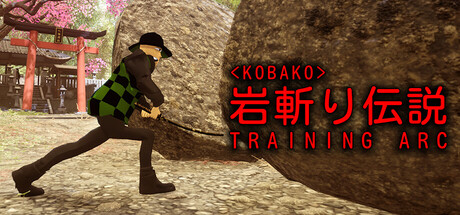
All voice lines in Training Arc were generated using AI narration tools. There is no live generation or player-facing AI system.
All audio is pre-recorded, voiced by a warm, slightly gruff ossan voice with a strong local accent.
He’ll accompany you through your training. Quiet, steady. Always there.
Kōbako.
During development, we use AI-assisted tools in a limited and transparent way. These tools may help us with coding support, minor visual stylization, and creating quick promotional or icon-style variations based on assets we made ourselves. In all cases, the final game reflects the work, creative direction, and decisions of our own development team.
As a small team with a limited budget, we used AI to assist with background music and multi-language localization. This allowed us to bring the game to a wider audience while focusing our resources on gameplay and visual design.
Some visual assets used in the game and on this Steam page were created with the assistance of AI-generated imagery. These elements have been significantly modified and manually edited to align with the game's overall art direction and art style.
In order to create better backgrounds and focus on the core parts of the game, we used AI to help create some of the backgrounds and props in the game. After the AI generates these images, our artists still need to make detailed modifications to them to ensure that the style of the backgrounds and props matches the environment, worldview, UI, and characters drawn by our talented artists.
We used generative AI during development to draft some artwork. The game does not generate content at runtime and players cannot create AI content.
All assets are cleared for copyright and policy-compliant commercial use.
Some visual assets, such as icons and illustrations, were generated or enhanced using AI tools, and were further refined and integrated by the developer.
Some visual assets such as enemy designs and background art were created using AI-generated content, and all sound effects were sourced from royalty-free libraries such as Freesound.org. Localization was assisted using machine translation tools, with manual review and adjustments. No AI was used in the game's code or core gameplay design.
Code: None
Game Mechanics: None
Story: None
Gameplay: None
3D models: None
2D graphics: None
In-Game Cutscenes: None
Movies: Some
Video generated from 3D models I made.
Music: Some
12 Songs out of over 120.
Lyrics are still self-made for these though.
This game uses AI-generated visual assets created with MidJourney during development. These include character illustrations, background art, and UI elements. All assets were reviewed and curated by the development team to ensure quality and originality. The game does not use AI to generate content during gameplay.
Some visuals in the game (e.g., background art and character illustrations) were created using AI tools during development. These were inspired by public domain material and were edited extensively. No AI is used during gameplay or to generate real-time content.
This game uses AI technology for sketch-to-image generation. Players can draw sketches in-game and use AI models based on Stable Diffusion 1.5 to convert sketches into complete images. We use self-trained LoRA models to provide specific artistic styles.
All AI-generated content is controlled through a strict prompt filtering system to ensure compliance with Steam's content policies.
Music from Old Fairy Tales
The music was inspired by reading old, well-known fairy tales, which I have rewritten and summarized in verse. With the help of AI (partly through singing and refining with AI) and post-production in Audacity, I was able to develop new songs from them.
Generative AI was used in a limited capacity during development. The final game does not include AI-generated art, audio, dialogue, or live AI-driven content.
AI was used to to mass-generate funny and interesting resumes for the players. Minimal AI was used for image processing, instead opting for human-created content.
Some in-game content (e.g., art, text) was created with AI assistance, then rigorously edited by our team. We only use ethically sourced data and comply with copyright standards.
All voice lines in Training Arc were generated using AI narration tools. There is no live generation or player-facing AI system.
All audio is pre-recorded, voiced by a warm, slightly gruff ossan voice with a strong local accent.
He’ll accompany you through your training. Quiet, steady. Always there.
Kōbako.
During development, we use AI-assisted tools in a limited and transparent way. These tools may help us with coding support, minor visual stylization, and creating quick promotional or icon-style variations based on assets we made ourselves. In all cases, the final game reflects the work, creative direction, and decisions of our own development team.
As a small team with a limited budget, we used AI to assist with background music and multi-language localization. This allowed us to bring the game to a wider audience while focusing our resources on gameplay and visual design.