Public Steam disclosure research25,383 disclosures tracked
Where do games disclose AI use?
Search developers’ Steam disclosures, compare classified AI use across
games, and follow recorded changes.
This index adds cross-game classifications and statistics to
statements published on individual store pages.
Groups reflect automatic analysis of public disclosures; mature records are excluded. These counts do not measure AI use across all of Steam.
Missing or unclear statements cannot establish whether a game uses AI.
Some of the game's artwork (such as background images) and store/marketing assets were created with the assistance of generative AI tools, and all of them were reviewed and adjusted by the developer. Some in-game descriptive texts
were also drafted with AI assistance and manually verified. All AI-assisted content is pre-rendered — the game does not generate any content or code with AI during gameplay. Trailer narration uses VOICEVOX text-to-speech (VOICEVOX:
Zundamon).
Generative AI was used strictly to create temporary concept art and placeholder assets during early development. All of these placeholders are being systematically replaced with custom or commissioned assets prior to the game's final release.
Some of this game's artwork — including key art, the main-menu background, and store/marketing images — was created with the help of generative AI (Midjourney) and then curated and edited by the developer.
Everything else, including gameplay, code, sound, and the in-game pixel art, is human-made or from licensed asset packs. No AI-generated content is produced live while you play.
Some in-game text translations were produced with AI assistance and reviewed for accuracy.
I used modern AI tools as creative assistants while building the world of my game. This allowed me to share the dark fantasy universe in my mind with you in a much more vivid and detailed way.
Some pre-rendered assets in this game and on its store page, including artwork, music, and sound effects, were created with the assistance of generative AI tools. All AI-assisted content was directed, reviewed, and edited by the developer. No content is generated by AI during gameplay.
Syncline is developed by me — AI tools were used to assist with parts of development, including code, some text content (UI copy, tutorial hints, level descriptions, store page copy), localization/translations, and some audio. All such content was directed by me and reviewed/edited before being included. No content is generated by AI at runtime — everything players see, hear, and play is fixed at build time.
In this game, the developer uses AI tools in the creation of the following pre-generated content that players see:
1. Artwork: Image assets and promotional materials.
2. Text: In-game text, store page descriptions, and their multilingual translations.
Some of the user interfaces were generated using AI; the reason for this is that I am not a graphic designer myself and cannot afford to hire a service provider to create them.
Heartwood Incremental was made by a solo developer working alongside an AI assistant (Anthropic's Claude). The AI helped write the game's code, including the code that procedurally draws its pixel-art sprites, tree, and icons, and helped draft written content such as upgrade, achievement, and store text. Everything was directed, reviewed, and refined by the human developer, and hand-checked before release. No generative AI runs while you play: nothing is created on your device at runtime, and all art and text are fixed in the build.
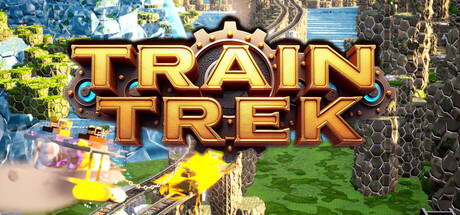
Train Trek uses generative AI in two ways.
During development we used AI tools to help make some assets: the user-interface art (HUD and menu icons, menu artwork, frames, button plates, mouse cursors), the instrumental soundtrack, and some sound effects. All of it was chosen, edited and finished by hand before it shipped. The 3D models are built procedurally by our own scripts, and the design, world generation and balancing are authored by hand. Parts of the source code were written with an AI coding assistant, reviewed and tested by the developer.
While you play, the game speaks using a text-to-speech model that ships inside the game and runs entirely on your own computer. It voices tutorial guidance, hints and menu narration instead of pre-recorded audio. It needs no internet connection, sends nothing anywhere, and never records or listens to you. It only reads lines we wrote and shipped with the game - it does not invent dialogue.
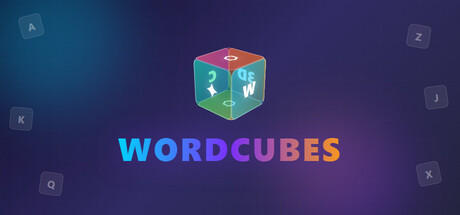
Generative AI tools were used during development to assist with the game's custom C# code, gameplay systems, UI structure and layout, in-game written content, official word list, localization in nine languages, and draft store-page copy.
All AI-assisted outputs were reviewed, edited, tested, and integrated by the developer. Visual art, icons, fonts, music, and sound effects are separately licensed third-party assets.
No generative AI is used during gameplay, and the game does not connect to external AI services.
This game uses content created with the assistance of generative AI. Some of the game's artwork and visual assets, along with its store page and marketing text, were produced with generative AI tools. The core gameplay — levels, mechanics, and the real-time 3D visuals rendered by the game engine — is hand-designed and code-generated by the developer. No generative AI content is created in real time during gameplay; all assets are finalized and reviewed before release.
As a solo developer, I unfortunately cannot afford to hire artists or creators, so the media in my game is a mix of AI-generated and hand-edited/crafted. I would love to have my assets professionally made, but the cost of somewhere around two thousand icons, portraits, and other media assets would be far more than I can afford as just some guy working alone. I've done my best to create the best art and sounds with the tools I have access to, trying extremely hard to make things you will enjoy. If this game were to ever be successful enough, I'd love to hire professional artists one day to remake my assets (and for my future games). I thank you for your understanding, and I hope the game is good enough to get me there eventually!
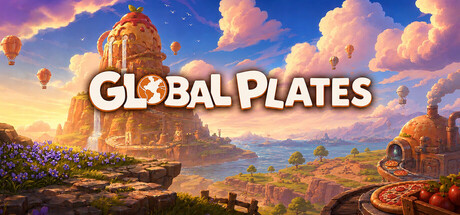
Global Plates uses generative AI in limited, development-time ways only:
• Music: the game's soundtrack was created using AI music generation tools, then selected and edited by the developer.
• Store page artwork: the key art is based on real screenshots rendered directly from the game, stylized with AI image tools.
All other content — 3D environments, machines, characters, and game design — was hand-crafted by the developer or licensed from professional asset libraries. The game does not use generative AI at runtime: nothing is AI-generated while you play.
AI tools were used in writing the game's code. No AI generated images, music, audio, or models were used. All artwork is Public-Domain paintings from famous, historical artists.
AI tools were used during development to assist with the creation and refinement of some visual assets. All content included in the final game was selected, edited, and integrated by the developer.
The masterpieces featured in this game are real public-domain paintings, digitized from high-resolution scans. They are not AI-generated.
Generative AI was used only in the following areas: some artwork other than the masterpieces (UI, characters, backgrounds), some sound, and localization.
Fish species artwork in Swimcraft is pre-rendered AI-generated imagery. All venue photography is the developer's own, and all audio, UI and game code are non-generated. No AI content is generated live during play.
AI tools were used to generate the visual assets, logos, and images featured on this store page and inside the application. The software itself is a local utility and does not dynamically generate any AI content during runtime.
Some images used in the game were created or assisted with the help of AI-generated content. All AI-generated assets were reviewed, edited, and integrated by the developer as part of the game's final artwork.
Generative AI tools were used during development to create and manually refine some illustrations, store page artwork, and music tracks, as well as to assist with text preparation and localization. The game does not generate any AI content in real time.
Some 2D art assets are created with AI-assisted pixel-art tools. Some sound effects and music are generated with AI audio tools. All AI-generated assets are reviewed, curated, and edited by the developer. No AI-generated content depicts real people, and all assets are used in compliance with the respective tools' licenses.
Some static visual assets used for Jigsaw Sweeper were created or refined with generative AI under developer direction, then manually selected, reviewed, edited, and integrated by the developer. This includes Steam achievement icons and may include selected store or marketing artwork.
The game does not generate AI content during gameplay, does not use AI to respond to player input, and does not connect to any external AI service while the game is running.
The Custom Image Puzzle feature lets players import local images from their own device. These images are not generated by the game, are not processed by an AI service, and are not shared through an online service.
The announcer voice audio is generated using text-to-speech technology. The game's phrase pool was written with AI assistance and human review.
Some commissioned store and library artwork may include AI-generated elements.
During Early Access, we use AI-generated voice-overs as temporary placeholders for some characters. These will be replaced with professionally recorded voice-overs during development or, at the latest, after the end of the Early Access period.
This game was created in collaboration with my friend Claude Code.
Listen.. I know AI is hated by the community, but I am a single developer with limited time and i wanted to make my progress during that time more efficient.
The direction comes from my side and the passion for this project is still real.
Some visual assets (creature sprites, plant and background illustrations, and tarot card art, including some store page images) were created using generative AI tools and then curated, edited, and art-directed by the developer. No AI content is generated during gameplay.
Color Cup Racing uses generative AI tools as part of the development and content creation process.
AI-assisted tools were used to help create or refine some game content, including development support, visual concepts, marketing materials, and/or music assets. All content included in the game is reviewed, selected, edited, and implemented by the developer before release.
The game does not generate AI content during gameplay. Players do not enter prompts, the game does not create live AI-generated images, audio, text, or code while running, and the game does not connect to external AI services during play.
Some of the game's artwork (such as background images) and store/marketing assets were created with the assistance of generative AI tools, and all of them were reviewed and adjusted by the developer. Some in-game descriptive texts
were also drafted with AI assistance and manually verified. All AI-assisted content is pre-rendered — the game does not generate any content or code with AI during gameplay. Trailer narration uses VOICEVOX text-to-speech (VOICEVOX:
Zundamon).
Generative AI was used strictly to create temporary concept art and placeholder assets during early development. All of these placeholders are being systematically replaced with custom or commissioned assets prior to the game's final release.
Some of this game's artwork — including key art, the main-menu background, and store/marketing images — was created with the help of generative AI (Midjourney) and then curated and edited by the developer.
Everything else, including gameplay, code, sound, and the in-game pixel art, is human-made or from licensed asset packs. No AI-generated content is produced live while you play.
Some in-game text translations were produced with AI assistance and reviewed for accuracy.
I used modern AI tools as creative assistants while building the world of my game. This allowed me to share the dark fantasy universe in my mind with you in a much more vivid and detailed way.
Some pre-rendered assets in this game and on its store page, including artwork, music, and sound effects, were created with the assistance of generative AI tools. All AI-assisted content was directed, reviewed, and edited by the developer. No content is generated by AI during gameplay.
Syncline is developed by me — AI tools were used to assist with parts of development, including code, some text content (UI copy, tutorial hints, level descriptions, store page copy), localization/translations, and some audio. All such content was directed by me and reviewed/edited before being included. No content is generated by AI at runtime — everything players see, hear, and play is fixed at build time.
In this game, the developer uses AI tools in the creation of the following pre-generated content that players see:
1. Artwork: Image assets and promotional materials.
2. Text: In-game text, store page descriptions, and their multilingual translations.
Some of the user interfaces were generated using AI; the reason for this is that I am not a graphic designer myself and cannot afford to hire a service provider to create them.
Heartwood Incremental was made by a solo developer working alongside an AI assistant (Anthropic's Claude). The AI helped write the game's code, including the code that procedurally draws its pixel-art sprites, tree, and icons, and helped draft written content such as upgrade, achievement, and store text. Everything was directed, reviewed, and refined by the human developer, and hand-checked before release. No generative AI runs while you play: nothing is created on your device at runtime, and all art and text are fixed in the build.
Train Trek uses generative AI in two ways.
During development we used AI tools to help make some assets: the user-interface art (HUD and menu icons, menu artwork, frames, button plates, mouse cursors), the instrumental soundtrack, and some sound effects. All of it was chosen, edited and finished by hand before it shipped. The 3D models are built procedurally by our own scripts, and the design, world generation and balancing are authored by hand. Parts of the source code were written with an AI coding assistant, reviewed and tested by the developer.
While you play, the game speaks using a text-to-speech model that ships inside the game and runs entirely on your own computer. It voices tutorial guidance, hints and menu narration instead of pre-recorded audio. It needs no internet connection, sends nothing anywhere, and never records or listens to you. It only reads lines we wrote and shipped with the game - it does not invent dialogue.
Generative AI tools were used during development to assist with the game's custom C# code, gameplay systems, UI structure and layout, in-game written content, official word list, localization in nine languages, and draft store-page copy.
All AI-assisted outputs were reviewed, edited, tested, and integrated by the developer. Visual art, icons, fonts, music, and sound effects are separately licensed third-party assets.
No generative AI is used during gameplay, and the game does not connect to external AI services.
This game uses content created with the assistance of generative AI. Some of the game's artwork and visual assets, along with its store page and marketing text, were produced with generative AI tools. The core gameplay — levels, mechanics, and the real-time 3D visuals rendered by the game engine — is hand-designed and code-generated by the developer. No generative AI content is created in real time during gameplay; all assets are finalized and reviewed before release.
As a solo developer, I unfortunately cannot afford to hire artists or creators, so the media in my game is a mix of AI-generated and hand-edited/crafted. I would love to have my assets professionally made, but the cost of somewhere around two thousand icons, portraits, and other media assets would be far more than I can afford as just some guy working alone. I've done my best to create the best art and sounds with the tools I have access to, trying extremely hard to make things you will enjoy. If this game were to ever be successful enough, I'd love to hire professional artists one day to remake my assets (and for my future games). I thank you for your understanding, and I hope the game is good enough to get me there eventually!
Global Plates uses generative AI in limited, development-time ways only:
• Music: the game's soundtrack was created using AI music generation tools, then selected and edited by the developer.
• Store page artwork: the key art is based on real screenshots rendered directly from the game, stylized with AI image tools.
All other content — 3D environments, machines, characters, and game design — was hand-crafted by the developer or licensed from professional asset libraries. The game does not use generative AI at runtime: nothing is AI-generated while you play.
AI tools were used in writing the game's code. No AI generated images, music, audio, or models were used. All artwork is Public-Domain paintings from famous, historical artists.
AI tools were used during development to assist with the creation and refinement of some visual assets. All content included in the final game was selected, edited, and integrated by the developer.
The masterpieces featured in this game are real public-domain paintings, digitized from high-resolution scans. They are not AI-generated.
Generative AI was used only in the following areas: some artwork other than the masterpieces (UI, characters, backgrounds), some sound, and localization.
Fish species artwork in Swimcraft is pre-rendered AI-generated imagery. All venue photography is the developer's own, and all audio, UI and game code are non-generated. No AI content is generated live during play.
AI tools were used to generate the visual assets, logos, and images featured on this store page and inside the application. The software itself is a local utility and does not dynamically generate any AI content during runtime.
Some images used in the game were created or assisted with the help of AI-generated content. All AI-generated assets were reviewed, edited, and integrated by the developer as part of the game's final artwork.
Generative AI tools were used during development to create and manually refine some illustrations, store page artwork, and music tracks, as well as to assist with text preparation and localization. The game does not generate any AI content in real time.
Some 2D art assets are created with AI-assisted pixel-art tools. Some sound effects and music are generated with AI audio tools. All AI-generated assets are reviewed, curated, and edited by the developer. No AI-generated content depicts real people, and all assets are used in compliance with the respective tools' licenses.
Some static visual assets used for Jigsaw Sweeper were created or refined with generative AI under developer direction, then manually selected, reviewed, edited, and integrated by the developer. This includes Steam achievement icons and may include selected store or marketing artwork.
The game does not generate AI content during gameplay, does not use AI to respond to player input, and does not connect to any external AI service while the game is running.
The Custom Image Puzzle feature lets players import local images from their own device. These images are not generated by the game, are not processed by an AI service, and are not shared through an online service.
The announcer voice audio is generated using text-to-speech technology. The game's phrase pool was written with AI assistance and human review.
Some commissioned store and library artwork may include AI-generated elements.
During Early Access, we use AI-generated voice-overs as temporary placeholders for some characters. These will be replaced with professionally recorded voice-overs during development or, at the latest, after the end of the Early Access period.
This game was created in collaboration with my friend Claude Code.
Listen.. I know AI is hated by the community, but I am a single developer with limited time and i wanted to make my progress during that time more efficient.
The direction comes from my side and the passion for this project is still real.
Some visual assets (creature sprites, plant and background illustrations, and tarot card art, including some store page images) were created using generative AI tools and then curated, edited, and art-directed by the developer. No AI content is generated during gameplay.
Color Cup Racing uses generative AI tools as part of the development and content creation process.
AI-assisted tools were used to help create or refine some game content, including development support, visual concepts, marketing materials, and/or music assets. All content included in the game is reviewed, selected, edited, and implemented by the developer before release.
The game does not generate AI content during gameplay. Players do not enter prompts, the game does not create live AI-generated images, audio, text, or code while running, and the game does not connect to external AI services during play.