Public Steam disclosure research25,383 disclosures tracked
Where do games disclose AI use?
Search developers’ Steam disclosures, compare classified AI use across
games, and follow recorded changes.
This index adds cross-game classifications and statistics to
statements published on individual store pages.
Groups reflect automatic analysis of public disclosures; mature records are excluded. These counts do not measure AI use across all of Steam.
Missing or unclear statements cannot establish whether a game uses AI.
Generative AI tools were used during development to assist with the creation and iteration of some some pre-generated visual, written and promotional assets. All AI-assisted content is reviewed, edited and curated by the developer. No generative AI is used during gameplay.
This game uses generative AI for some visual content, including icons, logos, game art, Steam store page art, and website marketing images. Some store and website descriptions were written with AI assistance. Store, website, and marketing art is made to match the actual in-game look and design.
As part of our early access work, we have used AI-generated images as placeholders for the illustrations on our cards and leader icons. This allows us to iterate quickly and see which game mechanics players like or dislike. We will replace these with human art once we've received enough feedback to finalize what we keep or discard.
Some in-game images, depicting traditional dress, festivals, food, and cultural artifacts, were created using an AI image generation pipeline (Google Gemini through an automated workflow). Every generated image was reviewed, curated, and approved by the developer before it was added to the game. No AI content is generated live during gameplay.
As a solo developer, AI has been used as a tool to get the game where it is today. Primary used as a tool to help with areas of development and certain text generations.
No art or music was generated by AI. 95% of the artwork in the game is procedurally generated by code, while the rest is hand done by me. The music was also created by me specifically for the game.
AI was used in places like name and description generations for items in the game as well as some text areas within the tutorial coach text to help guide players through the initial stages of the game.
"This game's code, including the level and cosmetics editors, are all AI-generated.
The maps and music are not AI-generated.
Some cosmetics may be AI-generated, but most are not."
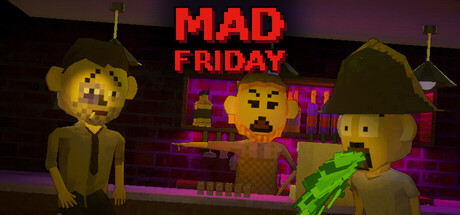
Mad Friday is made by one person. The art, animation, design and code are all mine, made by hand. A few background music tracks are licensed royalty-free assets produced with a generative music model. All audio is pre-generated and shipped with the build; nothing is generated at runtime.
Generative AI tools were used during development for ideation and drafting/editing some marketing or descriptive text. All final content is reviewed and edited by the development team. The game does not use live-generated AI content during gameplay.
Generative AI tools were used during development to assist with prototyping and writing portions of the game's code and Blueprint logic. AI-generated images were also used as source material for some Niagara visual effects. All AI-assisted content was reviewed, modified, and integrated by the development team.
Some of the art assets in this work are created using Image2.5, including but not limited to partial store page images, in-game scene graphics, loading screens, and select item icons.
Generative AI tools were used during development to assist with creating some music and UI graphic assets, as well as to provide coding suggestions and troubleshooting support. All AI-assisted content was reviewed, edited where necessary, and integrated by the developer. The game does not generate AI content during gameplay.
Generative AI was used to help translate the game's text and store page into other languages. It was not used to create any of the artwork, audio, or code in the game.
Generative AI was used to create certain promotional artwork for the Steam store page, including capsule images and the community icon. These assets were reviewed and edited by the developer. The game itself does not contain AI-generated artwork, audio, narrative, localization, or live-generated AI content.
This is a temporary placeholder poster. They will be removed before release and replaced with hand-drawn illustrations. Currently, I'm the only programmer working on the game. Closer to release, I'll be hiring an artist to collaborate on the game.
Generative artificial intelligence (AI) was used to create some audio and visual assets, portions of the game code, Steam store page copy, and localized content. No AI-generated content is created in real time during gameplay.
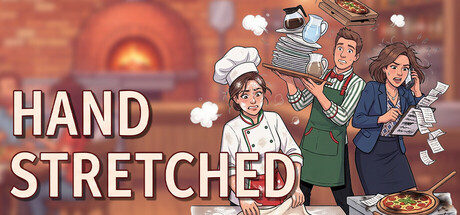
The background artwork in Hand Stretched — the shopfront, the kitchen and bar scenery, and the shop sign — was generated using Adobe Firefly, then edited and assembled by hand.
Everything you actually interact with is drawn by the game itself: the pizzas, the dough, the drinks and the icons are rendered in code as you play, not painted images.
The music is not AI-generated. It is four tracks licensed from human artists on Pixabay, credited by name in the game's settings.
The game's code was written with AI assistance. Nothing is generated while you play, and the game connects to no AI service.
Generative AI tools were used in creating and refining promotional artwork and marketing assets for this game's Steam store page. The game does not use live-generated AI during gameplay.
The game's art, code and marketing assets (store images and in-game graphics) were created during development with the assistance of generative AI tools. All AI-assisted content is pre-rendered and was reviewed by the developer before shipping. The game does not generate any content with AI at runtime.
The game's logo and main capsule assets were generated using artificial intelligence tools (e.g., [Gemini]). We retain full rights to the resulting images and they have been human-edited for the final version.
This game uses generative AI tools in parts of its development process.
Code: Some of the game's code was written with AI assistance. All generated code has been reviewed, tested, and integrated by the developer.
Audio: Some sound effects and voice lines may be generated or processed using AI tools.
Visual assets: The game primarily uses licensed asset packs and hand-authored materials. Where AI tools were used, it was for texture variation and iteration on existing licensed assets.
No AI-generated content is created live during gameplay. All content is fixed and reviewed before release.
Some of this game's 2D graphics — including UI icons, part icons and mission cards — were created ahead of time with the help of AI image generation tools. Every generated asset was reviewed, selected and adjusted by the developer before being included.
No content is generated by AI while the game is running. The 3D models, stages, effects and all game logic were produced by scripts and by hand, not by AI.
This game uses generative AI in the following ways:
Art: Visual assets including the logo, UI elements, backgrounds, and character sprites were created with the assistance of AI image generation tools, then reviewed and adjusted by the developer.
Localization: In-game text was translated into 72 languages with the assistance of AI translation tools.
All content has been reviewed by the developer before release.
Generative AI tools have been used in a limited capacity to assist with pre-generated promotional content. All AI-assisted material is reviewed and curated by the developer. No generative AI is used during gameplay, and the game does not connect to external AI services.
Some of the artwork in ChessTan was created with the help of generative AI tools. This includes in-game graphics (unit and board art) and the store page / marketing images. All AI-generated art was reviewed, edited, and curated by the developer before use. No AI-generated content is produced live during gameplay. Music is licensed royalty-free stock (not AI-generated), and AI coding assistants were used only for development, not to generate player-facing content
The game's visual assets and language translations were created with the assistance of generative AI tools. All AI-generated content has been reviewed and edited by the developer before being included in the final game.
AI tools were used during development to assist with coding, 3D modeling, and sound effect creation. All AI-generated content was reviewed and edited by the developer.
Some art assets and textures in this game were created with the help of generative AI tools. Translations were initially machine-generated. No content is generated by AI while the game is running.
Coppersmog is a game created independently by me, a father, a husband and a video game hobbyist.
I'm proud to say that I designed the game, directed it, and decided what made it fun to play.
I also built it with the help of generative AI.
I wanted to tell you this fact plainly so that my honesty could help bridge your concerns and inform your choice to play this game.
Here is what the AI contribution actually means in this game and with me specifically.
Every decision in this game is mine. The world, the rules, how a room feels, what a blorb is, and what's allowed to happen to one, I set it all.
To be honest, I throw away most of what AI generates because it just doesn't "get it" most of the time.
AI has no taste. It cannot tell when something is right, funny, or profound. It can make an enormous number of things, but it cannot decide which of them belongs in Coppersmog. That judgement is the heart of the job. That judgement is my most important aspect of what I do.
AI gives me is attempts, drafts and options.
It writes code segments, runs thousands of fight simulations, and fixes my grammar and then I cut, change, reject, and try again.
AI is wrong constantly.
Sometimes it builds a second version of something the game already has. Sometimes it forgets a decision we made weeks ago. Sometimes it writes code that looks perfect and never runs. There's a lot of invisible work to keep those pieces pointed in the same direction. Orchestrating it all falls to me.
I know that AI integration is not acceptable to everyone and so I wanted to be honest about how I'm using it to give you a chance to make an informed decision.
If you read all of this and decide that Coppersmog is not for you, that's a completely fair choice. I want you to make choices that are best for you, using the facts in front of you.
One thing that brings me comfort as I wrestle with where I want AI to be in my life is that this is a hobby project that made me smile quite a bit. I'm proud of my little world. Thank you.
Generative AI was used to assist with the composition of some concept artwork, a small number of promotional video shots, and multilingual localization. All related content was reviewed, edited, and finally approved by the development team before use.
This game includes limited use of generative artificial intelligence in the creation of certain visual and audio assets. These AI-assisted elements were used to support the development process and are integrated alongside original, human-created content. All assets have been reviewed and curated to ensure they meet the quality and artistic standards of the game.
An AI-assisted tool was used to create a preliminary translation pass that was reviewed and revised by human localization professionals.
AI was not and will not be used to generate in-game art, audio, narrative, or gameplay elements.
Pre-generated key art, store and marketing artwork, and two music loops were created with generative AI tools, then selected, edited, and reviewed by the developer. Gameplay rules, code, interface text, and player actions are authored and deterministic. No content is generated during gameplay, and the game does not connect to external AI services.
We use AI tools to assist development. Some 3D models are generated with the assistance of AI tools (Meshy) from our own concept designs, and are then reviewed, adjusted, and integrated into the game by the team. Some store page text was drafted with AI assistance and then edited by the developers.
No generative AI runs at runtime. Players never receive AI-generated content while playing.
This game includes assets that were created ahead of time with AI tools:
- 27 character 3D models (24 pilots, 3 national commanders) - multi-view images made with AI image generation, then turned into meshes with an image-to-3D tool
- 27 character portraits rendered from those 3D models
- 2D artwork for the nations, such as the emblems - AI image generation
- part of the HUD and UI texture set - AI image generation
- the cutaway diagrams on the briefing screen - AI image generation
Every generated asset was reviewed, selected and adjusted by the developer before being included.
No content is generated by AI while the game is running. The 3D models of the fighters, carriers, turrets, machine leviathans and asteroids are procedurally generated by program, and the stages, effects and all game logic were produced by scripts and by hand.
Generative AI tools were used during development to assist with the creation and iteration of some some pre-generated visual, written and promotional assets. All AI-assisted content is reviewed, edited and curated by the developer. No generative AI is used during gameplay.
This game uses generative AI for some visual content, including icons, logos, game art, Steam store page art, and website marketing images. Some store and website descriptions were written with AI assistance. Store, website, and marketing art is made to match the actual in-game look and design.
As part of our early access work, we have used AI-generated images as placeholders for the illustrations on our cards and leader icons. This allows us to iterate quickly and see which game mechanics players like or dislike. We will replace these with human art once we've received enough feedback to finalize what we keep or discard.
Some in-game images, depicting traditional dress, festivals, food, and cultural artifacts, were created using an AI image generation pipeline (Google Gemini through an automated workflow). Every generated image was reviewed, curated, and approved by the developer before it was added to the game. No AI content is generated live during gameplay.
As a solo developer, AI has been used as a tool to get the game where it is today. Primary used as a tool to help with areas of development and certain text generations.
No art or music was generated by AI. 95% of the artwork in the game is procedurally generated by code, while the rest is hand done by me. The music was also created by me specifically for the game.
AI was used in places like name and description generations for items in the game as well as some text areas within the tutorial coach text to help guide players through the initial stages of the game.
"This game's code, including the level and cosmetics editors, are all AI-generated.
The maps and music are not AI-generated.
Some cosmetics may be AI-generated, but most are not."
Mad Friday is made by one person. The art, animation, design and code are all mine, made by hand. A few background music tracks are licensed royalty-free assets produced with a generative music model. All audio is pre-generated and shipped with the build; nothing is generated at runtime.
Generative AI tools were used during development for ideation and drafting/editing some marketing or descriptive text. All final content is reviewed and edited by the development team. The game does not use live-generated AI content during gameplay.
Generative AI tools were used during development to assist with prototyping and writing portions of the game's code and Blueprint logic. AI-generated images were also used as source material for some Niagara visual effects. All AI-assisted content was reviewed, modified, and integrated by the development team.
Some of the art assets in this work are created using Image2.5, including but not limited to partial store page images, in-game scene graphics, loading screens, and select item icons.
Generative AI tools were used during development to assist with creating some music and UI graphic assets, as well as to provide coding suggestions and troubleshooting support. All AI-assisted content was reviewed, edited where necessary, and integrated by the developer. The game does not generate AI content during gameplay.
Generative AI was used to help translate the game's text and store page into other languages. It was not used to create any of the artwork, audio, or code in the game.
Generative AI was used to create certain promotional artwork for the Steam store page, including capsule images and the community icon. These assets were reviewed and edited by the developer. The game itself does not contain AI-generated artwork, audio, narrative, localization, or live-generated AI content.
This is a temporary placeholder poster. They will be removed before release and replaced with hand-drawn illustrations. Currently, I'm the only programmer working on the game. Closer to release, I'll be hiring an artist to collaborate on the game.
Generative artificial intelligence (AI) was used to create some audio and visual assets, portions of the game code, Steam store page copy, and localized content. No AI-generated content is created in real time during gameplay.
The background artwork in Hand Stretched — the shopfront, the kitchen and bar scenery, and the shop sign — was generated using Adobe Firefly, then edited and assembled by hand.
Everything you actually interact with is drawn by the game itself: the pizzas, the dough, the drinks and the icons are rendered in code as you play, not painted images.
The music is not AI-generated. It is four tracks licensed from human artists on Pixabay, credited by name in the game's settings.
The game's code was written with AI assistance. Nothing is generated while you play, and the game connects to no AI service.
Generative AI tools were used in creating and refining promotional artwork and marketing assets for this game's Steam store page. The game does not use live-generated AI during gameplay.
The game's art, code and marketing assets (store images and in-game graphics) were created during development with the assistance of generative AI tools. All AI-assisted content is pre-rendered and was reviewed by the developer before shipping. The game does not generate any content with AI at runtime.
The game's logo and main capsule assets were generated using artificial intelligence tools (e.g., [Gemini]). We retain full rights to the resulting images and they have been human-edited for the final version.
This game uses generative AI tools in parts of its development process.
Code: Some of the game's code was written with AI assistance. All generated code has been reviewed, tested, and integrated by the developer.
Audio: Some sound effects and voice lines may be generated or processed using AI tools.
Visual assets: The game primarily uses licensed asset packs and hand-authored materials. Where AI tools were used, it was for texture variation and iteration on existing licensed assets.
No AI-generated content is created live during gameplay. All content is fixed and reviewed before release.
Some of this game's 2D graphics — including UI icons, part icons and mission cards — were created ahead of time with the help of AI image generation tools. Every generated asset was reviewed, selected and adjusted by the developer before being included.
No content is generated by AI while the game is running. The 3D models, stages, effects and all game logic were produced by scripts and by hand, not by AI.
This game uses generative AI in the following ways:
Art: Visual assets including the logo, UI elements, backgrounds, and character sprites were created with the assistance of AI image generation tools, then reviewed and adjusted by the developer.
Localization: In-game text was translated into 72 languages with the assistance of AI translation tools.
All content has been reviewed by the developer before release.
Generative AI tools have been used in a limited capacity to assist with pre-generated promotional content. All AI-assisted material is reviewed and curated by the developer. No generative AI is used during gameplay, and the game does not connect to external AI services.
Some of the artwork in ChessTan was created with the help of generative AI tools. This includes in-game graphics (unit and board art) and the store page / marketing images. All AI-generated art was reviewed, edited, and curated by the developer before use. No AI-generated content is produced live during gameplay. Music is licensed royalty-free stock (not AI-generated), and AI coding assistants were used only for development, not to generate player-facing content
The game's visual assets and language translations were created with the assistance of generative AI tools. All AI-generated content has been reviewed and edited by the developer before being included in the final game.
AI tools were used during development to assist with coding, 3D modeling, and sound effect creation. All AI-generated content was reviewed and edited by the developer.
Some art assets and textures in this game were created with the help of generative AI tools. Translations were initially machine-generated. No content is generated by AI while the game is running.
Coppersmog is a game created independently by me, a father, a husband and a video game hobbyist.
I'm proud to say that I designed the game, directed it, and decided what made it fun to play.
I also built it with the help of generative AI.
I wanted to tell you this fact plainly so that my honesty could help bridge your concerns and inform your choice to play this game.
Here is what the AI contribution actually means in this game and with me specifically.
Every decision in this game is mine. The world, the rules, how a room feels, what a blorb is, and what's allowed to happen to one, I set it all.
To be honest, I throw away most of what AI generates because it just doesn't "get it" most of the time.
AI has no taste. It cannot tell when something is right, funny, or profound. It can make an enormous number of things, but it cannot decide which of them belongs in Coppersmog. That judgement is the heart of the job. That judgement is my most important aspect of what I do.
AI gives me is attempts, drafts and options.
It writes code segments, runs thousands of fight simulations, and fixes my grammar and then I cut, change, reject, and try again.
AI is wrong constantly.
Sometimes it builds a second version of something the game already has. Sometimes it forgets a decision we made weeks ago. Sometimes it writes code that looks perfect and never runs. There's a lot of invisible work to keep those pieces pointed in the same direction. Orchestrating it all falls to me.
I know that AI integration is not acceptable to everyone and so I wanted to be honest about how I'm using it to give you a chance to make an informed decision.
If you read all of this and decide that Coppersmog is not for you, that's a completely fair choice. I want you to make choices that are best for you, using the facts in front of you.
One thing that brings me comfort as I wrestle with where I want AI to be in my life is that this is a hobby project that made me smile quite a bit. I'm proud of my little world. Thank you.
Generative AI was used to assist with the composition of some concept artwork, a small number of promotional video shots, and multilingual localization. All related content was reviewed, edited, and finally approved by the development team before use.
This game includes limited use of generative artificial intelligence in the creation of certain visual and audio assets. These AI-assisted elements were used to support the development process and are integrated alongside original, human-created content. All assets have been reviewed and curated to ensure they meet the quality and artistic standards of the game.
An AI-assisted tool was used to create a preliminary translation pass that was reviewed and revised by human localization professionals.
AI was not and will not be used to generate in-game art, audio, narrative, or gameplay elements.
Pre-generated key art, store and marketing artwork, and two music loops were created with generative AI tools, then selected, edited, and reviewed by the developer. Gameplay rules, code, interface text, and player actions are authored and deterministic. No content is generated during gameplay, and the game does not connect to external AI services.
We use AI tools to assist development. Some 3D models are generated with the assistance of AI tools (Meshy) from our own concept designs, and are then reviewed, adjusted, and integrated into the game by the team. Some store page text was drafted with AI assistance and then edited by the developers.
No generative AI runs at runtime. Players never receive AI-generated content while playing.
This game includes assets that were created ahead of time with AI tools:
- 27 character 3D models (24 pilots, 3 national commanders) - multi-view images made with AI image generation, then turned into meshes with an image-to-3D tool
- 27 character portraits rendered from those 3D models
- 2D artwork for the nations, such as the emblems - AI image generation
- part of the HUD and UI texture set - AI image generation
- the cutaway diagrams on the briefing screen - AI image generation
Every generated asset was reviewed, selected and adjusted by the developer before being included.
No content is generated by AI while the game is running. The 3D models of the fighters, carriers, turrets, machine leviathans and asteroids are procedurally generated by program, and the stages, effects and all game logic were produced by scripts and by hand.