Public Steam disclosure research25,383 disclosures tracked
Where do games disclose AI use?
Search developers’ Steam disclosures, compare classified AI use across
games, and follow recorded changes.
This index adds cross-game classifications and statistics to
statements published on individual store pages.
Groups reflect automatic analysis of public disclosures; mature records are excluded. These counts do not measure AI use across all of Steam.
Missing or unclear statements cannot establish whether a game uses AI.
Generative AI tools were used in a limited capacity to assist with marketing materials and early concept visuals during development. All AI-assisted content was reviewed and approved by the development team. The final shipped game contains no generative AI content.
The promotional visuals and banners on the Steam store page were created with the support of generative AI tools. In contrast, the in-game assets were either manually created or later edited. However, certain marketing materials, such as headers, capsules, and banners, contain AI-generated components.
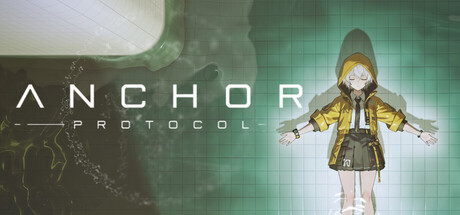
Anchored Protocol uses generative AI throughout its development and gameplay:
• Most of our 3D assets, sound effects, and visual art were created with the help of generative AI tools and reviewed by our team before shipping.
• During play, the game live-generates NPC dialogue, voice lines (TTS), and certain artworks in response to your actions, so each playthrough feels different.
We use input filtering and output moderation on live-generated content to prevent illegal, harmful, or off-topic responses. If you encounter anything
inappropriate, please report it via https://aako.world/support
AI image generation tools were used to create some promotional artwork and store page images. The game does not connect to any AI services or generate AI content during play.
EQUILIBRIUM uses generative AI to power its core gameplay mechanic: the Policy Terminal.
LIVE-GENERATED CONTENT
When a player types a directive or law in natural language (e.g., "Abolish the luxury car tax"), the AI Engine analyzes the request in real time and generates a structured governmental dossier, including:
- Legislative feasibility analysis
- Budget impact and financial coverage
- Macroeconomic effects (GDP, debt, inflation)
- Social and political consensus projections
- Parliamentary vote simulation
Model used: Anthropic Claude, accessed via API.
Guardrails: AI output is constrained to a fixed set of structured fields defined by the developer. All numeric effects are clamped within bounds enforced by the simulation engine, so no AI output can produce values outside the game's defined ranges. The model operates only on the simulation state provided to it and cannot invent game data: commands that cannot be mapped to a valid government action are refused, and the player is offered bounded policy alternatives instead. No image, audio, or user-data generation is involved, and no player data is used to train any model.
Because responses are generated at runtime, outputs vary between playthroughs: the same directive may produce different wording and different outcomes.
PRE-GENERATED CONTENT
The game's background music track was generated using AI tools during development and ships with the game.
Some sound effects and voice related audio assets were created or assisted using generative AI tools. These assets are used as part of the game's horror atmosphere and enemy audio design. The game does not generate AI content in real time during gameplay.
This game incorporates generative AI to enhance visual storytelling and character depth in the following ways:
Video Content: A portion of the ending cinematic utilizes footage generated by Sora 2, which can be identified by its watermark.
Character Illustrations: Three soldier profile photos displayed within the Personnel Search Center were created using ChatGPT (DALL-E).
We have used these tools to supplement the creative vision of our team and ensure a more immersive atmosphere for our players.
This game uses pre-generated AI content for its Steam store capsules and some in-game audio elements. These tools were used to support the creative process and maintain the game's aesthetic consistency.
his game uses generative AI in the following areas:
🎵 Music: Portions of the game's original soundtrack were composed using generative AI tools.
🎙️ Voice Acting: Character dialogue is performed using AI-generated voices. All dialogue, script, and performance direction were written and directed by the development team.
All AI-generated content was reviewed, edited, and approved by the developers before inclusion in the final game.
Generative AI was used solely as a supplementary tool for music composition and a small number of non-core textures (such as background patterns and decorative assets). All AI-assisted content has undergone significant manual refinement and human oversight to ensure it meets our artistic standards and visual style. AI was used only to enhance development efficiency; all core character designs, key art, and narrative elements remain 100% human-authored.
Our game uses pre-generated AI content exclusively for audio production. Specifically, we utilize generative AI tools to assist in the creation of our background music tracks and to generate voice-over (VO) dialogue for characters. All AI-assisted audio is pre-rendered during development and baked into the final game files. We do not use live-generated AI at runtime, and we do not use generative AI for visual artwork, 3D models, code, or the written narrative.
Our Creative Approach: A Human-First Duo and AI Disclosure
We are a passionate two-person team dedicated to bringing 1101 to life. To achieve the visual depth and cinematic quality we envisioned as a small studio, we utilized AI-assisted tools specifically for cinematic refinement, 3D texturing and modeling.
Here is exactly how we use AI to support our hand-crafted work:
From Concept to 3D Reality
Our 3D creation process combines traditional artistry with modern efficiency. Once we finalize a self-made image reference, hand-drawn sketch or a custom-generated image reference, we use AI-assisted modeling tools to convert that 2D vision into a 3D base mesh.
The Human Touch
This AI-assisted object is only the starting point. As a two-person team, we then step in to manually refine the geometry, adjust the proportions, and hand-modify the details. This "Human-in-the-Loop" approach allows us to bridge the gap between a 2D idea and a high-quality 3D asset, ensuring every object fits perfectly within our world’s hand-crafted design.
Cinematics: AI tools helped us polish visuals in our cinematics, allowing us to deliver high-quality storytelling that would typically require a much larger team.
Everything else is human-made. From the core gameplay mechanics and level design to the dialogue, music, and sound effects, every "soul" of this game comes directly from our hands. Ultimately, being an indie underdog means being resourceful. Using these tools wasn't about cutting corners; it was about bridging the gap to deliver a high-quality experience that a duo could otherwise never achieve. We’ve used technology to work harder on what matters most: making a game you'll love to play.
Some text content prepared in advance, including descriptions and localized text, may be created, translated, or improved with the assistance of AI-based tools.
During the development of this game, generative AI tools were used as a supportive resource for technical and creative tasks. Specifically, AI was utilized to assist in structuring complex C# scripts and providing visual reference images for world-building and character design. This allowed me as a solo developer to streamline my technical workflow and focus more on the core gameplay, environmental puzzles, and the unique atmospheric feel of the project. Every piece of AI-assisted logic or visual concept has been manually reviewed, adapted, and implemented by me to ensure it fits perfectly within the game's overall design.
Generative artificial intelligence was used during the development of this game to create some of the visual art, as well as some of the music and sound effects. AI-generated assets were reviewed/edited/finalized by a human before release.
Some visual or written content in this game may have been assisted by AI tools during development. All content has been reviewed and finalized by the developer.
AI was used to generate the initial rough 3D base for the characters in the game. All further work, including detailing, texturing, and custom animations, was done completely by hand.
This game includes some pre-generated visual assets and music created with the help of AI tools during development. No AI content is generated live during gameplay.
Generative AI tools were used in a limited capacity to assist with marketing materials and early concept visuals during development. All AI-assisted content was reviewed and approved by the development team. The final shipped game contains no generative AI content.
The promotional visuals and banners on the Steam store page were created with the support of generative AI tools. In contrast, the in-game assets were either manually created or later edited. However, certain marketing materials, such as headers, capsules, and banners, contain AI-generated components.
Anchored Protocol uses generative AI throughout its development and gameplay:
• Most of our 3D assets, sound effects, and visual art were created with the help of generative AI tools and reviewed by our team before shipping.
• During play, the game live-generates NPC dialogue, voice lines (TTS), and certain artworks in response to your actions, so each playthrough feels different.
We use input filtering and output moderation on live-generated content to prevent illegal, harmful, or off-topic responses. If you encounter anything
inappropriate, please report it via https://aako.world/support
AI image generation tools were used to create some promotional artwork and store page images. The game does not connect to any AI services or generate AI content during play.
EQUILIBRIUM uses generative AI to power its core gameplay mechanic: the Policy Terminal.
LIVE-GENERATED CONTENT
When a player types a directive or law in natural language (e.g., "Abolish the luxury car tax"), the AI Engine analyzes the request in real time and generates a structured governmental dossier, including:
- Legislative feasibility analysis
- Budget impact and financial coverage
- Macroeconomic effects (GDP, debt, inflation)
- Social and political consensus projections
- Parliamentary vote simulation
Model used: Anthropic Claude, accessed via API.
Guardrails: AI output is constrained to a fixed set of structured fields defined by the developer. All numeric effects are clamped within bounds enforced by the simulation engine, so no AI output can produce values outside the game's defined ranges. The model operates only on the simulation state provided to it and cannot invent game data: commands that cannot be mapped to a valid government action are refused, and the player is offered bounded policy alternatives instead. No image, audio, or user-data generation is involved, and no player data is used to train any model.
Because responses are generated at runtime, outputs vary between playthroughs: the same directive may produce different wording and different outcomes.
PRE-GENERATED CONTENT
The game's background music track was generated using AI tools during development and ships with the game.
Some sound effects and voice related audio assets were created or assisted using generative AI tools. These assets are used as part of the game's horror atmosphere and enemy audio design. The game does not generate AI content in real time during gameplay.
This game incorporates generative AI to enhance visual storytelling and character depth in the following ways:
Video Content: A portion of the ending cinematic utilizes footage generated by Sora 2, which can be identified by its watermark.
Character Illustrations: Three soldier profile photos displayed within the Personnel Search Center were created using ChatGPT (DALL-E).
We have used these tools to supplement the creative vision of our team and ensure a more immersive atmosphere for our players.
This game uses pre-generated AI content for its Steam store capsules and some in-game audio elements. These tools were used to support the creative process and maintain the game's aesthetic consistency.
his game uses generative AI in the following areas:
🎵 Music: Portions of the game's original soundtrack were composed using generative AI tools.
🎙️ Voice Acting: Character dialogue is performed using AI-generated voices. All dialogue, script, and performance direction were written and directed by the development team.
All AI-generated content was reviewed, edited, and approved by the developers before inclusion in the final game.
Generative AI was used solely as a supplementary tool for music composition and a small number of non-core textures (such as background patterns and decorative assets). All AI-assisted content has undergone significant manual refinement and human oversight to ensure it meets our artistic standards and visual style. AI was used only to enhance development efficiency; all core character designs, key art, and narrative elements remain 100% human-authored.
Our game uses pre-generated AI content exclusively for audio production. Specifically, we utilize generative AI tools to assist in the creation of our background music tracks and to generate voice-over (VO) dialogue for characters. All AI-assisted audio is pre-rendered during development and baked into the final game files. We do not use live-generated AI at runtime, and we do not use generative AI for visual artwork, 3D models, code, or the written narrative.
Our Creative Approach: A Human-First Duo and AI Disclosure
We are a passionate two-person team dedicated to bringing 1101 to life. To achieve the visual depth and cinematic quality we envisioned as a small studio, we utilized AI-assisted tools specifically for cinematic refinement, 3D texturing and modeling.
Here is exactly how we use AI to support our hand-crafted work:
From Concept to 3D Reality
Our 3D creation process combines traditional artistry with modern efficiency. Once we finalize a self-made image reference, hand-drawn sketch or a custom-generated image reference, we use AI-assisted modeling tools to convert that 2D vision into a 3D base mesh.
The Human Touch
This AI-assisted object is only the starting point. As a two-person team, we then step in to manually refine the geometry, adjust the proportions, and hand-modify the details. This "Human-in-the-Loop" approach allows us to bridge the gap between a 2D idea and a high-quality 3D asset, ensuring every object fits perfectly within our world’s hand-crafted design.
Cinematics: AI tools helped us polish visuals in our cinematics, allowing us to deliver high-quality storytelling that would typically require a much larger team.
Everything else is human-made. From the core gameplay mechanics and level design to the dialogue, music, and sound effects, every "soul" of this game comes directly from our hands. Ultimately, being an indie underdog means being resourceful. Using these tools wasn't about cutting corners; it was about bridging the gap to deliver a high-quality experience that a duo could otherwise never achieve. We’ve used technology to work harder on what matters most: making a game you'll love to play.
Some text content prepared in advance, including descriptions and localized text, may be created, translated, or improved with the assistance of AI-based tools.
During the development of this game, generative AI tools were used as a supportive resource for technical and creative tasks. Specifically, AI was utilized to assist in structuring complex C# scripts and providing visual reference images for world-building and character design. This allowed me as a solo developer to streamline my technical workflow and focus more on the core gameplay, environmental puzzles, and the unique atmospheric feel of the project. Every piece of AI-assisted logic or visual concept has been manually reviewed, adapted, and implemented by me to ensure it fits perfectly within the game's overall design.
Generative artificial intelligence was used during the development of this game to create some of the visual art, as well as some of the music and sound effects. AI-generated assets were reviewed/edited/finalized by a human before release.
Some visual or written content in this game may have been assisted by AI tools during development. All content has been reviewed and finalized by the developer.
AI was used to generate the initial rough 3D base for the characters in the game. All further work, including detailing, texturing, and custom animations, was done completely by hand.
This game includes some pre-generated visual assets and music created with the help of AI tools during development. No AI content is generated live during gameplay.