Public Steam disclosure research25,383 disclosures tracked
Where do games disclose AI use?
Search developers’ Steam disclosures, compare classified AI use across
games, and follow recorded changes.
This index adds cross-game classifications and statistics to
statements published on individual store pages.
Groups reflect automatic analysis of public disclosures; mature records are excluded. These counts do not measure AI use across all of Steam.
Missing or unclear statements cannot establish whether a game uses AI.
Some in-game 2D UI icons, some music and sound effects, and Steam store page / promotional visuals were created during development with the help of generative AI tools, then manually reviewed, cropped, or adjusted before shipping. This game does not use generative AI to create content in real time during gameplay.
ORACLE uses generative AI in two ways: some marketing artwork was created with generative tools, and an optional bundled local language model can generate short, context-aware ORACLE narration during play. Live generation runs locally on the player's PC and is limited to text; it does not generate code, images, audio, or gameplay rules.
Part of the program code, art materials, and text content in this work were created using generative artificial intelligence and have been manually reviewed and adjusted to ensure a seamless gaming experience. During gameplay, AI does not generate content in real-time, all content is pre generated.
AI tools were used during development as a learning and support aid. They helped me understand development workflows, troubleshoot technical problems, explore gameplay and UI ideas, and create early concept images used as visual references. All final decisions, implementation, balancing, and content selection were handled and reviewed by me. No AI content is generated during gameplay.
Despite game is simulating the AI, all conversations are hard coded and written by person.
AI was used to generate the names and descriptions for some items, but it was manually reviewed by developer.
Seed Money was developed with the assistance of generative AI tools, including Claude, GPT, and Gemini. AI was used throughout the development process, including programming assistance and the creation of artwork and sound assets. All AI-generated content included in the game was reviewed and integrated by the development team.
Generative AI was used to create of the music included in the game, as well as marketing and promotional materials for Steam.
AI tools were also used for programming and development.
There is no AI used in the gameplay - no content is dynamically generated.
Currently, many illustrations have been enhanced by AI using our own artworks and 3D models as a basis.
In addition, the audio versions of dialogues are produced using AI-generated voices.
Generative AI is used to assist with the translation and localization of in-game text and Steam store page content from the original Japanese into other supported languages.
Some visual assets in Grandpa's Legacy (including expedition artwork and selected store/marketing images) were created or assisted with generative AI tools, then curated and edited by the development team. No generative AI runs during gameplay, and the game does not connect to external AI services while you play.
Generative AI was used during development to assist in creating some pre-generated visual artwork and illustrative assets, including artwork used within the Chronicle system. All AI-assisted content is created and reviewed during development and is included in the game as finished assets. Echo Harvest does not use generative AI to create content dynamically during gameplay.
Generative AI tools were used to assist with programming and translation/localization during development. All artwork and original dialogue were created by the developer. AI-assisted translations were reviewed and edited by the developer before being included in the game. No generative AI is used during gameplay.
AI was used during development to create portions of the game’s pre-generated artwork, characters, animations, music, voices, and sound effects. These assets are included in the finished game. No AI content is generated live during gameplay.
Environments and environmental artwork are not created using generative AI.
Generative AI is used as part of the early development workflow for prototyping some creature artwork, which is going to be replaced during development.
Generative AI tools were used during development to create certain pre-generated visual and audio assets, including character portraits and video sequences, mech and environment artwork, synthetic voice-over, and some sound effects. All generated assets were reviewed and curated by the developer. The game does not generate content during gameplay, and no player input is sent to generative AI services.
Close Enough was built with generative AI. The code, the in-game text, the level layouts and all seven translations were written by an AI assistant (Claude) working to the developer's direction, and most of what you see on screen — the objects, the whole interface — is drawn by that code rather than loaded from image files.
The doodle recognition inside the game is not generative. It is a small image classifier bundled with the game, trained on Google's Quick, Draw! dataset of human-drawn doodles. It runs entirely on your own computer, sorts each drawing into one of 100 pre-defined objects and creates nothing. Your drawings are never uploaded, and the release build contains no code that could upload them.
The sprites, tiles, music, sound effects and font are licensed assets made by people, not by AI. Every one of them is credited inside the game under Esc → Credits.
Generative AI-assisted tools were used in the creation and development of some 3D models, audio, and visual content in the game. All such content was generated in advance during the development process and added to the game as pre-made assets. No content is generated in real time using generative AI during gameplay.
Generative AI was used during development to create pre-generated artwork (including fictional film posters and marketing images), narration, and some text and translations. These are fixed assets shipped with the game. No generative AI runs during gameplay, and no player input is sent to an external AI service.
I'm a solo developer, and I'd rather be upfront about where AI tools were used.
The character base meshes and some of their textures were generated with AI.
Every one of them was then brought into Blender and worked over by hand. Cleaned up, edited, re-textured and animated before it went anywhere near the game.
They're all rendered with a toon shader I wrote myself.
Everything else is made by hand.
The tavern, the props and the whole environment are hand modeled.
Other than that, everything else in the game was made by me.
Select visual artwork used in Comic Shop Tycoon, including some in-game comic and product artwork as well as Steam promotional artwork, was created using generative AI tools. All AI-generated content is pre-generated and fixed. The game does not generate AI content during gameplay or connect to external AI services while running.
AI-generated content in this project is limited to the store page and marketing materials. The game build itself contains no AI-generated content.
Store page text: The store description and Early Access questionnaire answers were drafted with the assistance of a large language model, then reviewed and edited by the developer.
Not AI-generated: All in-game art, models, textures and animation. 3D assets are CC0-licensed (Kenney) or built by the developer in Blender; textures are CC0/licensed sets from Poly Haven, ambientCG and Poliigon. All screenshots and capsule images are real frames captured from the game's renderer, composited with the game's own title typography. No image generation model was used to produce any art in the game or on the store page.
AI was used in the coding and content creation for this game. That should not take away from this project the thousands of hours spent on its creation, honing and reshaping its style, direction and gameplay which was all done by a human.
Generative AI was used to assist with some artwork, writing, localization, and game development. All AI-assisted content was reviewed, edited, and refined by the developer before being included. The game does not use live generative AI to create content during gameplay.
Some visual artwork used in the game and promotional materials was created with generative AI tools and then selected, edited, and integrated by the developer. No generative AI content is created during gameplay.
Generative AI tools were used during development to assist with the creation of some visual assets, written content, and localization used in the game and related store materials. All AI-assisted content was reviewed and, where necessary, edited by the developer before release. The game does not generate AI content during gameplay and does not rely on external AI services while being played.
Some small props and interface icons in this game began as AI-generated meshes and textures (text-to-3D / image-to-3D), which were then reworked by hand, retopologised, re-scaled, colour-graded and assembled before shipping. All other art comes from licensed asset packs and hand kitbashing. Nothing is generated live: no AI runs during play, and no player input is sent to an AI service.
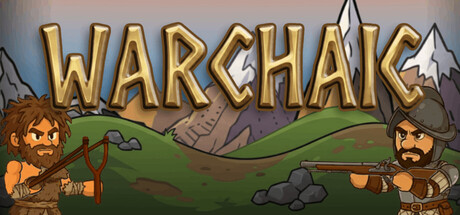
Generative AI was used to assist in the creation of some visual assets, UI elements, sound effects, and music featured in Warchaic. Software development was handled by our development team, while animations and visual effects (VFX) were either created by our team or sourced from licensed asset packages.
AI tools were used to assist in creating the game logo, marketing artwork, and some 2D in-game assets such as item icons and illustrations. All AI-generated content is pre-generated (nothing is generated at runtime) and was manually reviewed and edited. All 3D models, gameplay, code, and game design are hand-crafted.
Generative AI technologies were utilized during the development and content creation process of our game. In addition to software development support, AI tools were used to draft in-game narratives, assist with localization, and generate store page descriptions. All AI-assisted content has been thoroughly reviewed, edited, and curated by the development team to ensure quality standards and compliance with copyright policies.
Space Travelers uses generative AI only as a writing aid during development.
The game's text content (interface text, event and log lines) and its
localization into the 14 supported interface languages were produced with
the assistance of large language models, directed and reviewed by the
developer. Parts of this store page were drafted the same way.
No AI-generated images, audio or video are used: all artwork, animation
and sound in the game are produced by hand-written procedural code. The
game does not generate any content with AI while you play, and it never
connects to an external AI service.
Generative AI was used during development to assist in creating some pre-generated 2D artwork and written text used in the game. All AI-assisted content was reviewed, edited, and integrated by the developers. The game does not use generative AI to create new content at runtime.
Standard C++ game code, written during development with the assistance of an AI programming assistant, used as a pair-programming tool. This includes gameplay systems (crafting, inventory, world simulation), rendering and UI code, and development tooling. It is ordinary, static game logic.
AI assistance was used only during development, directed by myself through specific requests, with every change reviewed, tested, and committed to version control by myself.
The shipped game contains no AI models and does not execute or generate any code or content via AI at runtime. The game is a fully offline, single-player experience.
AI was used to assist with writing the game source code.
All visual assets are handmade pixel art by the author.
All audio assets are licensed from 3rd party sample banks.
We used generative AI on fighter portraits for deeper immersion and as a pre-production tool for early concept layouts. From there, all character assets and visual elements were extensively edited and manually hand-painted by human artists to ensure high visual quality and artistic control.
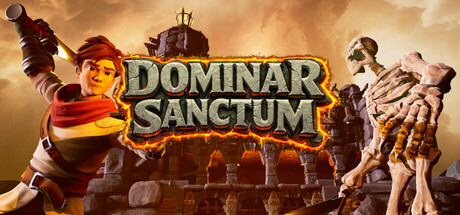
The vast majority of Dominar Sanctum has been created and developed without generative AI. Generative AI has only been used selectively for a small number of 2D icons, slide narration and a narrative voiceover, primarily for early prototyping and development. Even those icons have been manually reworked.
These few AI-assisted assets are not representative of the game's overall art, design, programming, or development process. They may be replaced or further refined before the full release.
Generative AI was used during development to assist with coding and the creation of pre-generated visual assets. No AI content is generated during gameplay.
Some in-game 2D UI icons, some music and sound effects, and Steam store page / promotional visuals were created during development with the help of generative AI tools, then manually reviewed, cropped, or adjusted before shipping. This game does not use generative AI to create content in real time during gameplay.
ORACLE uses generative AI in two ways: some marketing artwork was created with generative tools, and an optional bundled local language model can generate short, context-aware ORACLE narration during play. Live generation runs locally on the player's PC and is limited to text; it does not generate code, images, audio, or gameplay rules.
Part of the program code, art materials, and text content in this work were created using generative artificial intelligence and have been manually reviewed and adjusted to ensure a seamless gaming experience. During gameplay, AI does not generate content in real-time, all content is pre generated.
AI tools were used during development as a learning and support aid. They helped me understand development workflows, troubleshoot technical problems, explore gameplay and UI ideas, and create early concept images used as visual references. All final decisions, implementation, balancing, and content selection were handled and reviewed by me. No AI content is generated during gameplay.
Despite game is simulating the AI, all conversations are hard coded and written by person.
AI was used to generate the names and descriptions for some items, but it was manually reviewed by developer.
Seed Money was developed with the assistance of generative AI tools, including Claude, GPT, and Gemini. AI was used throughout the development process, including programming assistance and the creation of artwork and sound assets. All AI-generated content included in the game was reviewed and integrated by the development team.
Generative AI was used to create of the music included in the game, as well as marketing and promotional materials for Steam.
AI tools were also used for programming and development.
There is no AI used in the gameplay - no content is dynamically generated.
Currently, many illustrations have been enhanced by AI using our own artworks and 3D models as a basis.
In addition, the audio versions of dialogues are produced using AI-generated voices.
Generative AI is used to assist with the translation and localization of in-game text and Steam store page content from the original Japanese into other supported languages.
Some visual assets in Grandpa's Legacy (including expedition artwork and selected store/marketing images) were created or assisted with generative AI tools, then curated and edited by the development team. No generative AI runs during gameplay, and the game does not connect to external AI services while you play.
Generative AI was used during development to assist in creating some pre-generated visual artwork and illustrative assets, including artwork used within the Chronicle system. All AI-assisted content is created and reviewed during development and is included in the game as finished assets. Echo Harvest does not use generative AI to create content dynamically during gameplay.
Generative AI tools were used to assist with programming and translation/localization during development. All artwork and original dialogue were created by the developer. AI-assisted translations were reviewed and edited by the developer before being included in the game. No generative AI is used during gameplay.
AI was used during development to create portions of the game’s pre-generated artwork, characters, animations, music, voices, and sound effects. These assets are included in the finished game. No AI content is generated live during gameplay.
Environments and environmental artwork are not created using generative AI.
Generative AI is used as part of the early development workflow for prototyping some creature artwork, which is going to be replaced during development.
Generative AI tools were used during development to create certain pre-generated visual and audio assets, including character portraits and video sequences, mech and environment artwork, synthetic voice-over, and some sound effects. All generated assets were reviewed and curated by the developer. The game does not generate content during gameplay, and no player input is sent to generative AI services.
Close Enough was built with generative AI. The code, the in-game text, the level layouts and all seven translations were written by an AI assistant (Claude) working to the developer's direction, and most of what you see on screen — the objects, the whole interface — is drawn by that code rather than loaded from image files.
The doodle recognition inside the game is not generative. It is a small image classifier bundled with the game, trained on Google's Quick, Draw! dataset of human-drawn doodles. It runs entirely on your own computer, sorts each drawing into one of 100 pre-defined objects and creates nothing. Your drawings are never uploaded, and the release build contains no code that could upload them.
The sprites, tiles, music, sound effects and font are licensed assets made by people, not by AI. Every one of them is credited inside the game under Esc → Credits.
Generative AI-assisted tools were used in the creation and development of some 3D models, audio, and visual content in the game. All such content was generated in advance during the development process and added to the game as pre-made assets. No content is generated in real time using generative AI during gameplay.
Generative AI was used during development to create pre-generated artwork (including fictional film posters and marketing images), narration, and some text and translations. These are fixed assets shipped with the game. No generative AI runs during gameplay, and no player input is sent to an external AI service.
I'm a solo developer, and I'd rather be upfront about where AI tools were used.
The character base meshes and some of their textures were generated with AI.
Every one of them was then brought into Blender and worked over by hand. Cleaned up, edited, re-textured and animated before it went anywhere near the game.
They're all rendered with a toon shader I wrote myself.
Everything else is made by hand.
The tavern, the props and the whole environment are hand modeled.
Other than that, everything else in the game was made by me.
Select visual artwork used in Comic Shop Tycoon, including some in-game comic and product artwork as well as Steam promotional artwork, was created using generative AI tools. All AI-generated content is pre-generated and fixed. The game does not generate AI content during gameplay or connect to external AI services while running.
AI-generated content in this project is limited to the store page and marketing materials. The game build itself contains no AI-generated content.
Store page text: The store description and Early Access questionnaire answers were drafted with the assistance of a large language model, then reviewed and edited by the developer.
Not AI-generated: All in-game art, models, textures and animation. 3D assets are CC0-licensed (Kenney) or built by the developer in Blender; textures are CC0/licensed sets from Poly Haven, ambientCG and Poliigon. All screenshots and capsule images are real frames captured from the game's renderer, composited with the game's own title typography. No image generation model was used to produce any art in the game or on the store page.
AI was used in the coding and content creation for this game. That should not take away from this project the thousands of hours spent on its creation, honing and reshaping its style, direction and gameplay which was all done by a human.
Generative AI was used to assist with some artwork, writing, localization, and game development. All AI-assisted content was reviewed, edited, and refined by the developer before being included. The game does not use live generative AI to create content during gameplay.
Some visual artwork used in the game and promotional materials was created with generative AI tools and then selected, edited, and integrated by the developer. No generative AI content is created during gameplay.
Generative AI tools were used during development to assist with the creation of some visual assets, written content, and localization used in the game and related store materials. All AI-assisted content was reviewed and, where necessary, edited by the developer before release. The game does not generate AI content during gameplay and does not rely on external AI services while being played.
Some small props and interface icons in this game began as AI-generated meshes and textures (text-to-3D / image-to-3D), which were then reworked by hand, retopologised, re-scaled, colour-graded and assembled before shipping. All other art comes from licensed asset packs and hand kitbashing. Nothing is generated live: no AI runs during play, and no player input is sent to an AI service.
Generative AI was used to assist in the creation of some visual assets, UI elements, sound effects, and music featured in Warchaic. Software development was handled by our development team, while animations and visual effects (VFX) were either created by our team or sourced from licensed asset packages.
AI tools were used to assist in creating the game logo, marketing artwork, and some 2D in-game assets such as item icons and illustrations. All AI-generated content is pre-generated (nothing is generated at runtime) and was manually reviewed and edited. All 3D models, gameplay, code, and game design are hand-crafted.
Generative AI technologies were utilized during the development and content creation process of our game. In addition to software development support, AI tools were used to draft in-game narratives, assist with localization, and generate store page descriptions. All AI-assisted content has been thoroughly reviewed, edited, and curated by the development team to ensure quality standards and compliance with copyright policies.
Space Travelers uses generative AI only as a writing aid during development.
The game's text content (interface text, event and log lines) and its
localization into the 14 supported interface languages were produced with
the assistance of large language models, directed and reviewed by the
developer. Parts of this store page were drafted the same way.
No AI-generated images, audio or video are used: all artwork, animation
and sound in the game are produced by hand-written procedural code. The
game does not generate any content with AI while you play, and it never
connects to an external AI service.
Generative AI was used during development to assist in creating some pre-generated 2D artwork and written text used in the game. All AI-assisted content was reviewed, edited, and integrated by the developers. The game does not use generative AI to create new content at runtime.
Standard C++ game code, written during development with the assistance of an AI programming assistant, used as a pair-programming tool. This includes gameplay systems (crafting, inventory, world simulation), rendering and UI code, and development tooling. It is ordinary, static game logic.
AI assistance was used only during development, directed by myself through specific requests, with every change reviewed, tested, and committed to version control by myself.
The shipped game contains no AI models and does not execute or generate any code or content via AI at runtime. The game is a fully offline, single-player experience.
AI was used to assist with writing the game source code.
All visual assets are handmade pixel art by the author.
All audio assets are licensed from 3rd party sample banks.
We used generative AI on fighter portraits for deeper immersion and as a pre-production tool for early concept layouts. From there, all character assets and visual elements were extensively edited and manually hand-painted by human artists to ensure high visual quality and artistic control.
The vast majority of Dominar Sanctum has been created and developed without generative AI. Generative AI has only been used selectively for a small number of 2D icons, slide narration and a narrative voiceover, primarily for early prototyping and development. Even those icons have been manually reworked.
These few AI-assisted assets are not representative of the game's overall art, design, programming, or development process. They may be replaced or further refined before the full release.
Generative AI was used during development to assist with coding and the creation of pre-generated visual assets. No AI content is generated during gameplay.