Public Steam disclosure research25,383 disclosures tracked
Where do games disclose AI use?
Search developers’ Steam disclosures, compare classified AI use across
games, and follow recorded changes.
This index adds cross-game classifications and statistics to
statements published on individual store pages.
Groups reflect automatic analysis of public disclosures; mature records are excluded. These counts do not measure AI use across all of Steam.
Missing or unclear statements cannot establish whether a game uses AI.
Localization of the textual content for non-english languages is mainly produced as translations from english using generative artificial intelligence. LLM's have been used as a help also in writing and reviewing of program code, development helper tools, infrastructure setup, security checks, test maintenance and requirements management.
Pre-rendered AI imagery was used to create some background looping elements, for example an in-game TV screen. All other artwork, narrative and character art and animation is created by hand.
Some promotional images and in-game 2D visual assets were created or edited with the assistance of generative AI tools. All final assets were reviewed and edited by our art team before inclusion in the game/store page. We have checked the content to ensure it does not include illegal or infringing material.
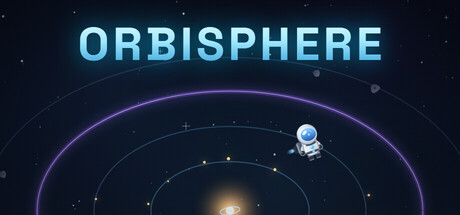
I built Orbisphere as a solo developer using AI tools under human direction. The soundtrack was created with generative AI music tools, with each track directed, selected, and edited by me. In-game vector artwork was authored with AI assistance from my terrible MS Paint references and designs. All game design, writing, systems, and balance are my own work.
AI-assisted. Developer-directed. Generative AI was used as a production tool during development: Claude assisted with prototyping and implementation, while Google Lyria was used to create the game's original 15-track soundtrack. The music and all other AI-assisted material were selected, edited, integrated, and play-tested by the developer to serve Boiler & Blood's dieselpunk folk-occult world.
Generative AI tools were used during development to assist with visual assets, in-game text, localization, and programming. All AI-assisted content was reviewed, edited, tested, and integrated by the developer. No generative AI is used while the game is running.
Selected background elements, tilesets, and player and boss character models used AI-generated source material that was manually reworked and adapted. Translations were created and edited with AI assistance. Part of the game's logic was developed with AI assistance. All design and gameplay decisions were made by the developer.
Generative AI tools were utilized to create some base visual and audio assets for Warix. AI was used to generate background textures, character sprites, and promotional store art. All AI-generated imagery was subsequently edited, composited, and polished by hand to fit the game's final aesthetic.
Some visual assets — character art/portraits, sprite artwork, and store/marketing
capsule images — were created with the help of generative AI image tools, then
edited, composited, and curated by the developer. All such assets are PRE-GENERATED
during development; the shipped game performs NO live/runtime AI generation. No
generative AI produces text, dialogue, or any player-facing content at runtime.
All generated assets were reviewed by the developer to ensure they contain no
infringing or inappropriate material.
Some store and marketing artwork (capsule/header images) was created with AI image
tools and then reviewed and edited by the developer. Some in-game commander avatars
were also AI-assisted. The game does not generate any AI content live during play.
Generative AI was used exclusively for marketing and promotional materials. This includes the store page capsule art, translations and the background music featured in the promotional trailer.
No AI generated assets, imagery or audio are used within the actual game build, game screenshots or gameplay experience.
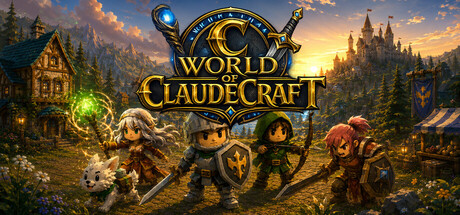
World of ClaudeCraft is, unapologetically, a game built with AI — the name is a hint. We used AI in two ways, and we want to be clear about both.
During development, the game's code was written with an AI coding assistant, and we used AI generation tools to create some of the assets that ship in the game as ordinary, fixed files:
Sound: Most in-game sound effects and all spoken NPC voice lines were generated with ElevenLabs' AI audio and text-to-speech models. The written dialogue itself is authored by us; AI produced the spoken audio.
3D models: A small number of creature models (the "Drowned Litany") were generated with Meshy AI (text-to-3D).
Everything else is either created by the game's own code (the world, towns, terrain, water, weather, and the music soundtrack are all generated procedurally at runtime) or is licensed third-party art — CC0 model, texture, and HDRI packs plus a purchased commercial icon set. That content is not AI-generated.
Critically: no generative AI runs while you play. Every AI-made asset was generated once, offline, during development and baked into the game as a static file. The running game makes no AI or LLM calls, and none of your gameplay or personal data is ever sent to an AI system. The simulation is fully deterministic — the same inputs always produce the same result.
Generative AI was used to enhance marketing assets such as steam capsule & early sketch concept before offloaded & polished by Humans.
All gameplay, art, and final content remain crafted by Human.
An AI assistant (Anthropic's Claude) helped write the game's code and draft store/marketing text, all reviewed by the developer. All art is hand-made and procedurally rendered; all music and sound effects are human-created or licensed (CC0 / commissioned). No AI-generated art, audio, or voice ships in the game, and no AI content is generated during play.
During the development process, we may use AI-based tools. In all such cases, the final product reflects the creativity and expression of our own development team.
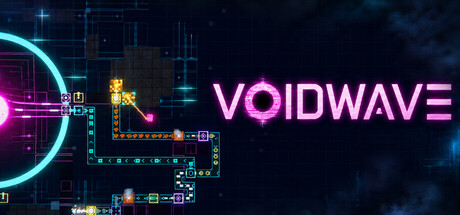
VOIDWAVE's game design, programming, and automation simulation are built by hand. Some visual assets — certain sprites, icons, and UI art — were created with the help of generative AI tools and hand-edited to fit the game's style, and the game's music is AI-generated. Sound effects use procedural synthesis (not AI). All gameplay, systems, and balancing are human-designed, and all content is finalized during development — nothing is AI-generated while you play.
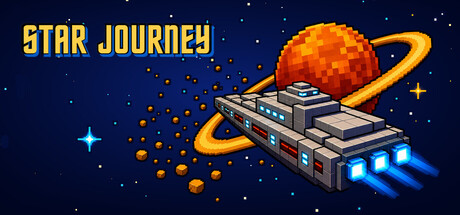
Generative artificial intelligence has been used to create store page thumbnails based on the developer's scene work.
Generative artificial intelligence has been used by the developer to improve the performance of the developers code to achieve incredible in game performance with respect to voxel mesh rendering and voxel lighting calculations. Thanks to the contributions of gen ai Star Journey performs beautifully even on laptops that have no dedicated GPU.
We have used generative AI tools to translate the game into additional languages and make it accessible to a wider audience. The development team has reviewed and overseen the integration of all text to ensure it is displayed correctly and that the interface and menus function properly.
Store Page Description
Please enter a message to players describing how this game uses generative artificial intelligence.
Note: The Steam Store will display this message under the 'About This Game' section on the game's store page. You can return to this survey at any time to update this message or its localizations.
AI Gen tools were used in a variety of ways for this game. Asset image concepting, narrative re-writes, 3d meshing, and marketing assets typically went through some form of a.i. modification, but then returned to a human-in-the-loop production step before game integration.
Generative AI was used during development as an assistance tool for code development, review, debugging, and refinement. Final implementation and testing were performed by the developer. The game does not use generative AI to create content at runtime. Visual assets are either original works or appropriately licensed third-party assets that were manually edited and adapted for the game.
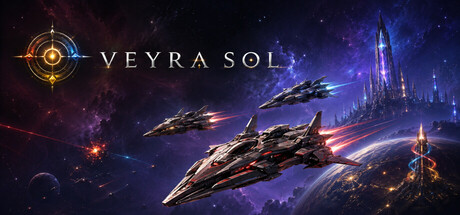
Veyrasol uses generative AI tools as part of its art pipeline. Both 3D models and 2D artwork used in the game (illustrations, backgrounds, UI and unit icons), as well as store page and marketing graphics such as capsule images and banners, were created with the help of generative AI tools and then reviewed, edited and assembled by the developer. Generative AI tools were also used to help write parts of the marketing website and store page copy. The core game (engine, server logic, real-time combat, and systems) is hand-coded by the developer, and no content is generated by AI at runtime during play.
Some graphical assets (capsule images, etc.) and music tracks
were created using AI generation tools.
No AI generates content in real time during gameplay.
All AI-generated materials were reviewed and selected by a human.
Card illustrations and some in-game artwork were pre-generated using generative AI image tools, then curated, edited and integrated by our team. All game design, code, writing and final art direction are human-made. The game does not generate any content with AI at runtime.
This game uses generative artificial intelligence (Midjourney) as a supporting tool in the production of some of its artwork and illustrations. All AI-generated content is selected, edited, and art-directed by the development team, which defines composition, style, and visual coherence before it is integrated into the game.
AI tools were used to create early drafts and a few base images for certain small visual elements, such as mission briefing cityscape thumbnails. Some initial sprite concepts were generated using AI. These assets were manually edited, adjusted, and integrated into the game’s visual style. No live generative AI is used during gameplay.
The story and game design are an original creation of the developer.
AI was used as a tool to produce certain fixed visuals (store page, logo, illustrations),
in order to faithfully represent the game's artistic vision.
No content is AI-generated during gameplay.
Ridiculous Games employs artists, designers and programmers to make our games. We used generative AI to help create this game. It's part of what lets a small team build a game like this. We believe in being transparent about the tools we use, but they're only tools. Every part of this game is reviewed, refined, and curated by our team to meet our creative vision and quality standards, and we hope you'll enjoy the game for the experience it delivers.
This is a solo-developed game. Some visual assets were created with the assistance of generative AI. I started from my own sketches and concepts, then used AI to generate and refine artwork, with all final assets reviewed and integrated by me.
Generative AI was used during development to assist with portions of the game's artwork, Steam store assets, sound effects, and voice narration. All AI-assisted content has been reviewed, edited, and/or refined by the developer. No generative AI is used during gameplay.
AI assisted drafting was used for the Steam store page text and marketing copy. The game does not use generative AI to create runtime gameplay content or player facing outputs during play.
This game was made by 1 person, with the help of AI for the art, coding, sound, story, you name it. This was a lot of work for me the human though, this was not a few prompts, this was many different systems and custom work pipelines I designed completely myself. It took a long time and a huge amount of effort.
Some non-core content in this game was created with the assistance of generative AI, including certain concept artwork, icons, promotional materials, and text. All AI-generated content has been reviewed, edited, and integrated by the development team to ensure it meets the game's quality standards and artistic direction.
This game uses generative artificial intelligence as a supporting tool for the creation of some visual and graphic assets, such as the game icon, logo, promotional images, main menu artwork, buttons, and certain visual or typography styles used within the game.
All AI-generated or AI-assisted content was reviewed, edited, and manually selected by the developer before being included in the game. Generative AI is not used during gameplay to create real-time content or to dynamically modify the player experience.
Localization of the textual content for non-english languages is mainly produced as translations from english using generative artificial intelligence. LLM's have been used as a help also in writing and reviewing of program code, development helper tools, infrastructure setup, security checks, test maintenance and requirements management.
Pre-rendered AI imagery was used to create some background looping elements, for example an in-game TV screen. All other artwork, narrative and character art and animation is created by hand.
Some promotional images and in-game 2D visual assets were created or edited with the assistance of generative AI tools. All final assets were reviewed and edited by our art team before inclusion in the game/store page. We have checked the content to ensure it does not include illegal or infringing material.
I built Orbisphere as a solo developer using AI tools under human direction. The soundtrack was created with generative AI music tools, with each track directed, selected, and edited by me. In-game vector artwork was authored with AI assistance from my terrible MS Paint references and designs. All game design, writing, systems, and balance are my own work.
AI-assisted. Developer-directed. Generative AI was used as a production tool during development: Claude assisted with prototyping and implementation, while Google Lyria was used to create the game's original 15-track soundtrack. The music and all other AI-assisted material were selected, edited, integrated, and play-tested by the developer to serve Boiler & Blood's dieselpunk folk-occult world.
Generative AI tools were used during development to assist with visual assets, in-game text, localization, and programming. All AI-assisted content was reviewed, edited, tested, and integrated by the developer. No generative AI is used while the game is running.
Selected background elements, tilesets, and player and boss character models used AI-generated source material that was manually reworked and adapted. Translations were created and edited with AI assistance. Part of the game's logic was developed with AI assistance. All design and gameplay decisions were made by the developer.
Generative AI tools were utilized to create some base visual and audio assets for Warix. AI was used to generate background textures, character sprites, and promotional store art. All AI-generated imagery was subsequently edited, composited, and polished by hand to fit the game's final aesthetic.
Some visual assets — character art/portraits, sprite artwork, and store/marketing
capsule images — were created with the help of generative AI image tools, then
edited, composited, and curated by the developer. All such assets are PRE-GENERATED
during development; the shipped game performs NO live/runtime AI generation. No
generative AI produces text, dialogue, or any player-facing content at runtime.
All generated assets were reviewed by the developer to ensure they contain no
infringing or inappropriate material.
Some store and marketing artwork (capsule/header images) was created with AI image
tools and then reviewed and edited by the developer. Some in-game commander avatars
were also AI-assisted. The game does not generate any AI content live during play.
Generative AI was used exclusively for marketing and promotional materials. This includes the store page capsule art, translations and the background music featured in the promotional trailer.
No AI generated assets, imagery or audio are used within the actual game build, game screenshots or gameplay experience.
World of ClaudeCraft is, unapologetically, a game built with AI — the name is a hint. We used AI in two ways, and we want to be clear about both.
During development, the game's code was written with an AI coding assistant, and we used AI generation tools to create some of the assets that ship in the game as ordinary, fixed files:
Sound: Most in-game sound effects and all spoken NPC voice lines were generated with ElevenLabs' AI audio and text-to-speech models. The written dialogue itself is authored by us; AI produced the spoken audio.
3D models: A small number of creature models (the "Drowned Litany") were generated with Meshy AI (text-to-3D).
Everything else is either created by the game's own code (the world, towns, terrain, water, weather, and the music soundtrack are all generated procedurally at runtime) or is licensed third-party art — CC0 model, texture, and HDRI packs plus a purchased commercial icon set. That content is not AI-generated.
Critically: no generative AI runs while you play. Every AI-made asset was generated once, offline, during development and baked into the game as a static file. The running game makes no AI or LLM calls, and none of your gameplay or personal data is ever sent to an AI system. The simulation is fully deterministic — the same inputs always produce the same result.
Generative AI was used to enhance marketing assets such as steam capsule & early sketch concept before offloaded & polished by Humans.
All gameplay, art, and final content remain crafted by Human.
An AI assistant (Anthropic's Claude) helped write the game's code and draft store/marketing text, all reviewed by the developer. All art is hand-made and procedurally rendered; all music and sound effects are human-created or licensed (CC0 / commissioned). No AI-generated art, audio, or voice ships in the game, and no AI content is generated during play.
During the development process, we may use AI-based tools. In all such cases, the final product reflects the creativity and expression of our own development team.
VOIDWAVE's game design, programming, and automation simulation are built by hand. Some visual assets — certain sprites, icons, and UI art — were created with the help of generative AI tools and hand-edited to fit the game's style, and the game's music is AI-generated. Sound effects use procedural synthesis (not AI). All gameplay, systems, and balancing are human-designed, and all content is finalized during development — nothing is AI-generated while you play.
Generative artificial intelligence has been used to create store page thumbnails based on the developer's scene work.
Generative artificial intelligence has been used by the developer to improve the performance of the developers code to achieve incredible in game performance with respect to voxel mesh rendering and voxel lighting calculations. Thanks to the contributions of gen ai Star Journey performs beautifully even on laptops that have no dedicated GPU.
We have used generative AI tools to translate the game into additional languages and make it accessible to a wider audience. The development team has reviewed and overseen the integration of all text to ensure it is displayed correctly and that the interface and menus function properly.
Store Page Description
Please enter a message to players describing how this game uses generative artificial intelligence.
Note: The Steam Store will display this message under the 'About This Game' section on the game's store page. You can return to this survey at any time to update this message or its localizations.
AI Gen tools were used in a variety of ways for this game. Asset image concepting, narrative re-writes, 3d meshing, and marketing assets typically went through some form of a.i. modification, but then returned to a human-in-the-loop production step before game integration.
Generative AI was used during development as an assistance tool for code development, review, debugging, and refinement. Final implementation and testing were performed by the developer. The game does not use generative AI to create content at runtime. Visual assets are either original works or appropriately licensed third-party assets that were manually edited and adapted for the game.
Veyrasol uses generative AI tools as part of its art pipeline. Both 3D models and 2D artwork used in the game (illustrations, backgrounds, UI and unit icons), as well as store page and marketing graphics such as capsule images and banners, were created with the help of generative AI tools and then reviewed, edited and assembled by the developer. Generative AI tools were also used to help write parts of the marketing website and store page copy. The core game (engine, server logic, real-time combat, and systems) is hand-coded by the developer, and no content is generated by AI at runtime during play.
Some graphical assets (capsule images, etc.) and music tracks
were created using AI generation tools.
No AI generates content in real time during gameplay.
All AI-generated materials were reviewed and selected by a human.
Card illustrations and some in-game artwork were pre-generated using generative AI image tools, then curated, edited and integrated by our team. All game design, code, writing and final art direction are human-made. The game does not generate any content with AI at runtime.
This game uses generative artificial intelligence (Midjourney) as a supporting tool in the production of some of its artwork and illustrations. All AI-generated content is selected, edited, and art-directed by the development team, which defines composition, style, and visual coherence before it is integrated into the game.
AI tools were used to create early drafts and a few base images for certain small visual elements, such as mission briefing cityscape thumbnails. Some initial sprite concepts were generated using AI. These assets were manually edited, adjusted, and integrated into the game’s visual style. No live generative AI is used during gameplay.
The story and game design are an original creation of the developer.
AI was used as a tool to produce certain fixed visuals (store page, logo, illustrations),
in order to faithfully represent the game's artistic vision.
No content is AI-generated during gameplay.
Ridiculous Games employs artists, designers and programmers to make our games. We used generative AI to help create this game. It's part of what lets a small team build a game like this. We believe in being transparent about the tools we use, but they're only tools. Every part of this game is reviewed, refined, and curated by our team to meet our creative vision and quality standards, and we hope you'll enjoy the game for the experience it delivers.
This is a solo-developed game. Some visual assets were created with the assistance of generative AI. I started from my own sketches and concepts, then used AI to generate and refine artwork, with all final assets reviewed and integrated by me.
Generative AI was used during development to assist with portions of the game's artwork, Steam store assets, sound effects, and voice narration. All AI-assisted content has been reviewed, edited, and/or refined by the developer. No generative AI is used during gameplay.
AI assisted drafting was used for the Steam store page text and marketing copy. The game does not use generative AI to create runtime gameplay content or player facing outputs during play.
This game was made by 1 person, with the help of AI for the art, coding, sound, story, you name it. This was a lot of work for me the human though, this was not a few prompts, this was many different systems and custom work pipelines I designed completely myself. It took a long time and a huge amount of effort.
Some non-core content in this game was created with the assistance of generative AI, including certain concept artwork, icons, promotional materials, and text. All AI-generated content has been reviewed, edited, and integrated by the development team to ensure it meets the game's quality standards and artistic direction.
This game uses generative artificial intelligence as a supporting tool for the creation of some visual and graphic assets, such as the game icon, logo, promotional images, main menu artwork, buttons, and certain visual or typography styles used within the game.
All AI-generated or AI-assisted content was reviewed, edited, and manually selected by the developer before being included in the game. Generative AI is not used during gameplay to create real-time content or to dynamically modify the player experience.