Public Steam disclosure research25,383 disclosures tracked
Where do games disclose AI use?
Search developers’ Steam disclosures, compare classified AI use across
games, and follow recorded changes.
This index adds cross-game classifications and statistics to
statements published on individual store pages.
Groups reflect automatic analysis of public disclosures; mature records are excluded. These counts do not measure AI use across all of Steam.
Missing or unclear statements cannot establish whether a game uses AI.
Generative AI tools were used during parts of the asset prototyping and ideation process. All final game assets were significantly modified, refined, and curated by the development team before inclusion in the game.
We want to be fully transparent with our community about how we develop our game. In this project, we have integrated Artificial Intelligence (AI) tools as an operational support for our team.
How we use it:
- Process optimization: It helps us streamline technical tasks and repetitive workflows.
- Efficiency: It allows us to deliver better work and move forward much faster.
- Resource maximization: It enables the team to save time on mechanical processes to focus on the final game polish.
Our commitment to craftsmanship:
- Total human control: No element of the final game has been left solely to AI.
- Expert review: Every technical asset or piece of content goes through a rigorous human editing filter.
- Manual work behind everything: Technology only optimizes our delivery times, but there is always genuine craftsmanship behind every asset.
- Guaranteed quality: We use AI to empower our team's capabilities, ensuring the essence and final finish of the game remain 100% human.
Thank you for your constant support!
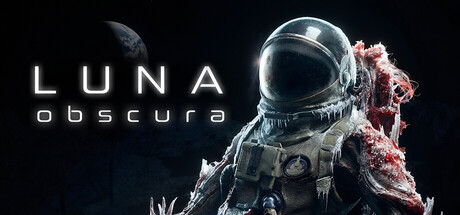
Luna: Obscura is my creative vision (SOSOROS). I designed and built the game's world, levels, creatures, and visual identity over two years. ANORMIC joined in the final year to handle programming and sound design.
The art on the walls: Every painting and sculpture you encounter inside the base is an original, physical artwork. Acrylics painted by hand, sculptures made by hand, by me. No AI, no prints of someone else's work. They existed in the real world before they existed on the moon.
Cover art: The key art combines in-engine 3D renders, AI-assisted generation trained exclusively on my own handmade artworks and 3D sculpts, and extensive manual overpaint and compositing in Photoshop.
Cinematic sequences: The in-game sequences are hybrids, built from direct in-engine screenshots of our own levels and creatures, extended through AI generation. I'm not an animator, and producing these any other way was beyond the scope of a two-person project. I hope the results speak for themselves.
Sound effects & enemy audio: The vast majority of audio was composed and engineered by ANORMIC. For the game's altered human enemies (lunatics whose minds have been overtaken) we made a deliberate artistic choice to use AI-generated vocal sounds. The result is audio that feels disturbingly human but remains completely incomprehensible. AI voice sits in an uncanny valley, and that's exactly where these creatures live. This was a creative decision, not a compromise.
Remaining environmental assets were licensed through the Unreal Engine Marketplace.
Everything else, the levels, the creatures, the paintings, the world, is human made.
And yes, there's a contradiction here. A statement against AI in art, inside a game that used it. I won't pretend otherwise. These two years were me testing that edge firsthand: I used these tools, learned what they can genuinely do, and somewhere along the way my conscience gave me the answer. Even where the hybrid approach worked, and I think the sequences are an honest use of it, I'd rather learn to rig and animate myself for the next project, even if the result is rougher. I stand with artists, and I'd rather earn my skills than borrow them. Sometimes you have to cross a line to understand exactly where it should be drawn.
Where we stand: We're not against AI. We use it gladly where it belongs: code, tools, concepting aid, the invisible machinery of production, the same way we welcome it in medicine and science. But art is different. As creators whose own work has potentially been scraped to train these models without consent, we understand the weight of this disclosure more than most. Our position for future projects is firm: AI should not be in the end result, and where reality forces a compromise, it must remain a hybrid, grounded in our own hands and our own source material, never a replacement for them. We made honest decisions, we're transparent about every one of them, and we stand behind the result. The goal is simple: just the work.
A Quick Note on AI Tools:
To give our loading screens a cinematic, atmospheric feel, we took screenshots of our actual game environments and used AI tools solely to enhance the lighting, details, and decals for those transition images. For our Achievement Icons, we used AI-generated imagery only for the background fillers, while the main icon artwork was manually created.
Rest assured, 100% of the actual playable game, including all 3D models, world textures, animations, and code was fully handcrafted by our team.
We are a small indie team of only two brothers, and all core gameplay mechanics, level design, story, programming, and animations were 100% handcrafted by us.
AI was used strictly for supplementary audio and minor environmental details: specifically, background music, ambient soundscapes, eerie sound effects, and select in-game textures/posters.
AI-assisted tools were used as part of the development workflow for prototyping, implementation support, and content iteration. The released game content was selected, edited, and curated by the developer. The game does not use live generative AI during gameplay.
AI Generated Content Disclosure
The developers describe how their game uses AI Generated Content like this:
Generative AI tools were used in limited cases during the production of certain game assets. AI-generated content was not used as-is, and any such assets were revised, refined, and finalized by our art and development teams to ensure they meet our quality standards and creative direction.
I use AI tools to assist with code review, translations, Steam capsule design, and music production tasks. All final game design, programming, and implementation decisions are made, reviewed, and supervised by me.
Generative AI was used to assist in the creation of promotional visual assets, including the game's logo and certain store page artwork. No gameplay content, code, story, dialogue, quests, characters, or game mechanics are generated by AI. All gameplay screenshots represent actual in-game content.
Generative AI tools were used during development to assist in creating, texturing, and editing background elements for the promotional marketing materials, library assets, and store page capsules. No AI content is generated live during gameplay.
Some ingame models and textures are AI generated to help speed up the production pipeline. These will eventually be replaced and I simply refuse to charge money for a game which uses AI assets, so until then this game will be free until all AI assets are replaced.
We have updated our AI disclosure in order to provide better transparency and clarity around the use of this support tool for Crazy Taxi: World Tour:
At SEGA Corporation, we utilize generative AI as an optional support tool for developers, with the aim of enabling developers to focus more on creative tasks and deliver better experiences to our players.
In Crazy Taxi: World Tour, generative AI was used as part of the ideation process for background objects. However, no AI-generated content will be included in the final game.
Generative AI was used only for a small portion of the game's visual and marketing materials, which were subsequently refined by the developer. The overwhelming majority of graphics and content were created manually or obtained from licensed sources.
The demo version contains temporary AI (generated music and promotional artwork only). These assets will be replaced with original content in the final version of the game.
Generative AI was used to assist in the creation of promotional artwork, marketing images, and store page assets. No AI-generated content is produced during gameplay, and no gameplay features rely on generative AI.
Generative AI was used during the development of Phantom Fools as a helper tool. It was used for some images, sound effects, music, and small parts of code. The 3D models, animations, most of the code, and the main game design were made by the developers without generative AI. Everything made with AI was checked, edited, and added to the game manually.
The game does not use generative AI during gameplay. No live AI-generated content is shown to players.
Generative AI is used to create sound effects and voice lines. The AI-generated images provide foundational 2D artwork for promotional materials that are heavily stylized and edited. All the AI-generated assets are static, pre-baked and there is no live, real-time interaction with AI during gameplay.
Since this is a large project for a two-person team, we used AI assistance to refine some code and create certain images that were difficult for us to capture in the real world. All AI-assisted content was reviewed, adjusted, and approved by us before being included in the game.
Generative AI was used to assist in creating a limited amount of pre-rendered visual content, including decorative in-game images, minor visual assets, and prologue background artwork.
AI tools were used to assist with the English localization of texts and dialogues. Additionally, some sound effects in the current Demo are AI-generated placeholders, which will be completely replaced with custom audio in the final release.
Generative AI tools were used during parts of the asset prototyping and ideation process. All final game assets were significantly modified, refined, and curated by the development team before inclusion in the game.
We want to be fully transparent with our community about how we develop our game. In this project, we have integrated Artificial Intelligence (AI) tools as an operational support for our team.
How we use it:
- Process optimization: It helps us streamline technical tasks and repetitive workflows.
- Efficiency: It allows us to deliver better work and move forward much faster.
- Resource maximization: It enables the team to save time on mechanical processes to focus on the final game polish.
Our commitment to craftsmanship:
- Total human control: No element of the final game has been left solely to AI.
- Expert review: Every technical asset or piece of content goes through a rigorous human editing filter.
- Manual work behind everything: Technology only optimizes our delivery times, but there is always genuine craftsmanship behind every asset.
- Guaranteed quality: We use AI to empower our team's capabilities, ensuring the essence and final finish of the game remain 100% human.
Thank you for your constant support!
Luna: Obscura is my creative vision (SOSOROS). I designed and built the game's world, levels, creatures, and visual identity over two years. ANORMIC joined in the final year to handle programming and sound design.
The art on the walls: Every painting and sculpture you encounter inside the base is an original, physical artwork. Acrylics painted by hand, sculptures made by hand, by me. No AI, no prints of someone else's work. They existed in the real world before they existed on the moon.
Cover art: The key art combines in-engine 3D renders, AI-assisted generation trained exclusively on my own handmade artworks and 3D sculpts, and extensive manual overpaint and compositing in Photoshop.
Cinematic sequences: The in-game sequences are hybrids, built from direct in-engine screenshots of our own levels and creatures, extended through AI generation. I'm not an animator, and producing these any other way was beyond the scope of a two-person project. I hope the results speak for themselves.
Sound effects & enemy audio: The vast majority of audio was composed and engineered by ANORMIC. For the game's altered human enemies (lunatics whose minds have been overtaken) we made a deliberate artistic choice to use AI-generated vocal sounds. The result is audio that feels disturbingly human but remains completely incomprehensible. AI voice sits in an uncanny valley, and that's exactly where these creatures live. This was a creative decision, not a compromise.
Remaining environmental assets were licensed through the Unreal Engine Marketplace.
Everything else, the levels, the creatures, the paintings, the world, is human made.
And yes, there's a contradiction here. A statement against AI in art, inside a game that used it. I won't pretend otherwise. These two years were me testing that edge firsthand: I used these tools, learned what they can genuinely do, and somewhere along the way my conscience gave me the answer. Even where the hybrid approach worked, and I think the sequences are an honest use of it, I'd rather learn to rig and animate myself for the next project, even if the result is rougher. I stand with artists, and I'd rather earn my skills than borrow them. Sometimes you have to cross a line to understand exactly where it should be drawn.
Where we stand: We're not against AI. We use it gladly where it belongs: code, tools, concepting aid, the invisible machinery of production, the same way we welcome it in medicine and science. But art is different. As creators whose own work has potentially been scraped to train these models without consent, we understand the weight of this disclosure more than most. Our position for future projects is firm: AI should not be in the end result, and where reality forces a compromise, it must remain a hybrid, grounded in our own hands and our own source material, never a replacement for them. We made honest decisions, we're transparent about every one of them, and we stand behind the result. The goal is simple: just the work.
A Quick Note on AI Tools:
To give our loading screens a cinematic, atmospheric feel, we took screenshots of our actual game environments and used AI tools solely to enhance the lighting, details, and decals for those transition images. For our Achievement Icons, we used AI-generated imagery only for the background fillers, while the main icon artwork was manually created.
Rest assured, 100% of the actual playable game, including all 3D models, world textures, animations, and code was fully handcrafted by our team.
We are a small indie team of only two brothers, and all core gameplay mechanics, level design, story, programming, and animations were 100% handcrafted by us.
AI was used strictly for supplementary audio and minor environmental details: specifically, background music, ambient soundscapes, eerie sound effects, and select in-game textures/posters.
AI-assisted tools were used as part of the development workflow for prototyping, implementation support, and content iteration. The released game content was selected, edited, and curated by the developer. The game does not use live generative AI during gameplay.
AI Generated Content Disclosure
The developers describe how their game uses AI Generated Content like this:
Generative AI tools were used in limited cases during the production of certain game assets. AI-generated content was not used as-is, and any such assets were revised, refined, and finalized by our art and development teams to ensure they meet our quality standards and creative direction.
I use AI tools to assist with code review, translations, Steam capsule design, and music production tasks. All final game design, programming, and implementation decisions are made, reviewed, and supervised by me.
Generative AI was used to assist in the creation of promotional visual assets, including the game's logo and certain store page artwork. No gameplay content, code, story, dialogue, quests, characters, or game mechanics are generated by AI. All gameplay screenshots represent actual in-game content.
Generative AI tools were used during development to assist in creating, texturing, and editing background elements for the promotional marketing materials, library assets, and store page capsules. No AI content is generated live during gameplay.
Some ingame models and textures are AI generated to help speed up the production pipeline. These will eventually be replaced and I simply refuse to charge money for a game which uses AI assets, so until then this game will be free until all AI assets are replaced.
We have updated our AI disclosure in order to provide better transparency and clarity around the use of this support tool for Crazy Taxi: World Tour:
At SEGA Corporation, we utilize generative AI as an optional support tool for developers, with the aim of enabling developers to focus more on creative tasks and deliver better experiences to our players.
In Crazy Taxi: World Tour, generative AI was used as part of the ideation process for background objects. However, no AI-generated content will be included in the final game.
Generative AI was used only for a small portion of the game's visual and marketing materials, which were subsequently refined by the developer. The overwhelming majority of graphics and content were created manually or obtained from licensed sources.
The demo version contains temporary AI (generated music and promotional artwork only). These assets will be replaced with original content in the final version of the game.
Generative AI was used to assist in the creation of promotional artwork, marketing images, and store page assets. No AI-generated content is produced during gameplay, and no gameplay features rely on generative AI.
Generative AI was used during the development of Phantom Fools as a helper tool. It was used for some images, sound effects, music, and small parts of code. The 3D models, animations, most of the code, and the main game design were made by the developers without generative AI. Everything made with AI was checked, edited, and added to the game manually.
The game does not use generative AI during gameplay. No live AI-generated content is shown to players.
Generative AI is used to create sound effects and voice lines. The AI-generated images provide foundational 2D artwork for promotional materials that are heavily stylized and edited. All the AI-generated assets are static, pre-baked and there is no live, real-time interaction with AI during gameplay.
Since this is a large project for a two-person team, we used AI assistance to refine some code and create certain images that were difficult for us to capture in the real world. All AI-assisted content was reviewed, adjusted, and approved by us before being included in the game.
Generative AI was used to assist in creating a limited amount of pre-rendered visual content, including decorative in-game images, minor visual assets, and prologue background artwork.
AI tools were used to assist with the English localization of texts and dialogues. Additionally, some sound effects in the current Demo are AI-generated placeholders, which will be completely replaced with custom audio in the final release.