Public Steam disclosure research25,383 disclosures tracked
Where do games disclose AI use?
Search developers’ Steam disclosures, compare classified AI use across
games, and follow recorded changes.
This index adds cross-game classifications and statistics to
statements published on individual store pages.
Groups reflect automatic analysis of public disclosures; mature records are excluded. These counts do not measure AI use across all of Steam.
Missing or unclear statements cannot establish whether a game uses AI.
This game does not use generative AI in real time.
Any generative AI content is created only in advance, in accordance with Steam's guidelines.
Programming
Generative AI tools may be used to assist with code completion, refactoring, and review. All code is subject to final human review before use.
Translations
For languages other than Japanese, AI tools may be used for translation.
Assets
Some in-game graphics and promotional images may be created with generative AI tools. All such assets are reviewed and edited by a human, and none are used as-is.
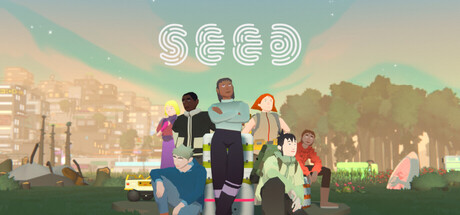
Currently, we use AI to modify some of the character voices featured in the game. Additionally, we are planning to introduce several features that leverage Generative, including:
- Seedling Speech Bubbles: AI-generated dialogue for Seedlings to enhance their interactions.
- Seedling Thought Bubbles: AI-generated internal thoughts to give Seedlings more personality and depth.
- Seedling Responses: AI-driven replies to messages that players send to their Seedlings.
Throughout our development, we may leverage AI-based tools to assist our team in programming logic and audio production. Please rest assured that the final gameplay and soundscapes reflect the creativity and hard work of our team. Examples include code optimization and musical composition aids.
Generative AI tools were used during the development process in the following areas:
3D Assets & Texturing: We utilized tools such as ChatGPT and Grok to generate visual references and base textures. These references were then used in conjunction with Meshy.ai to assist in the creation of 3D models and their corresponding textures.
Code & Programming: An AI-based coding assistant was used to help write, refactor, and optimize the game's GDScript logic, including character movement, interaction systems, and UI components.
All AI-generated elements have been reviewed, integrated, and refined by the development team to ensure a high-quality experience for players.
We do NOT use AI-generated art, and we never intentionally include AI assets in our game. We sometimes purchase assets and use stock photos. We do our best to verify them, but nowadays, distinguishing AI from human-made art can be hard.
That said, if there is any specific artwork that you believe looks like AI or raises concerns, we would appreciate it if you could point it out on our Discord server. We will investigate and replace anything that might have slipped through.
AI-generated art is NOT something we want to include in our game.
This game was developed independently by a solo developer. Generative AI tools were used in a limited capacity during production, specifically to assist with the texturing of certain visual assets and the conception of some written content. All gameplay systems, models, game design, art direction, music, and core creative decisions were made entirely by the developer.
This game was developed using AI-assisted tools in multiple areas of development, including programming, writing, music, and visual assets. AI tools were used during the creation process to help generate and prototype content, which was then reviewed, edited, and integrated into the game by the developer.
I used a text-based generative AI (LLM) to assist with the English translation (localization) of all in-game text (dialogue, UI, system messages) and to help write the English descriptions for the Steam store page.
AI was used to generate some of the 2D assets and portraits. I have personally selected and verified all generated content to ensure it fits the game's historical theme.
The pipes, ley lines, and gas mains of Arcana, Gas & Waterworks Inc. were designed, debated, and duct-taped together by a single developer. All music was licensed from real indie musicians, who did NOT use generative AI in any way, and who are credited in the game. Generative AI tools helped bring AGW Inc. to life by turning hand-drawn sketches into finished art, scripting sound effects, and contributing early drafts of in-game text. All of this content was rewritten, expanded, or replaced by the developer to fit the game's voice and world. Thanks to the help of these AI tools, I was able to finally answer the burning question, "What if fantasy worlds needed infrastructure?"
AI Society uses local generative AI (via Ollama) to power each character's behavior, dialogue, and decision-making. Based on the personality traits, hobbies, and description you set for each character, the AI determines their daily routines, job choices, relationships, and what they post on the in-game social media feed. All AI processing runs entirely on the player's machine — no data is sent to external servers.
Generative AI was used in a limited and supportive way during development. AI tools were utilized to help draft and refine parts of the store page description, and to assist in editing or enhancing some visual assets for presentation and marketing purposes.
AI-assisted tools were used during development to help create certain store assets and to assist with portions of the program’s source code.
The shipped game does not generate AI content during gameplay and does not connect to external AI services.
Visual effects and imagery in the game are generated deterministically by the program’s code using mathematical and procedural rendering techniques (ASCII graphics and SDL-based visual effects). These systems do not use generative AI.
AI tools were used during the early concept phase of some character designs.
All AI-generated elements were manually refined, edited, and integrated by the developer to fit the game’s artistic style and vision.
No gameplay systems, mechanics, code, or narrative content were generated by AI.
Live Through Time utilizes the Gemini 2.5 Flash AI model to act as a dynamic, interactive historian. All narrative text, NPC dialogue, character biographies, and world events are generated live in real-time based entirely on player input. The game contains no pre-written scripts; instead, the AI calculates the historical causality of your actions to create a completely unique, unscripted roleplaying experience.
This game uses generative AI (Large Language Models) as its core engine. Every NPC independently makes decisions, engages in dialogue, forms relationships, and creates emergent stories powered by LLM. AI generates text narratives including NPC thoughts, actions, dialogue, combat scenes, and story events in real time during gameplay. Players must provide their own API key to connect to an LLM service of their choice. No AI content is pre-generated or stored by the developer.
The game utilizes pre-generated content created with the assistance of Artificial Intelligence (AI). As a solo developer, I used AI tools in the following areas:
2D Graphics: Generation and processing of backgrounds, character portraits (e.g., images of Saints in the notebook), and user interface elements.
Coding: Assistance in writing and optimizing scripts within the Godot engine.
All generated content has been manually verified, edited, and approved by the author to ensure consistency with the story and values presented in the game.
AI was used in the application to create illustrations, voiceovers, translations, and musical accompaniment. All materials have been manually reviewed and refined to ensure the quality and integrity of the application.
The developer uses generative AI tools throughout the entire development process of this game.
Visual Arts: All character illustrations, card designs, backgrounds, and UI elements were generated using AI. The developer has manually reviewed and post-processed these assets to ensure artistic consistency and quality.
Code & Programming: The core game logic and systems were developed with the assistance of large language models (LLMs) to ensure stability and efficiency.
Script & Dialogue: All narrative content, world-building lore, and character dialogues were generated using AI and subsequently edited by the developer for narrative flow.
Commitment to Safety: > We ensure that the AI models and prompts used in development do not generate illegal or infringing content. All AI-generated assets have been thoroughly screened to comply with Steam's distribution policies.
We used AI assistance for multilingual translation of promotional texts, for visual style suggestions, and for the creation of capsule and library assets. We also used AI tools during development for in-game text localization, as well as for generating certain audio elements and textures/visual content.
This game utilizes generative AI during the development process. Some 3D props (such as marshmallows), game logos, and UI elements were initially created using AI tools. These assets were then manually refined and edited by the developer to fit the game's style.
CAI UWE uses generative AI technologies (Large Language Models) to generate the character's dialogues in real-time. There are no pre-written scripts; all of UWE's answers are generated live based on the user's chat inputs.
Generative AI was used solely to assist in creating promotional materials and store page visuals.
All in-game content is human-created and does not involve generative AI.
This game is an AI-powered desktop companion that uses Large Language Models (LLM) to generate real-time dialogue and voice interactions. The AI assistant can engage in natural conversations, answer questions, perform tasks, and provide voice feedback through Text-to-Speech (TTS) technology. All AI-generated content is produced in real-time via external API services, with content filtering and safety measures implemented to ensure compliance with community standards.
Generative AI tools were used during the development process for coding assistance and creating certain visual textures or artistic assets. All final assets have been reviewed and refined by the developer to ensure they align with the game's unique cyberpunk and steampunk art style.
Neofold includes real-time generated AI content, such as its recommended "Infinity Mode", which uses a local diffusion model to generate infinite unique creatures in real-time using your GPU. No external servers are used. No generation happens without your prior input, ensuring stable performance during your work and gaming sessions.
Neofold includes pre-generated AI content, such as its alternate "Lite Mode", which uses a giant set of pre-generated creatures for players without a suitable video card.
This game uses generative AI tools during its development. Specifically:
AI was used to assist in the creation and artistic refinement of marketing assets, library hero images, and the game title logo.
AI was used to provide reference and optimization for certain static environmental background assets within the game. All AI-generated content has been manually edited and quality-controlled to ensure it aligns with the game's oriental art style.
"We utilize AI tools for art styling and prototyping to optimize development efficiency and reduce costs. This ensures our small team can dedicate our limited manpower to conceptualizing and expanding the game's core content, ultimately delivering a much richer narrative depth and a significantly larger script."
This game does not use generative AI in real time.
Any generative AI content is created only in advance, in accordance with Steam's guidelines.
Programming
Generative AI tools may be used to assist with code completion, refactoring, and review. All code is subject to final human review before use.
Translations
For languages other than Japanese, AI tools may be used for translation.
Assets
Some in-game graphics and promotional images may be created with generative AI tools. All such assets are reviewed and edited by a human, and none are used as-is.
Currently, we use AI to modify some of the character voices featured in the game. Additionally, we are planning to introduce several features that leverage Generative, including:
- Seedling Speech Bubbles: AI-generated dialogue for Seedlings to enhance their interactions.
- Seedling Thought Bubbles: AI-generated internal thoughts to give Seedlings more personality and depth.
- Seedling Responses: AI-driven replies to messages that players send to their Seedlings.
Throughout our development, we may leverage AI-based tools to assist our team in programming logic and audio production. Please rest assured that the final gameplay and soundscapes reflect the creativity and hard work of our team. Examples include code optimization and musical composition aids.
Generative AI tools were used during the development process in the following areas:
3D Assets & Texturing: We utilized tools such as ChatGPT and Grok to generate visual references and base textures. These references were then used in conjunction with Meshy.ai to assist in the creation of 3D models and their corresponding textures.
Code & Programming: An AI-based coding assistant was used to help write, refactor, and optimize the game's GDScript logic, including character movement, interaction systems, and UI components.
All AI-generated elements have been reviewed, integrated, and refined by the development team to ensure a high-quality experience for players.
We do NOT use AI-generated art, and we never intentionally include AI assets in our game. We sometimes purchase assets and use stock photos. We do our best to verify them, but nowadays, distinguishing AI from human-made art can be hard.
That said, if there is any specific artwork that you believe looks like AI or raises concerns, we would appreciate it if you could point it out on our Discord server. We will investigate and replace anything that might have slipped through.
AI-generated art is NOT something we want to include in our game.
This game was developed independently by a solo developer. Generative AI tools were used in a limited capacity during production, specifically to assist with the texturing of certain visual assets and the conception of some written content. All gameplay systems, models, game design, art direction, music, and core creative decisions were made entirely by the developer.
This game was developed using AI-assisted tools in multiple areas of development, including programming, writing, music, and visual assets. AI tools were used during the creation process to help generate and prototype content, which was then reviewed, edited, and integrated into the game by the developer.
I used a text-based generative AI (LLM) to assist with the English translation (localization) of all in-game text (dialogue, UI, system messages) and to help write the English descriptions for the Steam store page.
AI was used to generate some of the 2D assets and portraits. I have personally selected and verified all generated content to ensure it fits the game's historical theme.
The pipes, ley lines, and gas mains of Arcana, Gas & Waterworks Inc. were designed, debated, and duct-taped together by a single developer. All music was licensed from real indie musicians, who did NOT use generative AI in any way, and who are credited in the game. Generative AI tools helped bring AGW Inc. to life by turning hand-drawn sketches into finished art, scripting sound effects, and contributing early drafts of in-game text. All of this content was rewritten, expanded, or replaced by the developer to fit the game's voice and world. Thanks to the help of these AI tools, I was able to finally answer the burning question, "What if fantasy worlds needed infrastructure?"
AI Society uses local generative AI (via Ollama) to power each character's behavior, dialogue, and decision-making. Based on the personality traits, hobbies, and description you set for each character, the AI determines their daily routines, job choices, relationships, and what they post on the in-game social media feed. All AI processing runs entirely on the player's machine — no data is sent to external servers.
Generative AI was used in a limited and supportive way during development. AI tools were utilized to help draft and refine parts of the store page description, and to assist in editing or enhancing some visual assets for presentation and marketing purposes.
AI-assisted tools were used during development to help create certain store assets and to assist with portions of the program’s source code.
The shipped game does not generate AI content during gameplay and does not connect to external AI services.
Visual effects and imagery in the game are generated deterministically by the program’s code using mathematical and procedural rendering techniques (ASCII graphics and SDL-based visual effects). These systems do not use generative AI.
AI tools were used during the early concept phase of some character designs.
All AI-generated elements were manually refined, edited, and integrated by the developer to fit the game’s artistic style and vision.
No gameplay systems, mechanics, code, or narrative content were generated by AI.
Live Through Time utilizes the Gemini 2.5 Flash AI model to act as a dynamic, interactive historian. All narrative text, NPC dialogue, character biographies, and world events are generated live in real-time based entirely on player input. The game contains no pre-written scripts; instead, the AI calculates the historical causality of your actions to create a completely unique, unscripted roleplaying experience.
This game uses generative AI (Large Language Models) as its core engine. Every NPC independently makes decisions, engages in dialogue, forms relationships, and creates emergent stories powered by LLM. AI generates text narratives including NPC thoughts, actions, dialogue, combat scenes, and story events in real time during gameplay. Players must provide their own API key to connect to an LLM service of their choice. No AI content is pre-generated or stored by the developer.
The game utilizes pre-generated content created with the assistance of Artificial Intelligence (AI). As a solo developer, I used AI tools in the following areas:
2D Graphics: Generation and processing of backgrounds, character portraits (e.g., images of Saints in the notebook), and user interface elements.
Coding: Assistance in writing and optimizing scripts within the Godot engine.
All generated content has been manually verified, edited, and approved by the author to ensure consistency with the story and values presented in the game.
AI was used in the application to create illustrations, voiceovers, translations, and musical accompaniment. All materials have been manually reviewed and refined to ensure the quality and integrity of the application.
The developer uses generative AI tools throughout the entire development process of this game.
Visual Arts: All character illustrations, card designs, backgrounds, and UI elements were generated using AI. The developer has manually reviewed and post-processed these assets to ensure artistic consistency and quality.
Code & Programming: The core game logic and systems were developed with the assistance of large language models (LLMs) to ensure stability and efficiency.
Script & Dialogue: All narrative content, world-building lore, and character dialogues were generated using AI and subsequently edited by the developer for narrative flow.
Commitment to Safety: > We ensure that the AI models and prompts used in development do not generate illegal or infringing content. All AI-generated assets have been thoroughly screened to comply with Steam's distribution policies.
We used AI assistance for multilingual translation of promotional texts, for visual style suggestions, and for the creation of capsule and library assets. We also used AI tools during development for in-game text localization, as well as for generating certain audio elements and textures/visual content.
This game utilizes generative AI during the development process. Some 3D props (such as marshmallows), game logos, and UI elements were initially created using AI tools. These assets were then manually refined and edited by the developer to fit the game's style.
CAI UWE uses generative AI technologies (Large Language Models) to generate the character's dialogues in real-time. There are no pre-written scripts; all of UWE's answers are generated live based on the user's chat inputs.
Generative AI was used solely to assist in creating promotional materials and store page visuals.
All in-game content is human-created and does not involve generative AI.
This game is an AI-powered desktop companion that uses Large Language Models (LLM) to generate real-time dialogue and voice interactions. The AI assistant can engage in natural conversations, answer questions, perform tasks, and provide voice feedback through Text-to-Speech (TTS) technology. All AI-generated content is produced in real-time via external API services, with content filtering and safety measures implemented to ensure compliance with community standards.
Generative AI tools were used during the development process for coding assistance and creating certain visual textures or artistic assets. All final assets have been reviewed and refined by the developer to ensure they align with the game's unique cyberpunk and steampunk art style.
Neofold includes real-time generated AI content, such as its recommended "Infinity Mode", which uses a local diffusion model to generate infinite unique creatures in real-time using your GPU. No external servers are used. No generation happens without your prior input, ensuring stable performance during your work and gaming sessions.
Neofold includes pre-generated AI content, such as its alternate "Lite Mode", which uses a giant set of pre-generated creatures for players without a suitable video card.
This game uses generative AI tools during its development. Specifically:
AI was used to assist in the creation and artistic refinement of marketing assets, library hero images, and the game title logo.
AI was used to provide reference and optimization for certain static environmental background assets within the game. All AI-generated content has been manually edited and quality-controlled to ensure it aligns with the game's oriental art style.
"We utilize AI tools for art styling and prototyping to optimize development efficiency and reduce costs. This ensures our small team can dedicate our limited manpower to conceptualizing and expanding the game's core content, ultimately delivering a much richer narrative depth and a significantly larger script."